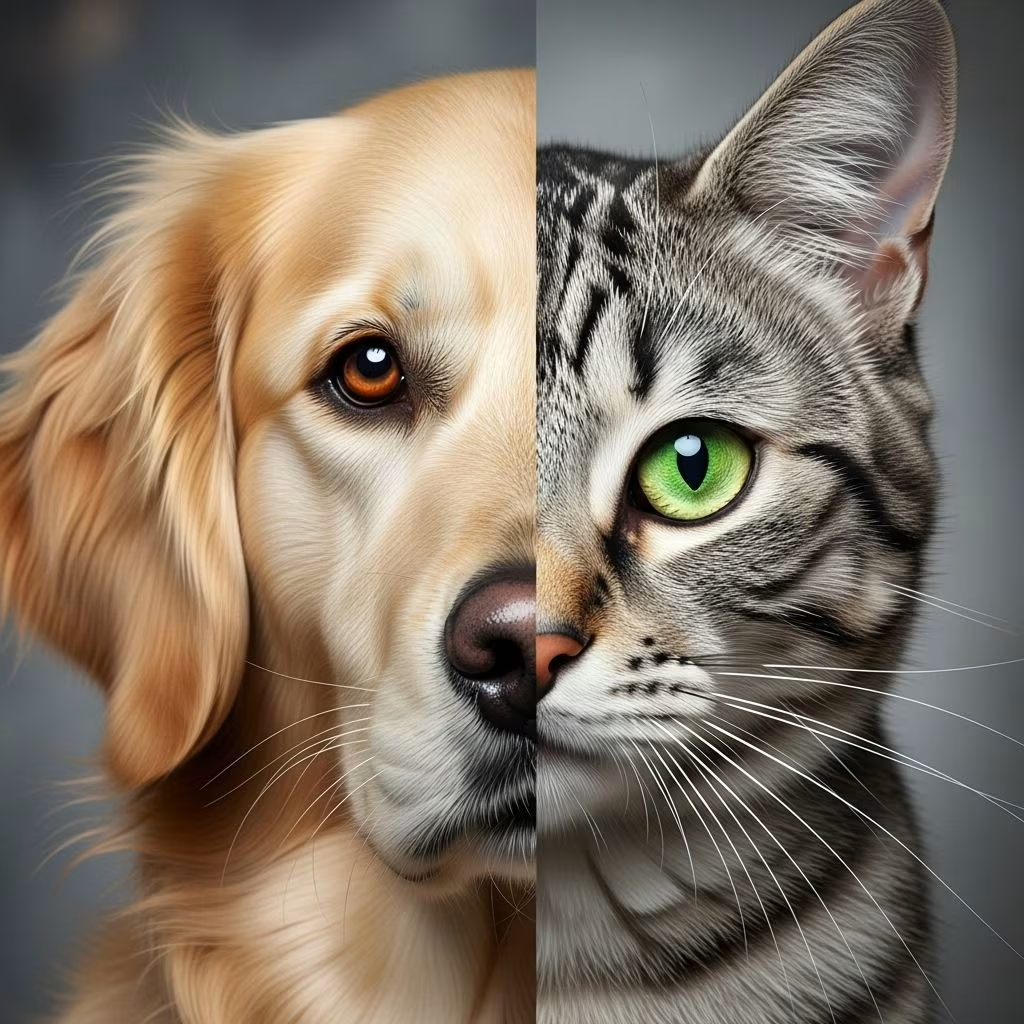
The Myth and Reality of Cat-Dog Crossbreeding
The idea of a cat-dog hybrid—an animal that combines the best traits of both beloved pets—has captivated imaginations for centuries. Tales and memes of “kuppies” or “doggicats” circulate online, but what does science have to say about this persistent myth? Let’s uncover the truth behind the idea that dogs and cats can have babies together.
Why Can’t Dogs and Cats Crossbreed?
Dogs and cats are completely different species, separated by genetics, physiology, and evolutionary history. While both are popular pets, their biological differences make crossbreeding impossible.
Genetic Incompatibility
Dogs have 78 chromosomes (39 pairs), while cats have just 38 chromosomes (19 pairs). This mismatch means their genetic material cannot align properly during reproduction, making successful fertilization and embryo development biologically impossible.
Evolutionary Barriers
Dogs belong to the Canidae family, and cats belong to the Felidae family. These groups diverged over 40 million years ago, evolving entirely separate reproductive and physiological systems. Even if mating were attempted, the reproductive anatomy, hormone cycles, and genetic codes are incompatible.
Reproductive Differences
| Species | Chromosomes | Ovulation Type | Reproductive Anatomy |
|---|---|---|---|
| Dog | 78 (39 pairs) | Spontaneous (regular cycles) | No penile barbs |
| Cat | 38 (19 pairs) | Induced (by mating) | Has penile barbs |
These fundamental differences in reproduction mean that even in the rare event of attempted mating, fertilization would not occur, and no hybrid offspring could develop.
How Crossbreeding Works In Nature
Hybrid animals do exist, but only between closely related species with similar genetics. Real animal hybrids result from species that share recent common ancestry, similar chromosome counts, and compatible reproductive systems.
- Ligers: Offspring of lions and tigers (same genus, similar chromosomes).
- Mules: Offspring of horses and donkeys (same family, slightly different chromosome numbers).
- Wolfdogs: Offspring of wolves and domestic dogs (same species, Canis lupus).
- Savannah Cats: Offspring of domestic cats and servals (same family, Felidae).
These hybrids are possible because their parent species are closely related and can produce viable offspring, though sometimes with health issues.
Historical Hoaxes and Modern Myths
Throughout history, there have been claims and hoaxes about cat-dog hybrids. In 1937, a scientific journal published photographs of an alleged hybrid, but no actual specimen was ever verified. Today, social media is rife with manipulated images and sensational stories, but none have been scientifically substantiated.
Identifying Hybrid Hoaxes
- Look for reputable scientific sources and verified documentation.
- Be skeptical of sensational claims without evidence.
- Recognize that viral posts often use photo editing or misidentification.
Why the Myth Persists
The fascination with cat-dog hybrids reflects our love for both species and a desire to combine their best traits. The idea of a playful, loyal, and independent pet is appealing, but nature’s genetic boundaries are firm.
Alternatives for Fans of Both Cats and Dogs
If you love both cats and dogs, consider these options:
- Adopt Both: Many households successfully keep both cats and dogs as companions.
- Choose Breeds with Desired Traits: Some cat breeds, like Maine Coons, display dog-like loyalty, while certain dog breeds can be more independent or aloof.
- Mixed-Species Families: With proper introduction and socialization, cats and dogs can form close bonds and enrich each other’s lives.
The Science of Hybridization Explained
Hybridization occurs when two different species reproduce and create offspring. For this to happen, the species must be closely related enough for their DNA to align properly during fertilization. Dogs and cats, separated by millions of years of evolution and belonging to different families, do not meet these criteria.
Genetic and Anatomical Barriers
- Chromosome Mismatch: Even if fertilization were to occur (which it cannot), the embryo would not develop due to incompatible genetic instructions.
- Reproductive Cycles: Cats are induced ovulators (ovulate only after mating), while dogs are spontaneous ovulators (ovulate on a regular cycle).
- Physical Differences: Male cats have penile barbs to stimulate ovulation, which dogs lack, further preventing reproductive success.
FAQs: Cat-Dog Hybrids and Crossbreeding
Are there any real cat-dog hybrids in existence?
No. There are no verified cases of cat-dog hybrids. All reported instances have been hoaxes, misinterpretations, or digitally altered images.
Can a dog get a cat pregnant, or vice versa?
No. Their genetic, anatomical, and physiological differences make reproduction impossible. Even artificial insemination would not work due to these barriers.
Why do people believe cat-dog hybrids are possible?
The myth persists due to viral internet content, lack of scientific awareness, and the desire for a “best of both worlds” pet. Recognizing the science helps debunk these myths.
What are some real animal hybrids?
Real hybrids include ligers (lion + tiger), mules (horse + donkey), wolfdogs (wolf + dog), and Savannah cats (domestic cat + serval). These occur between closely related species.
Can cats and dogs live together peacefully?
Yes. With proper introduction and training, cats and dogs can coexist happily, often forming close bonds.
Genetics, Breeding, and Pet Lifestyle
Understanding the science behind crossbreeding helps us appreciate why certain hybrids are possible and others are not. Responsible breeding focuses on health, temperament, and genetic compatibility within species, not between them.
Conclusion: The Limits of Nature’s Creativity
While the idea of a cat-dog hybrid is fun to imagine, science confirms it’s biologically impossible. The genetic, anatomical, and evolutionary barriers between cats and dogs are simply too great. Instead, we can celebrate the unique qualities of each species and enjoy the companionship of both in our homes.
How to Spot and Debunk Hybrid Myths
- Always seek information from reputable scientific sources.
- Be critical of sensationalist claims, especially those without evidence.
- Share accurate information to help others understand the science.
Further Reading and Resources
For more on pet genetics and real hybrid animals, consult veterinary science publications, genetic databases, and reputable pet care websites.
References
- https://www.petscare.com/news/post/dog-cat-hybrid-science
- https://www.petscare.com/news/post/cat-dog-hybrid-myth-science
- https://www.catster.com/lifestyle/can-dog-and-cat-crossbreed/
- https://basepaws.com/blog/can-a-dog-get-a-cat-pregnant
- https://www.atlasobscura.com/articles/kuppies-catdogs-pet-hybrids-hoax
- http://www.macroevolution.net/cat-dog-hybrids.html
- https://www.livescience.com/59875-less-variety-in-cats-than-dogs.html
- https://www.wisdompanel.com/en-us/blog/the-genetics-of-chimerism-and-mosaicism-in-dogs-and