


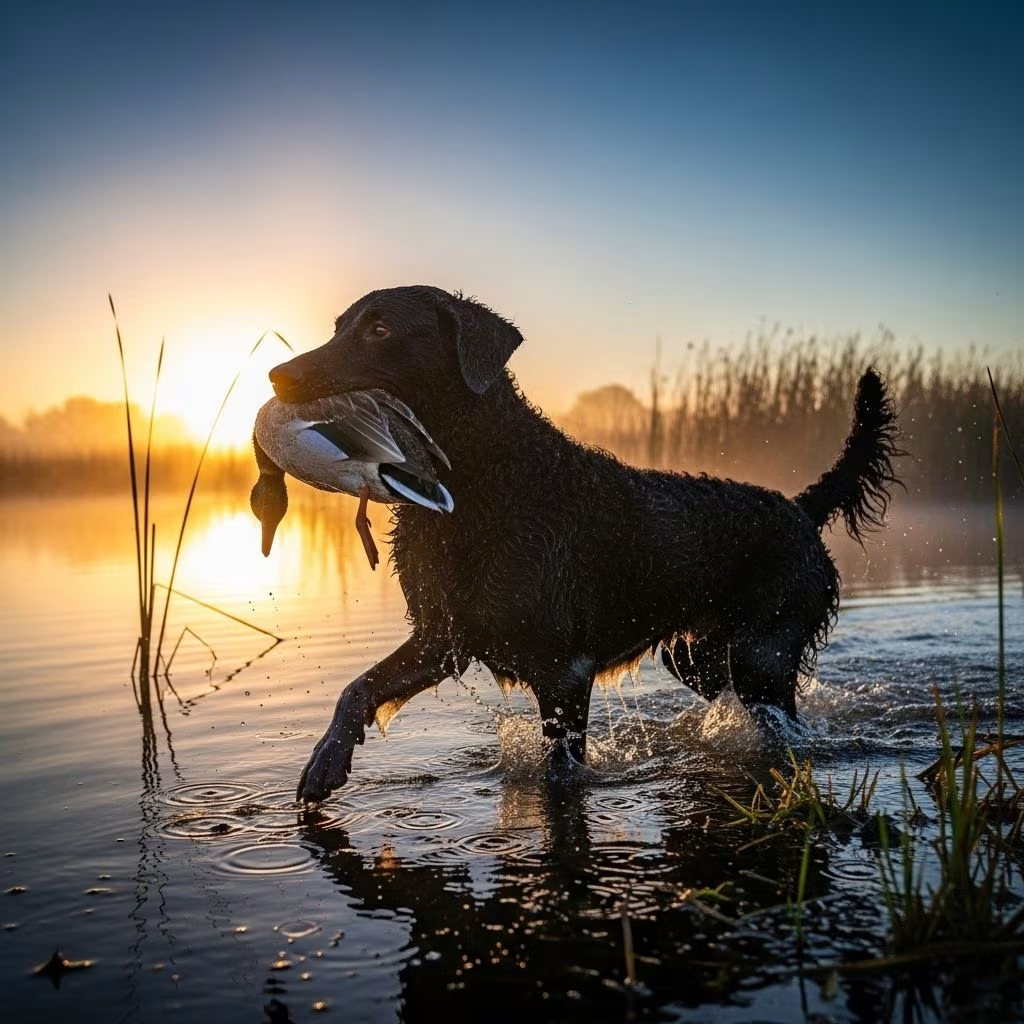
Curly-Coated Retriever Dog Breed Overview
The Curly-Coated Retriever stands as one of the oldest and most distinctive retriever breeds, valued for its versatility in hunting and its unique, water-resistant curling coat. Renowned for intelligence, poise, athletic stamina, and a cheerful, independent disposition, the Curly-Coated Retriever excels both as a hunting companion and an active family pet.
Table: At-a-Glance Curly-Coated Retriever Facts
| Country of Origin | England |
|---|---|
| Bred For | Waterfowl & Upland Game Retrieving, Companionship |
| Coat | Dense, tight curls; water resistant |
| Colors | Black, Liver |
| Temperament | Confident, Intelligent, Proud, Responsive |
| Life Expectancy | 10–12 years |
| Weight Range | 60–95 lbs (Males generally heavier than females) |
| Height at Withers | 25–27 in (Male); 23–25 in (Female) |
| AKC Recognition | 1924 |
| Popularity | Low |
Breed History & Heritage
The Curly-Coated Retriever is regarded as one of the oldest retriever breeds, with its roots tracing back to early 19th-century England. Historians suggest the Curly-Coat emerged from crosses among the now-extinct English Water Spaniel, the St. John’s Newfoundland, various retrieving setters, and possibly the Poodle, with a deliberate focus on producing a dog that’s expert in waterfowl retrieval and resilient in rugged terrain.
- First known as a “retriever” in England.
- First shown at Birmingham, England dog shows in 1860.
- Recognized by the AKC in 1924.
- Enjoys steady, though limited, popularity in Great Britain, Australia, New Zealand, and a niche following in the United States.
The breed’s distinctive coat was intentionally cultivated for water resistance, lending the Curly-Coated Retriever unmatched proficiency as a swimmer and gundog.
Physical Characteristics
General Appearance
The Curly-Coated Retriever is athletic and robust, sporting a medium-to-large frame that balances strength with agility. The body’s length slightly exceeds its height, creating a functional silhouette suited to fieldwork.
Distinctive Coat
- Tightly curled, dense, and weatherproof coat covers the body, neck, thighs, and tail.
- Muzzle, forehead, front of forelegs, and feet feature short, smooth, straight hair.
- Coat colors are solid black or liver—prominent white patches are undesirable but scattered white hairs are tolerated.
- Coat’s resilience offers protection against harsh weather, brambles, and cold water during retrieval.
Coat Faults: Bald patches, sparse hair, or soft/brittle curls are considered faults. Trimming may be performed for neatness, but the natural, workmanlike look is preferred.
Head & Expression
- Head: Long, wedge-shaped, proportionate to body.
- Skull: Nearly flat, tapers slightly to eyes.
- Muzzle: Long and strong, completing the wedge shape.
- Eyes: Almond-shaped; black or brown in black dogs, brown or amber in liver dogs.
- Ears: Small, set slightly above eye corner, tightly curled hair covers them.
Expression is lively and composed, reflecting intelligence and alertness.
Body Structure
- Neck: Moderately long, slightly arched, no throatiness.
- Chest: Deep to elbow, oval, well-filled.
- Ribcage: Long and well-sprung.
- Back: Strong, level.
- Loin: Short, muscular, deep with moderate tuck-up.
- Croup: Slightly sloped to tail set.
- Tail: Moderately short, straight, covered in curls, not carried over the back.
Legs are straight, sturdy, and muscular, with compact, well-arched toes. Dewclaws on both hind and forelegs may be removed.
Temperament & Personality
The Curly-Coated Retriever is famed for its versatile, confident, and intelligent nature. Poised yet playful, curlies thrive in both active families and working environments.
- Loyal and affectionate bond with family.
- Independence and quick learning—highly responsive to positive training but may invent their own games if bored.
- Alertness makes them effective watchdogs, though not unduly aggressive.
- Energy level ranges from moderate to high, reflecting their hunting origins.
- Enjoys retrieving, swimming, running, and engaging in dog sports.
- Long puppyhood—can be mischievous as they mature.
When mature, Curlies are equally content to participate in vigorous outdoor activities or relax in the home. Early socialization and obedience training are essential to prevent boredom-driven behavior.
Health & Care
Life Expectancy & General Health
The Curly-Coated Retriever typically lives 10–12 years, with robust health overall. Nevertheless, prospective owners should be aware of a few breed-specific considerations:
- Hip Dysplasia: As with many large breeds, some Curlies are prone to hip issues.
- Elbow Dysplasia and joint concerns may occur.
- Eye Conditions: Progressive retinal atrophy or cataracts have occasionally been documented.
- Cancer: The breed is reportedly susceptible to some forms of cancer in later years.
- Routine veterinary care, vaccinations, and regular activity contribute to longevity and well-being.
Grooming & Coat Maintenance
- Low maintenance coat: Requires only occasional bathing and minimal trimming (ears and tail for neatness) to retain the natural appearance.
- Sheds, but not excessively; regular brushing (once weekly) reduces loose hair.
- Avoid excessive combing or brushing, as it can frizz the curls and diminish their density.
- Bald patches and uneven curls indicate improper grooming or underlying health issues.
Exercise & Activity Needs
- Requires daily exercise: walks, swimming sessions, or off-leash play in safe areas.
- Mental stimulation (training, scent games, retrieval exercises) is vital for happiness.
- Can excel in hunting, agility, obedience, therapy work, rescue, and conformation events.
Living With a Curly-Coated Retriever
Family Integration
- Gentle and affectionate with children—supervision with toddlers recommended due to their size and energy.
- Tolerant of other dogs and animals if socialized early.
- Adaptable to households that provide both companionship and physical/mental challenges.
Training Tips
- Start early with puppy training classes; focus on positive reinforcement and variety to prevent boredom.
- Consistency and patience foster cooperation—Curlies prefer fun, dynamic training.
- Agility, scent work, and advanced obedience suit their intelligence and stamina.
- Microchipping or tattooing for lifetime identification is recommended by breed clubs.
Frequently Asked Questions (FAQs)
Q: Is the Curly-Coated Retriever suitable for first-time dog owners?
A: Yes, though their intelligence and independent streak mean that consistent, engaging training is essential. First-time owners who are active and committed to positive reinforcement will enjoy a rewarding relationship.
Q: How much grooming does the breed require?
A: Grooming requirements are modest. Weekly brushing (using fingers or a gentle comb) and occasional bathing suffice. Trim ears and tail lightly for neatness, but avoid over-grooming to preserve natural curls.
Q: Are Curly-Coated Retrievers good with children and other pets?
A: They are generally very good with children and can live peacefully with other pets, particularly when socialized early. Their playful nature is endearing, but supervision around small children is wise due to their exuberance.
Q: What types of activities suit a Curly-Coated Retriever?
A: Beyond hunting and retrieving, Curlies enjoy swimming, running, hiking, dog sports, therapy work, and advanced obedience challenges.
Q: Is the Curly-Coated Retriever hypoallergenic?
A: While the curly coat sheds sparingly and doesn’t harbor much dander, the breed is not considered truly hypoallergenic.
Q: Can the breed be left alone for long periods?
A: Curlies value companionship and regular activity. Long periods alone may lead to boredom and unwanted behavior. Owners should plan for daily interactions, mental stimulation, and exercise.
Breed Standards (Synopsis)
- Height (at withers): Males 25–27 inches; Females 23–25 inches.
- Weight: Males 70–95 lbs; Females 60–70 lbs.
- Colors: Solid black or liver; no significant white markings.
- Eyes: Almond-shaped, black/brown (black dogs), brown/amber (liver dogs).
- Ears: Small, close to head, covered in tight curls.
- Tail: Moderately short, straight, dense curls, carried level.
- Coat: Small, crisp, tight curls; smooth and short on face and front limbs.
- Gait: Balanced, strong, and effortless.
Table: Breed Color and Markings
| Standard Color | Markings |
|---|---|
| Black | None |
| Liver | None |
Note: White hairs are permissible only as scattered flecks.
Curly-Coated Retriever Clubs & Resources
- Curly-Coated Retriever Club of America (CCRCA): Breed advocacy, education, and community support.
- AKC Reunite: Lifetime “Lost & Found” identification service; microchip or tattoo registration recommended.
- Annual dog shows and field trials showcase the breed’s skills and temperament.
- Rescue organizations exist for Curly-Coated Retrievers in need of new homes.
Additional Considerations
- Popularity: Remains relatively low compared to similar retrievers (Labrador, Golden) but highly respected by enthusiasts.
- Working Roles: Employed in hunting, search and rescue, therapy, and competitive dog sports for their intelligence and resilience.
- Care Commitment: Owners should anticipate long puppyhood, energetic adolescence, and a lifelong need for engagement.
Further Resources and Breed Contacts
- Consult breed standards from the American Kennel Club and the United Kennel Club for further detail.
- Explore breed-specific rescue organizations or club events to learn more and meet Curlies in person.
- Visit reputable breeders who prioritize health testing, early socialization, and breed preservation.
References
- https://www.akc.org/dog-breeds/curly-coated-retriever/
- https://www.akc.org/expert-advice/lifestyle/fun-facts-curly-coated-retriever/
- https://georgiapuppiesfromheaven.com/breed-info/sporting/curcoare/
- https://www.ukcdogs.com/curly-coated-retriever
- https://showsightmagazine.com/dog-breeds/curly-coated-retriever/
- http://cdn.akc.org/CurlyCoatedRetriever-club-flier.pdf
- https://akc.tv/breed?id=808


