Irish Wolfhound History: The Ancient Giant of Ireland
The Irish Wolfhound, known in ancient Gaelic as cú faoil, has a history as towering as its stature. This breed’s origins reach back into the misty legendary past of Ireland, intertwining with Celtic kings, Roman consuls, and epic hunts. Today, the Irish Wolfhound is celebrated not just for its immense size, but for its gentle temperament and storied heritage.
Roman Records and Celtic Legends
As far back as Roman times, there were written accounts of colossal Greyhound-like dogs in Ireland. The Roman statesman Quintus Aurelius Symmachus wrote a letter of thanks in 391 AD for a gift of seven Irish hounds, noting that “all Rome viewed them in wonder”. These dogs, called cú faoil, were revered for both their size and ferocity. Some Irish chieftains even adopted the word cú—meaning “hound”—as a royal honorific, symbolizing loyalty and nobility.
The Legend of Ailbé
Among the legends, one tale stands out: that of Ailbé, a hound so renowned that two kings fought over him. In the ancient text “The Wooing of Emer,” one king offered “three score hundred milch cows at once and a chariot with two horses and as much again at the end of the year” for Ailbé. The rivalry turned violent, and Ailbé met a tragic end—yet even in death, his legend endured.
The Irish Wolfhound in Celtic Society
A Symbol of Nobility and Status
Like many sighthounds of the past, the Irish Wolfhound was reserved for nobility. Owning such a dog was a mark of status, and these hounds were often gifted to kings, emperors, ambassadors, and cardinals—sometimes in groups of seven, bound with silver chains, indicating their value and prestige.
Guardians and Hunters
Irish Wolfhounds were not just symbols of power; they were working dogs. They served as guardians of livestock and property, as well as hunters of big game—deer, elk, boar, and, famously, wolves. Their speed and strength made them indispensable for controlling wolf populations, and their reputation as hunters was second to none.
| Role | Description |
|---|---|
| Guardian | Protected livestock and property |
| Hunter | Hunted deer, elk, boar, and wolves |
| Companion | Status symbol for Irish nobility |
Legends of Wolfhound Armies
According to legend, one of the High Kings of Ireland, Cormac mac Airt (reigned circa 2nd–4th century AD), commanded an army of 300 hounds. While this number may be exaggerated, there is no doubt that Irish Wolfhounds were highly coveted by royalty and military leaders.
The Irish Wolfhound in Literature and History
Accounts by Travelers and Historians
Edmund Campion, in his “Historie of Ireland” (1571), wrote that the Irish “are not without wolves and greyhounds to hunt them, bigger of bone and limb than a colt”. Their popularity spread far beyond Ireland’s shores; Irish Wolfhounds were gifted to foreign royalty and nobility as symbols of esteem.
Export and Prohibition
The breed’s fame led to so many Irish Wolfhounds being sent abroad that by 1652, Oliver Cromwell issued a decree prohibiting their exportation. This reflected both the breed’s scarcity and value—Ireland’s wolves were disappearing, and so were the wolves’ greatest hunters.
Decline and Extinction
As wolf populations in Ireland dwindled, so did the demand for Wolfhounds. By the early 1800s, the breed was on the verge of extinction. The last reported sighting of a Wolfhound in its original form was in 1780, and by the mid-19th century, the true Irish Wolfhound was considered lost to history.
The “Extinct” Monument
Remarkably, the breed’s legacy was so enduring that a Civil War memorial at Gettysburg features a life-size Irish Wolfhound lying in mourning, with an inscription stating that the breed had been extinct for over a century. This monument stands as a poignant reminder of the breed’s historical significance.
The Revival of the Irish Wolfhound
Captain George Augustus Graham and the Rescue Mission
In 1863, Captain George Augustus Graham decided to resurrect the Irish Wolfhound. Graham, a Deerhound enthusiast, began by seeking out descendants of the old Irish hounds, though experts debate the authenticity of these “survivors”. Realizing that the remaining dogs were not enough to re-establish the breed, Graham turned to crossbreeding.
Breeding Strategy
Graham crossed the dogs he found with Scottish Deerhounds, which provided size and stamina, and later incorporated Great Danes for bone mass, as Deerhounds were too slight for the legendary Wolfhound stature. He also introduced Borzoi blood—through the famous Korotai, owned by the Duchess of Newcastle—and used a single Tibetan Mastiff cross. While some claim this Mastiff was a Kyi Apso, the legacy of the two daughters, Vandal and Nookoo, endures in every modern Irish Wolfhound’s pedigree.
Crafting the “Ideal” Irish Wolfhound
Graham was meticulous in his vision. He commissioned a life-size painted cardboard model based on his ideal Irish Wolfhound—35 inches at the shoulder, 42-inch girth, and 140 pounds of majestic form. This model guided breeders toward the “most striking and remarkable animal of a very majestic and beautiful appearance,” as Graham himself described.
Despite his efforts, Graham acknowledged that the revived Irish Wolfhound lacked the “original integrity” of the ancient hounds. Yet, his work ensured that the breed’s legend lived on—not just in myth, but in living dogs.
| Crossbreed | Contribution |
|---|---|
| Scottish Deerhound | Size, speed, agility |
| Great Dane | Bone mass, imposing stature |
| Borzoi | Grace, refinement |
| Tibetan Mastiff | Strength, unique features |
The Irish Wolfhound Today
Gentle Giants
Modern Irish Wolfhounds are known as “gentle giants,” combining their enormous size with a calm, affectionate temperament. Despite their origins as hunters and guardians, they are beloved family companions, gentle with children and loyal to their owners.
Physical Traits
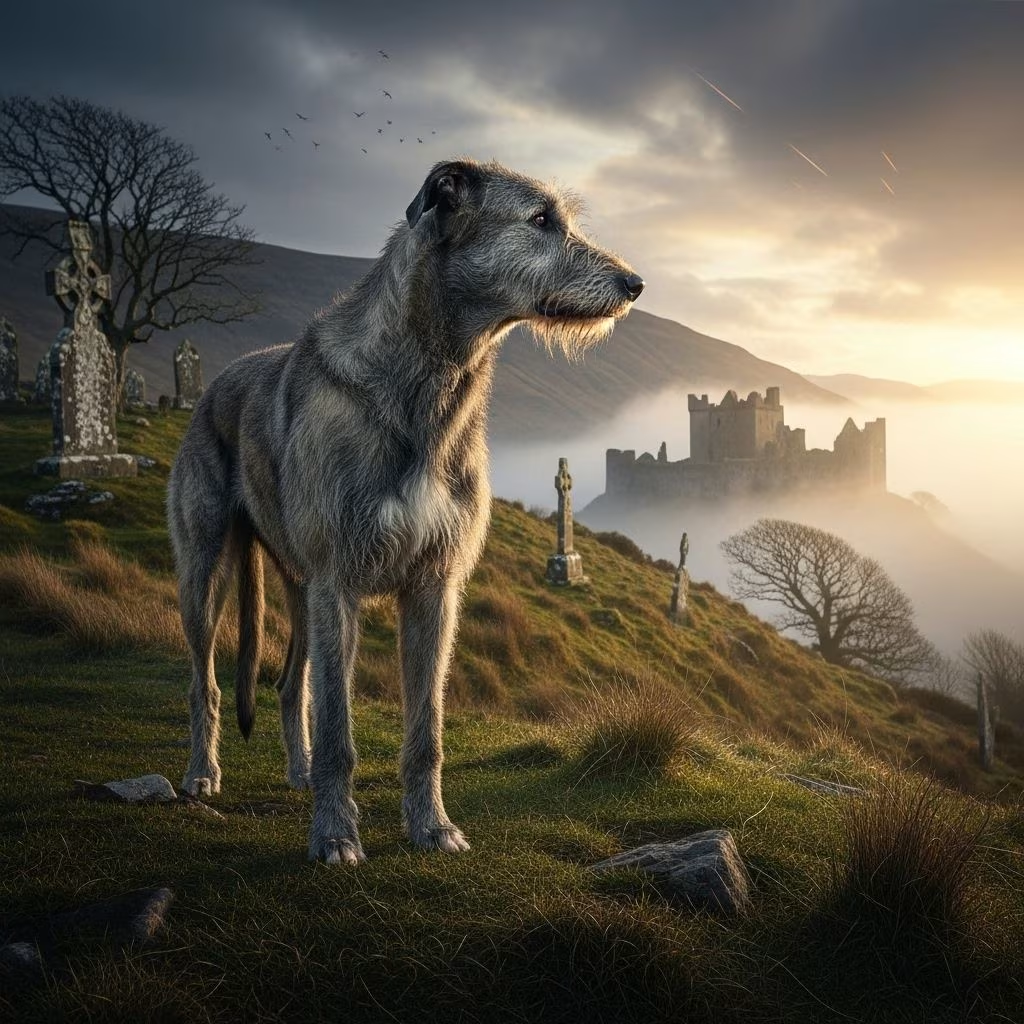
- Height: Males stand at least 32 inches at the shoulder, making them the tallest dog breed in the world. Standing on their hind legs, some may reach seven feet tall.
- Coat: Rough-coated and weather-resistant, with shaggy eyebrows and a wiry texture.
- Build: Built for speed and endurance, with a deep chest and powerful limbs.
The Breed’s Legacy
The Irish Wolfhound remains a living symbol of Ireland’s rich history. Owning one is a connection to the island’s storied past—of epic hunts, legendary battles, and the enduring bond between humans and dogs.
Frequently Asked Questions (FAQs)
Are Irish Wolfhounds aggressive?
Irish Wolfhounds are known for their gentle and affectionate nature, despite their size and history as hunters. Early socialization is key, but they are typically calm and good-natured with families and children.
How did the Irish Wolfhound almost go extinct?
As wolves and elk populations in Ireland declined, the demand for Wolfhounds dropped. By the early 1800s, the breed was rare, and by the mid-19th century, it was considered extinct in its original form.
Who revived the Irish Wolfhound?
Captain George Augustus Graham played a pivotal role in reviving the breed in the 1860s by crossbreeding surviving Irish dogs with Scottish Deerhounds, Great Danes, Borzoi, and Tibetan Mastiffs.
Why were Irish Wolfhounds so valued in ancient times?
They were prized for their size, hunting ability, and as status symbols for royalty. Their courage and loyalty made them legendary among Irish nobility and warriors.
How big do Irish Wolfhounds get?
Males stand at least 32 inches at the shoulder, with some individuals even taller. Their immense size and strength are defining features of the breed.
Conclusion
The Irish Wolfhound is more than a dog—it is a living legend, a testament to Ireland’s cultural and historical legacy. From its origins in Celtic myth, through its near disappearance, and on to its dramatic revival, the breed’s story is one of nobility, loyalty, and enduring fascination. Today, the Irish Wolfhound stands tall—not just as the world’s largest dog, but as a symbol of the past that continues to inspire awe and affection.
References
- https://www.akc.org/expert-advice/dog-breeds/irish-wolfhound-history-behind-the-breed/
- https://www.akc.org/expert-advice/lifestyle/didnt-know-about-irish-wolfhound/
- https://www.iwclubofamerica.org/about-irish-wolfhounds
- https://www.akc.org/expert-advice/dog-breeding/fleetwind-irish-wolfhounds-female/
- https://www.akc.org/expert-advice/lifestyle/irish-dog-breeds/
- https://www.youtube.com/watch?v=umNvAEStcgs