The Origins of the Labrador Retriever
The Labrador Retriever, today renowned as America’s favorite dog breed, traces its roots back over five centuries to the rocky coastlines of Newfoundland, a large island off Canada’s Atlantic shore. Curiously, while the breed is named after the Labrador region—northwest of Newfoundland—its true birthplace is the island itself, not the adjacent territory. From the outset, Labradors have been defined by their utility, adaptability, and companionship, but it took a roundabout journey across continents for the breed to achieve worldwide fame.
Fishing Dogs of Newfoundland: The St. John’s Dog
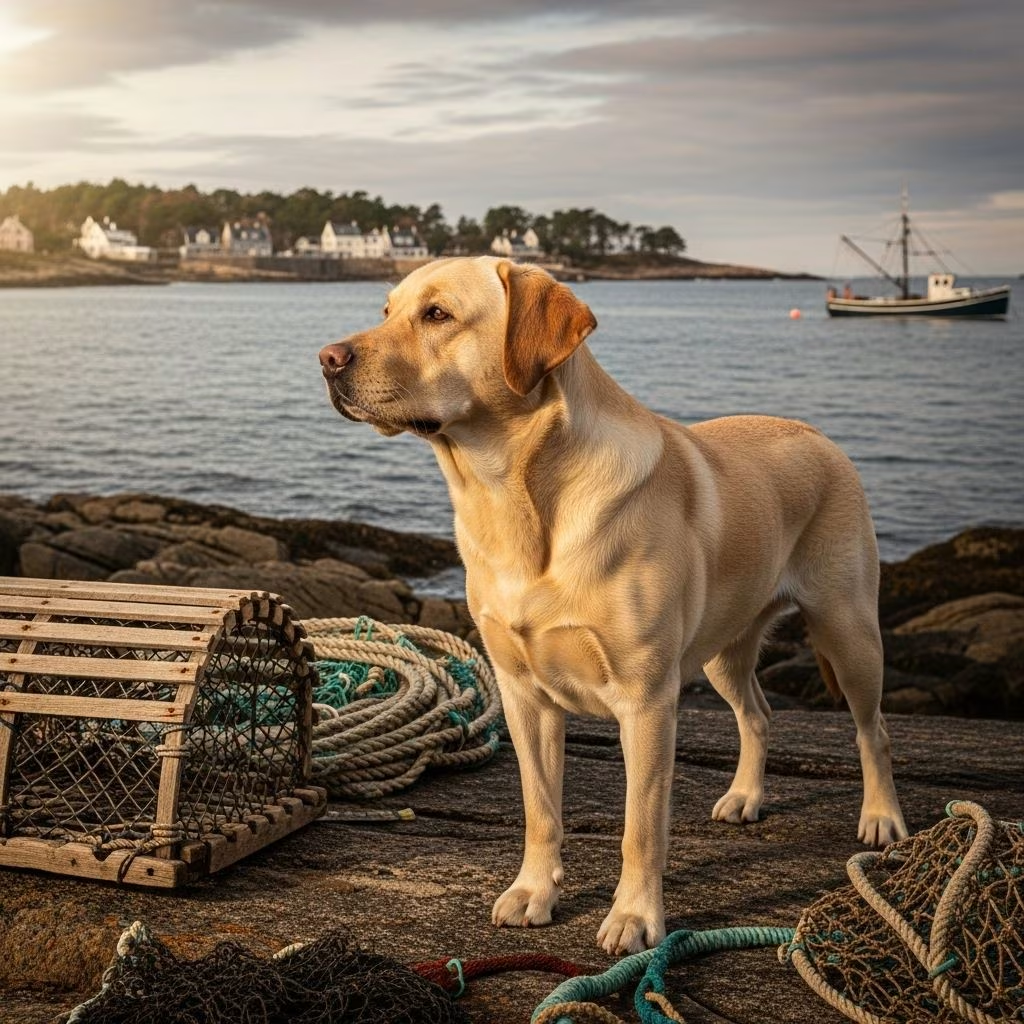
Before European colonization, Newfoundland’s pristine but remote environment saw the mingling of dogs brought by Spanish, French, Portuguese, and British fishermen. These seafarers needed hardy, water-loving dogs to assist with daily tasks—retrieving nets, hauling ropes, and even saving lives in perilous Atlantic conditions. Through centuries of informal breeding, the fishermen of the capital city, St. John’s, produced a balanced and sturdy animal called the St. John’s Dog, the Labradors’ direct ancestor.
- Key traits: Dense, waterproof coat; otter-like tail for agile swimming; athletic build for endurance.
- Temperament: Tireless worker, gentle family companion, loyal, eager to please.
The St. John’s Dog’s signature coat repelled water and provided insulation, while its strong tail acted as a rudder, making it uniquely suited for Newfoundland’s coastal life.
Crossing the Atlantic: From Newfoundland to England
Intense demand for efficient working dogs led to British imports of the St. John’s Dog via trading ships between Newfoundland and Poole, Dorset, in the early 1800s. British sportsmen quickly recognized these dogs’ exceptional talent for retrieving waterfowl, inspiring a new direction for their breeding.
- The 10th Earl of Home, the 5th Duke of Buccleuch, and Lord John Scott first brought St. John’s Dogs to Britain, where they were bred with local hunting dogs to improve their field abilities.
- The breed flourished among British nobility, especially those seeking responsive, fast, and waterproof retrievers for shooting parties.
Patrons of the Early Breed
Early champions of the breed— notably the Earl of Malmesbury, Duke of Buccleuch, and Earl of Home—established foundational bloodlines and formal breeding programs in Victorian Britain. The three noblemen collaborated, sharing bloodstock and breeding strategies.
- Buccleuch’s Avon and Buccleuch’s Ned: These two males, provided by Malmesbury to Buccleuch, are direct ancestors of modern Labradors.
- By 1870, the term Labrador Retriever had become the breed’s common name.
Breed Refinement: The Labrador Retriever in Britain
Formal recognition for the Labrador Retriever approached in the late 1800s and early 1900s, as Britain’s Kennel Club and other associations standardized dog breeds. The breed’s steady rise in popularity coincided with the development of influential kennels and a renewed focus on breed purity, function, and temperament.
Colors and Characteristics
- Black Labradors dominated early records, reflecting the standard coloration of the St. John’s Dog.
- The first liver/chocolate Labrador appeared in 1892 at Buccleuch kennels.
- The first recorded yellow Labrador: Ben of Hyde, born in 1899, at the kennels of Major C.J. Radclyffe.
Official recognition: The breed was acknowledged by Britain’s Kennel Club in 1903, and enthusiasm among sportsmen led to further refinement and stronger documentation of pedigrees.
| Year | Milestone | Location |
|---|---|---|
| 1830s | St. John’s Dogs arrive in Britain | Newfoundland to Poole, England |
| 1870 | Labrador Retriever name popularized | England |
| 1892 | First liver (chocolate) Lab | Buccleuch Kennels |
| 1899 | First yellow Lab (Ben of Hyde) | Hyde Kennels |
| 1903 | Breed recognized by Kennel Club | England |
Influential British Kennels and Champions
- The rise of Munden Labradors (Lord Knutsford) and Banchory Labradors (Lady Howe) helped solidify physical standards and personality traits.
- Many early Labs achieved dual championships in both field work and conformation, highlighting the breed’s versatility.
Exported to America: The Labrador’s Journey Across the Atlantic
World War I accelerated Labrador exportation to the United States, where import restrictions and changing hunting styles created demand for capable retrievers. Initially classified by the AKC as a generic “Retriever,” the breed was officially recognized as the Labrador Retriever in 1917.
- Early American Labs were primarily used as gundogs and for retrieving waterfowl, echoing their Newfoundland predecessors.
- The first AKC field trial specifically for Labradors took place in 1931.
- The Labrador Retriever Club, Inc. was founded the same year, becoming the national parent organization for the breed.
- First AKC Champion: Boli of Blake (1933), a pivotal figure in American Labrador lineage.
Through ongoing field trials, conformation shows, and club dedication, the breed sharpened its reputation—first as a reliable hunter, then as a peerless companion.
The Labrador’s Golden Age: From Field to Family
The period following World War II saw a boom in Labrador numbers and influence, especially in the United States. Imported British bloodlines, notably from Sandylands kennel, helped shape American show lines and field trial champions. Labradors increasingly divided into two broad types: field-bred (emphasizing hunting and athleticism) and show-bred (focusing on conformation and gentle temperament).
- Key bloodlines: Sandylands Mark (England), Shed of Arden (America), Banchory Bolo (linking British and American lines).
- Labrador Retriever Club, Inc. continues to prioritize field performance, helping define the breed’s standards and drive AKC recognition.
- Popularity soared as Labradors became known for their intelligence, loyalty, and trainability in multiple roles—including companion, service, and rescue dogs.
Modern Labrador Retriever: The World’s Favorite Dog
Today, the Labrador Retriever is celebrated worldwide for its versatility, earning top rankings for companion, field, and service work. Its trainability, sociability, and innate desire to please have made it the foundation breed for guide dogs, therapy animals, and search-and-rescue teams.
- For families: Labradors are gentle, playful, and safe with children.
- For hunters: Their keen noses, swimming ability, and retrieving instinct are unmatched.
- For professionals: Labradors excel at advanced obedience, detection, rescue, and assistance duties.
Fun and Surprising Facts About Labradors
- Labradors are famously obsessed with water, thanks to their St. John’s Dog heritage.
- Their “otter” tails act as powerful rudders, improving swimming agility.
- All modern Labradors share ancestry with a few founding lines, especially Buccleuch’s Ned and Avon.
- Though always popular, Labradors didn’t become the top AKC registered breed until the late 20th century.
- Labs remain adaptable—equally comfortable retrieving ducks, assisting the disabled, or simply warming a couch.
Labrador Retriever Breed Profile
| Characteristic | Details |
|---|---|
| Origin | Newfoundland, Canada and England |
| Initial Use | Fishing, retrieving, hunting waterfowl |
| Temperament | Gentle, trainable, energetic, loyal |
| Colors | Black, Chocolate, Yellow |
| Key Traits | Otter tail, dense waterproof coat, athletic build |
| Modern Roles | Family companion, service dog, hunting, therapy, rescue |
The Enduring Legacy of the Labrador Retriever
The Labrador Retriever’s extraordinary journey—from St. John’s docks to global prominence—reflects its adaptability, resilience, and universal appeal. Through wars, changing lifestyles, and evolving kennel standards, Labradors have remained steadfast friends and indispensable working partners. Their influence now spans every continent; no breed is more synonymous with trust, versatility, and joy in canine companionship.
Frequently Asked Questions (FAQs)
Q: Why is the Labrador called “Labrador Retriever” when it came from Newfoundland?
A: The breed developed on the island of Newfoundland, but was named after the neighboring region of Labrador during its establishment in England to distinguish it from the heavier Newfoundland dog.
Q: What made Labradors so popular as hunting dogs?
A: Labradors’ strength, swimming ability, dense coat, and trainable nature made them perfect for retrieving waterfowl and assisting hunters in challenging conditions.
Q: Are all modern Labradors related to Buccleuch’s Ned and Avon?
A: Yes, these two dogs provided by Malmesbury to Buccleuch are considered key ancestors, with direct lines to virtually every Labrador Retriever alive today.
Q: When did Labradors become recognized by the AKC?
A: The breed was officially recognized by the American Kennel Club in 1917, with its popularity and numbers growing steadily thereafter.
Q: What are the three accepted Labrador colors, and when did they emerge?
A: Black was the original and most common color, with chocolate/liver Labradors first documented in 1892 and yellow in 1899 at British kennels.
Q: Why are Labradors so often chosen as service and therapy dogs?
A: Labradors possess intelligence, stability, and eagerness to learn, making them ideal for intensive training, service work, and companionship.
References
- https://www.akc.org/expert-advice/dog-breeds/labrador-retriever-history/
- https://www.akc.org/dog-breeds/labrador-retriever/
- https://www.akcpetinsurance.com/blog/labrador-retriever-history
- https://thelabradorclub.com/club-history/
- https://www.akc.org/expert-advice/dog-breeds/why-labradors-popular/
- https://www.pslra.org/about-labradors/breed-history/
- https://www.akc.org/expert-advice/lifestyle/fun-facts-labrador-retrievers/
- https://en.wikipedia.org/wiki/Labrador_Retriever
- https://www.youtube.com/watch?v=aIA8fKnMjMY