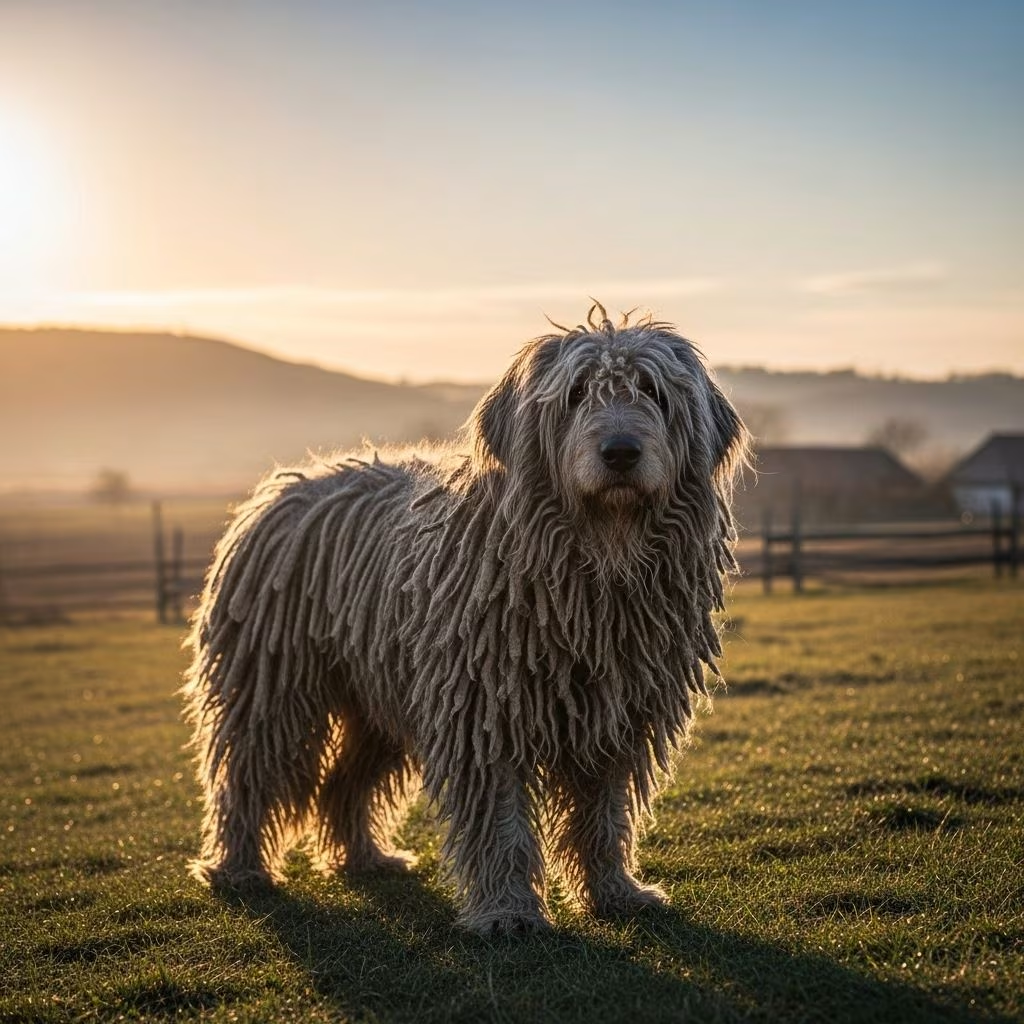
The Komondor stands as one of the most visually striking and historically significant dog breeds in existence. With its distinctive corded white coat that resembles thick dreadlocks or mop strings, this Hungarian livestock guardian commands attention wherever it goes. But beneath that remarkable exterior lies a dog with an ancient heritage, unwavering loyalty, and powerful protective instincts that have been honed over more than a thousand years of selective breeding.
Originally developed to guard livestock on the vast Hungarian plains, the Komondor has transitioned from working the fields to becoming a devoted family companion and property guardian. This breed is not for everyone—their size, independence, and grooming requirements demand an experienced owner who understands the unique needs of livestock guardian breeds. However, for those who can provide the right environment and leadership, the Komondor offers unparalleled devotion and protection.
Origins and History of the Komondor
The Komondor’s history stretches back over a millennium, with roots that connect to the nomadic peoples who traversed the Eurasian steppes. The breed’s name itself reveals its ancient origins—Komondor, or quman-dur, literally translates to “dog of the Cumans,” a reference documented in written records as early as the mid-1500s.
The Cumans were a nomadic pastoralist people believed to have originated in an area of China east of the Yellow River. Despite their Asian origins, historical accounts describe them as having blonde hair and blue eyes, and they spoke an early Turkic language. These nomadic peoples didn’t farm but instead lived in tents and relied primarily on their livestock herds for sustenance, consuming mostly meat, cheese, and milk. Their expertise in livestock breeding was so renowned that they became particularly famous for their cream-colored horses, which were highly prized commodities in trade.
Given their mobile lifestyle and the critical importance of protecting their valuable animal herds from predators like wolves and bears, the Cumans needed a sturdy, loyal, and fearless livestock guardian. The Komondor perfectly filled this role, with its impressively corded coat providing protection from both harsh weather and predator attacks, while also allowing the dog to blend seamlessly into the bleating herds of sheep. This camouflage kept the livestock calm while giving the Komondor the element of surprise when confronting threats.
As the Cumans migrated westward and were eventually absorbed into Hungarian culture centuries ago, the Komondor became firmly established in Hungary. For centuries, Hungarian shepherds valued these dogs for their exceptional guarding abilities, loyalty, intelligence, and fearlessness. The breed’s primary role was protecting sheep and cattle from predators that roamed the Hungarian plains, including coyotes, bears, and wolves.
The Komondor gained official recognition from the American Kennel Club in 1937, marking its entrance into the modern dog fancy. However, World War II nearly devastated the breed, bringing it perilously close to extinction. After the war ended, dedicated breeders worked tirelessly to reestablish the Komondor population by importing dogs from Hungary and other locations, ensuring this ancient guardian breed would survive for future generations.
Physical Characteristics and Appearance
The Komondor is an unmistakable breed, primarily due to its extraordinary coat. Adults typically stand 25.5 to 27.5 inches tall at the shoulder, with males generally being larger than females. In terms of weight, these substantial dogs range from 80 to 130 pounds, with males often reaching the higher end of this spectrum. Their imposing size and powerful build make them formidable guardians capable of confronting large predators.
The breed’s most defining and iconic feature is undoubtedly its coat. The Komondor possesses thick, naturally forming cords that develop as the soft puppy coat transitions into a coarse adult coat. These cords are not artificial or created through grooming—they form naturally as the undercoat becomes entwined with the outer coat. The result is a distinctive corded appearance that covers the entire body, including the head and face, often obscuring the dog’s eyes.
The coat is always white, though it can appear duller or dirtier without regular maintenance. Interestingly, this remarkable coat serves multiple practical purposes beyond its striking appearance. The cords provide excellent insulation, keeping the dog warm in harsh winter conditions while also helping to regulate temperature in summer heat. Additionally, the thick cords act as natural armor, protecting the dog from predator bites during confrontations with wolves, bears, or other threats. The white color allowed shepherds to easily distinguish their guardian dogs from predators, particularly wolves, even in low light conditions.
Beyond the coat, Komondors possess a strong, muscular build suited to their guardian role. They have a broad head, powerful jaws, and a body that combines strength with surprising agility and speed. Their athletic capabilities allow them to leap toward predators to drive them away or knock them down when protecting their charges.
Temperament and Personality
The Komondor’s temperament reflects its centuries-old role as a livestock guardian. These dogs are calm and steady when circumstances are normal, displaying a composed demeanor that belies their readiness to spring into action. However, in cases of perceived threat or danger, the Komondor will leap to defend its charges without hesitation, demonstrating the fearlessness and protective instinct that has been bred into the line for generations.
One of the breed’s most notable characteristics is its intelligence and independent thinking. The Komondor was specifically bred to think for itself, making autonomous decisions about threats and appropriate responses without waiting for human direction. This intelligence and independence made them ideal for protecting flocks on open plains where they might be far from shepherds for extended periods. However, this same trait means they require an experienced owner who can provide firm, consistent leadership.
With family members, the Komondor displays remarkable affection and gentleness. They are particularly gentle with children in their family, though their large size requires supervision during interactions to prevent accidental knocking over of smaller children. The breed forms deep, lasting bonds with family members—once you are considered part of the “flock,” you remain so permanently. Komondors have been known to greet family members they haven’t seen in years as though they had just seen them yesterday, demonstrating the depth and permanence of their attachments.
Regarding strangers, the Komondor is naturally wary but not inherently aggressive. These dogs are instinctively protective of their family, home, and possessions, and will guard them without any formal training. When strangers are present, the Komondor will assess the situation carefully, using its keen instincts to sense intentions. Once it becomes clear that no harm is meant, the dog will typically accept the stranger, though it will remain watchful. However, should the dog decide its flock, territory, family, or master needs protection, it will not hesitate to spring into action with a suddenness and power that can take intruders by surprise.
This protective nature, combined with the breed’s size, power, and speed, makes proper training and socialization absolutely essential. Without appropriate socialization and obedience training, a Komondor may react in an excessively aggressive manner when confronted with new situations or people. Therefore, early socialization—exposing the puppy to various situations, people, and other dogs—is crucial for developing a well-adjusted adult.
Training and Socialization Requirements
Given the Komondor’s size, strength, and protective instincts, obedience training is not optional—it is an absolute necessity. Training should ideally begin early, preferably between 4 and 8 months of age. Komondors are intelligent and capable of learning quickly when training is conducted properly, but they can also be stubborn, particularly when they become bored.
Successful training requires specific approaches tailored to the breed’s temperament. Training sessions must be kept upbeat and happy, as Komondors become obstinate when bored. Praise is essential for motivation, as are consistent and humane corrections. Harsh training methods are counterproductive and can damage the trust between dog and owner. Once a Komondor gets away with unfriendly or hostile behavior, it will often believe such behavior is appropriate going forward. Therefore, consistent corrections even with young puppies are necessary to ensure a well-adjusted adult dog.
Socialization is equally critical to training. The Komondor should be exposed to new situations, people, and other dogs during puppyhood to prevent the development of excessive reactivity or aggression. Because they are natural guard dogs with strong protective instincts, insufficient socialization can result in a dog that overreacts to normal situations, potentially creating dangerous scenarios. Puppy training classes are strongly recommended for all Komondors, as they provide structured socialization opportunities while teaching basic obedience.
Owners must maintain consistent leadership throughout the dog’s life. The Komondor needs to understand its place in the family hierarchy and must respect its owner’s authority. Without clear leadership, these intelligent, powerful dogs may attempt to make their own decisions about what constitutes a threat, which can lead to problematic behaviors.
Grooming and Coat Care
The Komondor’s spectacular corded coat is both the breed’s most distinctive feature and its most challenging aspect in terms of care. While the cords form naturally, they require careful maintenance to ensure they don’t mat together into uncomfortable, unmanageable masses. Grooming a Komondor is significantly different from grooming most other breeds and demands considerable time and dedication.
The corded coat begins developing when the puppy coat starts transitioning to the adult coat, typically around 8 to 12 months of age. During this transition period, owners must carefully separate the forming cords to prevent them from matting together. This process involves gently pulling apart the coat into individual cords, which must be done regularly to maintain proper cord formation. Once established, the cords continue to grow throughout the dog’s life, eventually reaching the ground in mature adults.
Bathing a Komondor presents unique challenges due to the coat’s density and the time required for drying. The corded coat absorbs and holds tremendous amounts of water, and thorough drying can take up to two days, even with the use of fans and other drying equipment. If not dried completely, the cords can develop mildew or unpleasant odors. For this reason, many Komondor owners limit bathing frequency and focus instead on keeping the coat clean through regular inspection and spot cleaning.
Regular maintenance between baths includes checking the cords for debris, separating any cords that are beginning to grow together, and monitoring the skin condition beneath the coat. The dense coat can sometimes hide skin issues, so thorough examination is important for identifying problems early.
Some owners, particularly those not showing their dogs in conformation events, choose to clip the coat short to reduce grooming demands. While this significantly simplifies care, it removes the breed’s most distinctive characteristic and eliminates the protective benefits the corded coat provides. This decision should be made carefully after considering all factors.
Health Considerations
The Komondor is generally a robust and healthy breed, with a lifespan typically ranging from 10 to 12 years. However, like all large breeds, they are susceptible to certain health conditions that potential owners should understand.
Hip dysplasia represents one of the more common concerns in the breed. This developmental condition affects the hip joint, where the ball and socket don’t fit together properly, leading to deterioration over time. Hip dysplasia can cause pain, lameness, and arthritis. Responsible breeders screen their breeding dogs for hip dysplasia and provide certifications from organizations like the Orthopedic Foundation for Animals.
Gastric dilatation-volvulus, commonly known as bloat, is a life-threatening emergency condition that affects deep-chested breeds like the Komondor. In this condition, the stomach fills with gas and may twist on itself, cutting off blood flow and preventing the dog from relieving the gas buildup. Bloat requires immediate veterinary intervention and can be fatal without prompt treatment. Owners can reduce risk by feeding smaller meals throughout the day rather than one large meal, avoiding exercise immediately before and after eating, and using elevated food bowls cautiously or not at all.
Eye problems, including entropion (where the eyelid rolls inward) and cataracts, can occur in the breed. Regular veterinary eye examinations can help identify these conditions early when treatment options may be more effective.
The breed may also be prone to certain skin conditions, though the thick coat can sometimes make these issues difficult to detect. Regular examination of the skin beneath the cords is important for early identification of problems.
Maintaining a healthy weight is crucial for Komondors, as excess weight places additional stress on joints and increases the risk of various health problems. Regular veterinary check-ups, appropriate nutrition, and adequate exercise all contribute to keeping a Komondor healthy throughout its life.
Exercise and Living Requirements
Despite their calm demeanor, Komondors require regular exercise to maintain physical and mental health. These are large, athletic dogs that were bred to patrol extensive territories while guarding livestock. Daily exercise should include walks, opportunities to run in securely fenced areas, and mental stimulation through training or puzzle toys.
However, exercise needs should be balanced with the breed’s working style. Komondors are not high-energy dogs that require constant activity like some herding breeds. Instead, they need moderate daily exercise combined with the opportunity to patrol and monitor their territory. A securely fenced yard where the dog can move about and keep watch is ideal.
Living arrangements significantly impact whether a Komondor is appropriate for a particular household. These are not apartment dogs. Their size, exercise needs, and tendency to bark when alerting to potential threats make them better suited to homes with secure, fenced yards in less densely populated areas. The fence must be sturdy and high enough to contain a large, athletic dog, as Komondors can jump surprisingly well when motivated.
The breed’s protective nature means they will naturally patrol and monitor their territory. This behavior is instinctive and cannot be trained away—it is fundamental to what makes a Komondor a Komondor. Potential owners must be comfortable with having a dog that takes its guardian role seriously and will bark to alert to unusual activity.
Climate considerations are less significant than with some breeds due to the insulating properties of the corded coat. Komondors can handle both hot and cold weather reasonably well, though care should be taken to ensure they have shade and water in hot conditions and that the coat is kept clean and dry in wet weather to prevent mildew development.
Is a Komondor Right for You?
The Komondor is a magnificent breed, but it is decidedly not the right choice for every household. Several factors should be carefully considered before deciding to bring a Komondor into your life.
Experience with dogs, particularly large or guardian breeds, is highly beneficial. First-time dog owners will likely find the Komondor’s size, strength, independence, and protective instincts challenging to manage. These dogs require confident, consistent leadership from someone who understands canine behavior and can establish appropriate boundaries.
Time commitment is another crucial consideration. The grooming requirements alone demand significant time investment, and this breed also requires proper training, socialization, and daily interaction with family members. Komondors that are isolated or neglected can develop behavioral problems.
Living situation matters tremendously. As mentioned, these are not apartment dogs, and they are generally not well-suited to urban environments where their protective barking might disturb neighbors. They thrive in more spacious, rural, or suburban settings where they have room to patrol and where their guardian behaviors are more appropriate.
The financial investment extends beyond the initial purchase price. Komondors require quality nutrition suited to large breeds, routine veterinary care, potential emergency veterinary expenses, training classes, and grooming supplies or professional grooming services if owners choose to use them.
For the right owner in the right situation, however, the Komondor offers unparalleled loyalty, devotion, and protection. These dogs form deep bonds with their families and will guard them fearlessly throughout their lives. Their intelligence, while sometimes challenging, also makes them fascinating companions for those who appreciate working with a thinking dog.
Frequently Asked Questions
Q: How much grooming does a Komondor require?
A: Komondors require extensive grooming commitment. The cords must be regularly separated to prevent matting, which can take several hours per session. Bathing is infrequent but time-consuming, as the coat takes up to two days to dry completely. Daily inspection and maintenance are necessary to keep the coat healthy and clean.
Q: Are Komondors good family dogs?
A: Komondors can be excellent family dogs for experienced owners who understand the breed’s needs. They are gentle and affectionate with family members, including children, though supervision is necessary due to their size. However, their protective instincts and guarding behaviors require proper socialization and training from an early age.
Q: Do Komondors get along with other pets?
A: Komondors can coexist with other pets if properly socialized from puppyhood. However, their strong protective instincts mean they may view unknown animals as potential threats. Early socialization and proper introductions are essential for multi-pet households.
Q: How much exercise does a Komondor need daily?
A: Komondors require moderate daily exercise, including walks and opportunities to patrol a securely fenced yard. They are not high-energy dogs requiring constant activity, but they do need regular physical activity and mental stimulation to stay healthy and content.
Q: Can Komondor coats be trimmed or clipped?
A: While Komondor coats can be clipped for easier maintenance, doing so removes the breed’s most distinctive feature and eliminates the protective benefits the cords provide. Many pet owners choose to keep the traditional corded coat, though those not showing their dogs may opt for clipping to reduce grooming demands.
Q: Are Komondors suitable for first-time dog owners?
A: Komondors are generally not recommended for first-time dog owners. Their size, strength, independent nature, protective instincts, and specialized grooming needs require an experienced owner who can provide confident leadership, consistent training, and proper socialization.
References
- https://www.akc.org/expert-advice/dog-breeds/komondor-history/
- https://en.wikipedia.org/wiki/Komondor
- https://komondorclubofamerica.org/about-the-komondor/
- https://komondorclub.com/about-the-breed/the-history-of-komondor/
- https://mywoof.com/blogs/articles/dog-breed-profile-komondor
- https://www.dutch.com/blogs/dogs/komondor
- https://www.akc.org/dog-breeds/komondor/