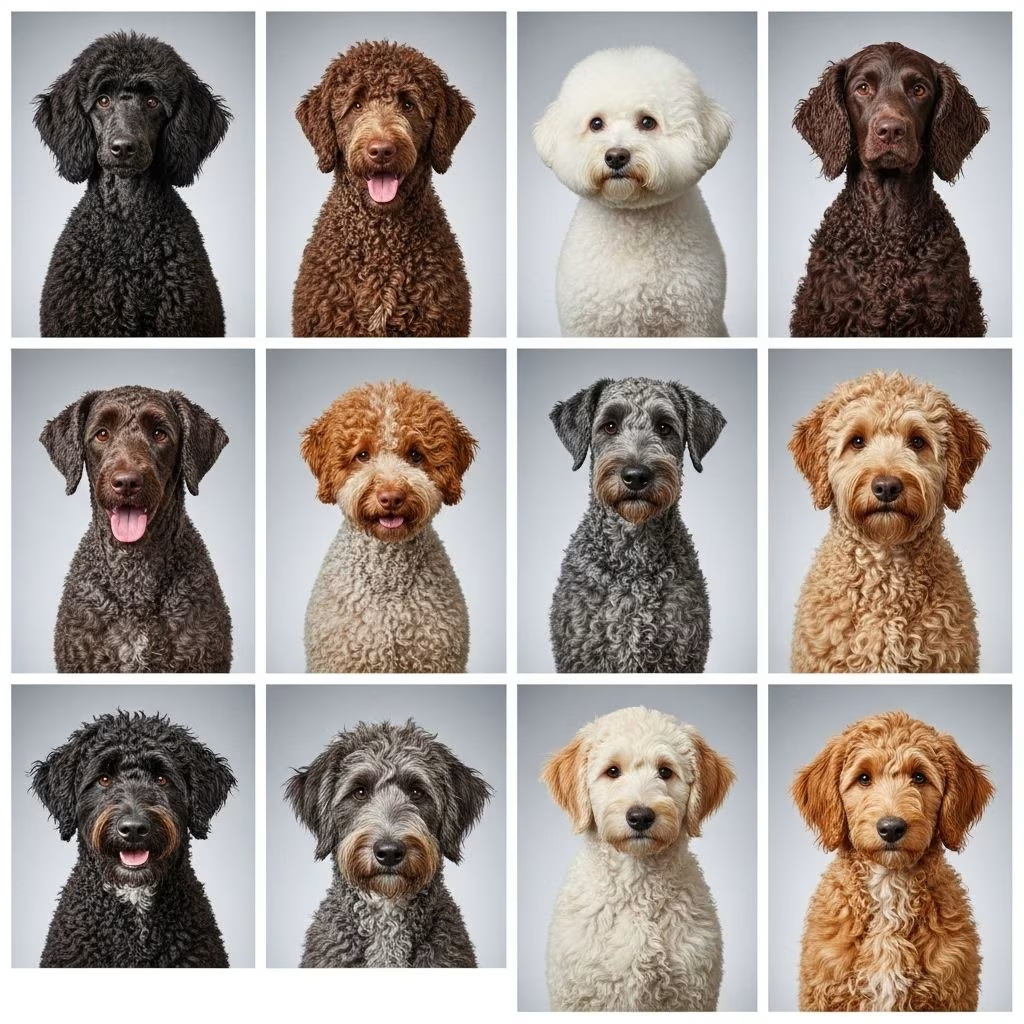
Labradoodle Dog Breed Overview
The Labradoodle is an affectionate, intelligent, and lively dog breed resulting from crossing the beloved Labrador Retriever with the elegant Poodle. Renowned for their intelligence, friendly demeanor, and low-shedding coats, Labradoodles make excellent companion animals and service dogs. This guide explores their fascinating origins, appearance, temperament, care needs, and answers the most common questions for prospective and current owners.
History and Origin
The Labradoodle’s story begins in Australia in the late 1980s, when Wally Conron, working for the Royal Guide Dogs Association, sought to develop a guide dog suitable for people with dog allergies. The first successful cross between a Labrador Retriever and a Standard Poodle produced puppies that possessed the intelligence and gentle temperament of guide dogs while reducing issues for allergy sufferers.
The intention was to combine the Labrador’s friendly, trainable nature with the Poodle’s low-shedding, hypoallergenic coat. Over time, breeders began to select for more consistent traits, introducing additional breeds such as the English and American Cocker Spaniel and, occasionally, the Irish Water Spaniel into the lines. This selective breeding led to the development of the Australian Labradoodle, which is distinct from first-generation Labradoodles.
- First Labradoodle Litter: Produced in Australia in the late 1980s to meet the specific needs of a vision-impaired woman whose husband had allergies.
- Breed Expansion: The early “Labrador-Poodle” cross was well suited for service work, prompting pet breeders to popularize the Labradoodle further.
- Australian Labradoodle: With the addition of other breeds, this line was developed to cement a predictable, desirable coat and temperament, often distinguished as “multigenerational” Labradoodles.
Appearance
Labradoodles are known for their soft, expressive faces and curly or wavy coats, which are typically low-shedding—a prime reason behind their popularity. However, Labradoodles’ appearance can vary significantly, especially among first-generation crosses, due to genetic diversity from both parent breeds.
- Head: Broad and slightly rounded, with a gentle expression and medium-sized, floppy ears.
- Eyes: Large, soulful, and expressive, usually in shades of brown or hazel.
- Build: Athletic yet sturdy, with a balanced, agile posture.
Labradoodle Coat Types
Labradoodles sport a variety of coat types:
- Wool: Tight, curly texture resembling a Poodle’s; usually most hypoallergenic.
- Fleece: Soft, wavy to loosely curled, prized for being easy to manage and low-shedding.
- Hair: Straighter like the Labrador, often less allergy-friendly and prone to shedding.
Labradoodle Coat Colors
- Chocolate
- Cream
- Gold
- Apricot
- Black
- Silver
- Parchment
- Red
- Chalk
- Lavender
- Blueish gray
Labradoodle coats may be solid, have abstract white markings, or display patterns such as parti, phantom, or even tri-colored appearances.
Temperament & Personality
Labradoodles are celebrated for their affectionate, outgoing, and social nature. These dogs thrive on human interaction and are renowned for their intelligence and willingness to please—traits inherited from both parent breeds.
- Friendly: Generally warm, sociable, and enjoy being around people and other animals.
- Intelligent: Quick learners who respond well to training and mental stimulation.
- Active: Energetic and playful, Labradoodles require ample exercise and mental enrichment.
- Gentle: Known for being patient with children, making them excellent family dogs.
- Comical: Many Labradoodles possess a goofy, fun-loving side that endears them even more to their owners.
Due to their intelligence and eagerness to learn, Labradoodles excel as service dogs, therapy animals, and in canine sports such as agility and obedience.
Size & Types
Labradoodles come in three primary sizes, largely determined by the size of the Poodle parent used in breeding. Size has a bearing on energy levels, space requirements, and suitability for various households.
| Type | Weight Range | Height at Shoulder |
|---|---|---|
| Miniature | 18–28 lbs (8–13 kg) | 14–16 inches (35–41 cm) |
| Medium | 26–45 lbs (12–20 kg) | 17–20 inches (43–51 cm) |
| Standard | 45–75 lbs (20–34 kg) | 21–24 inches (53–61 cm) |
The “multigenerational” or “Australian Labradoodle” generally exhibits more consistent traits than first-generation crosses, with further refinements in temperament and coat characteristics.
Grooming & Care
Caring for a Labradoodle requires an understanding of their grooming needs, exercise requirements, and mental stimulation preferences.
Grooming Needs
- Brushing: Most Labradoodles should be brushed 2–3 times weekly to prevent tangling and matting, especially for fleece or wool coats.
- Trimming: Professional grooming every 6–8 weeks helps maintain coat health and cleanliness.
- Bathing: Bathe every few months or as needed, based on activity level and coat oils.
- Ears: Check and clean ears regularly to reduce the risk of ear infections, as Labradoodles’ floppy ears can trap moisture.
- Nail Trimming: Inspect nails every few weeks and trim as needed to avoid discomfort.
Exercise & Enrichment
- Daily Exercise: Labradoodles are energetic and require at least 30–60 minutes of exercise daily, including walks, play, and off-leash runs where safe.
- Mental Stimulation: Incorporate obedience training, puzzle toys, interactive games, and agility activities to challenge their minds.
Health & Lifespan
While Labradoodles are generally healthy, they can inherit health conditions seen in both Labradors and Poodles. Responsible breeders conduct health screenings to reduce the risk of hereditary diseases. The average life expectancy ranges from 12 to 14 years, but this can vary with size, genetics, and care.
Potential Health Concerns
- Hip and elbow dysplasia—common in medium to large breeds.
- Progressive retinal atrophy (PRA)—an inherited eye disorder that can cause blindness.
- Allergies—skin and food sensitivities sometimes occur.
- Ear infections—due to floppy ears.
- Addison’s disease—especially in lines with significant Poodle ancestry.
- Epilepsy—occasionally seen in both parent breeds.
Choosing a reputable breeder who performs appropriate health checks (hips, elbows, eyes, and genetic screening) can help mitigate these risks.
Living with a Labradoodle
Labradoodles are ideal for active families, singles, and seniors alike due to their affectionate, engaging nature. They adapt well to various living environments but thrive best where they have regular interaction and opportunities to exercise.
- Family-Friendly: Get along well with children and other pets.
- Apartment Living: Miniature and medium types can adapt to apartment life if provided with enough exercise.
- Outdoor Activities: Love hikes, swimming, and canine sports.
- Alone Time: Can suffer separation anxiety if left alone for extended periods.
Early socialization and positive reinforcement training help ensure Labradoodles become well-mannered, confidence, and happy companions.
Frequently Asked Questions (FAQs)
Q: Are Labradoodles hypoallergenic?
A: While Labradoodles are often promoted as hypoallergenic, individual dogs may still shed or cause allergic reactions. Multigenerational Australian Labradoodles are more likely to produce consistent, allergy-friendly coats, but no dog is truly 100% hypoallergenic.
Q: How much do Labradoodles shed?
A: Shedding varies. Fleece and wool coats typically shed less than hair coats. First-generation Labradoodles (F1) are more likely to shed, whereas multigenerational Labradoodles are purpose-bred to be low-to-non-shedding.
Q: What is the difference between Labradoodles and Australian Labradoodles?
A: The original Labradoodle is a direct cross between a Labrador Retriever and a Poodle. The Australian Labradoodle, developed in Australia, typically has additional breeds (such as Cocker Spaniel or Irish Water Spaniel) in its ancestry and is bred for more predictable coat and temperament traits.
Q: Are Labradoodles easy to train?
A: Yes, Labradoodles inherit intelligence and eagerness to please from both parent breeds, making them highly trainable. Consistent, positive reinforcement methods work best.
Q: Do Labradoodles require a lot of exercise?
A: Yes, Labradoodles are active dogs and need daily exercise to maintain their physical and mental health. Without regular activity, they may develop boredom-related behaviors.
Q: Are Labradoodles good with children and other pets?
A: Labradoodles are well-known for their patience and gentle nature with children, and they usually get along with other pets, especially when socialized from a young age.
Q: Can Labradoodles live in apartments?
A: Miniature and medium Labradoodles can adapt to apartment living provided they receive enough exercise and attention. Standard Labradoodles generally do better in homes with more space.
Q: How often should I groom my Labradoodle?
A: Regular brushing (2–3 times per week) and professional grooming every 6–8 weeks is recommended to prevent mats and keep their coat healthy. Frequency depends on the coat type and activity level.
Q: Do Labradoodles bark much?
A: Labradoodles typically are not excessive barkers, but they may alert their owners to visitors or strange noises. With proper training and socialization, barking is usually manageable.
Q: What is the average cost of a Labradoodle puppy?
A: Prices can vary by breeder, lineage, size, and location but often range from $1,500 to $3,000, with multigenerational Australian Labradoodles tending to be on the higher end. Always choose a reputable breeder prioritizing health and temperament.
Labradoodles have won admirers across the globe for their endearing personality, intelligence, and versatile coats. Whether as family pets, service animals, or therapy dogs, Labradoodles continue to grow in popularity as companions who bring both joy and comfort to their families.
References
- https://legendarylabradoodles.com/labradoodles-101.html
- https://canadoodles.com/about-labradoodles/history-of-the-labradoodle/
- https://agapelabradoodles.com/the-history-of-the-labradoodle/
- https://brownslabradoodles.com/blog/2023/6/30/the-surprising-origins-of-labradoodle-puppies-a-fascinating-history
- https://en.wikipedia.org/wiki/Labradoodle
- https://www.poochandmutt.co.uk/blogs/by-breed/labradoodle
- https://www.gorgeousdoodles.com/helpful-labradoodle-information/labradoodle-history/