Pembroke Welsh Corgi: An Enchanted History
The Pembroke Welsh Corgi enjoys a place of honor in canine history, known as much for its charm and intelligence as for its long-standing service to Welsh farmers and its status as a royal favorite. With roots entwined in legend and folklore and a journey through centuries as a dedicated working dog, the Pembroke has evolved into one of the world’s most beloved breeds.
Ancient Origins: A Breed of Legend and Utility
The origins of the Pembroke Welsh Corgi are shrouded in both ancient history and fable. The breed is believed to have arrived in Pembrokeshire, Wales, as early as the 10th or 11th century, possibly brought by Flemish weavers who settled in the area. These settlers may have introduced dogs similar to the Schipperke and Pomeranian, which contributed to the Pembroke’s ancestry. Over generations, these spitz-type dogs adapted to the Welsh landscape and the needs of local farmers, developing into the sturdy, short-legged herders we recognize today.
- Spitz Heritage: The Pembroke is part of the spitz family, marked by a pointed muzzle, fox-like face, and erect ears, sharing ancestry with breeds like the Swedish Vallhund and Norwegian Buhund.
- Ancestors: Possible descent from dogs brought by Vikings and Flemish settlers, including the Schipperke and Pomeranian.
- First Roles: Served as versatile farmhands—herding cattle, guarding livestock, and eliminating vermin.
Pembrokes in Welsh Folklore
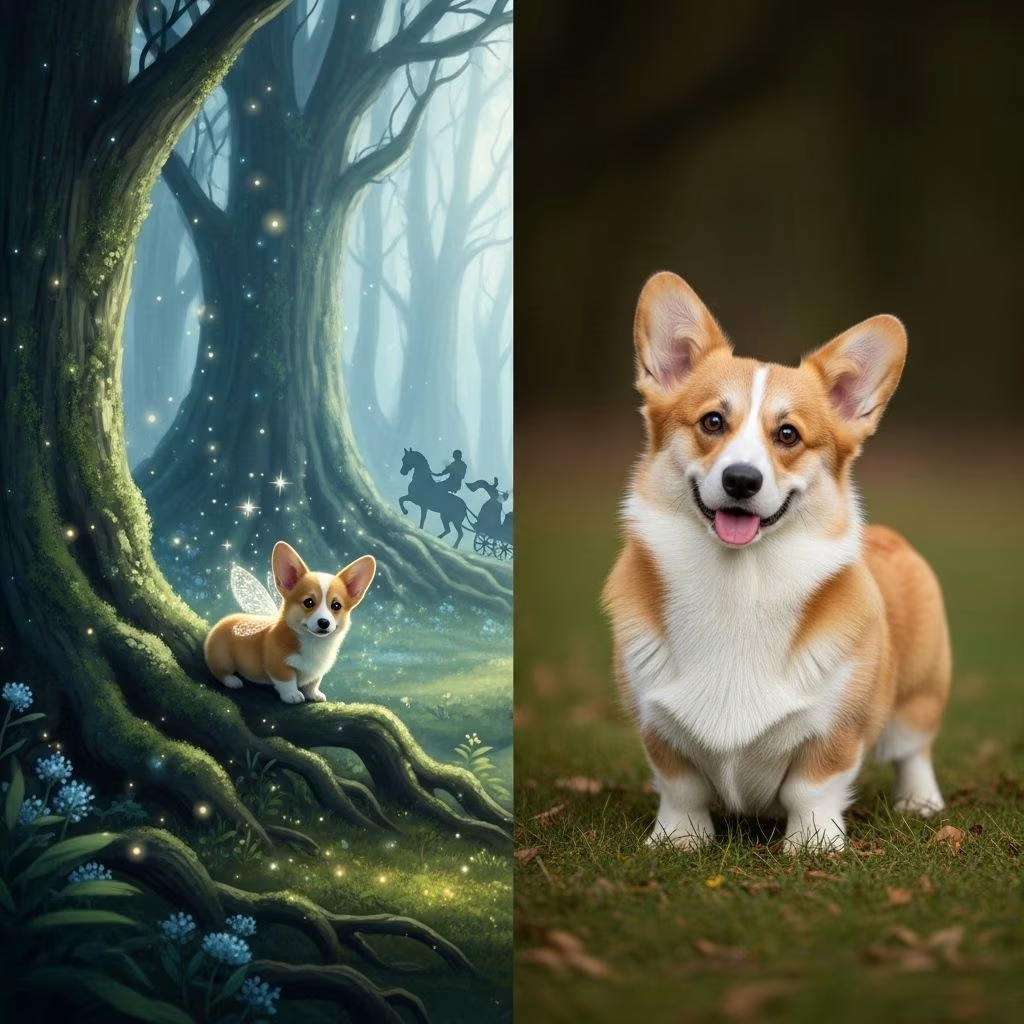
Few breeds are as enmeshed in legend as the Pembroke Welsh Corgi. According to Welsh tales, these “enchanted” dogs were favorites of fairies and elves. Some stories claim corgis pulled fairy coaches, herded fairy cattle, and even carried elfin warriors into battle. Devotees point to the faint markings on a Pembroke’s coat—known as “fairy saddles”—as evidence of their magical heritage.
The Pembroke as a Farm Dog
Beyond myth, Pembrokes earned their reputation through hard work. They were indispensable on Welsh farms, thanks to their intelligence, energy, and agility. Their primary responsibility was moving cattle to and from pastures, a task made possible by their small stature and surprising speed. These little dogs were bold enough to nip a cow’s heels but agile enough to avoid a kick.
- Herding: Efficiently moved cattle through fields, acting as the farmer’s right hand.
- Guarding: Protected other livestock and family members from predatory animals.
- Rodent Control: Helped keep barns and granaries free from rats and mice.
Such versatility made the Pembroke valuable in the rugged rural landscape of Wales, where dogs often had to perform any task not requiring legs longer than their own 12-inch height.
Physical Traits and Breed Identity
The Pembroke’s appearance is as memorable as its character. Key features include:
- Fox-like face and sharp muzzle
- Large, erect, pointed ears
- Short, straight legs
- Sturdy, athletic build
- Tail: Distinct from the Cardigan Welsh Corgi, the Pembroke is typically tailless or docked, which sets it apart visually.
The Pembroke’s unique physique, adapted for close work with livestock, has helped it stand out in the dog world, both as a working breed and as a show dog.
Pembrokes and Their Spitz Relatives
While the Corgi’s forebears include various Nordic breeds, its resemblance to the Swedish Vallhund is striking, suggesting a common lineage. Traits like a foxy face, high-set tail, and compact, powerful body are hallmarks of the spitz group and are shared with other cousins such as the Norwegian Buhund and Schipperke.
The Evolution of the Pembroke as a Recognized Breed
Division from Cardigan Welsh Corgis
The term ‘corgi’ once referred to all Welsh herding dogs, but by the early 20th century, breeders and fanciers recognized significant differences between the Pembroke and Cardigan types. Initially shown together, the two breeds began to diverge. The Cardigan, with a longer body and tail, traces an older lineage, while the Pembroke is distinguished by its lack of tail (natural or docked), lighter build, and different ear shape.
- 1920s: The British Kennel Club recognizes “Welsh Corgis” as an official breed.
- 1934: Pembrokes and Cardigans receive separate breed status within the Kennel Club (England).
- Physical distinctions become standard: Tail-less or docked in Pembrokes, full tails retained in Cardigans. Differences in body shape, ear size, and overall proportions are formalized.
The Royal Connection: Queen Elizabeth II and the Corgis
The fame of the Pembroke Welsh Corgi soared thanks in large part to the British royal family’s adoration. The breed’s most famous patron, Queen Elizabeth II, has owned over thirty corgis throughout her long reign. The Queen received her first Pembroke, Dookie, in 1933, and the dogs became permanent fixtures in the royal household. Their presence in the public eye fueled a surge in demand and affection for the breed.
- Royal association: The Pembroke became a symbol of British royalty and was popularized globally through the Queen’s affection for the breed.
- Enduring legacy: The Queen’s lineage of Pembrokes contributed to a breed identity steeped in both tradition and celebrity.
The Pembroke Comes to America
The breed’s transatlantic journey began in 1934, when Mrs. Lewis Roesler, a Massachusetts-based breeder, imported two English Pembroke Corgis—Little Madam and Captain William Lewis. These dogs became the breed’s American pioneers, registered with the American Kennel Club (AKC). The Pembroke quickly gained followers among dog fanciers and, in 1935, ‘Little Madam’ became the first American Pembroke champion.
- 1936: The Pembroke Welsh Corgi Club of America (PWCCA) was founded, fostering breed awareness and rigorous standards.
- Initial status: Early Pembrokes in America were primarily working farm dogs but soon found esteem as show dogs and loyal companions.
Popularity and the Modern Pembroke
A combination of royal endorsement, versatile skills, and magnetic personality sparked the Pembroke’s ascent in popularity throughout the 20th century and into the 21st.
- Mid-20th century: The breed rose steadily in AKC registrations, reflecting broader appeal beyond agricultural life.
- Family pet and competitor: Pembrokes are now rarely called upon to herd cattle, but their intelligence and vigor shine in diverse canine sports—agility, obedience, tracking, conformation, and herding trials.
- Popularity statistics: The Pembroke ranked 50th in AKC registrations in 1968, 25th in 2004, and surged to 11th by 2023, evidence of enduring and growing admiration.
- Global reputation: The breed’s association with showmanship, adaptability, and household companionship boosts its fame worldwide.
Why Are Pembrokes So Popular?
- Friendly ‘Up’ Personality: Pembrokes are known for their cheerful demeanor, always eager to participate in any activity with family or in competition.
- Intelligence: Quick-witted and highly trainable, they excel in sports and as attentive companions.
- Compact Size: Their manageable stature makes them suited to both rural and city households.
- Versatility: Whether working, competing, or cuddling at home, Pembrokes thrive in varied roles.
How the PWCCA Shaped the Breed
Since its founding in 1936, the Pembroke Welsh Corgi Club of America (PWCCA) has played a crucial role in safeguarding and promoting the breed’s heritage, health, and welfare in the United States. The club organizes shows, sets breed standards, educates the public, and ensures ethical breeding practices.
- Pioneers efforts in breed rescue, health screening, and education.
- Supports activities that highlight Pembroke capabilities, such as herding and agility trials.
- Works with breeders to maintain breed type and spirit.
Pembroke Welsh Corgi vs. Cardigan Welsh Corgi
| Feature | Pembroke Welsh Corgi | Cardigan Welsh Corgi |
|---|---|---|
| Tail | Short (docked or naturally absent) | Long, bushy |
| Body Shape | More compact, lighter | Longer, heavier set |
| Ears | Smaller, pointed, upright | Larger, more rounded |
| Ancestry | Spitz-type, Flemish roots | Celtic, possibly older lineage |
| Recognition Year (KC/AKC) | 1934 (Separate from Cardigan) | 1934 (Separate from Pembroke) |
Pembroke Welsh Corgi in the Modern World
Though their herding days are mostly behind them, Pembrokes continue to thrive as family pets, competitors, and therapy animals. Their keen intelligence, adaptability, and affectionate temperament make them cherished by owners worldwide. Breed clubs, dedicated breeders, and Corgi enthusiasts help maintain the health and vitality of these remarkable dogs, ensuring their legacy for generations to come.
Pembroke Welsh Corgi Fun Facts
- Fairy tale marks: Some Pembrokes are said to have “fairy saddle” marks on their coats—an echo of their magical origin story.
- Royalty’s companion: No dog breed is more connected to the current British monarchy than the Pembroke Welsh Corgi.
- Corgi means ‘dwarf dog’ in Welsh: Fitting for their diminutive stature and heritage.
- All-around athlete: Excels in agility, herding, obedience, and therapy roles.
Frequently Asked Questions (FAQs)
Q: What distinguishes the Pembroke Welsh Corgi from the Cardigan Welsh Corgi?
A: The Pembroke is tailless (either docked or naturally bobbed), has a more compact body, and smaller, sharper ears, while the Cardigan has a full tail, a heavier build, and larger, more rounded ears.
Q: Why are Pembroke Welsh Corgis associated with royalty?
A: Queen Elizabeth II’s lifelong fondness for Pembroke Welsh Corgis made them internationally famous, elevating the breed’s popularity and status.
Q: Are Pembroke Welsh Corgis still used as herding dogs?
A: While modern Pembrokes rarely herd cattle, their intelligence and agility make them proficient in herding trials and a range of canine sports.
Q: What is the temperament of the Pembroke Welsh Corgi?
A: Pembrokes are intelligent, energetic, friendly, and highly responsive to their owners, making them adaptable companions for various activities.
Q: How has the Pembroke Welsh Corgi’s popularity changed over time?
A: Once solely Welsh farm dogs, Pembrokes have become a top choice globally, ranking high in AKC popularity lists due to their charm, adaptability, and royal associations.
References
- https://www.akc.org/expert-advice/dog-breeds/pembroke-welsh-corgi-history/
- https://www.akc.org/dog-breeds/pembroke-welsh-corgi/
- https://www.akc.org/expert-advice/lifestyle/fun-facts-pembroke-welsh-corgi/
- https://www.akc.org/about/archive/guide-collections/pembroke-collection/
- https://www.akc.org/expert-advice/lifestyle/the-queens-royal-corgis/
- https://www.youtube.com/watch?v=1WkS9suafQU
- https://en.wikipedia.org/wiki/Pembroke_Welsh_Corgi
- https://akc.tv/pembroke-welsh-corgi