


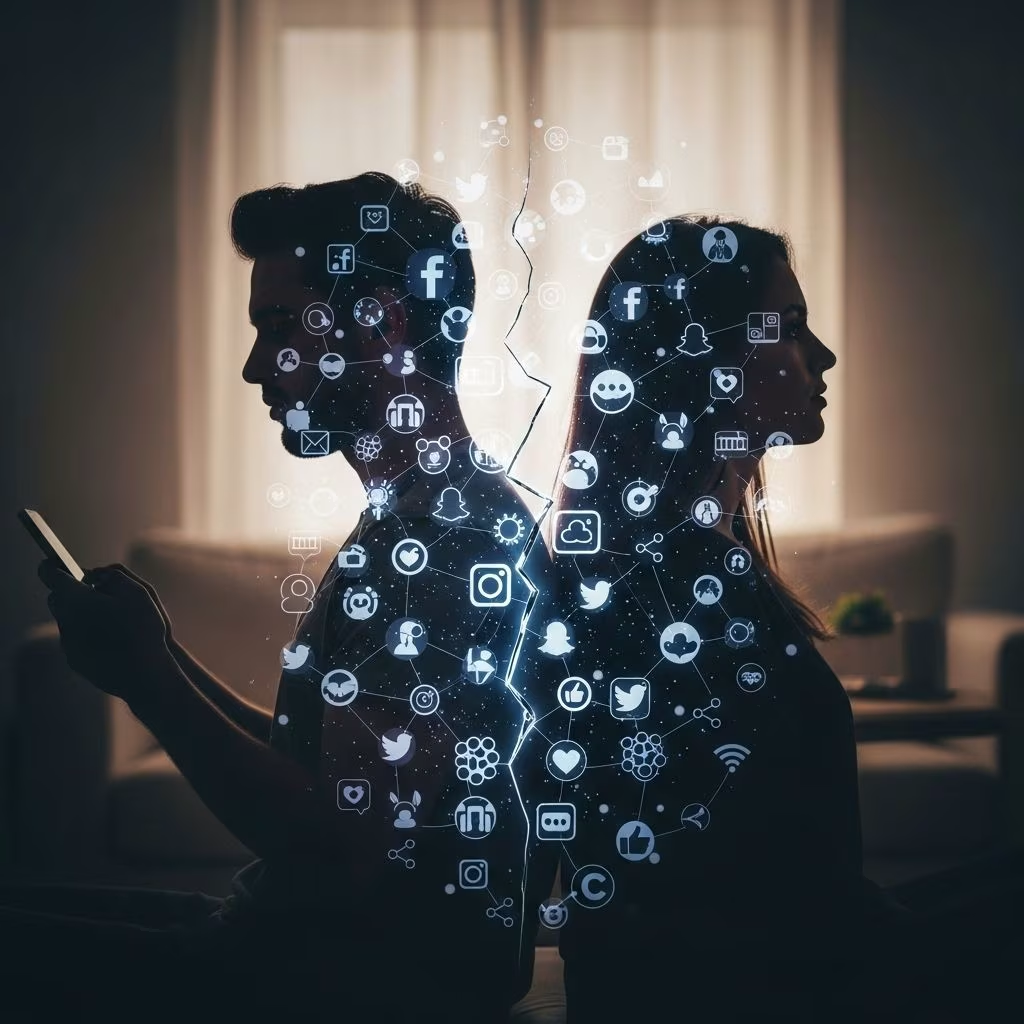
10 Ways Social Media Has Undermined the Modern Relationship
In just over a decade, social media has radically transformed the landscape of love and romantic partnership. While these platforms connect us, they have also introduced new complications, anxieties, and doubts. Here are ten ways social media has undermined the modern relationship, changing the way people meet, interact, fight, and sometimes, separate for good.
1. The Illusion of Unlimited Options
Social media platforms present the facade of infinite possibilities. Every swipe, follow, or friend request can feel like an invitation to something new. Psychologists note that this abundance of perceived alternatives can reduce satisfaction with one’s current partner and foster a perpetual search for something “better.”
- Apps like Instagram or Facebook expose users to attractive profiles, subtly undermining contentment with existing relationships.
- The paradox of choice can trigger commitment-phobia and difficulty investing in a single relationship.
Instead of strengthening bonds, social media can turn relationships into a revolving door of what-ifs and never-weres, fueling discontent and restlessness in romantic connections.
2. Comparisons and Competition
Platforms encourage the constant sharing of life’s highlights—lavish dates, gifts, and smiling couple photos. This creates a culture of comparison where individuals measure their relationships against the curated, often filtered presentations of others.
- Perpetual exposure to others’ “perfect” moments can lead to envy, inadequacy, and resentment.
- This competition for perceived happiness erodes genuine connection and appreciation for the unique strengths of one’s own relationship.
In the race to keep up appearances, couples may lose sight of the private joys that make their partnership meaningful.
3. Digital Jealousy and Surveillance
Likes, comments, new followers, and online activity can easily breed suspicion. Unlike real-world interactions, every digital trace is permanent and open for scrutiny, sometimes interpreted in ways that sow mistrust.
- People monitor partners’ profiles for likes, comments, or friend additions, seeking hidden meaning in harmless interactions.
- Jealousy sparked by digital exchanges can ignite unnecessary arguments, exacerbating insecurity and controlling behaviors.
Constant digital surveillance turns once-private relationships into open books, making mutual trust harder to maintain.
4. Publicizing Private Matters
Arguments that used to occur behind closed doors now spill into the public arena via status updates, subtweets, or cryptic stories. The urge to share, vent, or garner sympathy with an online audience can escalate conflicts and undermine intimacy.
- Disagreements become entertainment for followers rather than opportunities for constructive dialogue between partners.
- Public displays of dispute can deepen wounds, invite outside judgment, and make private reconciliation more difficult.
The line between private life and public persona blurs, often at the cost of genuine resolution and healing.
5. Seeking Validation From Strangers
In the digital age, affirmation sometimes comes less from a partner and more from followers, friends, or even strangers. The dopamine hit of likes and comments reinforces external validation at the expense of authentic, interpersonal support.
- Individuals may focus more on how their relationship is perceived online than on its actual quality.
- This search for virtual approval risks reducing real connection to an afterthought.
When relationship worth depends on digital applause, essential conversations and gestures between partners may be neglected.
6. The Past Never Really Stays in the Past
Exes, old flames, and former friends remain a tap away. Social media makes reconnecting with past partners easier than ever, occasionally reviving old attachments or igniting new temptations.
- A harmless “Hey, how have you been?” message from an ex can easily spiral into emotional infidelity.
- Reminders of former relationships, visible on both partners’ feeds, may sow seeds of insecurity and comparison.
The ease of accessing old relationships can complicate closure and trust in current ones.
7. Mistaking Online Connection for Real Intimacy
Text messages, emojis, and social updates can provide a veneer of closeness while failing to foster genuine emotional intimacy. Non-verbal cues—a key element in understanding and empathy—are usually absent.
- Digital communication is more prone to misunderstanding, with words lacking tone and context.
- Constant, superficial digital exchanges often replace deeper, face-to-face conversations needed for lasting bonds.
True intimacy thrives in presence, vulnerability, and undistracted engagement, qualities that are difficult to convey online.
8. Distraction and Eroded Quality Time
Notifications, scrolling, and endless content can siphon attention away from a partner in the same room. The need to “stay connected” with others may undermine connection in the relationship right in front of us.
- Partners may feel ignored or undervalued as devices compete for attention.
- Moments that should be shared—meals, conversations, relaxation—are interrupted by the pull of apps and messages.
Scheduling quality, device-free time together has become essential to maintaining real presence and intimacy.
9. Loss of Privacy and Increased Scrutiny
Many aspects of relationships—anniversaries, proposals, breakups—are documented and shared. This “shared to the world” mentality invites commentary and can pressure couples to perform rather than simply live their lives.
- Events are staged for digital attention, making authentic celebration or conflict resolution more challenging.
- Even private successes or struggles can become fodder for online gossip and analysis.
Protecting privacy and keeping certain moments sacred can help couples maintain a healthy boundary between digital life and real life.
10. The Fragility of Digital Connections
Breakups that once occurred quietly can now be relived publicly. Photos, tagged posts, and shared memories may linger online long after a relationship ends.
- Deleting, blocking, or unfollowing can become dramatic acts, sometimes provoking additional hurt.
- Lingering online reminders of an ex can complicate healing or closure.
The digital traces of past relationships cast long shadows, influencing how we navigate and recover from heartbreak.
Table: Key Impacts of Social Media on Modern Romantic Relationships
| Impact | Description | Result |
|---|---|---|
| Unlimited Options | Endless access to new people | Reduced commitment |
| Comparison Pressure | Seeing curated happy relationships | Insecurity, envy |
| Digital Jealousy | Monitoring online interactions | Suspicion and fights |
| Public Drama | Broadcasting arguments | Escalates conflict |
| Validation Seeking | Chasing likes/comments | Neglect of real intimacy |
| Past Resurfacing | Easy to contact ex-partners | Temptation and mistrust |
| Superficial Communication | Lack of non-verbal cues | Misunderstandings |
| Distraction | Constant notifications | Lost quality time |
| Loss of Privacy | Exposure to public judgment | Pressure to perform |
| Post-breakup Lingering | Past posts remain online | Difficulty moving on |
Tips for Navigating Social Media in Modern Relationships
- Establish mutual boundaries around friend requests, messaging, and public posting.
- Have regular discussions about digital habits and expectations.
- Create device-free zones or times to encourage real presence and shared activity.
- Resist broadcasting every private moment to the world; cherish some things offline.
- Address jealousy or insecurity head-on with open, honest conversations.
- Be mindful of reconnecting with the past; check motives before reaching out to exes online.
- Support one another’s self-esteem beyond likes and external validation.
Frequently Asked Questions (FAQs)
Q: How does social media most commonly hurt relationships?
A: The most common issues are jealousy over online interactions, unhealthy comparisons to others’ relationships, and reduced quality time or attention between partners due to distraction.
Q: Is it ever positive for relationships?
A: Social media can help maintain long-distance relationships and make communication more flexible, but it requires intentional use and strong boundaries.
Q: Can social media lead to infidelity?
A: Yes, platforms make it easy to connect with new or former partners, and studies suggest an uptick in affairs linked to online encounters.
Q: What’s the best way to protect a relationship from social media’s negative effects?
A: Communicate openly with your partner, establish clear digital boundaries, set aside tech-free relationship time, and avoid airing private conflicts online.
Q: Why do people compare their relationships to others online?
A: Social media highlights only the best aspects of people’s lives, creating unrealistic standards and making users feel their relationships are insufficient by comparison.
Conclusion
While social media has unlocked new ways to connect, express love, and share life’s journey, it has also introduced complex challenges to modern relationships. The digital age demands that couples remain vigilant, intentional, and communicative to defend the integrity of their connection from digital distractions, insecurity, and the ever-watchful eyes of the online world.
References
- https://mindbodycounselingreno.com/blog/relationships/how-social-media-affects-relationships/
- https://rubymediagroup.com/ny-social-media-expert-kris-ruby-discusses-how-social-media-can-impact-marriage-and-divorce/
- https://community.thriveglobal.com/social-media-s-impact-on-self-esteem/
- https://www.elitedaily.com/life/changing-social-media-habits/1674645
- https://www.elitedaily.com/dating/photo-relationship-social-media/1601522
- https://pmc.ncbi.nlm.nih.gov/articles/PMC8279499/
- https://www.psychologytoday.com/us/blog/a-deeper-wellness/202308/how-your-social-media-habits-are-damaging-your-relationships
- https://www.theodysseyonline.com/social-media-destroy-relationships


