


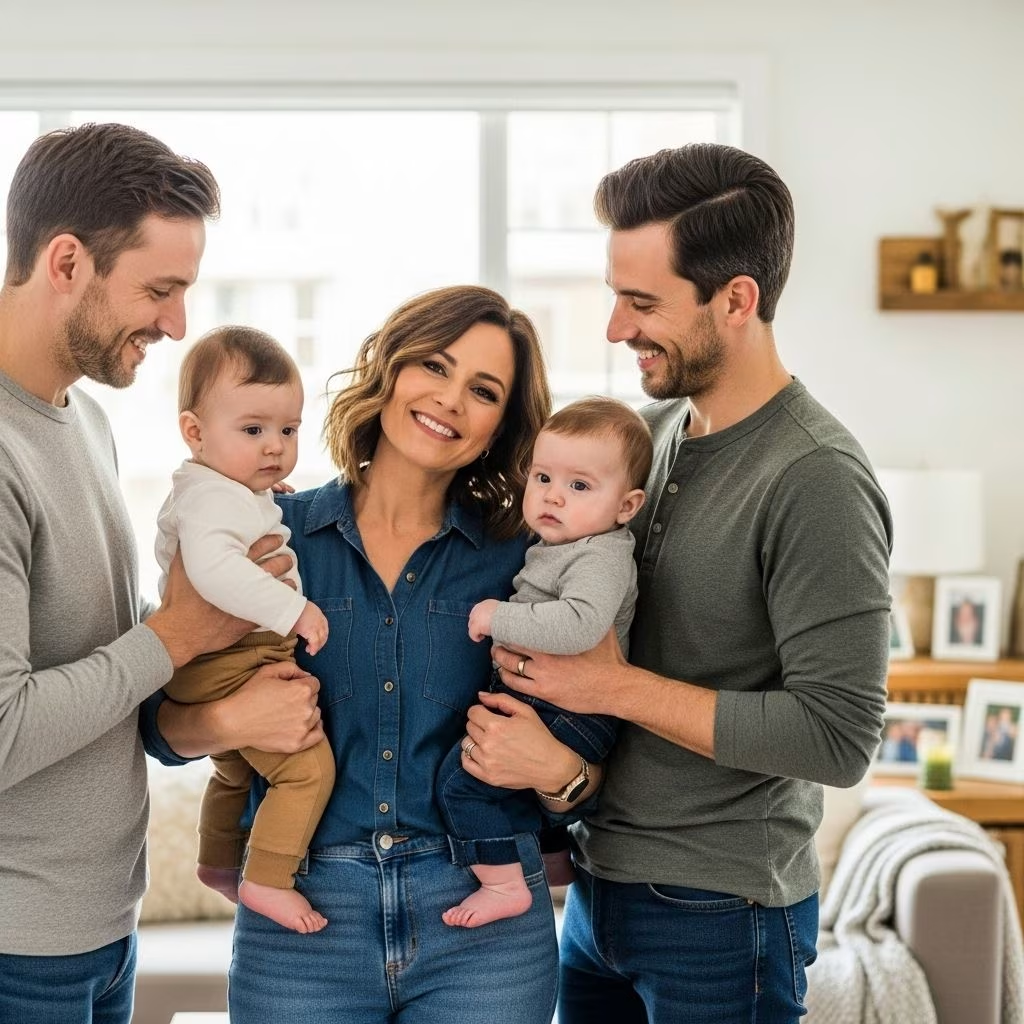
Why I Carried My Gay Brother’s Babies—Twice
When people think of family, they often imagine a unit defined by unconditional love and devotion. For some, that bond is tested and proven in extraordinary ways. This is the story of how one woman, motivated by love for her gay brother, chose to carry not one but two babies for him and his partner, guiding her family through a profound surrogacy journey that reshaped their lives and perspectives.
A Promise That Started Decades Ago
The roots of this unique family story were planted long before anyone realized their significance. When Clinton came out as gay, his sister Rhiannon immediately offered to help him become a father one day. “When Clinton came out to our family, the first thing I said was that I’d help him to have a baby when the time was right,” she recalls. At the time, Clinton may have dismissed it as a loving but impossible gesture—yet Rhiannon’s promise was heartfelt and enduring.
The First Steps Toward Surrogacy
For Clinton and his partner Callum, building a family required navigating complex emotional and legal terrain. The couple weighed options—adoption, international surrogacy, and IVF (in vitro fertilization)—only to find roadblocks and obstacles at nearly every turn. Both adoption and overseas surrogacy proved prohibitively complicated, with unclear laws and potential for heartbreak. That was when the couple’s original, deeply personal offer from Rhiannon appeared not just viable but essential.
The Surrogacy Process: Navigating Laws, Emotions, and Family Ties
Surrogacy in Australia, as in many parts of the world, is strictly regulated. Rhiannon’s journey as a surrogate combined years of counseling, legal reviews, and fertility treatments. She had to undergo psychological assessment, fertility screening, and legal consultations to ensure everyone’s rights—and the baby’s interests—were protected.
- Australian law forbids commercial surrogacy, allowing only altruistic arrangements among close family or friends.
- Adverts for surrogates are prohibited; all parties must complete formal agreements and counseling.
- There is a six-week period after birth before parental rights can be transferred in court.
Despite the challenges, Rhiannon never doubted her commitment, calling the process “a dream come true.” Her sense of purpose deepened after the birth of Clinton and Callum’s first daughter, Zara, in 2014.
Becoming a Surrogate: The IVF Journey
The medical process began with in vitro fertilization (IVF). Rhiannon would become the gestational carrier for embryos created using an egg donor and sperm from Clinton and Callum. A critical early step involved a year’s worth of counseling aimed at ensuring everyone proceeded with full awareness of the responsibilities, risks, and emotional complexities involved.
In 2014, Rhiannon delivered Zara, healthy and loved. Far from being “just” a surrogate, she embraced her dual role as both birthing parent and aunt—a relationship that only deepened when, after Zara’s birth, Rhiannon surprised everyone, herself included, by deciding she “couldn’t wait” to help again.
The Second Time: Love Enlarged, Not Divided
Amidst the exhaustion of new motherhood—a state many would describe as overwhelming—Rhiannon found herself yearning to give her niece Zara the ultimate gift: a sibling. Despite the physical demands and the delicate emotional landscape of surrogacy, she reaffirmed her commitment. Three weeks before the article’s publication, Rhiannon gave birth to Clinton and Callum’s second daughter, Aiden, thus completing the family in a way that felt preordained.
Sibling Bonds and the Meaning of Family
For Clinton, the words “thank you” paled in comparison to the enormity of what his sister had done. The act of carrying his children not once, but twice, deepened their bond in ways words cannot fully capture. Clinton has since pondered how to tell his daughters about the remarkable journey that brought them into the world—a journey as scientific as it was sentimental, as legal as it was loving.
As Rhiannon puts it: “We’re a modern family, and I wouldn’t have it any other way.”
The Emotional Complexities of Sibling Surrogacy
While the story brims with love and triumph, sibling surrogacy is not without its challenges:
- Emotional boundaries can blur: Counseling and honest discussion are vital.
- Extended family reactions may range from supportive to conflicted.
- Society’s judgments can cause stress, requiring resolve and a tight-knit support circle.
But, as Rhiannon and Clinton’s family discovered, openness, frank conversation, and shared purpose saw them through the difficult moments.
Why Sibling Surrogacy Is Uniquely Special
Few family arrangements feel as intimate and generous as a sibling carrying a child for a brother or sister. For LGBTQ+ couples, this pathway to parenthood is especially poignant because:
- It preserves a biological link between the intended parent and child.
- It ensures the surrogate’s values, health history, and intentions are clearly known.
- The child can grow up knowing their birth story as part of a loving narrative rather than a transactional arrangement.
Legal and Cultural Challenges: A Landscape in Flux
While Rhiannon’s journey had a happy ending, the trip wasn’t smooth for all. In Australia and other countries, surrogacy laws are evolving—sometimes slowly and unevenly. Some challenges include:
- Unclear or restrictive laws that can make even altruistic surrogacy complex to navigate.
- Medical and psychological screening requirements that, while well-intentioned, may delay or even derail surrogacy plans.
- Increasing demand for surrogacy, leading to more families sharing their stories and advocating for reform.
| Aspect | Australia | United Kingdom | United States (select states) |
|---|---|---|---|
| Commercial Surrogacy | Prohibited | Prohibited | Varies: Allowed in some |
| Altruistic Surrogacy | Permitted | Permitted | Permitted |
| Allowed for LGBTQ+ Couples? | Yes | Yes | Varies by state |
When “Aunt” Means More Than Biology
Rhiannon’s story has touched many, not just for its optimism, but for making visible an important truth: Families come in many forms, and love can transcend biology, labels, and even legal frameworks. For Zara and Aiden, their aunt Rhiannon’s act will forever be a thread in the fabric of their family narrative—a powerful lesson in selflessness and devotion.
Other Stories: Families Built Through Sibling Surrogacy
While rare, Rhiannon’s experience echoes a growing number of stories worldwide. Another UK family, for instance, recently made headlines when a mother of six became a surrogate twice for her gay brother and his partner. In the US, more siblings are choosing surrogacy or egg donation to help one another create families when laws and biology present barriers. These stories remind us that non-traditional families are gaining acceptance and visibility, thanks in part to the bravery and generosity of people like Rhiannon.
Changing Attitudes and Growing Acceptance
Changing laws, improved fertility options, and greater acceptance of LGBTQ+ families are shifting the conversation around parenting and surrogacy. What was once a hidden or stigmatized journey is now a topic of national dialogue, inspiring others to consider what family truly means.
Frequently Asked Questions
Is it legal for siblings to be surrogates for each other in Australia?
Yes, provided the arrangement is altruistic and undertaken without commercial payment. A thorough legal and counseling process is required, and parental rights are transferred in court after a waiting period.
What are the psychological impacts of sibling surrogacy?
Most families report a deepening of bonds. However, careful counseling is critical to ensure clear boundaries, prevent resentment, and manage complex emotions on all sides.
How are children told about their surrogacy story?
Openness is key. Many families choose to tell their children their origin stories from the start, emphasizing the love and thoughtfulness involved in their arrival. Books, family photos, and open conversations are common approaches.
What should someone consider before agreeing to be a surrogate?
- The physical and psychological demands of pregnancy and childbirth.
- The legal and emotional complexities involved.
- The clarity of boundaries and relationships after the baby is born.
Key Takeaways from Rhiannon’s Story
- Surrogacy is more than a medical procedure; it is a family journey laden with love, legalities, and emotional growth.
- Siblings can make extraordinary surrogates, provided they have open communication, professional guidance, and mutual respect.
- Modern families are defined by intention and love—not simply by biology or tradition.
- Sharing these stories challenges stigma and encourages legal and social progress worldwide.
Resources and Further Reading
- Consult accredited surrogacy and fertility clinics for up-to-date legal advice in your region.
- Organizations such as Rainbow Families and Pride in Diversity offer community and advice for LGBTQ+ parenting and surrogacy.
- Support groups exist for surrogates, intended parents, and donor-egg families, often providing critical peer-to-peer insight and encouragement.
Final Reflection: Expanding the Meaning of Family
Rhiannon’s journey as a surrogate twice over for her gay brother is more than a medical achievement—it is a testament to the evolving nature of what it means to be family. As more people choose to document and share these stories, a new era of openness, empathy, and understanding promises to redefine the limits of love, commitment, and kinship in our society.
References
- https://www.the-independent.com/life-style/health-and-families/health-news/gay-couple-surrogate-sister-twice-australia-rhiannon-stevens-melbourne-clinton-callum-baby-a7477366.html
- https://www.youtube.com/watch?v=zjUT6PpPIgw
- https://www.timesnownews.com/the-buzz/article/woman-becomes-surrogate-mother-for-her-gay-brother-and-partner/726190
- https://www.fertilityiq.com/fertilityiq/articles/how-my-sister-became-our-egg-donor
- https://instinctmagazine.com/sister-gives-her-brother-his-husband-the-gift-of-love-life-twice/


