


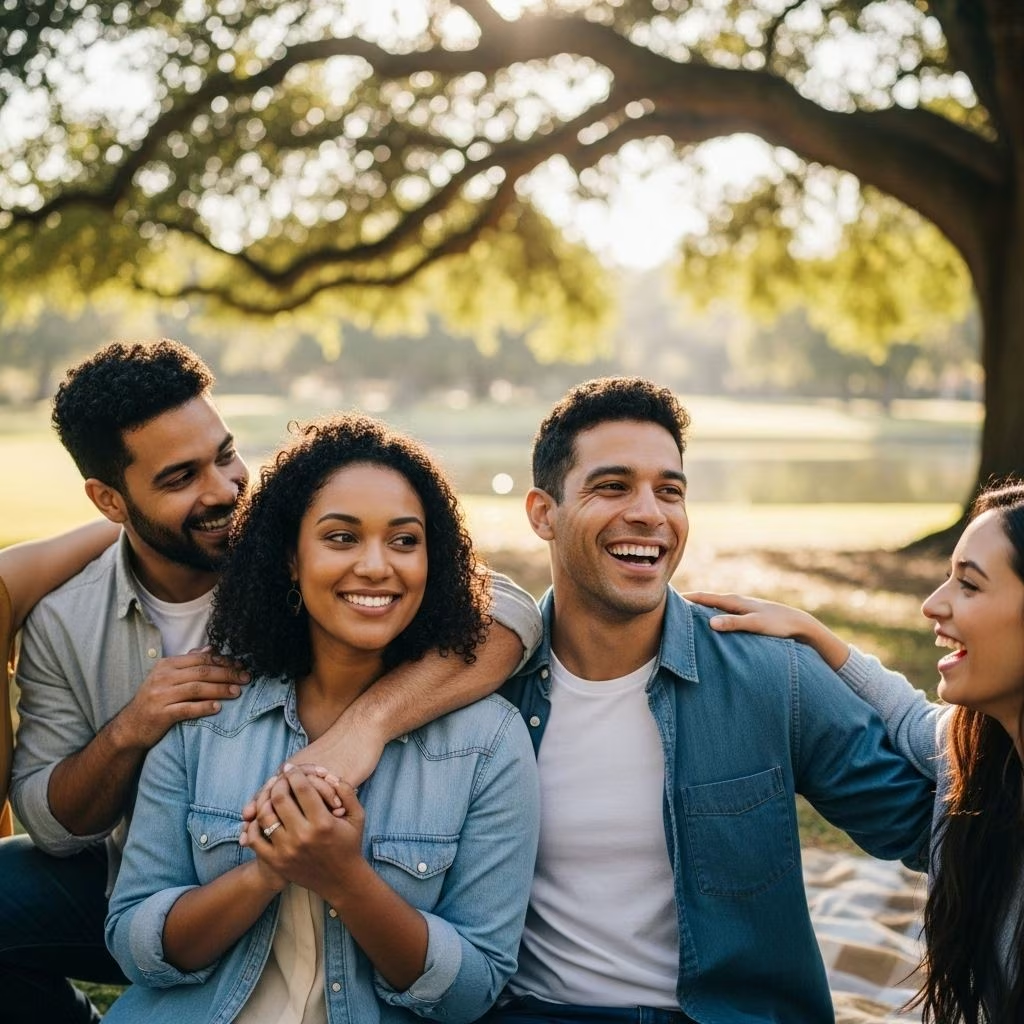
How To Not Be The Worst To Your Friends When You’re in a Great Relationship
New love is exciting, exhilarating, and all-consuming. But as anyone who’s watched a close friend vanish into coupledom knows, it’s all too easy to lose sight of old friendships when romance seems to take over your life. The art of being a good friend while in a relationship lies in balance, sensitivity, and consideration. Here’s a comprehensive guide to maintaining meaningful friendships without neglect—even while basking in the glow of a happy relationship.
Why Prioritizing Friendships Matters
Romantic partners offer companionship, support, and joy—but friends are foundational for personal growth, emotional wellness, and resilience. They provide perspective that’s not colored by romance, help us practice vulnerability, and offer support during life’s inevitable curveballs. Maintaining strong friendships can even make your romantic relationship healthier by keeping your identity well-rounded and your emotional needs diversified.
Core Principles for Healthy Friendships in Relationships
- Mutual Respect: Value your friends’ experiences, even if they’re different from your own current reality.
- Consistent Communication: Stay in touch and make time for meaningful conversations beyond surface-level check-ins.
- Healthy Boundaries: Know when to separate romance from friendship gatherings, and respect social cues.
- Emotional Generosity: Show up for your friends’ milestones and rough patches—not just your own.
Common Pitfalls to Avoid
- Neglect: Gradually reducing contact or canceling plans due to your relationship without explanation can make friends feel sidelined.
- Unintentional Exclusion: Frequently bringing your partner to friend-only events can make others uncomfortable.
- Constant Boasting: Dominating conversations with relationship updates can come across as insensitive.
- Unsolicited Advice: Offering guidance based solely on your romantic happiness may seem patronizing.
Don’t Brag About Your Happiness
It’s natural to feel elated about a new relationship, but repeatedly sharing romantic highs can distance you from friends who might be struggling with love, enjoying singlehood, or simply not interested. Here’s how to keep perspective:
- Gauge the mood before launching into relationship anecdotes.
- Avoid statement comparisons (e.g., “I’m so much happier now than when I was single”).
- Save in-depth love stories for those who actively ask to hear them or are especially interested.
- Recognize that your friends’ emotional needs may be different from your own.
Quick Tips:
- If you catch yourself steering every conversation toward your new partner, pause and refocus.
- Ask your friends about their lives, challenges, or recent adventures to show genuine interest.
Don’t Give Unsolicited Love Advice
Your relationship might feel like a case study in happiness, but each friendship has its own pace, needs, and wisdom. Offering advice unasked, especially in the form of “what worked for me and my partner,” can be off-putting—even if your intentions are good.
- Wait until your friends directly ask for your opinions on their romantic situations.
- Avoid framing your advice as superior or universal wisdom.
- Be a sounding board rather than a lecturer; empathize first, share your experience later (if requested).
Empathy First
Remember: most people want to feel listened to, not fixed. Supporting friends through relationship struggles is about validation, not solutions—unless explicitly invited to give them.
Don’t Bring Your Partner Everywhere (Unless Invited)
Your partner is a wonderful addition to your life, but not every invitation extends to them by default. Some gatherings are meant for friends only, offering intimacy and inside jokes built over years. Respect your friends’ need for this space by:
- Only bringing your partner to events where they’re specifically asked to come.
- Checking in advance with hosts if you’re unsure whether your partner is invited.
- Being okay with spending time apart from your partner; friendships deserve exclusive attention.
When to Include Your Partner
- Group events where everyone is bringing a guest.
- Special occasions where your partner and friends already know each other well.
But avoid assuming “the more the merrier” for every get-together.
Managing Changing Dynamics
As life evolves, so do friendships and relationships. Circumstances—work, family, new priorities—mean it’s unrealistic to expect the same intensity from every friendship as you transition into a relationship. However, being attentive to shifts can prevent misunderstandings.
How to Address Feeling Left Out (for Friends)
If you feel neglected because your friend is preoccupied with their relationship, open communication is key:
- Find a calm time to share your feelings without blame (e.g., “I miss hanging out with you”).
- Focus on your needs, not your friend’s shortcomings.
- Be patient—adjustments in priorities are normal and don’t have to mean the end of closeness.
- Ask for specific changes (“Can we have a friend catch-up this month?”).
When Friendships Teach Us About Relationships
According to many relationship experts and anecdotal accounts, friendships lay the groundwork for healthy romantic partnerships. What we practice with friends—trust, apology, gratitude, vulnerability—translates to our dating lives. For example, learning to apologize when we’ve genuinely let a friend down sets the stage for humility and resolution in romance. Being grateful for a friend’s support makes it more natural to express thanks in a relationship.
Friendship Lessons for Love
- Vulnerability: Genuine friendships allow us to show our true selves, making it easier to be open and authentic as romantic partners.
- Trust: Knowing how to trust a friend prepares you to trust a romantic interest—an essential foundation for love.
- Gratitude: Recognizing and expressing thanks for your friends’ support increases emotional connection in all areas of life.
- Apology and Accountability: Addressing mistakes and making amends with friends equips you to do the same in your relationship.
Balancing Friendships and Relationships: A Practical Approach
Finding harmony takes ongoing awareness. Here are actionable strategies to stay present for your friends while growing your relationship:
- Schedule Regular Friend Time: Set aside time—even if infrequent—for one-on-one friend dates or check-ins. Treat these as seriously as “date night.”
- Practice Good Listening: Make conversations a two-way street. Avoid defaulting to relationship talk unless prompted.
- Celebrate Your Friends: Show up for milestones, birthdays, or achievements—even if it requires advance planning.
- Respect Independence: Maintain your own hobbies, interests, and social life outside your relationship. This enriches both your friendship and your romance.
Friendship Vs. Relationship: Key Differences
| Friendship | Relationship |
|---|---|
| Room for multiple close bonds | Often centered on a primary, exclusive partner |
| May span years or decades | Can progress more quickly, sometimes life-changing in months |
| Usually lower expectations regarding time and exclusivity | Often involves daily or consistent interaction, emotional and physical commitment |
| Less likely to involve jealousy or possessiveness | Can trigger strong emotions about loyalty, attention, or exclusivity |
Ways To Show Appreciation For Friends
- Send a thoughtful message or card just because.
- Recall inside jokes or shared memories to strengthen your unique bond.
- Support them during tough times without expecting anything in return.
- Celebrate their personal wins—even the small ones.
Gratitude grows connections. A small gesture of appreciation can reassure your friends that they’re still a meaningful part of your life, regardless of romantic changes.
Frequently Asked Questions (FAQs)
Q: Is it normal for friendships to change after starting a relationship?
A: Yes, shifting priorities are a normal part of adult life. The goal is to adapt without abandoning core connections. Open communication keeps friendships strong through change.
Q: What if my friends dislike my partner?
A: Be attentive to their reasons. Listen to their concerns with an open mind but maintain boundaries. Ultimately, your decisions about romantic life are yours, but true friends will raise concerns with your best interests at heart.
Q: How do I reconnect if I’ve unintentionally neglected a friend?
A: Reach out honestly. Acknowledge your absence, apologize sincerely, and suggest a meetup or call. Be ready to listen and make a sustained effort over time.
Q: Should my partner and friends always get along?
A: While it’s ideal, it’s not required for harmony. Respectful coexistence is enough, and you can nurture each relationship individually if needed.
Q: Is it okay to decline bringing my partner to certain events?
A: Absolutely. Your friendships are unique and can thrive with one-on-one time. Just communicate clearly with both your friends and your partner about expectations.
Key Takeaways for Nurturing Friendships in Relationships
- Avoid bragging or making others feel “less than” about their romantic status.
- Don’t offer advice unless asked—be a listener first.
- Keep romance and friendship spaces distinct unless inclusion is explicitly welcomed.
- Practice gratitude, accountability, and appreciation for the role of friends in your life.
- Balance requires conscious effort but brings long-term happiness both in friendship and romance.
Being a good friend when you’re in a relationship isn’t just possible—it’s essential for a rich and fulfilling life. Continue to nurture and honor your friendships as they have helped shape the person you are for your partner—and your future self.
References
- https://www.elitedaily.com/dating/how-to-be-a-good-friend-relationship/1810915
- https://www.elitedaily.com/dating/friendship-key-successful-relationship/1622656
- https://livingthesecondact.com/2019/08/13/friendship-expectations-how-high-is-too-high/
- https://drdanielleforshee.com/elite-daily-how-to-tell-your-friends-in-relationships-you-feel-left-out-miss-them/
- https://thehobbyistpost.wordpress.com/elite-daily/


