


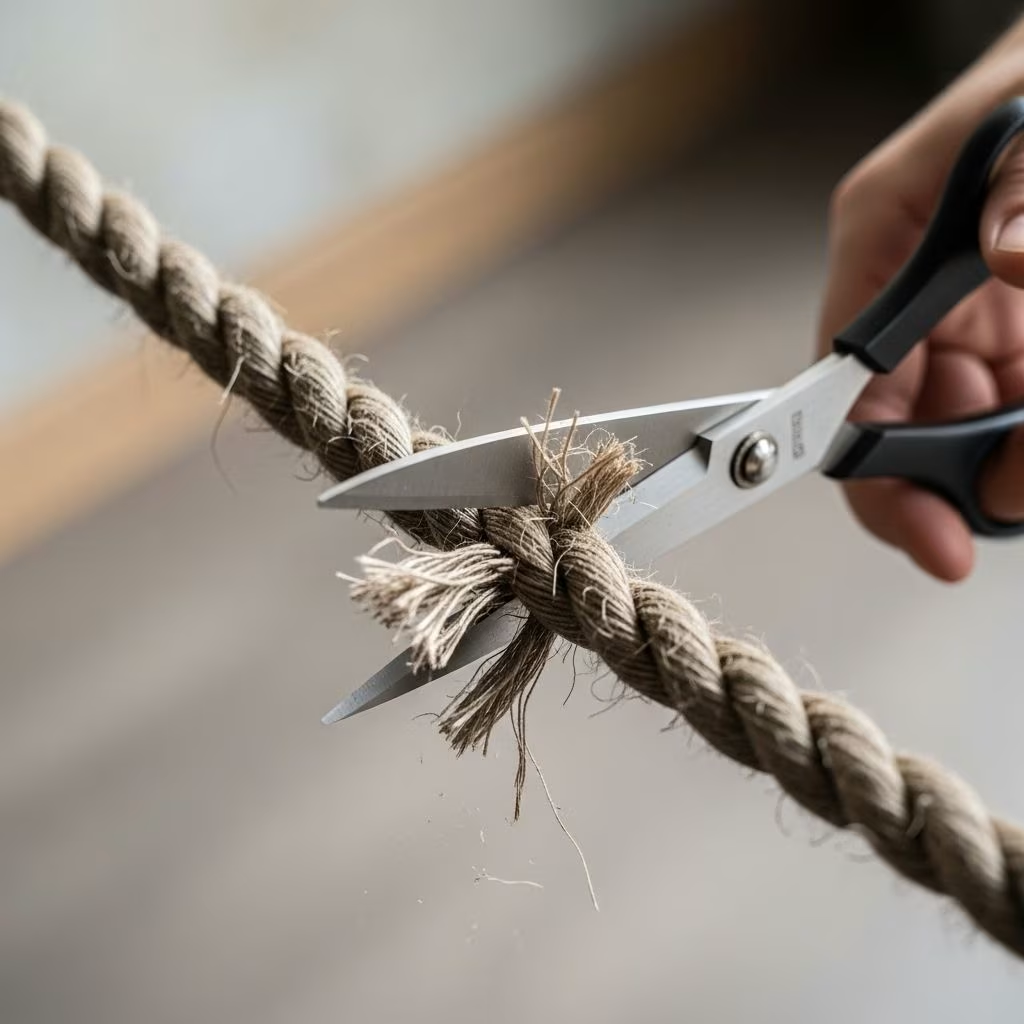
Navigating the complex world of romantic relationships requires more than just finding the right person—it demands significant personal growth and self-awareness. For many individuals, especially those who have experienced repeated relationship failures, the journey toward lasting love begins with transforming fundamental aspects of how they approach partnerships. The path to finding and maintaining a healthy relationship often requires confronting uncomfortable truths about ourselves and making conscious decisions to change deeply ingrained patterns of behavior.
Relationships don’t fail solely because of incompatibility or bad timing. More often, they crumble under the weight of unrealistic expectations, poor communication habits, and an unwillingness to adapt and grow alongside another person. The good news is that these patterns can be broken with intentional effort and honest self-reflection. Understanding the specific mentality shifts required for relationship success can be transformative, turning serial relationship failures into opportunities for genuine connection and lasting partnership.
The Challenge of Modern Love
Finding love in today’s world presents unique challenges that previous generations didn’t face. The abundance of dating options through apps and social media creates a paradox of choice, making it difficult to commit to one person when countless alternatives are just a swipe away. This reality, combined with delayed professional satisfaction and an overall cultural aversion to commitment, has fundamentally altered how people approach relationships.
Some individuals naturally possess personality traits that make relationships easier—they’re more agreeable, adaptable, and emotionally available. For others, particularly those with strong opinions, high expectations, or a need for control, building successful partnerships requires conscious effort and significant personal development. The journey often involves extensive self-reflection, honest conversations with friends who serve as informal therapists, and a willingness to acknowledge and address personal shortcomings.
The reality is that not everyone is equally equipped to handle the demands of a committed relationship. Some people must work harder than others to develop the emotional maturity and behavioral flexibility that healthy partnerships require. This isn’t a personal failing—it’s simply an acknowledgment that different personalities face different challenges when it comes to love and intimacy.
Understanding the Power of Expectations
Expectations in relationships occupy a complex middle ground—they’re neither entirely positive nor completely negative. On one hand, having clear standards about what you want and need from a partner demonstrates self-respect and emotional clarity. On the other hand, rigid expectations can become weapons that destroy budding connections before they have a chance to flourish.
The critical distinction lies between knowing what you want and trying to force someone to become what you want. When you enter a relationship with a predetermined checklist of behaviors and characteristics your partner must exhibit, you’re setting up both yourself and your partner for failure. Pressure, guilt-tripping, and manipulation—no matter how subtle—typically produce the opposite of the desired effect. Most people instinctively resist being molded or controlled, even when the person applying pressure believes they’re acting in the relationship’s best interest.
Consider this powerful analogy: imagine repeatedly visiting a small corner market that displays a prominent sign reading “We Do Not, Nor Will We Ever, Have Milk.” Despite this clear message, you continue returning to that store, each time becoming frustrated and disappointed when you discover they still don’t carry milk. This scenario perfectly illustrates how many people approach relationships—they choose partners who clearly cannot or will not meet their fundamental needs, then expend enormous energy trying to change the unchangeable.
The healthier approach involves honest assessment of compatibility from the beginning. If you want marriage and children within the next few years, but your partner has explicitly stated they never want these things, no amount of waiting, hoping, or subtle convincing will bridge that fundamental gap. Letting go of incompatible partners, no matter how much chemistry exists, creates space for someone who naturally aligns with your life goals and values.
This doesn’t mean you should abandon all expectations. Rather, it means distinguishing between reasonable standards (respect, honesty, emotional availability) and attempts to control or reshape another person’s fundamental nature. When someone shows you who they are through their actions and choices, believe them. Don’t invest years trying to extract milk from a store that has never carried it and never will.
Releasing the Need to Always Be Right
For individuals who derive satisfaction and validation from winning arguments and proving others wrong, relationships present a particularly challenging obstacle. The intellectual pleasure of debate, the rush of presenting the perfect counterargument, the satisfaction of watching someone concede your point—these experiences can become addictive, especially for people with strong opinions and quick minds.
However, this approach to disagreement creates serious problems in intimate relationships. When you prioritize being right over maintaining emotional connection, you’re essentially choosing your ego over your partnership. Each argument becomes a competition with a winner and loser, rather than an opportunity for mutual understanding and compromise. Over time, this dynamic erodes intimacy and creates an atmosphere of adversarial tension rather than collaborative problem-solving.
The issue intensifies when emotional reactions enter the equation. Some people become genuinely angry or tearful when they feel their voice isn’t being heard or their perspective is being dismissed. While these reactions are understandable, they often escalate conflicts rather than resolving them. A partner who fears triggering an emotional outburst may begin avoiding honest communication altogether, which ultimately damages the relationship more than any individual disagreement could.
Learning to let go of the need to be right represents one of the most difficult but valuable personal growth achievements possible. It requires recognizing that healthy debate can be enjoyable and stimulating, but knowing when to disengage before things become heated. When a discussion about movie preferences, political ideologies, or the best route to take to the restaurant starts generating genuine anger or hurt feelings, it’s time to step back and ask whether being right is truly worth the damage to intimacy.
This principle extends far beyond trivial disagreements. If you can’t gracefully accept that your partner prefers different movies, music, or restaurants without making them feel stupid or inferior, how will you handle major life decisions about finances, parenting approaches, or career moves? The ability to compromise on small things builds the foundation for navigating larger conflicts successfully.
Importantly, backing away from arguments doesn’t mean suppressing your opinions or abandoning your values. It means recognizing that different perspectives can coexist without one being definitively correct. Your partner’s preference for action movies over art films isn’t a personal attack on your character or taste—it’s simply a difference in preference. Learning to accept and even appreciate these differences creates space for both individuals to maintain their authentic selves within the relationship.
Embracing Vulnerability and Emotional Honesty
Modern dating culture often encourages emotional guardedness. Playing it cool, maintaining mysterious distance, and avoiding appearing “too interested” have become standard dating strategies. However, while these tactics might help navigate the early stages of casual dating, they become obstacles when seeking genuine connection and commitment.
The reality is that defining the relationship requires vulnerability. You must be willing to put your intentions on the line, even knowing you might face rejection or disappointment. The ambiguity that characterizes undefined relationships creates anxiety and prevents both people from fully investing in the connection. You can’t simultaneously protect yourself from potential hurt and open yourself to potential love—the two are fundamentally incompatible.
Many people avoid the “what are we?” conversation because they fear the answer might not be what they want to hear. However, this avoidance serves no one. If your partner doesn’t want the same type of relationship you do, wouldn’t you rather know that sooner rather than later? Months or years invested in a connection that has no future represents time you could have spent finding someone whose relationship goals align with yours.
The key is approaching these conversations with honesty rather than ultimatums. Instead of demanding commitment or threatening to leave if your partner doesn’t immediately agree to be exclusive, try expressing your own desires clearly while giving your partner space to respond honestly. A simple approach might be: “I really enjoy what we have together, and I’m interested in exploring an exclusive relationship. I understand if that’s not what you’re looking for right now, but I wanted to be honest about where I’m at.”
This approach accomplishes several important things. First, it demonstrates emotional maturity and communication skills. Second, it gives your partner the information they need to make an informed decision. Third, it establishes a pattern of honest, direct communication that will serve the relationship well if you both choose to move forward together.
When two people discover they do want the same thing, the relief and excitement can be profound. The ambiguity disappears, replaced by clarity and mutual commitment. You’re no longer wondering whether you should be looking at other options or holding back emotionally to protect yourself. Instead, you can both invest fully in building something meaningful together.
Adapting to Changing Relationship Dynamics
One of the most overlooked challenges in long-term relationships involves recognizing and accepting that both you and your partner will change over time. The person you fell in love with five years ago isn’t exactly the same person sitting across from you today. Their interests evolve, their priorities shift, and their perspectives mature. The same is true for you.
Many relationship problems stem from playing by old rules—expecting your partner to behave according to patterns established early in the relationship, even after circumstances and individuals have changed. You might find yourself thinking “You never do that for me anymore” without recognizing that the relationship has naturally evolved beyond the intense courtship phase. This failure to acknowledge growth and change creates unnecessary conflict and disappointment.
Consider how relationships typically progress through distinct phases. The early period features constant communication, elaborate dates, and intense focus on one another. As the relationship matures, this intensity naturally mellows into something more sustainable—comfortable routines, integrated social lives, and a sense of security that doesn’t require constant demonstration. Neither phase is better or worse; they’re simply different expressions of commitment and connection.
Problems arise when one person fails to recognize this evolution or interprets it as declining interest. The partner who no longer sends good morning texts might not love you less—they might simply feel secure enough in your connection that they don’t feel the need for constant reassurance. The person who wants to spend occasional evenings with friends instead of every moment with you isn’t pulling away—they’re maintaining the healthy balance that allows long-term relationships to thrive.
The solution involves regular communication about expectations and needs. Don’t assume your partner understands how you feel or what you need. Instead, have explicit conversations about what each person requires to feel loved, valued, and secure. These discussions should happen repeatedly throughout the relationship, acknowledging that needs and preferences change over time.
Balancing Independence and Partnership
Finding the right balance between maintaining individual identity and building shared life together represents one of relationship’s ongoing challenges. Some people struggle with codependency, losing themselves entirely in the relationship and neglecting personal interests, friendships, and goals. Others maintain such fierce independence that they never truly let their partner in, keeping them at arm’s length emotionally and practically.
The healthiest relationships feature two complete individuals who choose to build something together without losing their essential selves in the process. This means maintaining friendships outside the relationship, pursuing individual interests and hobbies, and respecting each other’s need for occasional solitude or time apart. Paradoxically, secure attachment actually requires a foundation of healthy independence.
However, this independence must be balanced with genuine investment in the relationship. Your partner shouldn’t feel like an afterthought or a convenience you turn to only when nothing better is available. Building a life together requires conscious effort, dedicated time, and willingness to prioritize the relationship even when competing demands arise.
This balance becomes particularly important when friends enter relationships and dynamics shift. It’s unreasonable to expect friends to prioritize friendship over romantic relationships indefinitely. Circumstances change, people grow up, and priorities evolve. Understanding this reality helps maintain both friendships and romantic relationships through various life transitions.
Recognizing When to Let Go
Not every relationship deserves or benefits from continued effort and compromise. While personal growth and mentality shifts can dramatically improve your relationship prospects, they can’t transform fundamental incompatibility into lasting love. Knowing when to let go represents its own form of wisdom and maturity.
Certain situations signal that ending the relationship might be the healthiest choice for everyone involved. When life goals fundamentally conflict—one person wants children while the other definitely doesn’t, one dreams of living abroad while the other is committed to staying near family—something has to give. Your life goals and personal ambitions are fundamental parts of who you are. Suppressing or abandoning them to maintain a relationship creates resentment that will eventually destroy the connection anyway.
Similarly, relationships that feel consistently unbalanced, where one person does all the emotional labor while the other simply receives care and attention without reciprocating, eventually exhaust even the most devoted partner. While many successful relationships feature one person as “the gardener” and the other as “the flower,” both partners must contribute something meaningful to the partnership.
Drama, instability, and chaos represent other significant red flags. If your partner consistently creates unnecessary drama, can’t maintain emotional stability, or generates crisis after crisis, the relationship may not be worth preserving. While everyone experiences difficult periods, there’s a difference between supporting a partner through genuine hardship and being perpetually caught in manufactured chaos.
Frequently Asked Questions
Q: How do I know if my expectations in a relationship are reasonable or too demanding?
A: Reasonable expectations focus on respect, honesty, emotional availability, and consistent treatment—fundamental aspects that should be present in any healthy relationship. Unreasonable expectations involve trying to change someone’s core personality, preferences, or life goals to match your vision. If you find yourself thinking “If only they would change this one thing,” you’re likely dealing with unrealistic expectations. Instead of trying to mold someone into your ideal partner, seek someone who naturally aligns with your values and needs.
Q: What’s the difference between healthy compromise and losing yourself in a relationship?
A: Healthy compromise involves negotiating specific situations and finding middle ground on issues where both perspectives have merit, such as deciding how to spend holidays or managing household responsibilities. It shouldn’t require abandoning your core values, giving up activities that bring you joy, or consistently sacrificing your needs for your partner’s preferences. If you feel like you’re constantly giving in while your partner rarely compromises, or if you’ve lost touch with your own interests and identity, the balance has tipped into unhealthy territory.
Q: How can I stop feeling like I need to win every argument with my partner?
A: Start by recognizing that “winning” an argument often means losing intimacy and connection. Before engaging in debate, ask yourself whether being right is more important than maintaining emotional closeness with your partner. Practice stepping back when discussions become heated, and work on genuinely listening to understand your partner’s perspective rather than simply waiting for your turn to counter their points. Remember that different opinions and preferences can coexist without one being objectively correct.
Q: When is the right time to have the “define the relationship” conversation?
A: The right time is when the ambiguity of your situation creates anxiety or prevents you from fully investing in the connection. If you’re wondering whether you should be seeing other people, if you’re hesitant to make future plans, or if you’re finding yourself obsessing over what the relationship means, it’s time to have the conversation. Generally, this happens after you’ve been consistently seeing each other for several weeks or months and feel ready to consider something more committed. The key is approaching the conversation honestly about your own desires rather than demanding immediate commitment.
Q: How do I accept that my partner has changed without feeling like they’re a different person than who I fell in love with?
A: Change is inevitable in long-term relationships—both you and your partner will evolve as individuals. Rather than viewing change as loss, try to see it as growth and development. Communicate regularly about your evolving interests, priorities, and needs. Focus on whether your core values and life goals still align rather than expecting your partner to maintain exactly the same preferences and behaviors they had when you first met. If the changes feel fundamental and incompatible with who you are, that might indicate you’ve grown in different directions, which sometimes happens even in relationships that started well.
References
- https://www.elitedaily.com/dating/5-ways-relationship-mentality-change-order-find-one/954634
- https://www.elitesingles.co.uk/em/from-single-to-couple/ending-a-relationship
- https://www.elitedaily.com/p/this-is-how-a-relationship-changes-after-you-dtr-so-dont-be-scared-to-have-the-conversation-9624163
- https://www.elitedaily.com/dating/millennials-traditional-realtionships/1298956
- https://drdanielleforshee.com/elite-daily-how-to-tell-your-friends-in-relationships-you-feel-left-out-miss-them/
- https://smudailycampus.com/1019368/opinion/lesson-learned-magazines-do-not-serve-as-accurate-sources-for-relationship-advice/
- https://www.aubreenichols.com/published-article/2017/6/22/elite-daily-my-past-abusive-relationship-makes-it-hard-for-me-to-say-no-to-men


