


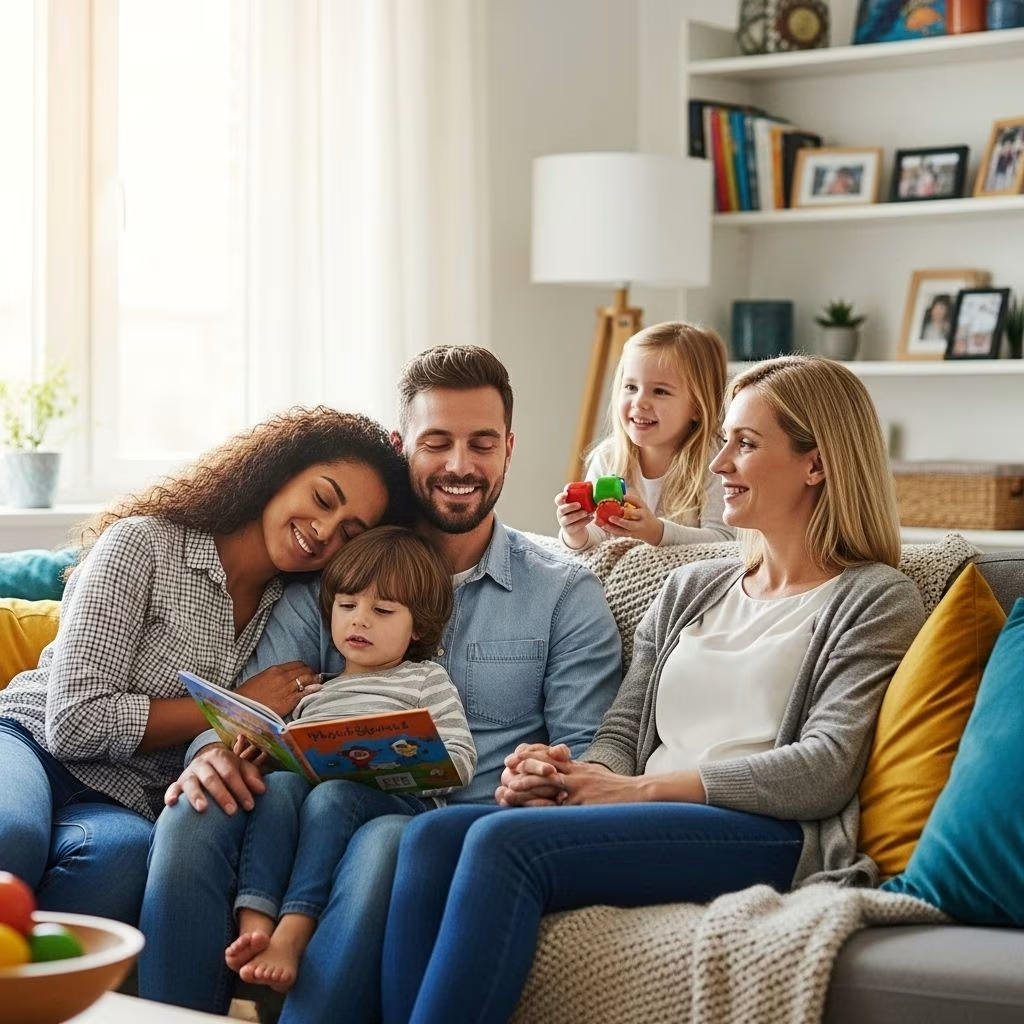
Polyamorous Parenting: Navigating Non-Monogamy, Marriage, and Family
As relationship models evolve beyond monogamy, polyamorous marriages and families are gaining visibility. For many, building a household on non-monogamous principles is both liberating and challenging—and for parents, these complexities multiply. This article explores real-life polyamorous family structures, examines their approach to childrearing, and confronts common misconceptions, offering a nuanced picture of life, love, and parenting outside traditional norms.
Understanding Polyamory and Non-Monogamy
Polyamory refers to engaging in multiple romantic and/or sexual relationships simultaneously, with everyone’s informed consent. Unlike open relationships, which focus more on sexual variety, polyamory typically involves deeper emotional bonds with more than one partner.
Families built on polyamorous principles often emphasize transparency, communication, and honesty as core values.
- Emotional connection: Relationships are based on love, not just sex.
- Consent and openness: All parties are aware and agree to the arrangement.
- Flexible structures: Families can include multiple adults, but every arrangement is unique.
While polyamory is often misunderstood, it challenges the notion that romantic exclusivity is the only path to happiness and stability.
The Polyamorous Family: Roles and Realities
Polyamorous families may include three or more adults, but they don’t always live together. The exact structure varies widely, shaped by personal needs and boundaries.
- Some poly families live communally, sharing childcare and household duties.
- Others maintain separate households, but coordinate responsibilities and schedules.
- Children may interact regularly with multiple adults—some acting as parents, others as close friends or mentors.
One parent in a polyamorous household shared, “Most days look like this: my partner Mike, who lives with us, helps me with dinner while Rob tends to the kids. We all eat together, and then Mike and I put the kids to bed while Rob texts a woman he’s met on OKCupid. Once the kids are down, the three of us sit on the couch for a movie and a cup of tea.”
Such arrangements challenge the stereotype that polyamory is chaotic. In reality, many poly families function with thoughtful coordination and shared responsibility.
Marriage and Commitment: Rethinking the Vows
For those practicing polyamory, marriage may stray from tradition. Instead of “until death do us part” and exclusive vows, some couples opt to celebrate evolution and adaptability:
- Impermanence is recognized: Change is part of life and relationships.
- Vows may focus on mutual support and growth, not exclusion of others.
- Relationship needs can shift post-childbirth or after years together, which can lead couples to open their marriage to new partners, seeking emotional or sexual fulfillment elsewhere.
“After we finished having babies, we realized that although many things about our marriage were stellar—close friendship, mutual support, and compatible co-parenting—we weren’t ideal for one another sexually. We decided to try polyamory, and it was surprisingly smooth.”
This acknowledgment allows polyamorous families to approach change without blame or betrayal, focusing on respectful transitions and the wellbeing of all involved.
Parenting in a Polyamorous Household
The question of children in polyamorous families is central:
- Shared childcare: Multiple adults can share responsibilities, offering practical and emotional support.
- Role models: Children may benefit from relationships with a variety of adults beyond their biological parents.
- Openness: Poly parents often advocate age-appropriate honesty with children about family structure.
Research and personal testimony indicate that, in healthy poly families, children thrive when their wellbeing is prioritized.
It’s vital, however, to prepare children for environments where polyamory is less accepted, as social stigma and misunderstanding can lead to bullying or discrimination. Many poly families discuss their relationships openly at home, teaching children about acceptance and self-worth, while navigating discretion outside the home when necessary to protect their children’s emotional safety.
Challenges and Criticisms: Myths vs. Reality
Polyamory faces persistent social stigma, especially around family and childrearing. Critics raise concerns about stability, emotional security, and possible confusion for children.
- Some opponents argue that polyamorous parenting exposes children to instability and constant changes in caregivers.
- Others fear children may struggle with social acceptance, or feel pressured to hide their family’s arrangement.
However, proponents stress that healthy polyamory requires careful communication and emotional maturity from all adults involved. Advocates point out:
- Polyamorous parents introduce new partners to their children very gradually—only after testing the relationship’s stability.
- If a relationship ends, poly parents often make efforts to maintain the connection between children and former partners, unlike some monogamous families where stepparents may be cut off after a divorce.
- Children’s wellbeing is always the priority; emotional safety and adjustment are carefully monitored.
“Polyamory is not the problem you had. It was selfishness, inconsideration, non communication, deception, and hiding things. Polyamory is so, so selfless… Your partner trusts you to do what makes them happy, to not be jealous. This doctor claiming that a child is damaged because their parent’s partner is no longer around conveniently forgets that the same happens in monogamous relationships.”
Emotional Fulfillment and Adult Relationships
Polyamorous marriages don’t mean the original partnership was broken; rather, many couples choose non-monogamy to supplement emotional or sexual needs not fully met by one person.
- No single person can always meet all of another’s emotional or sexual needs.
- Opening a marriage can be an opportunity for growth, healing, and deeper connection—not a sign of failure.
- Couples often report that polyamory enhances friendship, respect, and mutual admiration. Romantic chemistry might not be perfect, but co-parenting and support can remain strong.
Household routines tend to be fluid: partners alternate childcare, household chores, and leisure activities. “Sometimes Mike and I take the kids camping and Rob spends the weekend combing bookstores. Sometimes Mike and Rob watch football together while I volunteer. Sometimes we all take a family vacation together.”
Social Stigma and Community: Navigating the Outside World
Outside the home, poly families face unique pressures:
- School and community: Children may be teased or stigmatized for their family structure.
- Discretion vs. openness: Parents must balance honesty with their child’s emotional safety and the realities of conservative environments.
- Support networks: Polyamorous families often rely on understanding friends and chosen communities for connection and backup.
In places where non-monogamy is accepted, children report no unique problems. But in regions or schools where it’s stigmatized, poly families might adopt more privacy or develop talking strategies to help kids handle outside questions.
Managing Change and Relationship Transitions
One of the most distinctive polyamorous philosophies is embracing change without blame. When relationships shift, polyamorous adults strive for transitions marked by:
- Honest communication about needs and boundaries.
- Respect for emotional impact, especially where children are concerned.
- A focus on maintaining healthy relationships with all significant adults—rather than sudden and total separation.
This approach contrasts with the negative cycles often seen in monogamous divorces, where ex-stepparents may be quickly erased from children’s lives. By recognizing impermanence and adjusting gracefully, poly families hope to minimize trauma and maintain stability.
Polyamory vs. Serial Monogamy: A Comparison
| Aspect | Polyamory | Serial Monogamy |
|---|---|---|
| Number of Partners | Multiple (with consent and transparency) | One at a time (relationships replace each other with breakups/divorce) |
| Childcare | Can involve several adult caregivers | Usually two caregivers; new partners may come and go |
| Relationship Transitions | Gradual; efforts to maintain continuity for kids | Often abrupt; stepparents may be cut off after split |
| Communication | Emphasis on openness with partners and children | Varies; sometimes secrecy around affairs or new partners |
| Stability for Children | Can be stable with clear boundaries and priorities | Can be disrupted by divorce or frequent partner changes |
Frequently Asked Questions (FAQs)
Q: Is polyamory harmful to children?
A: Research and lived experience suggest children in polyamorous families do well when adults prioritize their needs, communicate openly, and introduce partners gradually. Problems arise from instability or poor communication, not from polyamory itself.
Q: Do polyamorous families experience more breakups?
A: Not necessarily. Poly parents are cautious about introducing partners and tend to maintain contacts between kids and former stepparents, resulting in fewer abrupt losses than in some serially monogamous homes.
Q: How do children cope with polyamorous parenting?
A: Most adjust well if their home environment is loving, stable, and honest. In conservative communities, some children experience teasing or bullying, but families counter this with positive reinforcement and discretion.
Q: Is polyamory just about sex?
A: Polyamory includes emotional connections and love, not just sexual variety. Many poly families value deep relationships, shared parenting, and mutual support.
Q: Can polyamorous relationships work long-term?
A: Many do, though, like all relationships, they require effort, communication, and a willingness to adapt as life changes. Flexibility and honesty are key.
Q: What about jealousy?
A: Jealousy exists in all relationships. In polyamory, it’s addressed through open dialogue, trust, and mutual reassurance. Many people find that long-term polyamory helps them develop emotional confidence and coping skills.
Q: How do polyamorous families handle legal issues?
A: Most legal systems only recognize two-parent households, but many poly families create informal agreements and designate guardianship in case of emergencies. Advocacy for legal recognition is ongoing.
Conclusion: Redefining Family
Polyamorous parenting and marriage reframe what family means. By emphasizing honesty, shared responsibility, adaptability, and love, non-monogamous families challenge society to move beyond stereotypes. Most important, child wellbeing remains the central focus—regardless of how many adults sit at the dinner table, tuck kids in, or support each other through life’s inevitable changes.
As society grows more diverse, listening to the stories and realities of polyamorous families is crucial. In the words of a poly parent, “Polyamory made my marriage better—and it might make my divorce better, too.” What matters most is the compassion, care, and intentional love that makes any home truly thrive.
References
- https://dianaverse.com/2020/04/12/polyamoryinterview/
- https://www.drkarenruskin.com/polyamory-not-healthy-for-children/
- https://polyinthemedia.blogspot.com/2016/03/elle-polyamory-made-my-marriage-better.html
- https://www.marieclaire.com/sex-love/a36981856/covid-polyamory-monogamy-marriage-essay/
- https://www.marieclaire.com/sex-love/a17341/the-next-sexual-revolution-open-marriage/
- https://jennmjacksonphd.substack.com/p/a-lesbian-married-to-a-man-writing


