Speak Now or Forever Hold Your Peace: Meaning, Origins, and Modern Traditions
Few wedding phrases are as instantly recognizable as “Speak now or forever hold your peace.” This dramatic line evokes visions of movie weddings interrupted by last-minute objections and is embedded in collective memory thanks to literature, film, and music. But what does it really mean? Where did it come from? And how is it viewed in modern-day ceremonies? This article explores the rich history, cultural significance, and evolving relevance of this iconic tradition.
In This Article
- Key Takeaways
- Meaning of ‘Speak Now or Forever Hold Your Peace’
- Origins and History
- Legal and Social Intent
- Impact in Pop Culture and Media
- How Modern Couples Handle the Phrase
- Alternatives and Modern Variations
- Frequently Asked Questions (FAQs)
Key Takeaways
- ‘Speak now or forever hold your peace’ is traditionally spoken by officiants at weddings to give attendees a final chance to object.
- Originally, objections needed a legal basis—such as prior marriage or being underage—not just emotional or personal reasons.
- The custom dates back to the Middle Ages, codified in the Book of Common Prayer (1549).
- Today, many couples choose to skip, modernize, or even playfully subvert the tradition.
Meaning of ‘Speak Now or Forever Hold Your Peace’
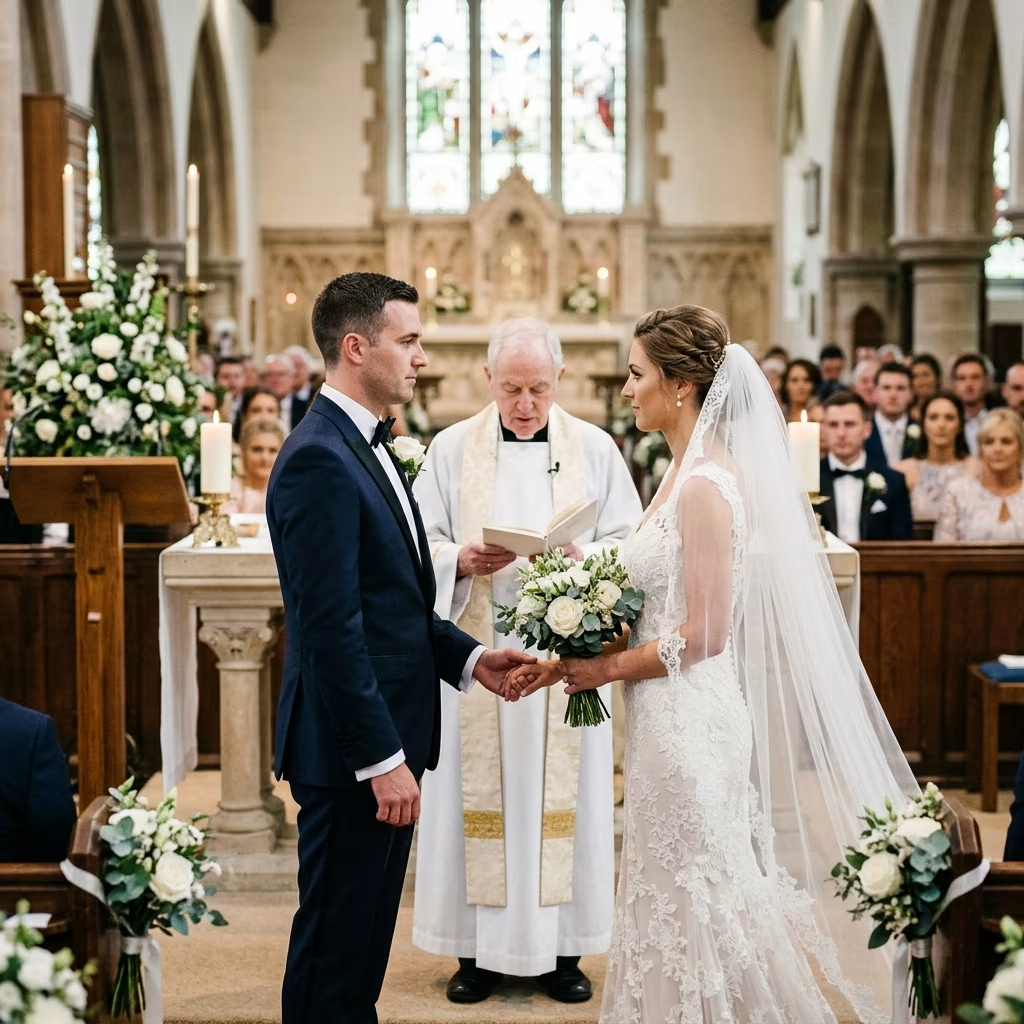
The phrase is an admonition or final invitation for anyone attending a wedding to voice valid reasons why the marriage should not proceed. If no one objects at that moment, attendees are expected to remain silent forever, accepting the union without protest.
- Traditionally spoken by officiants, it marks the last formal opportunity for public objection.
- The meaning has expanded, in modern vernacular, to describe any situation where this is the final chance to object or offer opinion before a decision is finalized.
While the most common association is with weddings, the phrase is also used metaphorically in legal, political, or even casual contexts: “This is your last chance—speak now or forever hold your peace.”
Origins and History
The roots of ‘speak now or forever hold your peace’ are found in medieval Christian marriage customs and the enforcement of legal and moral standards in matrimony.
The Banns of Marriage
- Before the widespread use of official records and fast communication, the banns of marriage were public announcements read in church on three consecutive Sundays before a wedding.
- The purpose was to allow anyone with knowledge of a legal impediment to come forward—in particular, previous undissolved marriages, consanguinity (too closely related), insanity, or underage status.
- The phrase itself first appeared documented in the Book of Common Prayer in 1549: “If any of you can show just cause why they may not lawfully be married, speak now; or else hereafter forever hold your peace.”
| Era | Practice | Purpose |
|---|---|---|
| Middle Ages | Banns of Marriage announced in church | Prevention of illegal/unethical unions |
| 1549 (Book of Common Prayer) | Formalized language for objections in ceremony | Legal safeguard and affirmation |
| Modern Era | Often omitted or altered for positive tone | Personalization, inclusivity |
The British Empire and Beyond
The tradition spread throughout countries influenced or colonized by the British Empire. Over time, as communication, legal systems, and marriage registration improved, the practical necessity of public objections waned. Today, it remains largely symbolic.
Legal and Social Intent
The original focus of this practice was legitimacy and transparency. By publicizing upcoming marriages, churches and communities gave individuals the chance to object for legal reasons:
- The existence of a previous, undissolved marriage (to prevent bigamy).
- Underage individuals attempting to marry without proper consent.
- Close familial relationships (consanguinity).
- Lack of mental capacity.
Less commonly, objections could come from issues of coercion or fraud. In contemporary practice, officiants are responsible for ensuring these legal requirements are met long before the ceremony itself, making public objections practically obsolete in most places.
Impact in Pop Culture and Media
The phrase’s enduring fame may owe more to Hollywood, literature, and music than to genuine wedding drama. It has become a prominent trope for injecting suspense, comedy, or romance into storytelling.
- Film and television: Countless romantic comedies and dramas feature dramatic objections or love confessions triggered by this line.
- Music: Taylor Swift’s 2010 song “Speak Now” is a notable pop culture example where the idea of objecting at a wedding becomes a metaphor for risking everything for love.
- Internet memes: Parodies and humorous takes abound online, often referencing famous wedding scenes or exaggerating the phrase’s potential for unexpected revelations.
While actual real-life objections are extremely rare, the lasting image of someone stopping a wedding at the last moment remains iconic in the public imagination.
How Modern Couples Handle the Phrase
For contemporary couples, the phrase ‘speak now or forever hold your peace’ can be:
- Faithfully preserved as a traditional ritual
- Skipped entirely to avoid awkwardness or potential disruption
- Positively reimagined—for instance, by inviting “blessings and support” instead of objections
- Transformed into playful moments, such as staging faux objections for laughs
More and more, couples personalize their ceremonies to reflect their values and comfort levels. Officiants often discuss this element with couples beforehand to determine what fits their vision for the wedding.
Reasons Couples May Omit or Alter the Phrase
- Concerns over inviting unnecessary tension or giving the spotlight to a disruptive guest
- Belief that all valid concerns should be addressed before the ceremony
- Preference for a more positive or affirming atmosphere
In jurisdictions where the law requires checks for legal impediments before a license is issued, there is no longer any legal need for public objections during the ceremony.
Alternatives and Modern Variations
Many couples and officiants now replace the traditional line with alternative language suited to their ceremony’s tone:
- Inviting guests to offer blessings, wisdom, or support instead of objections—for example: “Do you offer your blessings to this couple?”
- Omitting the moment entirely and addressing any concerns in private, prior to the wedding day
- Custom statements that celebrate inclusion, unity, and joy
Examples of Alternative Phrases
- “If any among you has words of encouragement for this couple, please share them now or in the years to come.”
- “Let us show our support for this union with our love and best wishes.”
- “We invite you to continue to support this couple as they begin their new journey together.”
Frequently Asked Questions (FAQs)
Q: What are legitimate reasons someone could object to a wedding?
A: Historically, only legal objections were considered valid—such as proof of existing marriage, close relation, underage participants, or lack of mental capacity.
Q: Does anyone actually speak up during real weddings?
A: In modern times, genuine objections during the ceremony are very rare. Most concerns are addressed prior to the wedding, and dramatic objections mainly exist in movies and fiction.
Q: Is it required to include this phrase in the ceremony?
A: No. Inclusion of the phrase is optional. In many cultures and religious denominations, it is now standard to omit it or replace it with a more positive invitation for support or blessings.
Q: What happens if someone objects during the ceremony?
A: The officiant typically pauses to hear the objection. If it is not based on legal grounds, ceremonies usually continue. Legal issues might postpone or cancel the wedding. However, these scenarios are extremely uncommon today.
Q: Has the phrase been referenced in pop culture?
A: Yes! Films, TV shows, novels, and songs (notably Taylor Swift’s “Speak Now”) have featured or parodied the phrase, making it an enduring romantic and dramatic trope.
Final Thoughts
The phrase ‘Speak now or forever hold your peace’ remains a fascinating window into the overlap of history, law, social custom, and storytelling. Whether taken seriously, omitted, or used to add a dose of fun to ceremonies, it continues to captivate modern audiences with its echo of centuries past and its power to symbolize finality, truth, and the importance of timely honesty.
References
- https://grammarist.com/phrase/speak-now-or-forever-hold-your-peace/
- https://www.stylecraze.com/articles/speak-now-or-forever-hold-your-peace/
- https://www.theknot.com/content/speak-now-or-forever-hold-your-peace
- https://www.demilked.com/wedding-objection-tales/
- https://www.stylecraze.com/articles/wedding-ceremony-script/
- https://www.marieclaire.com/culture/news/a19437/people-who-have-spoken-now-or-forever-held-their-peace-at-weddings/
- https://www.weddingwire.com/wedding-forums/does-anyone-use-speak-now-or-forever-hold-your-peace/1e7ca949bf178c78.html