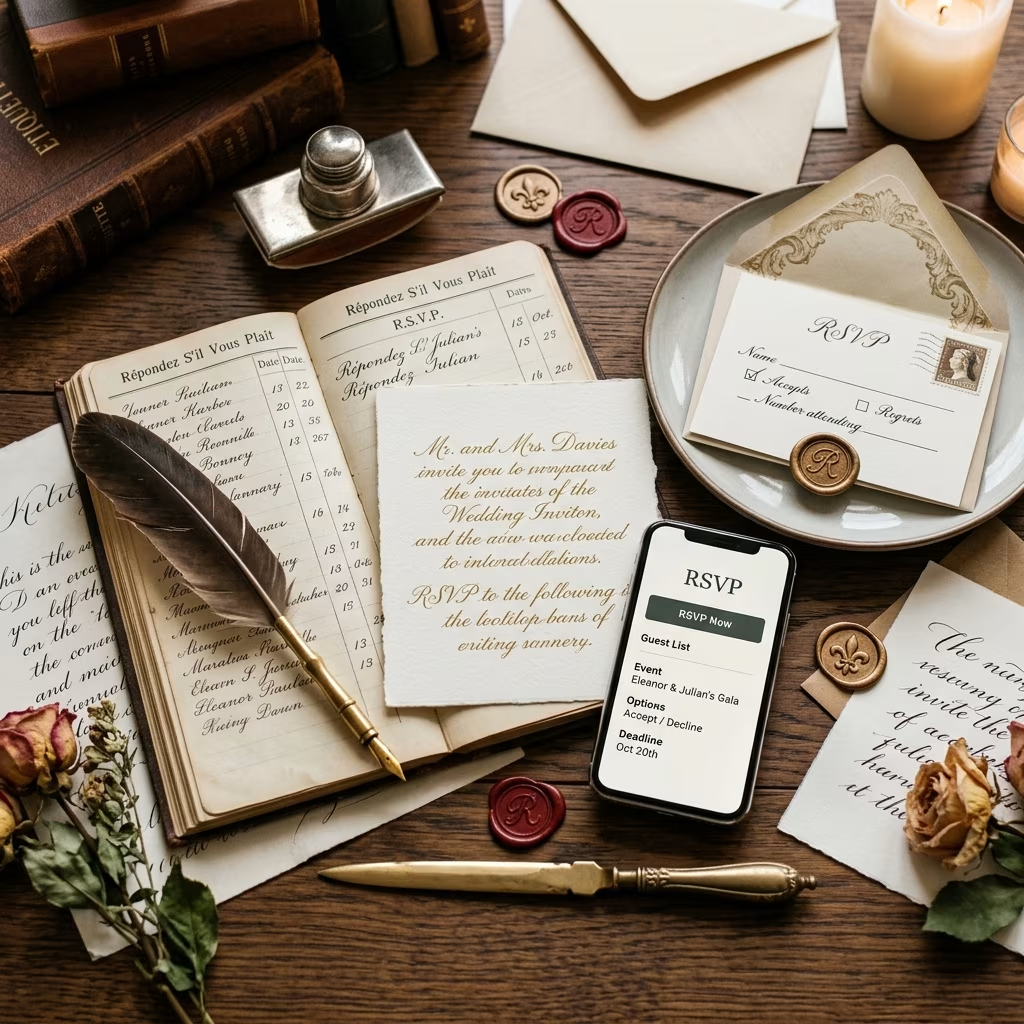
The acronym RSVP holds a prominent place in event invitations around the world. Originating from a French phrase, RSVP is more than a polite request—it’s a vital tool facilitating seamless celebration planning and upholding social etiquette. Whether it’s a formal wedding, an exclusive party, or a casual gathering, understanding RSVP can make the difference between a chaotic or flawlessly executed event.
What Does RSVP Mean?
RSVP stands for the French phrase “Répondez s’il vous plaît”, which translates to “please respond” in English. When included on invitations, RSVP is a formal request from the host for guests to confirm whether they will attend the event.
In essence, when you see RSVP on an invitation, you are being asked: Will you be attending or not? The response helps the host finalize essential event details such as headcount, catering, seating arrangements, and overall logistics.
Why Is RSVP Important?
- Finalizing Headcount: Accurate RSVPs mean the host knows exactly how many guests to expect, directly impacting seating, food, drinks, and favors.
- Budgeting & Logistics: The event’s budget depends heavily on guest numbers, and insufficient or late replies can disrupt planning and cause stress for hosts.
- Respect and Courtesy: Promptly responding to an RSVP shows appreciation for the invitation and respect for the host’s time and resources.
- Personalization: Especially at weddings, an accurate RSVP allows for thoughtful touches, from personalized menus to tailored entertainment.
The Origins and History of RSVP
The use of RSVP can be traced back to the 18th-century French aristocracy. The tradition crossed over to English-speaking countries, soon becoming a hallmark of formal event invitations, especially among the British upper class in the 1800s, who adopted the phrase for its elegance and clarity.
While RSVP is now a staple in English-speaking invitations, it’s no longer widely used in France itself, where it is considered somewhat old-fashioned. Instead, French hosts today might use, “Réponse attendue avant le…” meaning “Your answer is expected before…”. In French-speaking regions of Canada, RSVP maintains its popularity.
Other Common RSVP Variations Around the World
| Variation | Meaning | Region |
|---|---|---|
| SVP | “S’il vous plaît” (Please) | France, Canada |
| Regrets Only | Respond only if declining | US, UK, Canada |
| Réponse attendue avant le… | Answer is expected before a date | Modern France |
RSVP Etiquette: Dos and Don’ts
For the Host
- Include a clear RSVP request on every invitation.
- Specify the deadline for responses, typically 2-4 weeks before the event.
- Offer simple ways to reply—reply card, website, QR code, email, or phone number.
- Follow up gently with guests who haven’t responded by the deadline.
- Be gracious whether guests accept or decline your invitation.
For the Guest
- Respond as soon as possible, well before the deadline.
- Reply only for the people addressed on the invitation.
- Be clear and honest if you cannot attend—no need for lengthy explanations.
- Never assume it’s acceptable to bring uninvited guests (plus-ones or children) unless explicitly stated.
- Stick to the RSVP method the host has specified.
Best Ways to Phrase RSVP on Invitations
Depending on the event’s tone, hosts may choose traditional, modern, or creative RSVP phrasing. Here are some examples:
Formal Wording
- “Kindly respond by 15th August”
- “The favor of your reply is requested by 15 August”
- “We kindly request your response by July 12”
Informal or Friendly Wording
- “Let us know if you can make it by August 15!”
- “We’d love to see you—please RSVP by August 20!”
Humorous Wording
- “Ready to eat, drink, and dance? Tell us by August 5!”
- “Should we save you a slice of cake? RSVP by June 1st!”
Unique or Destination Event Wording
- “Pack your bags! Let us know by May 10th if you’re joining.”
- “Join us for the adventure. Confirm your spot by June 21st.”
Alternatives to ‘RSVP’
- “Please respond by…”
- “Kindly let us know your attendance”
- “Reply on or before…”
‘Regrets Only’ and Other RSVP Variations
Some invitations use ‘RSVP, regrets only’—which means that the host assumes you are coming unless you reply to say you cannot attend. This is often used for informal or smaller gatherings where most invitees are expected to accept.
Other common RSVP notes include:
- Save the Date: A preliminary notice before invitations are sent, especially for distant or destination events.
- RSVP with meal preferences: Guests are asked to indicate meal choices along with attendance.
Modern RSVP: Digital Trends and Tips
With the rise of technology, RSVP methods have evolved beyond traditional return cards. Today, hosts and guests use digital tools for faster, more convenient replies:
- Email RSVPs: Many hosts provide an email address for digital replies.
- Online RSVP Forms: Wedding or event websites offer embedded forms for instant responses.
- QR Codes: Invitations may include a QR code leading directly to an RSVP webpage.
- Event Apps: Specialized apps allow tracking of guests, meal choices, and communication in one platform.
However, the essence remains: a clear and timely response is always appreciated, regardless of the medium.
Frequently Asked Questions (FAQs)
Q: Is it rude not to respond to an RSVP?
A: Yes, not replying is generally considered poor etiquette. A timely response shows respect for the host and aids planning.
Q: What should I do if I miss the RSVP deadline?
A: Contact the host as soon as possible. Apologize and give your response—some hosts may still accommodate you, but do not assume.
Q: Can I bring a guest if my invitation doesn’t mention a plus-one?
A: Only bring extra guests if explicitly allowed. Otherwise, respond for yourself only.
Q: Why do some invitations use ‘regrets only’?
A: ‘Regrets only’ simplifies communication—respond only if you cannot attend. The host assumes your attendance unless told otherwise.
Q: How soon should I RSVP?
A: Ideally, respond as soon as you know your plans—never later than the date requested by the host.
Q: What happens if too many people don’t RSVP?
A: The host may have to spend additional time and resources following up, potentially affecting logistics and guest comfort.
RSVP in Summary
The simple four-letter acronym RSVP—rooted in French tradition, evolved in global etiquette—remains a foundational practice for both formal and informal events. It ensures harmony, smooth organization, and demonstrates mutual respect between hosts and guests. As modes of reply evolve with technology, the fundamental message persists: Respond promptly, and celebrate thoughtfully.
References
- https://www.parekhcards.com/blog/what-does-rsvp-really-mean-in-a-wedding-card.asp
- https://cherrytreeinnbnb.com/how-much-does-rsvp-mean/
- https://www.hitched.co.uk/wedding-planning/invite-wording-and-etiquette/what-does-rsvp-mean/
- https://en.wikipedia.org/wiki/RSVP
- https://www.stylecraze.com/articles/what-does-rsvp-mean/
- https://www.thedressoutlet.com/blogs/occasions/rsvp-meaning-history?page=205
- https://www.paperlesspost.com/blog/what-does-rsvp-mean/