


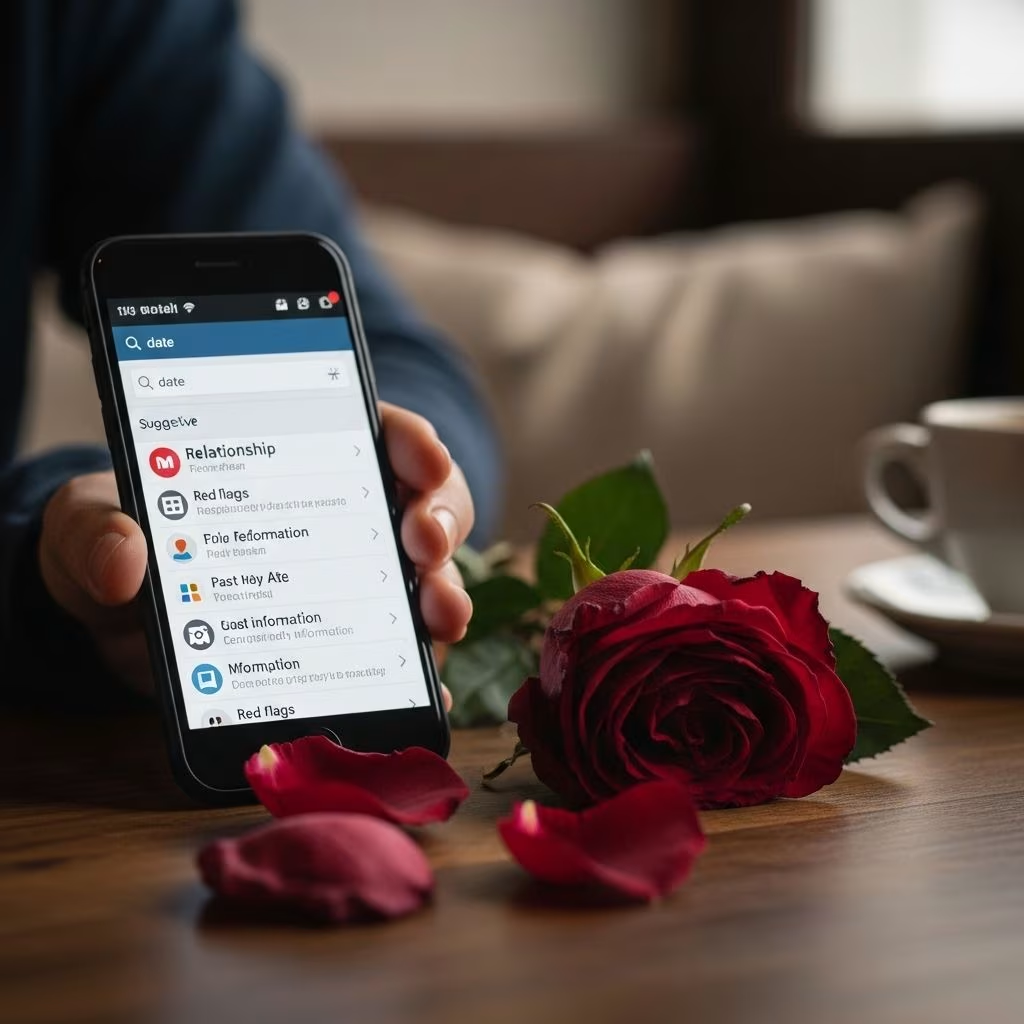
4 Reasons Googling Your Date Will Sabotage the Relationship
In the digital age, it is virtually irresistible to look up a new romantic prospect online. With a few quick keystrokes, you can uncover a person’s social media presence, old headshots, LinkedIn profile, or even that regrettable blog post from undergrad. But what happens when this innocent curiosity goes too far? While Googling your date feels harmless—or even essential for safety—it could be the silent saboteur of a budding relationship. Here’s a deep dive into how uncovering too much, too soon can undermine real connection and romance.
The Thrill of Digital Discovery: Why We Google Our Dates
Whether out of curiosity, anxiety, or the desire for reassurance, most people have keyed their new date’s name into a search bar. You may be looking for red flags, hoping to verify details, or just wanting to piece together who this person is beyond what they tell you on a first date. But this flood of information comes with unexpected consequences:
- Preemptive Judgement: Online profiles present a curated or outdated version of someone, which may not match who they are in the present.
- Assumption Overload: Interpreting incomplete or context-free digital traces can lead you to form opinions before a relationship even begins.
- Loss of Mystery: Knowing too much too soon dampens the organic process of discovery that forms the foundation of intimacy.
1. Googling Kills the Natural Spark of Discovery
One of the great pleasures of a new romance is the gradual unfolding of someone’s story. Every revelation—favorite band, childhood ambition, that unforgettable travel story—unfurls a new layer of connection. When Google gives you an advance peek, it disrupts:
- First Impression Dynamics: Meeting a person in real life allows their personality and presence to shape your perception authentically, free from online filters.
- Spontaneous Chemistry: Finding out key facts online prevents the organic back-and-forth that builds mutual excitement and intrigue.
- True Conversation: There’s less to talk about if you already know the answers to “where did you grow up?” or “what do you do for a living?”
The act of searching takes away those “aha!” bonding moments that naturally blossom when two people share and receive revelations in real time.
2. Online Intel Breeds Unfair Comparisons
Modern dating often already feels like a competition—scrolling endless apps, swiping left and right, weighing potential matches. When you Google your date, you gain access not only to their past and present, but sometimes also to their other options: exes, mutual friends, old social circles. This leads to:
- Envy and Insecurity: Learning about a partner’s past partners can spark comparison, jealousy, or feelings of inadequacy—even when there’s no real overlap or competition.
- Scorn Down, Envy Up: The act of comparison can divide rather than connect, sabotaging the impulse to understand and empathize with your date as an individual.
- Valuing Story Over Substance: You may become preoccupied with whether their “cultural fit” matches your expectations, losing sight of authentic chemistry.
This cycle of digital comparison can chip away at genuine interest and sow seeds of doubt that might never exist if the information were shared organically and contextually.
3. Unveiling Old Baggage and Irrelevant Details
Everyone has a digital trail, and not all of it is flattering. Old blogs, cringeworthy tweets, or that time someone got quoted in their college’s online newspaper add up to a soup of out-of-context facts. Here’s why preemptively digging up these details is risky:
- Misplaced Focus: It’s easy to fixate on a minor, outdated, or irrelevant detail that holds little bearing on who your date is now.
- Distorted Priorities: Taking online findings as gospel can mean ignoring the reality of your in-person experience and what your gut tells you.
- Past ≠ Present: People evolve. What you find online may be a snapshot of someone’s former self, not the person sitting in front of you.
If you hold Google’s top results against someone before you’ve truly met them, you rob yourself—and your date—of the chance to grow beyond their history.
4. Googling Undermines Trust and Vulnerability
True connection is about openness, risk, and the slow build of mutual trust. When one person knows far more (or thinks they do) about the other, it can breed:
- Imbalance: If one person holds a dossier of “clues” while the other is sharing vulnerably, the relationship dynamic is skewed.
- Secret-Keeping: Some people will try to hide aspects of themselves if they suspect their date has pre-judged them based on easily discoverable facts.
- Missed Opportunity for Honest Dialogue: You may feel less inclined to ask questions or listen actively if you believe you already know the answer.
Ultimately, preemptively Googling your date can plant suspicion before trust has a chance to form, undermining the foundation of a meaningful relationship.
Why We Want to Know—And Why It Rarely Satisfies
The reality is, dating can be nerve-wracking. Googling a romantic interest gives a false sense of control and safety, especially in a culture of dating burnout and ghosting. However, this habit rarely alleviates insecurity—it often amplifies it. What we know on paper is rarely as valuable or revealing as what we learn face-to-face.
- Safety is Important: Conducting basic safety checks is wise, but digging deep for incidental details meddles with natural rapport.
- Real Trust is Built, Not Researched: Relationships thrive on what is shared over time, not on what is unearthed in a late-night internet deep dive.
Should You Ever Google Your Date?
There are, of course, exceptions. A quick check that ensures your date is who they say they are, or to verify details for personal safety, is reasonable. The problem arises when this curiosity becomes compulsive or when you use the results to judge someone before they’ve had a chance to show you who they are. Here’s how to strike a healthy balance:
- Keep it Light: Limit searches to red-flag checks (like confirming a last name or public profile) rather than deep dives into their online past.
- Wait to Uncover Details: Let your date reveal their stories at their own pace, focusing on shared discovery rather than private research.
- Ask Directly: If you learn something surprising, use it as an opportunity for conversation, not confrontation.
Pace the Relationship for Genuine Connection
In a world saturated with information, one of the bravest things you can do is let things unfold at their own pace. Here are some tips to help you focus on the moment rather than the online archive:
- Set boundaries for yourself around Googling and social media stalking before dates.
- Embrace the mystery—remind yourself that suspense and discovery are vital for lasting attraction.
- Be honest with your partner about your own online presence and potential digital skeletons.
- Prioritize what you experience and feel in real time over what you can find with a search engine.
Table: Pros and Cons of Googling Before Dating
| Pros | Cons |
|---|---|
| Potential safety checks | Kills natural discovery |
| Basic identity verification | Leads to unfair judgment |
| Prevents catfishing | Triggers unnecessary comparison |
| May reveal genuine deal-breakers | Can escalate insecurity |
| Informs with publicly available facts | Undermines trust and surprise |
Frequently Asked Questions (FAQs)
Q: Is it ever okay to Google your date?
A: Yes, basic Googling for safety or identity verification is considered reasonable, especially when meeting someone from a dating app for the first time. However, deep-diving for personal details, old relationships, or irrelevant past information can be counterproductive and damaging to genuine connection.
Q: How can I avoid sabotaging the relationship with online research?
A: Set boundaries on what you check, focus on real-time experiences, and engage openly in conversation. Use any information found online as a starting point for honest dialogue rather than secret judgment or silent comparison.
Q: Should I tell my date if I found something about them online?
A: If the information is relevant or troubling, respectfully bring it up in conversation. Transparency and curiosity are usually appreciated more than silent judgment or avoidance.
Q: What if my date Googles me and finds something embarrassing?
A: Remember, everyone has a digital footprint with a few outdated or awkward traces. Acknowledge those moments with humor or honesty, and use them as a chance to share how you’ve changed or grown.
Final Thoughts: From Google to Genuine
If you truly want a new relationship to flourish, resist the urge to search for all the answers in the digital archive. Chemistry, trust, and intimacy thrive best when both people are allowed to reveal themselves piece by piece. Instead of relying on Google to paint the picture, allow your date to bring their story to life—one conversation at a time.
References
- https://www.csis.org/analysis/russias-shadow-war-against-west
- https://www.elitedaily.com/dating/sabotage-potential-relationships/1713050
- https://www.elitedaily.com/dating/google-date-sabotage-relationship/1423138
- https://pmc.ncbi.nlm.nih.gov/articles/PMC3825032/
- http://www.dni.gov/files/ODNI/documents/assessments/GlobalTrends_2040.pdf
- https://media.defense.gov/2024/Dec/18/2003615520/-1/-1/0/MILITARY-AND-SECURITY-DEVELOPMENTS-INVOLVING-THE-PEOPLES-REPUBLIC-OF-CHINA-2024.PDF


