Astronauts’ Playlists: The Music That Wakes Up Space Travelers
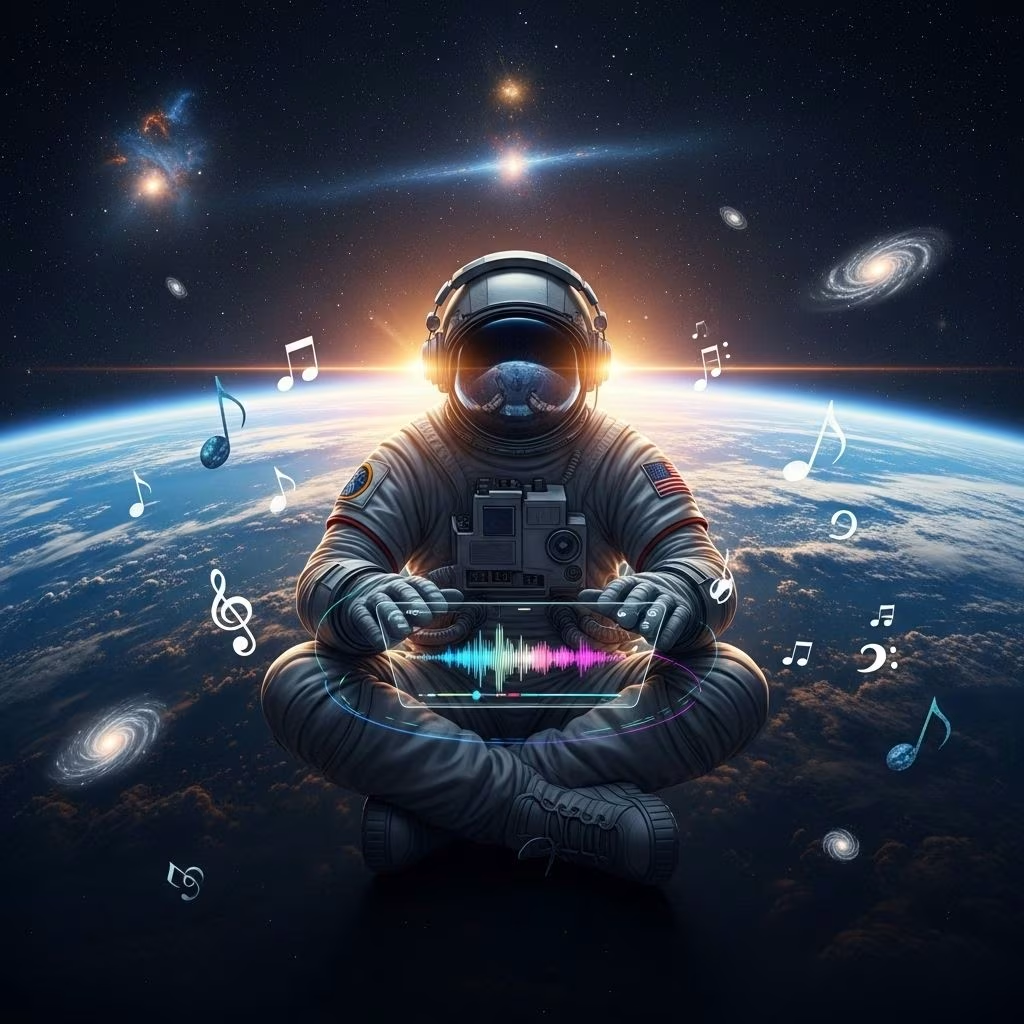
When imagining life aboard a spacecraft, the mind often jumps to zero gravity, scientific experiments, and the vastness of the cosmos. Yet behind every mission, there’s a deeply human side—one that echoes through the corridors of space in the form of music. From the first harmonica on Gemini 6 to today’s digital playlists orbiting Earth, music has become a vital companion for astronauts, lifting their spirits and keeping them grounded, even when they’re anything but. This article explores how music, especially morning wake-up songs, has become an integral part of the spaceflight experience, recounts some legendary playlists, and explains why astronauts cherish every note.
The Roots of Space Music: A Tradition Beyond Earth
Music’s journey to space began in the earliest days of human space exploration. As missions stretched in duration and complexity, so did the need for emotional sustenance. Music resonated with astronauts as a universal language reaching beyond the hum of machinery and the cold silence outside their craft.
- Gemini 6 (1965): Astronauts Tom Stafford and Wally Schirra surprised Mission Control by playing “Jingle Bells” on a harmonica and sleigh bells, a humanizing moment immediately broadcast back to Earth.
This playful gesture foreshadowed music’s future role as morale booster and emotional anchor for generations of astronauts.Music since then has grown from quaint entertainment to a psychological lifeline, woven into mission planning and flight routines.
- Apollo to Shuttle Programs: Wake-up music soon became a daily staple, handpicked by families, friends, and ground crew to comfort astronauts and give them a much-needed connection to home.
NASA’s approach acknowledged music’s power to manage stress and maintain focus—critical for safe and effective long-term missions.
Wake-Up Songs: A Beloved NASA Tradition
Nothing says good morning quite like a favorite tune. Since the Apollo missions, NASA Mission Control in Houston has signaled a new day for astronauts by broadcasting specially chosen wake-up songs. Sometimes funny, often heartfelt, and occasionally profoundly moving, these songs punctuate routine with memories, humor, and a bit of home.
- Personalized Selections: Wake-up music choices are often deeply personal, suggested by astronauts or their families. Each song forms a bridge to loved ones and cherished memories back on terra firma.
- Diverse Genres: From country and rock to jazz and children’s songs, the playlists span the spectrum—mirroring the uniquely human stories behind each mission crew.
- Classic Wake-Up Anthems:
- “Here Comes the Sun” by The Beatles —A literal and uplifting choice for Apollo 12 as it orbited the Moon.
- “Rocket Man” by Elton John —A tongue-in-cheek favorite for obvious reasons, echoing across multiple missions.
- “What a Wonderful World” by Louis Armstrong —A soul-soothing reminder of Earth’s beauty, often played to help astronauts reflect and unwind.
- “Hotel California” by The Eagles —Beloved for its surrealism, reflecting the out-of-this-world nature of space travel.
- Celebratory or Humorous Songs: From “Jingle Bells” to the theme from 2001: A Space Odyssey, mission traditions have always left room for inside jokes and crew cheer.
The Modern Age: Astronaut Playlists in the Digital Era
Advances in technology have revolutionized how astronauts access and enjoy music. Today’s International Space Station crews can bring entire libraries of songs with them thanks to compact digital devices and cloud-connected resources. No longer limited to tapes or a handful of cassettes, astronauts’ music horizons are as vast as the universe they inhabit.
- Personal Devices: From iPods to smartphones, astronauts now curate their own playlists, swapping and sharing tracks with crewmates and even requesting new songs from Mission Control.
- NASA’s Digital Library: NASA maintains a central digital music library aboard the ISS, ensuring that the mood can be matched to the moment—whether for work, exercise, or a quiet moment of reflection.
- Public Involvement: On notable missions, such as the final flight of the Shuttle Discovery, NASA has involved the public in voting for wake-up songs—making millions part of the daily space adventure.
Famous Wake-Up Songs Through the Decades
Across decades of space travel, hundreds of songs have echoed through spacecraft. Some, however, appear again and again—becoming unofficial anthems of space exploration. Here are some of the most iconic tunes that have awakened astronauts above the world:
| Song Title | Artist/Composer | Notable Mission(s) | Context |
|---|---|---|---|
| Here Comes the Sun | The Beatles | Apollo 12, Shuttle missions | Uplifting start, sunrises, new beginnings |
| Rocket Man | Elton John | Frequent favorite, Atlantis STS-135 | Humor and relatable lyrics for space travel |
| Blue Sky | Big Head Todd & the Monsters | Shuttle Discovery (2005, 2011) | Winner of NASA’s public vote; inspirational comeback song |
| Good Day Sunshine | The Beatles | Multiple shuttle missions | Cheerful mood before spacewalks |
| Man on the Moon | R.E.M. | Shuttle, ISS missions | Evokes space history and human ambition |
| Theme from 2001: A Space Odyssey | Richard Strauss | Apollo 15 | Cultural nod to space exploration’s cinematic legacy |
| Jingle Bells | Traditional, performed by Gemini 6 | Gemini 6 | Festive surprise for Mission Control on Christmas |
| Mr. Blue Sky | Electric Light Orchestra | Multiple shuttle and ISS missions | Energizing, upbeat vibe for busy days |
How Wake-Up Songs Are Chosen
Wake-up selections are more than just random tracks—they’re thoughtfully chosen with input from astronauts, their families, mission planners, and sometimes the wider public:
- Astronaut Preferences: Crew members often submit a list of favorite genres, artists, or specific songs before launch.
- Family and Friends’ Requests: Loved ones back home suggest songs that have personal meaning, enabling a touching daily connection across the void.
- Mission Control Picks: Ground crews sometimes inject humor or event-based references, keeping morale high and the mood light.
- Public Contests: During major missions, NASA has occasionally run online contests, letting the public vote for which tracks should launch the day for astronauts.
- In 2011, fans chose “Blue Sky” by Big Head Todd and the Monsters for Discovery’s final flight, symbolizing hope after tragedy.
Astronauts’ Personal Playlists: What Do They Really Listen To?
Beyond the tradition of wake-up songs, astronauts rely on personal playlists for recreation, relaxation, and escape—especially when facing the monotony and isolation of long-duration missions. Thanks to digital storage, modern crews enjoy massive musical variety in space.
- Genre Diversity: Rock, pop, classical, jazz, folk, and even niche genres can be found in crew playlists. The selections reflect the international flavor of today’s missions.
- Space-Themed Songs: Many astronauts include tracks with space themes—either in title or spirit—such as “Major Tom (Coming Home),” “Space Oddity” by David Bowie, and “Walking on the Moon” by The Police.
- Classical Compositions: For focus and relaxation, astronauts often include orchestral or piano music.
- Songs from Home: International crew members bring traditional or contemporary music from their own countries, fostering camaraderie and multicultural understanding aboard the ISS.
Why Music Matters for Space Travel
- Morale and Motivation: Music helps astronauts process emotions, stave off homesickness, and recharge mentally after high-stakes activities.
- Team Bonding: Shared musical experiences help unite multinational crews and foster a sense of togetherness far from home.
- Aid to Routine: Playlists can set the tone for work, exercise, exercise, or relaxation—establishing “Earthly” routines in an otherworldly environment.
- Connection to Earth: Each wake-up track or familiar lyric bridges the gap between Earth and space, keeping astronauts’ spirits grounded in the human experience.
Public Participation: “Space Rock” Contests
Sometimes, the music of space becomes a group celebration. NASA’s “Space Rock” contest invited the public to vote on which songs would awaken Discovery’s final crew—a tradition that blended global excitement with the deeply personal.
- 2.4 Million Votes Cast: In the final shuttle missions, fans worldwide decided which songs should be beamed up each morning, engaging the world directly in space exploration.
- Iconic Winners: “Blue Sky” by Big Head Todd and the Monsters, an anthem of hope and resilience penned after the Columbia disaster, topped the public poll.
- Legacy: The contest symbolized the deep connection between those in orbit and fellow humans below, making the adventure universal.
Music’s Universal Message: Beyond the Final Frontier
From the harmonica melodies of Gemini 6 to the personalized playlists of the International Space Station, music in space underscores a simple truth: no matter the technological marvels or dazzling vistas, space travel is a human journey. Wake-up songs and playlists are more than background noise—they are the heartbeat of the crew, an auditory thread sewing together Earth and the cosmos, past and future. As space travel continues, expect music’s role to only grow more profound, echoing through each new mission to the stars.
Frequently Asked Questions (FAQs)
Q: When did NASA first start playing wake-up songs for astronauts?
A: The tradition dates back to the Gemini program in 1965, when a Jack Jones song from the musical “Hello, Dolly!” woke up the Gemini 6 crew. The practice became an official morale-boosting tool during Apollo and has continued ever since.
Q: Can astronauts pick their own wake-up music?
A: Yes, astronauts and their families typically provide a list of favorites that Mission Control integrates into the schedule. Sometimes, ground control or the public adds special selections too.
Q: What are the most frequently played songs in space?
A: The Beatles (notably “Here Comes the Sun” and “Good Day Sunshine”) and Elton John (“Rocket Man”) are among the most played artists on NASA missions. These upbeat, familiar tracks have awakened crews on many occasions.
Q: Why is music important for astronauts?
A: Music helps combat isolation, boosts morale, strengthens team bonds, and provides comfort during stressful or emotional moments, making it a crucial psychological support tool for astronauts spending long periods away from Earth.
Q: Has the public ever chosen music for astronauts?
A: Yes! On the final flights of space shuttles such as Discovery, NASA held online votes, letting millions of people decide which songs astronauts would hear each morning in space.
References
- https://www.space.com/11037-space-music-playlist-astronauts-wakeup.html
- https://www.nasa.gov/general/nasamoontunes/
- https://spacecenter.org/out-of-this-world-playlist-what-music-do-astronauts-listen-to-for-wake-up/
- https://scottsastropage.com/music-playlist/
- https://www.cospar2020.org/music-in-space-what-songs-astronauts-listen-to-while-orbiting-the-earth/
- https://themusicuniverse.com/space-playlist-2025-what-to-listen-to-according-to-astronauts-taste/
- https://orbitaltoday.com/2023/06/14/the-most-popular-space-songs-looking-at-astronauts-playlists/
- https://www.space.com/11029-space-music-astronauts-wakeup-songs.html
- https://www.youtube.com/watch?v=f9Ss9mh75A0
- https://music.apple.com/us/playlist/astronaut-songs-music-stories-from-space/pl.9bd7795f5d254431930d8734500b5882?l=es-MX
- https://www.youtube.com/watch?v=4nIaQGOEokI
- https://staging.spacecenter.org/out-of-this-world-playlist-what-music-do-astronauts-listen-to-for-wake-up/
- https://en.wikipedia.org/wiki/Space-themed_music
- https://www.space-collectibles.com/blog/apollo-11-music-playlist
- https://soundcloud.com/everydayastronaut
- https://www.earthmusictheater.org/Your-Playlist
- https://cybernews.com/science/spotify-wrapped-nasa-astronaut-music