August 2025 Lunar Calendar: All the Essential Moon Phases
Every August brings a wealth of lunar phenomena, and 2025 is no exception. This month, skywatchers across the globe will experience four major Moon phases, including the rare chance of seeing two First Quarter Moons within a single month. Augmented by close planetary encounters and unique cultural interpretations, August offers remarkable opportunities for astronomy enthusiasts and casual stargazers alike.
This comprehensive guide covers:
- Exact dates and times for each major Moon phase in August 2025
- The science behind each phase and what makes them unique
- Tips for spotting the Moon and planetary conjunctions
- Special events, including the rare ‘Black Moon’ and lunar occultations
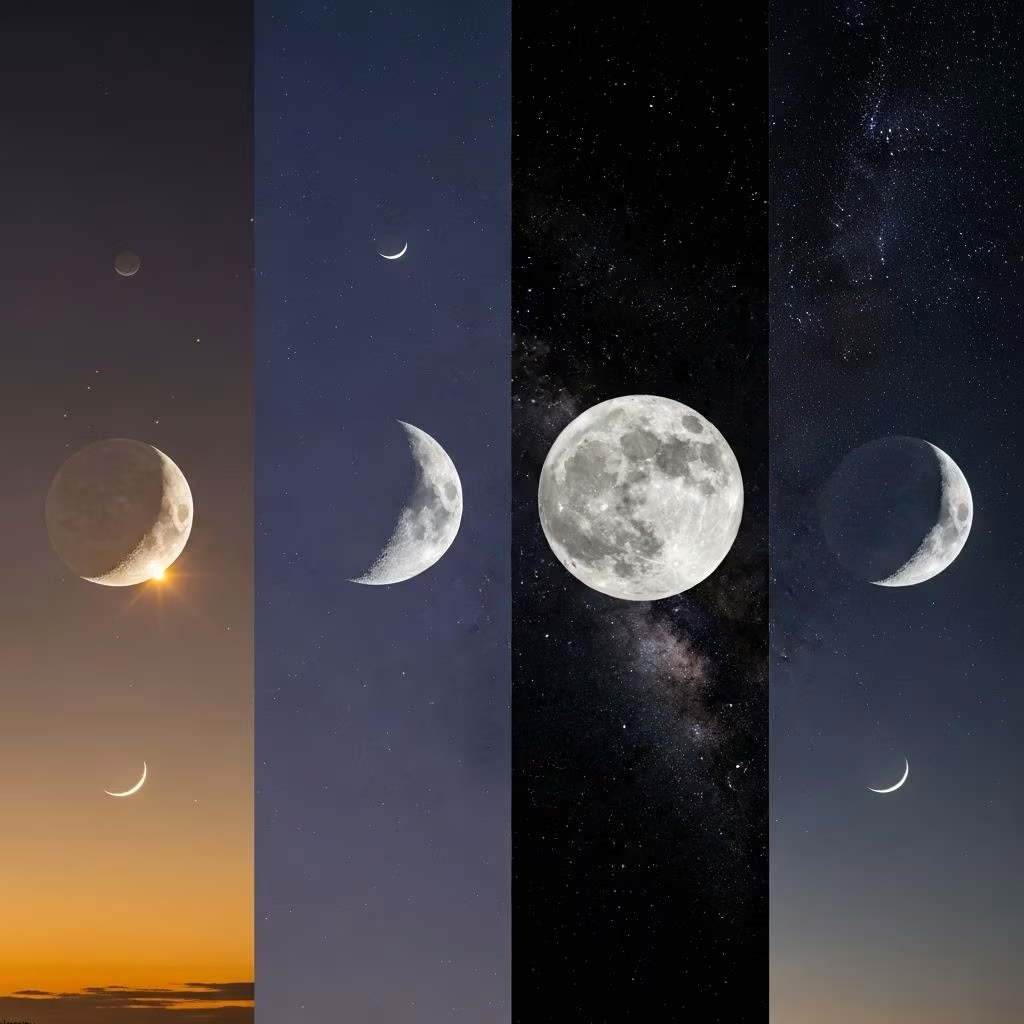
Key Moon Phases of August 2025
| Moon Phase | Date | Time (UTC) |
|---|---|---|
| First Quarter | August 1 | 12:41 |
| Full Moon | August 9 | 07:54 |
| Third Quarter | August 16 | 05:12 |
| New Moon | August 23 | 06:06 |
| First Quarter | August 31 | 06:25 |
The First Quarter Moons: Double Occurrence & Its Significance
The First Quarter Moon marks the moment when half of the lunar surface facing Earth is illuminated. August 2025 is particularly special—this phase occurs twice within the month: first on August 1 and again on August 31. This phenomenon arises from the Moon’s synodic cycle, which averages 29.54 days, occasionally allowing for the same phase to repeat within a single calendar month due to the month’s 30 or 31 days.
Depending on your location and local time zone, these phases may bleed into adjacent days, but globally, both First Quarter Moons fit perfectly in August, a statistical rarity that delights astronomers and calendar aficionados.
- Best viewing time: The First Quarter Moon generally rises around noon and sets near midnight, offering excellent evening visibility.
- Appearance: The Moon appears half-lit, a favorite for telescope viewing thanks to dramatic shadows cast by craters and mountains along the terminator line.
Observing Tips for the First Quarter Moon
- Use binoculars or a small telescope to observe crater detail along the lunar terminator.
- The high contrast makes for spectacular photos, especially during clear evenings.
- Look for the Moon high in the southern sky just after sunset.
The Full Moon: Peak Illumination on August 9
August’s Full Moon will occur at 07:54 UTC on August 9, reaching its brightest and largest appearance in the night sky. The Full Moon always draws attention due to its brilliant luminescence, rising as the Sun sets and staying up all night.
This phase is ideal for nighttime walks and moonlit activities, but presents a challenge for deep-sky astronomers, as its brightness can wash out faint stars and nebulae.
- Best viewing: The Full Moon is visible all night—moonrise coincides roughly with sunset, and moonset with sunrise.
- Unique features: During Full Moon, telescopic surface detail is subdued by direct illumination, but subtle lunar seas (mare) and bright ray systems from major craters are clearly visible.
The Cultural & Astronomical Significance of August’s Full Moon
The Full Moon in August is often associated with traditional festivals, folklore, and even agricultural cycles. In some cultures, it is referred to as the ‘Sturgeon Moon’ or ‘Green Corn Moon.’ Astronomically, it’s the best time to observe the lunar maria and to appreciate the Moon’s dominance over the night.
The Waning Moon: From Full to New
After the Full Moon, as the Moon begins its journey back toward darkness, it enters the waning phases. From August 10 to August 22, the visible portion shrinks nightly, with the illuminated side facing east as seen from the Northern Hemisphere. This period is ideal for observing faint deep sky objects, as the Moon’s brightness wanes.
The Third Quarter Moon: Early Morning Splendor on August 16
On August 16 at 05:12 UTC, the Moon will reach its Third Quarter phase. At this point, half of the lunar disk will again be visible, but in the opposite orientation to the First Quarter. The Moon rises roughly at midnight and sets around noon.
- Astronomy tip: Early risers can catch the Third Quarter Moon in the predawn sky, perfect for crisp celestial photography.
- Lunar features: The play of light and shadow on the Moon’s surface is striking, especially along the waning terminator.
The New Moon: A Rare “Black Moon” Event on August 23
This year’s New Moon falls at 06:06 UTC on August 23, bringing complete darkness to the lunar face as seen from Earth. Notably, this New Moon is a “Black Moon”—the third New Moon in an astronomical season which features four New Moons, a rare occurrence that interests both astronomers and astrologers.
- Why it matters: The absence of lunar glare creates ideal conditions for viewing galaxies, nebulae, and meteor showers.
- Lunar alignment: The New Moon aligns closely with the Sun, making it invisible to the naked eye.
- Occultations: In August 2025, the Moon will participate in an occultation of the Pleiades star cluster, a spectacle best observed from East Asia.
The “Waxing” and “Waning” Lunar Cycle Explained
The Moon is described as “waxing” when its illuminated portion grows, moving from New Moon toward Full, and “waning” when that portion shrinks, from Full Moon back to New. In August 2025, waxing takes place from August 2 to August 8, and again from August 24 to August 31. Waning dominates the period between August 10 and August 22.
This regular rhythm is the basis for Earth’s lunar months and forms the bedrock of many calendars and cultural events worldwide.
Lunar Encounters: Moon, Planets, and Star Clusters in August 2025
The Moon doesn’t travel the night sky alone. Throughout August, it makes close passes to several bright planets and prominent star clusters. These conjunctions offer stunning sights and are great targets for binocular and telescope users.
- The Pleiades: Around August 16, the Moon will skim by the Pleiades cluster. A lunar occultation (where the Moon temporarily blocks the cluster) will be visible in parts of East Asia.
- Planetary approaches: Throughout the month, the Moon will draw near to bright objects like Jupiter, Saturn, and sometimes even Mars and Venus, depending on your location.
Check local sky maps for the precise dates and times of these conjunctions and be prepared for stunning visual juxtapositions.
Frequently Asked Questions About August’s Moon Phases
Q: Why are there two First Quarter Moons in August 2025?
A: The Moon’s cycle lasts about 29.54 days. With August having 31 days, the First Quarter falls at both the start and end of the month, a calendar quirk that occurs only sporadically.
Q: What is a “Black Moon” and why does August 2025 feature one?
A: A “Black Moon” commonly refers to the third New Moon within a season that includes four New Moons—a rare event that happens roughly every few years.
Q: When is the best time to observe the Full Moon?
A: The Full Moon is brightest and most dramatic on the night it peaks, but it appears nearly full for a day or two before and after. In August 2025, this is around August 9.
Q: What should I look for during each major phase?
- First Quarter: Best for crater and mountain detail.
- Full Moon: Brightness and lunar seas (mare) are most visible.
- Third Quarter: Great morning viewing of the terminator.
- New Moon: Look elsewhere! Deep sky objects and meteor showers are at their best now.
Q: How does the Moon cycle affect stargazing conditions?
A: The New Moon creates the darkest skies for stargazing, while the Full Moon’s brightness can obscure many faint celestial objects.
Key Stargazing Tips for August 2025
- Consult local moonrise and moonset times for your region before heading out.
- If possible, travel to areas with minimal light pollution for breathtaking views.
- Use binoculars or a telescope to enhance lunar detail, especially near the terminator during the quarter phases.
- For astrophotography, use lunar features for dramatic foregrounds—especially at moonrise and moonset.
- Track the Moon’s conjunctions with planets for bonus observations and striking wide-field images.
Lunar Calendar Table: At-A-Glance View of August 2025
| Week | Moon Phase | Highlights & Sky Events |
|---|---|---|
| August 1–2 | First Quarter | Optimal evening viewing |
| August 3–8 | Waxing Gibbous | Growing illumination, great for craters/terminator |
| August 9 | Full Moon | All-night lunar glow |
| August 10–15 | Waning Gibbous | Lunar glare fades, deep sky objects improve |
| August 16 | Third Quarter | Best morning lunar observations; Pleiades approach |
| August 17–22 | Waning Crescent | Dim lunar views, best for darkest skies |
| August 23 | New Moon | “Black Moon” event; best stargazing conditions |
| August 24–30 | Waxing Crescent | Lunar return, subtle evening views |
| August 31 | First Quarter | Rare double appearance closes the month |
Conclusion: August 2025 — A Month for Lunar Enthusiasts
August 2025 is set to thrill stargazers with its dynamic lunar calendar. The rare occurrence of two First Quarter Moons, the spectacle of a Black Moon, impactful planetary conjunctions, and occultations like the dance with the Pleiades cluster make this a month to plan your celestial observations carefully.
Whether you’re observing through binoculars, a telescope, or just enjoying the Moon with the naked eye, use the opportunities presented by each phase to expand your appreciation for Earth’s nearest neighbor. Mark your calendar, gather your gear, and get ready to witness the Moon’s ever-changing face throughout August 2025.
References
- https://www.spaceweatherlive.com/en/moon-phases-calendar/2025/8.html
- https://www.moongiant.com/calendar/
- https://www.moongiant.com/calendar/august/2025/
- https://catalina.lpl.arizona.edu/moon-phases/month/2025-08
- https://www.calendar-12.com/moon_calendar/2025/august
- https://www.calendarr.com/united-states/lunar-calendar-august-2025/
- https://griffithobservatory.org/explore/observing-the-sky/whats-in-the-sky/the-moon/2025-phases-of-the-moon/
- https://www.timeanddate.com/news/astronomy/moon-august-2025
- https://theskylive.com/moon-calendar?year=2025
- https://www.timeanddate.com/moon/phases/
- https://catalina.lpl.arizona.edu/moon-phases/month
- https://theskylive.com/moon-calendar?year=2025&month=08
- https://lunaf.com/lunar-calendar/2025/08/
- https://www.astronomy.com/observing/full-moon-calendar-dates-times-types/
- https://lunaf.com/lunar-calendar/2025/08/27/
- https://nationsgeo.com/moon/august-2025/
- https://phasesmoon.com/mooncalendar2025August.html