


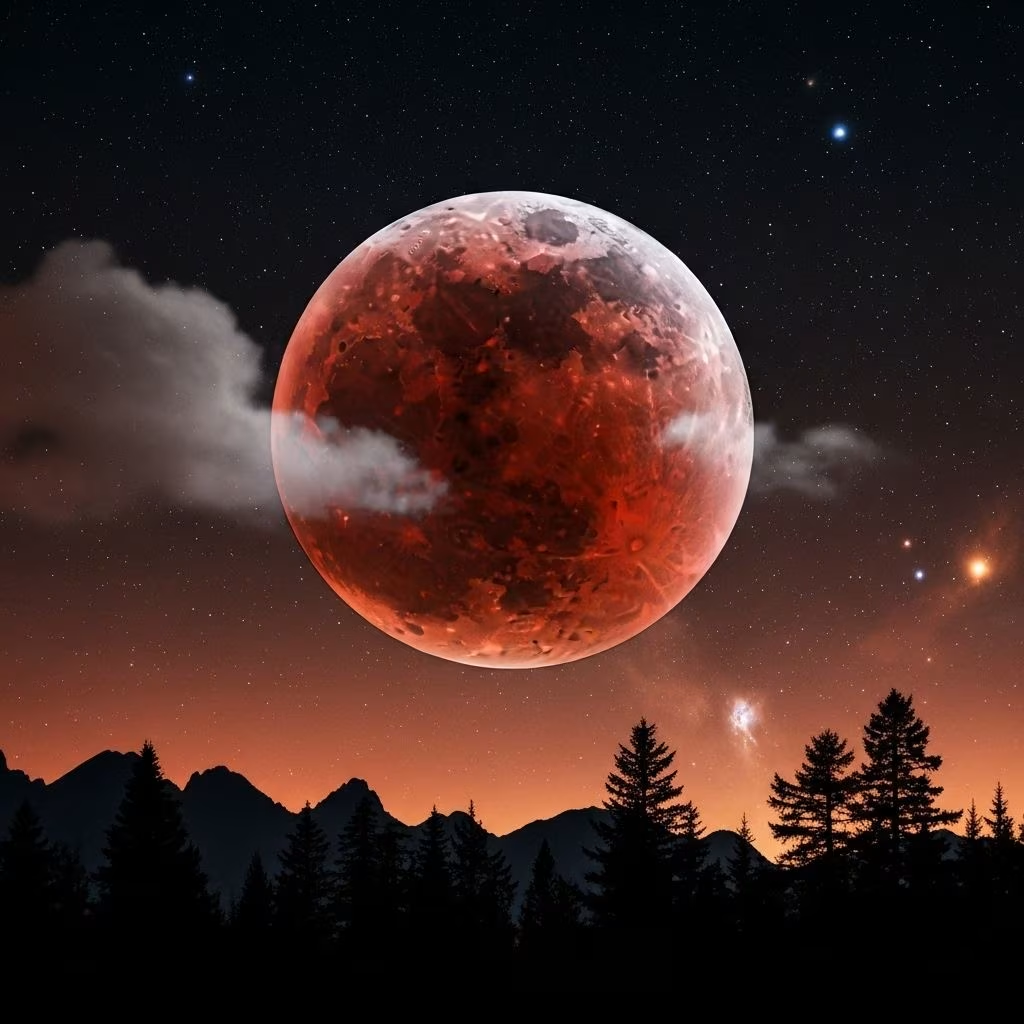
What Is a Blood Moon?
The term Blood Moon refers to a captivating astronomical event where the Moon appears with a rusty red or coppery hue during a total lunar eclipse. Although not a scientific term, ‘Blood Moon’ has entered popular vernacular to describe lunar totalities, and has also found resonance in cultural, historic, and meteorological discussions.
The Three Common Definitions of “Blood Moon”
- A total lunar eclipse, during which the Moon takes on a reddish color.
- A series of four consecutive total lunar eclipses (a tetrad) occurring within two years.
- Occasionally, the term is used loosely to describe any full moon with an unusual tint or hue.
Why Does the Moon Turn Red During an Eclipse?
When the Earth passes between the Sun and the Moon during a total lunar eclipse, the Moon traverses through the Earth’s shadow (the umbra), blocking most direct sunlight. However, some indirect sunlight still reaches the Moon — filtered and refracted by Earth’s atmosphere — bathing the lunar surface in shades of red, orange, or even brown.
Rayleigh Scattering: The Atmospheric Filter
- Rayleigh scattering occurs as sunlight passes through Earth’s atmosphere. Shorter wavelengths (blues and violets) scatter more strongly than longer, red wavelengths.
- This is the same phenomenon responsible for blue skies and red sunsets on Earth.
- The result: During a lunar eclipse, the bent and filtered red light beams onto the Moon’s surface, giving it the recognizable blood-red glow.
Table: Basic Comparison — Lunar Eclipse vs. Blood Moon
| Lunar Eclipse | Blood Moon |
|---|---|
| Earth blocks sunlight from reaching the Moon. | Refers specifically to the red-tinted Moon during totality. |
| Occurs 2-4 times per year. | Visible only during total lunar eclipses. |
| Moon can appear gray, dark, or red. | Moon appears red, copper, or orange due to atmospheric filtering. |
How Often Do Blood Moons Occur?
Blood Moons aren’t all that rare. Total lunar eclipses happen a few times every decade, but their visibility depends on your geographic location and weather conditions.
- On average, any given place on Earth will witness a total lunar eclipse every few years.
- A tetrad (four consecutive total lunar eclipses) is more exceptional.
- The next total lunar eclipse, or Blood Moon, will occur on March 3, 2026.
Scientific Explanation: The Journey of Light During an Eclipse
To understand what causes the Blood Moon’s striking color, it’s essential to follow the path of sunlight as it interacts with Earth’s atmosphere:
- As the Moon enters the umbra, all direct sunlight is blocked.
- The only light that reaches the Moon is sunlight that’s been refracted through Earth’s thick atmosphere.
- Atmospheric particles filter out shorter wavelengths, allowing reds and oranges through.
- The result is a Moon awash in red and orange hues, varying based on atmospheric conditions.
Colors of the Blood Moon: Not Always the Same
While most Blood Moons appear red, atmospheric changes — from volcanic ash, pollution, or dust — can give the Moon shades of orange, yellow, copper, or brown during totality.
- After major volcanic eruptions, more particulate matter in the atmosphere can darken or brown the Moon’s color.
- If the air is relatively clear, the Moon may shine with a bright copper or orange shade.
Folklore, Culture, and History
Blood Moons have been a source of wonder — and sometimes apprehension — across cultures. Ancient texts and mythologies often viewed the red Moon as an omen or sign. In recent decades, the term surged in popularity due to media coverage and certain religious interpretations.
- Ancient Civilizations: Often considered Blood Moons to be portents of change, disaster, or divine intervention.
- Modern Usage: Gained momentum in the 2010s due to several consecutive lunar eclipses (the “tetrad”) and media reporting.
- Pop Culture: Used in films, literature, and even video games to evoke mystery or suspense.
Blood Moon vs. Other Moon Phenomena
- Supermoon: When the Moon is closest to Earth and appears larger and brighter.
- Blue Moon: The second full moon in a calendar month.
- Harvest Moon: The full moon closest to the autumnal equinox.
- Blood Moon: The reddish Moon visible during a total lunar eclipse.
Sometimes, these phenomena coincide, such as the rare Super Blue Blood Moon — when a supermoon, blue moon, and blood moon all happen together.
Observing a Blood Moon: Tips for Stargazers
- Find a dark location: Away from city lights for optimal viewing.
- Check eclipse schedules: Consult astronomical calendars for the timing and visibility in your area.
- Use binoculars or a telescope: Enhances the color and detail but isn’t necessary for enjoying the spectacle.
- Protect your eyes: Unlike solar eclipses, watching a lunar eclipse is completely safe for your eyes.
- Capture the moment: Use a camera with a tripod for long exposures to record the event.
Table: Scientific vs. Popular Definitions
| Definition | Scientific Term | Popular Term |
|---|---|---|
| Red Moon during total eclipse | Total Lunar Eclipse | Blood Moon |
| Four total lunar eclipses in sequence | Lunar Eclipse Tetrad | Blood Moon Tetrad |
| Blue moon coinciding with an eclipse | Rare lunar event | Super Blue Blood Moon |
Frequently Asked Questions (FAQs)
Q: Is the Blood Moon dangerous or harmful?
No, a Blood Moon is a natural celestial phenomenon and poses no threat to Earth or human health.
Q: Why don’t all lunar eclipses look red?
Atmospheric conditions during the eclipse — including dust, pollution, and weather — affect the hue, so sometimes the Moon may appear orange, yellow, or brown rather than red.
Q: Can I view a Blood Moon without special equipment?
Yes. Lunar eclipses are safe to watch with the naked eye, though binoculars or a telescope can enhance the experience.
Q: How is a Blood Moon different from a solar eclipse?
A Blood Moon occurs during a total lunar eclipse, when Earth’s shadow falls on the Moon. A solar eclipse occurs when the Moon’s shadow falls on Earth, temporarily darkening parts of the daytime sky.
Q: What’s the next Blood Moon?
The next total lunar eclipse (Blood Moon) is projected for March 3, 2026.
Blood Moon Myths and Misconceptions
- Myth: Blood Moons predict disasters or change.
- Fact: No scientific basis exists for such claims. The event is a well-understood natural phenomenon.
- Myth: Blood Moons are rare.
- Fact: While some patterns (like tetrads) are rare, total lunar eclipses — and thus Blood Moons — occur regularly.
Summary of Key Points
- ‘Blood Moon’ is a non-scientific term for a total lunar eclipse, where Earth’s atmosphere refracts sunlight, coloring the Moon red.
- The appearance and intensity of the red color depend on atmospheric conditions, including dust, clouds, and pollution.
- Blood Moons have inspired mythologies and cultural interpretations, but the scientific explanation is straightforward and well-documented.
- Viewing a Blood Moon is accessible, awe-inspiring, and completely safe for all stargazers.
References
- https://spaceplace.nasa.gov/full-moons/en/
- https://www.timeanddate.com/eclipse/blood-moon.html
- https://en.wikipedia.org/wiki/Lunar_eclipse
- https://www.merriam-webster.com/dictionary/blood%20moon
- https://www.sciencealert.com/blood-moon
- https://www.nasa.gov/image-article/blood-moon-lunar-eclipse/
- https://www.accuweather.com/en/weather-news/blood-moons-explained-why-the-moon-turns-red-during-lunar-eclipses/338261
- https://en.wikipedia.org/wiki/Blood_Moon
- https://science.howstuffworks.com/blood-moon.htm
- https://originalbotanica.com/blog/blood-moon-meaning-lunar-eclipse
- https://byjus.com/current-affairs/blood-moon/
- https://www.worldatlas.com/articles/what-is-a-blood-moon.html
- https://www.skyatnightmagazine.com/astrophotography/moon/lunar-eclipses
- https://gulfnews.com/world/blood-moon-explained-why-the-moon-turns-a-fiery-red-glow-1.500252461


