


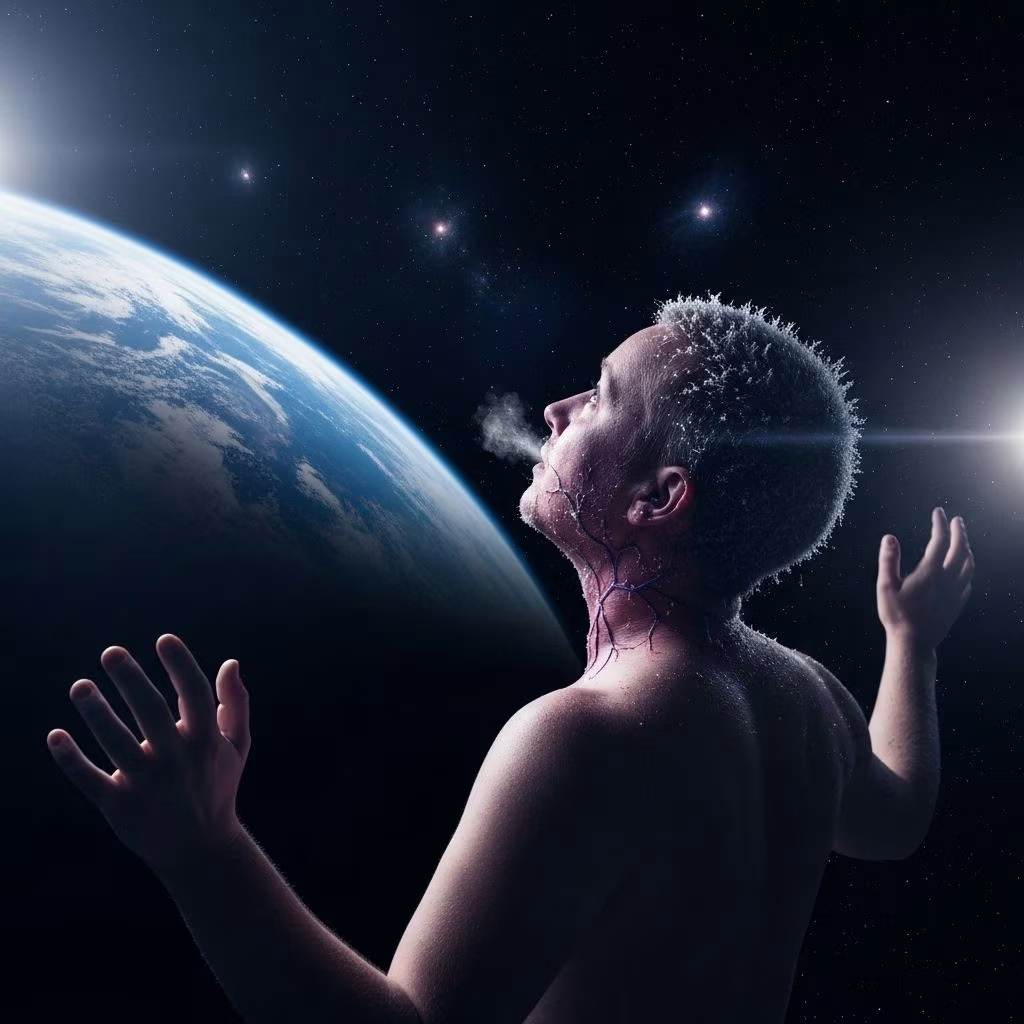
How Long Could You Survive in Space Without a Spacesuit?
Outer space is one of the harshest environments imaginable. Despite its vast allure, the consequences of human exposure to the vacuum beyond Earth’s atmosphere are severe and almost immediate. But what actually happens if you find yourself outside a spacecraft without a spacesuit? This article explores the biological effects, the perilous timeline from consciousness to death, and dispels Hollywood myths surrounding instant human destruction in space.
The Vacuum of Space Versus the Human Body
The vacuum of space is completely inhospitable for unprotected human life. Without atmospheric pressure, oxygen, or protection against extreme temperatures and cosmic radiation, the body is exposed to an environment for which evolution has not prepared us. But the transition from protected to exposed triggers a rapid series of physiological events, most initiated within seconds.
- No air pressure: There is virtually no atmospheric pressure in space, which affects both gas and liquid in the body.
- No breathable oxygen: Asphyxiation begins as soon as the lungs are empty.
- Extreme temperatures: Depending on your position relative to a star, you could be burned rapidly by solar radiation or, in the shadow, exposed to extreme cold.
- Radiation hazard: Unfiltered cosmic rays and solar radiation deliver significant DNA damage.
Hollywood Myths Versus Scientific Reality
Pop culture often dramatizes exposure to space as an instantaneous explosion, freezing, or horrific injury the moment an astronaut is outside their suit. The reality is both less dramatic and more insidious:
- You do not explode—skin and connective tissue keep you together.
- You do not instantly freeze—heat loss by radiation takes longer in a vacuum.
- Consciousness is brief in the vacuum, but death takes a minute or more.
- Only in rare or specific orbital mechanics scenarios could the body receive intense burn injuries quickly.
Survival Timeline: Seconds in the Void
Here’s a moment-by-moment look at what happens to the human body when it is suddenly exposed to the vacuum of space without a suit:
| Elapsed Time | What Happens | Body Response |
|---|---|---|
| 0 Seconds | Sudden exposure to vacuum. Air in lungs rushes out. | Immediate decompression; risk of lung rupture if holding breath. |
| 5-10 Seconds | Oxygen in blood depletes rapidly. Water vaporizes on moist surfaces (eyes, mouth). | Swelling starts; consciousness begins to wane. |
| 10-15 Seconds | Brain is starved of oxygen. | Unconsciousness; possible convulsions. |
| 30 Seconds | Cells are depleted of oxygen (hypoxia); more fluids vaporizing. | Complete loss of function; irreversible brain cell death looming. |
| 60-90 Seconds | Body asphyxiates. | Death from lack of oxygen; internal injury from swelling and vaporization. |
| Several Hours | Thermal radiation exposure (burn or freeze). | Post-mortem processes in space. |
Biological Effects of Space Exposure
Understanding what happens at the cellular and systemic levels reveals just how vulnerable the human form is outside of Earth’s biosphere.
- Decompression and Barotrauma:
- If you hold your breath, expanding air can rupture lungs and damage tissue—exhaling before exposure is crucial.
- Decompression causes dissolved gases (primarily nitrogen) to form bubbles in tissues and blood, similar to the bends in divers.
- Boiling and Vaporization:
- Fluids and saliva on the tongue, eyes, and airways begin to boil in the absence of atmospheric pressure, even though body fluids beneath the skin remain liquid due to bodily pressure.
- This vaporization contributes to rapid dehydration on exposed surfaces.
- Swelling:
- Gas and vapor expand the body’s soft tissues, causing dramatic swelling—potentially up to twice the normal size—but not bursting.
- Loss of Consciousness:
- After 10-15 seconds, depleted oxygen causes fainting before death by asphyxiation.
- Neural tissue is extremely sensitive to hypoxia; after only 60-90 seconds brain cells sustain irreversible damage.
- Thermal Stress:
- In the sun, rapid burns can occur; in the shade or away from stars, cooling is slow because heat is lost only by infrared radiation.
- Eventually, the body cools to the temperature of its environment in several hours to a day.
- Radiation Exposure:
- Certain high-energy particles can cause acute radiation injury, but serious consequences develop only with prolonged exposure.
What Happens After Death in Space?
The fate of a body in space depends on location, temperature, and exposure to light or collisions. In the vacuum of deep space:
- Decomposition is slow—there are no microbes to speed up putrefaction except for gut bacteria until they too die off due to lack of oxygen.
- The body can remain preserved for millions of years if untouched by cosmic debris or energy.
- In direct sunlight, the body may become mummified as liquids evaporate quickly.
- In the shadow of a planet or spacecraft, the body will gradually freeze as heat radiates away.
- With no atmosphere, odors and decay gases also dissipate into the void, leaving the body unchanged, potentially for eons.
Why Spacesuits Are Life Support Systems
Astronauts wear spacesuits for far more than warmth. Each feature addresses specific threats the vacuum of space poses:
- Oxygen supply: Maintains respiration and prevents rapid asphyxiation.
- Pressure regulation: Prevents bodily fluids from boiling; supports internal pressure balance.
- Thermal control: Protects against extreme heat and cold, using insulation and temperature regulation systems.
- Micrometeoroid shield: Defends against high-velocity space dust and tiny debris.
- Radiation shielding: Reduces exposure to harmful rays and energetic particles from space.
Spacesuits: Not Just Fancy Clothing
Spacesuits integrate advanced engineering to keep the body alive. They are, in effect, personal spacecraft designed for temporary survival outside pressurized habitats.
Are There Real-Life Incidents of Exposure?
Though no astronaut has died from being exposed to space alone, there are a few close calls and relevant accidents:
- Soyuz 11 (1971): Three cosmonauts died when their Soyuz capsule depressurized during return to Earth. The fatal hypoxia occurred within seconds. No explosion or gruesome injuries were reported; their blood contained gas bubbles typical of decompression.
- NASA training accident (1966): Spacesuit malfunction during vacuum tube testing caused an astronaut to lose consciousness within 12–15 seconds; he survived after rapid repressurization without lasting injury.
Frequently Misunderstood Facts
- Do Humans Instantly Explode in Space? No. The skin and underlying tissues are tough enough to withstand the pressure differential between body interior and space.
- Can You Survive If Rescued Quickly? Yes, if exposure is brief (under 60 seconds), and rapid treatment is provided, a person may survive with minimal long-term consequences.
- Is Death in Space Quick and Painless? While loss of consciousness happens quickly, the brief process involves extreme physical trauma and is not painless or instantaneous.
- Will Your Body Instantly Freeze? Not in the vacuum and not unless exposed to extreme cold in shadow. Freezing takes many hours due to slow radiative heat loss.
Frequently Asked Questions (FAQs)
Q: How fast does a human lose consciousness in space?
A: Within 10–15 seconds. Your brain quickly uses up all available oxygen, and you faint almost immediately after exposure.
Q: What is the main cause of death in the vacuum of space?
A: Asphyxiation (lack of oxygen) is the primary cause of death, not explosive decompression or freezing.
Q: Can any part of your body survive longer than the rest in space?
A: No. All tissue is exposed to vacuum simultaneously. The brain, being most sensitive to hypoxia, succumbs very quickly.
Q: Is immediate re-pressurization possible for survival?
A: Yes, if the exposure is under 60 seconds, prompt first aid and oxygen delivery can prevent permanent damage and fatality.
Q: What should you do if suddenly exposed to the vacuum of space?
A: Exhale immediately to prevent lung injury, try to protect eyes and mouth, and wait for rapid rescue. Holding breath increases fatal risk.
Conclusion
The vacuum of space is unyielding and deadly, granting no mercy to an unprotected human body. While death is not instantaneous, survival is measured in seconds without a spacesuit. Fortunately, with modern engineering and vigilant safety protocols, astronauts are well-protected and real incidents of exposure are exceedingly rare. For anyone pondering the question of how long you could survive in space without a suit, the answer is simple: not long at all, and never by choice.
References
- https://www.space.com/how-long-could-you-survive-in-space-without-spacesuit
- https://www.wtamu.edu/~cbaird/sq/2012/12/17/how-long-can-a-human-in-outer-space-last-without-a-spacesuit-before-exploding/
- https://www.sciencefocus.com/space/what-would-happen-if-you-were-in-space-without-a-spacesuit
- https://www.livescience.com/human-body-no-spacesuit
- https://science.howstuffworks.com/suitless-space-walk.htm
- https://www.youtube.com/watch?v=6CbWEEl1qgk
- https://www.businessinsider.com/how-long-human-survive-outer-space-without-spacesuit-2017-5
- https://www.youtube.com/watch?v=4TlyzKBm5yw
- https://www.wtamu.edu/~cbaird/sq/mobile/2012/12/17/how-long-can-a-human-in-outer-space-last-without-a-spacesuit-before-exploding/
- https://www.physicsforums.com/threads/human-in-outer-space-without-space-suit.214622/
- https://science.howstuffworks.com/question540.htm
- https://www.livescience.com/space/space-exploration/how-long-could-a-person-survive-in-space-without-a-spacesuit
- https://www.scienceabc.com/nature/universe/long-can-one-survive-planet-without-space-suit.html
- https://www.businessinsider.com/how-long-human-survive-outer-space-without-spacesuit-2017-5?op=1
- https://newspaceeconomy.ca/2023/08/03/human-survival-in-outer-space-the-perils-and-possibilities/
- https://www.indiatoday.in/visualstories/education/can-you-survive-in-space-without-a-space-suit-70202-16-10-2023
- https://www.dplylemd.com/post/surviving-in-space-without-a-spacesuit
- https://www.iflscience.com/what-would-happen-to-your-body-in-space-without-a-spacesuit-71405
- https://askanastronomer.org/how-long-can-a-human-in-outer-space-last-without-a-spacesuit-before-exploding/


