Moon Halos: Unveiling the Science and Lore of Lunar Rings
The night sky often delivers unexpected wonders, and among the most striking are moon halos — luminous rings that encircle our moon, captivating stargazers and photographers alike. These celestial spectacles not only inspire poetic awe, but are also an invitation to explore atmospheric science, optical physics, and cultural history.
What Is a Moon Halo?
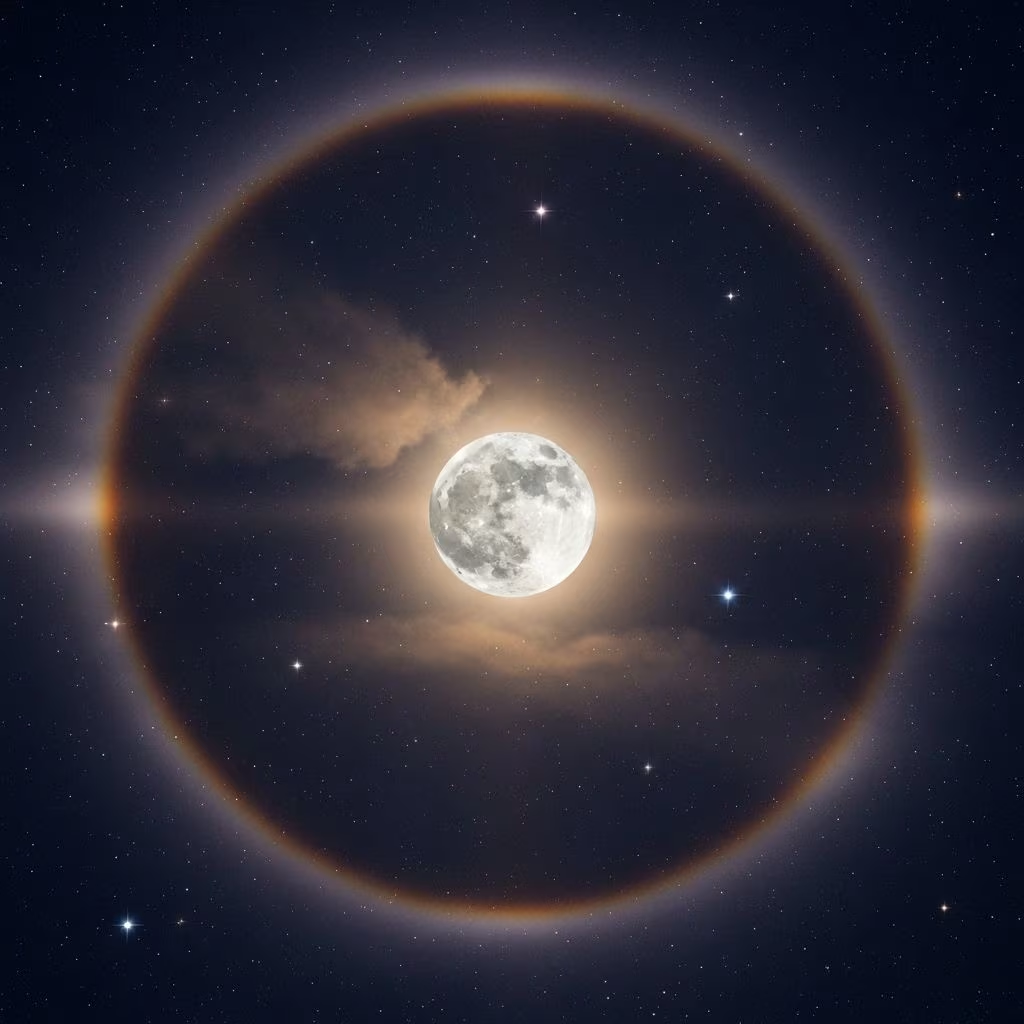
A moon halo, also known as a lunar halo, is a large, bright ring of light encircling the moon. This phenomenon manifests when high-altitude ice crystals, predominantly in cirrus or cirrostratus clouds, refract and reflect moonlight, transforming the atmosphere into a panoramic lens. The resultant halo is typically seen at night, but similar effects can form around the sun during the day.
- Appearance: A well-defined, glowing ring surrounding the moon.
- Common Size: Univocally forms a 22-degree radius circle, corresponding to the angular distance from the moon to the ring’s edge.
- Occurrence: Visible only when the sky contains thin, high-altitude clouds with sufficient ice crystals.
Formation: The Science Behind Lunar Halos
The moon halo phenomenon is an intricate interplay of light and atmospheric matter. Let’s break down the mechanics:
- Cloud Types: Cirrus and cirrostratus clouds, which form between 20,000 and 40,000 feet (6,100 and 12,200 meters).
- Ice Crystals: Tiny, suspended hexagonal ice crystals act as prisms, bending and dispersing moonlight.
- Optical Effects: The light is refracted (bent), reflected, and dispersed through the ice crystals. The specific hexagonal shape ensures consistency in halo size.
- Geometry: The hexagonal structure refracts light at a 22-degree angle, creating the characteristic ring.
In effect, these ice crystals transform the upper atmosphere into a gigantic lens, resulting in arcs and halos around luminous celestial bodies. This phenomenon is a compelling example of atmospheric optics at work.
The Typical 22-Degree Halo
Scientists note that moon halos most frequently appear as 22-degree circles around the moon. The angular distance is about the width of your outstretched hand at arm’s length (a useful trick for observers).
| Parameter | Halo Characteristic |
|---|---|
| Radius | 22 degrees |
| Altitude Range | Cirrus clouds (20,000 – 40,000 feet) |
| Crystal Type | Hexagonal ice crystals |
| Occurrence | Most commonly at night |
Global Sightings and Photography
Lunar halos are visible all over the world, whenever atmospheric conditions are right. Astrophotographers have captured their splendor from locations such as Malaysia, where time-lapse photography demonstrated the gradual emergence of the Milky Way galaxy alongside a moon halo above Mersing.
- Astrophotography: Long-exposure captures often reveal additional celestial features (e.g., planets Venus and Saturn) in the same field as the halo.
- Time-Lapse: Time-lapse imaging can demonstrate the stubborn persistence of the ring and the shifting positions of stars and planets.
- Notable Images: Malaysian photographer Justin Ng filmed an evolving nightscape featuring halo, moon, and Milky Way in a 12-hour time-lapse just before a meteor shower peak.
Recent Noteworthy Events
On November 27th, a dramatic moon halo shone brightly in the Florida sky alongside a SpaceX Falcon 9 rocket launch. The station’s time-lapse photography captured both the rocket’s streak and the luminous ring encircling the full moon, a rare juxtaposition of technological and natural spectacle.
- SpaceX Launch: The rocket punched a hole through icy clouds but didn’t disrupt the halo. The ring persisted for at least 128 seconds during the time-lapse photo.
- Cloud Formation: Halo emerged thanks to ice crystals in the cirrus clouds overhead, not due to rocket interactions.
Moon Halos vs. Sun Halos: What’s the Difference?
Halos are not exclusive to the moon. When the same optical phenomenon occurs during daylight, the result is a sun halo. Both have the same origin — light interacting with ice crystals high in the atmosphere — with a few distinctions:
| Feature | Moon Halo | Sun Halo |
|---|---|---|
| Visibility | Nighttime | Daytime |
| Color | White/pearl; sometimes faint rainbow tones | Brighter, more pronounced colors (occasionally full rainbow) |
| Frequency | Frequent with full or bright moon | More common overall |
Folklore and Weather Superstitions
Throughout history, moon halos have been imbued with superstition and used in weather lore. Ancient observers noticed that halos often preceded inclement weather, such as rain or snow. This correlation is rooted in fact: cirrus clouds, which generate halos, usually arrive before lower, denser rainclouds.
- Weather Prediction: Moon halos have been used as precursors to storms, especially in pre-modern cultures.
- Folklore: Many traditions see halos as omens — sometimes of misfortune, sometimes simply as signs of change.
- Symbolism: In poetry and storytelling, halos often symbolize mystery, magic, or important transitions.
Scientific Insights: What Does a Halo Reveal?
Moon halos are more than visual wonders; they provide subtle clues about atmospheric conditions:
- Presence of Ice Crystals: Indicates cirrus clouds are overhead.
- Atmospheric Stability: Suggests the upper atmosphere is cold and stable enough to maintain cloud formation.
- Weather Change: Often signals an approaching weather system, as these clouds precede warm fronts and precipitation.
Observing a Moon Halo: A Practical Guide
Anyone can observe a moon halo on clear nights when high-altitude clouds drift by and the moon shines brightly. Here’s how to best enjoy the view:
- Look Up: Scan for hazy clouds illuminated by the moon.
- Estimate the Angle: Stretch your hand at arm’s length; the distance from thumb to pinky approximates 22 degrees, aligning with the halo’s radius.
- Photography Tips:
- Use long-exposure settings to enhance the ring’s glow.
- Capture foreground objects (trees, buildings) for scale.
- Wide-angle lens often works best.
- Safety Note: Never look directly into the sun if searching for a daytime halo.
Fun Facts About Moon Halos
- Moon halos can sometimes produce faint rainbow colors on their inner or outer edges, due to varied light dispersion.
- Halos can appear alongside other phenomena, such as moon dogs (parhelia), which are bright spots appearing on either side of the halo.
- The darker area inside the halo results from ice crystals filtering light outward, producing a shadow cone effect.
- Not all halos are perfectly circular; some are distorted by uneven cloud structure or crystal alignment.
Related Phenomena
- Moonbows: Faint nighttime rainbows formed by moonlight refracted through raindrops.
- Corona: A smaller ring, usually less defined, created by water droplets rather than ice crystals.
- Sun Halos: Brighter, rainbow-colored rings around the sun, formed in a similar way.
Frequently Asked Questions (FAQs)
Q: What causes a moon halo?
A: Moon halos form when moonlight passes through ice crystals in high-altitude clouds (cirrus/cirrostratus), refracting light into a ring at 22 degrees.
Q: Does a moon halo mean bad weather is coming?
A: Often, yes. Cirrus clouds that produce halos typically arrive ahead of a weather front, meaning rain or snow may follow within one or two days.
Q: Can moon halos be different sizes?
A: The most common lunar halos are 22-degree rings, but occasionally rarer halos appear with different geometric angles (e.g., 46-degree halos), requiring different crystal shapes and arrangements.
Q: Do moon halos affect stargazing or astronomy?
A: They may scatter light and make faint objects harder to see, but often enhance night-sky photography by adding dramatic visual context.
Q: Are moon halos visible everywhere?
A: Yes, wherever atmospheric conditions allow for thin, high clouds and a bright moon. They occur on every continent.
Conclusion: The Enduring Magic of Lunar Halos
Moon halos remain one of the most accessible and awe-inspiring atmospheric phenomena. Blending optical science, natural beauty, and folklore, they invite us to witness the remarkable interplay between our planet’s weather and the light issued by cosmic neighbors. Whether predicting the next storm or simply stopping to admire the night’s spectacle, moon halos always remind us: the universe rewards those who look up.
References
- https://www.space.com/spacex-rocket-hole-clouds-full-moon-halo
- https://www.space.com/space-exploration/artemis/a-gateway-to-the-gateway-around-the-moon-space-picture-of-the-day-for-april-16-2025
- https://www.space.com/space-exploration/artemis/moon-orbiting-gateway-space-stations-habitat-module-arrives-in-the-us-photos
- https://www.space.com/22493-lunar-halo-over-malaysia.html
- https://www.space.com/moon-halo
- https://www.space.com/14497-moon-halo-photo-hungarian-castle.html
- https://www.space.com/13867-lunar-halo-orion-skywatcher-photo.html
- https://www.space.com/42318-lunar-eclipse-cloudy-halo-video.html
- https://science.nasa.gov/uncategorized/new-nasa-mission-to-reveal-earths-invisible-halo/
- https://www.space.com/astronomy/dark-universe/a-massive-dark-matter-halo-may-explain-the-strange-5th-point-of-this-einstein-cross