


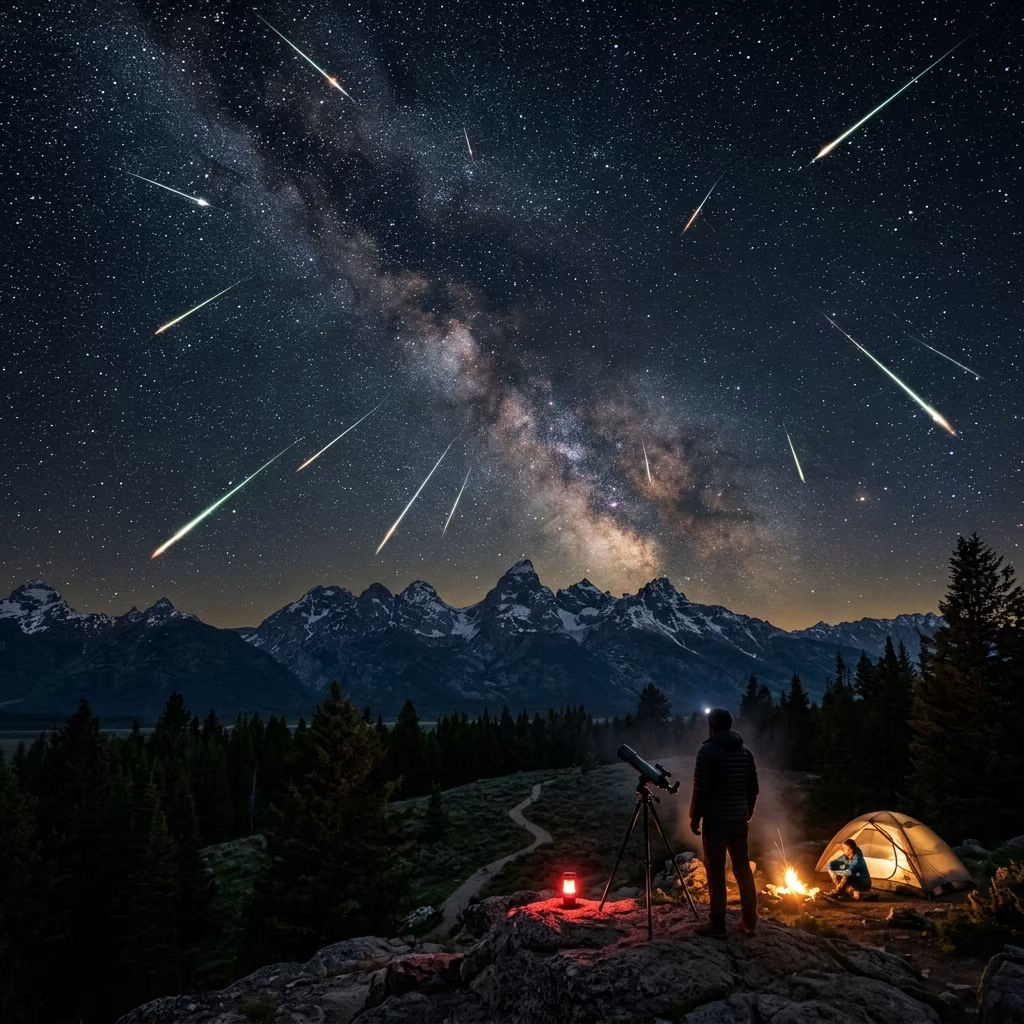
Perseid Meteor Shower 2025: Peak Viewing Guide for August 12-13
The Perseid meteor shower is among the most anticipated annual skywatching events, promising a dazzling display of shooting stars lighting up the night sky each summer. In 2025, this celestial phenomenon peaks on the night of August 12-13, offering a prime opportunity for sky enthusiasts and casual observers alike to witness nature’s cosmic fireworks.
Overview of the Perseid Meteor Shower
The Perseids are renowned for their high frequency of bright meteors, some of which flare spectacularly as fireballs streaking across the sky. First observed by astronomers centuries ago, this meteor shower holds a special place as a summer highlight for northern hemisphere stargazers. Its radiant—the point in the sky from which the meteors appear to originate—is located in the constellation Perseus, lending the shower its name.
Each year, as the Earth passes through debris left behind by the comet Swift-Tuttle, tiny particles slam into our atmosphere and vaporize, creating the streaks of light we see as meteors. The Perseids are known for:
- Reliably high hourly rates at their peak (sometimes up to 100 meteors per hour under ideal conditions)
- Bright shooting stars and occasional fireballs
- Long trails that can last several seconds
Key Dates & Best Times to Watch in 2025
The 2025 Perseid meteor shower is active from July 17 to August 24, with peak activity expected during the overnight hours of August 12-13. This peak is when meteor rates are highest and the most spectacular show is likely. However, visibility conditions in 2025 are significantly affected by the lunar phase.
| Event | Dates (2025) | Details |
|---|---|---|
| Shower Active | July 17 – August 24 | Meteor rates gradually rise, peaking in mid-August |
| Peak Nights | August 12-13 | Best viewing, but moonlight will impact fainter meteors |
Moonlight Challenge: The 2025 Perseid peak unfortunately coincides with a waning gibbous Moon (about 86% illuminated), which will wash out all but the brightest meteors. Under excellent conditions without moonlight you might expect up to 100 meteors per hour, but this year typical rates from dark sky sites may be reduced to around 15-30 visible meteors per hour.
According to meteor expert Robert Lunsford of the American Meteor Society, the best time to spot Perseids is in the predawn hours of August 13, when the radiant is high in the sky and activity reaches its maximum. Long, grazing meteors may be visible as soon as it gets dark, with activity building through midnight.
The Science Behind the Perseids
What Causes the Perseid Meteor Shower?
The Perseids are caused by Earth crossing the debris trail of comet 109P/Swift-Tuttle. This ancient comet, discovered by Lewis Swift and Horace Tuttle in 1862, orbits the Sun every 133 years, leaving a wide stream of rocky and dusty particles in its wake. As Earth orbits through this stream each August, the particles plunge into our atmosphere at tremendous speed—around 36 miles per second (58 km/s). The intense friction causes the meteors to heat up and vaporize, resulting in the streaks of light we call shooting stars.
- Origin Comet: 109P/Swift-Tuttle
- Comet’s Orbit: Once every 133 years
- Meteor Speed: 36 miles per second (58 km/s)
- Meteor Radiant: Constellation Perseus
History & Discovery
The association between the Perseids and comet Swift-Tuttle was first recognized by Italian astronomer Giovanni Schiaparelli in the late 1800s. The spectacle of the Perseids has been recorded by skywatchers for over a millennium and continues to be a source of wonder and excitement, inspiring both amateur astronomers and the general public.
How to See the Perseids in 2025
Even though moonlight will be strong during the peak in 2025, you can still maximize your meteor-watching experience with some careful planning. Follow these steps to give yourself the best chance:
- Check the weather forecast for clear skies before you go out. Flexible planning can help you avoid cloudy or rainy nights.
- Find a dark location far away from urban light pollution. Rural areas, parks, or open fields work best.
- Face away from the Moon to minimize its glare and increase your chances of seeing fainter meteors.
- Arrive early and give your eyes at least 15-30 minutes to adjust to the dark. Avoid bright screens and artificial light.
- Lie back comfortably with a blanket or reclining chair to take in the widest possible view of the sky.
- Remember that binoculars and telescopes are not necessary—they limit your field of view and are not helpful for meteor watching.
Best Times and Directions
- Predawn hours (2 a.m. to dawn) offer the best rates, since the radiant is highest and Earth rotates you into the meteor stream.
- You can begin watching as early as 10 p.m. local time; some long, slow-moving ‘earthgrazer’ meteors are visible earlier in the night before the Moon rises higher.
- Look northeast toward Perseus, but meteors can appear in any part of the sky. The more sky you can see, the better.
Essential Meteor Watching Tips
- Dress warmly and comfortably, as nights can get chilly even in summer.
- Bring snacks and a hot drink for comfort during hours of watching.
- Use a red flashlight to preserve night vision.
- Go with friends or family for a safe and enjoyable experience.
- Patience is vital—meteors often appear in bursts, with quiet spells in between.
- Record your viewing with a notebook or photography (long exposures can capture brighter meteors, especially fireballs).
Meteor Shower Viewing: Quick Checklist
- Dark, unobstructed sky
- No binoculars/telescopes required
- Face away from the Moon
- Best after midnight
- Let eyes adapt to darkness (~20 minutes)
- Lie back for maximum sky coverage
Frequently Asked Questions (FAQ)
When is the best time to watch the 2025 Perseid meteor shower?
The night of August 12-13, 2025, with peak rates likely before dawn. For several nights before and after, meteors will still be visible at lower rates.
How many meteors will I see during the peak?
While the theoretical maximum under dark, moonless skies can be around 100 meteors per hour, the bright waning gibbous Moon in 2025 will reduce the visible rate to about 15-30 meteors per hour in optimal conditions.
Where should I look in the sky?
Meteors will seem to radiate from the constellation Perseus in the northeast, but can appear anywhere in the sky. The key is to view as much open sky as possible and to position yourself so the Moon is behind you.
Do I need special equipment?
No. Unlike many celestial events, meteors are best observed with just your eyes. Binoculars and telescopes restrict your field of view and are not recommended.
What causes meteor showers?
Meteor showers like the Perseids occur when Earth passes through a stream of debris left behind by a comet—in this case, Swift-Tuttle. These debris bits hit our atmosphere at high speed and burn up, producing streaks of light.
How can I maximize my chances despite moonlight?
- Choose the darkest site possible away from artificial lights.
- Face away from the Moon’s location in the sky.
- Be patient—look for brighter meteors and fireballs.
Can Perseids be seen in the southern hemisphere?
While visible from much of the northern hemisphere, southern hemisphere observers will see far fewer Perseids, as the radiant does not rise high above the horizon there.
Further Resources
- American Meteor Society’s Meteor Shower Calendar (for worldwide viewing predictions and tips)
- Royal Observatory Greenwich’s Perseid Meteor Shower Guide
- The Planetary Society’s Complete Meteor Shower Viewing Guide
- Stargazing apps (such as SkySafari, Stellarium, or Star Walk) to locate Perseus and plan your observing session
Summary Table: Perseid Meteor Shower 2025 Key Facts
| Key Fact | 2025 Details |
|---|---|
| Shower Activity | July 17 – August 24 |
| Peak Night | August 12–13 |
| Peak Rate (Ideal) | Up to 100/hour |
| Expected Visible Rate (2025) | 15–30/hour due to Moon |
| Best Viewing Time | 2 a.m. to dawn |
| Moon Phase | Waning Gibbous (86%) |
| Origin Comet | 109P/Swift-Tuttle |
| Direction | Look northeast (Perseus) |
Enjoy the Perseid Meteor Shower Safely
Despite lunar interference, the Perseids offer a beautiful, accessible natural spectacle. Plan for comfort and patience, adjust for the moonlight, and join millions of skywatchers worldwide in savoring the universe’s summer fireworks show!
References
- https://www.amsmeteors.org/meteor-showers/meteor-shower-calendar/
- https://www.space.com/stargazing/meteor-showers/dont-miss-perseid-meteor-shower-2025-peak-aug-12-13-heres-what-you-need-to-know
- https://www.rmg.co.uk/stories/space-astronomy/perseid-meteor-shower-guide-uk-when-where-to-see
- https://www.planetary.org/articles/your-guide-meteor-shower
- https://in-the-sky.org/news.php?id=20250812_10_100
- https://www.space.com/stargazing/meteor-showers/the-perseid-meteor-shower-2025-peaks-aug-12-13-heres-what-to-expect-from-the-dazzling-cosmic-light-show
- https://abcnews.go.com/US/watch-perseid-meteor-shower-peak-tuesday/story?id=124580723
- https://www.usatoday.com/story/news/nation/2025/08/10/perseid-meteor-shower-2025/85577274007/
- https://www.amsmeteors.org/2025/08/viewing-the-perseids-in-2025/
- https://www.youtube.com/watch?v=gxxRY2FsKno
- https://www.timeanddate.com/astronomy/meteor-shower/perseid.html
- https://starwalk.space/en/news/all-you-need-to-know-about-the-perseids
- https://www.nhm.ac.uk/discover/meteor-shower-lyrids-perseids-geminids-leonids-orionids.html
- https://www.livescience.com/space/meteoroids/perseid-meteor-shower-2025-how-to-see-shooting-stars-despite-the-full-moon
- https://www.nasa.gov/blogs/watch-the-skies/2025/08/08/bright-moonlight-could-interfere-with-view-of-perseids-peak/
- https://www.nasa.gov/image-article/perseids-meteor-shower/


