Summer Solstice 2025: The Longest Day Arrives
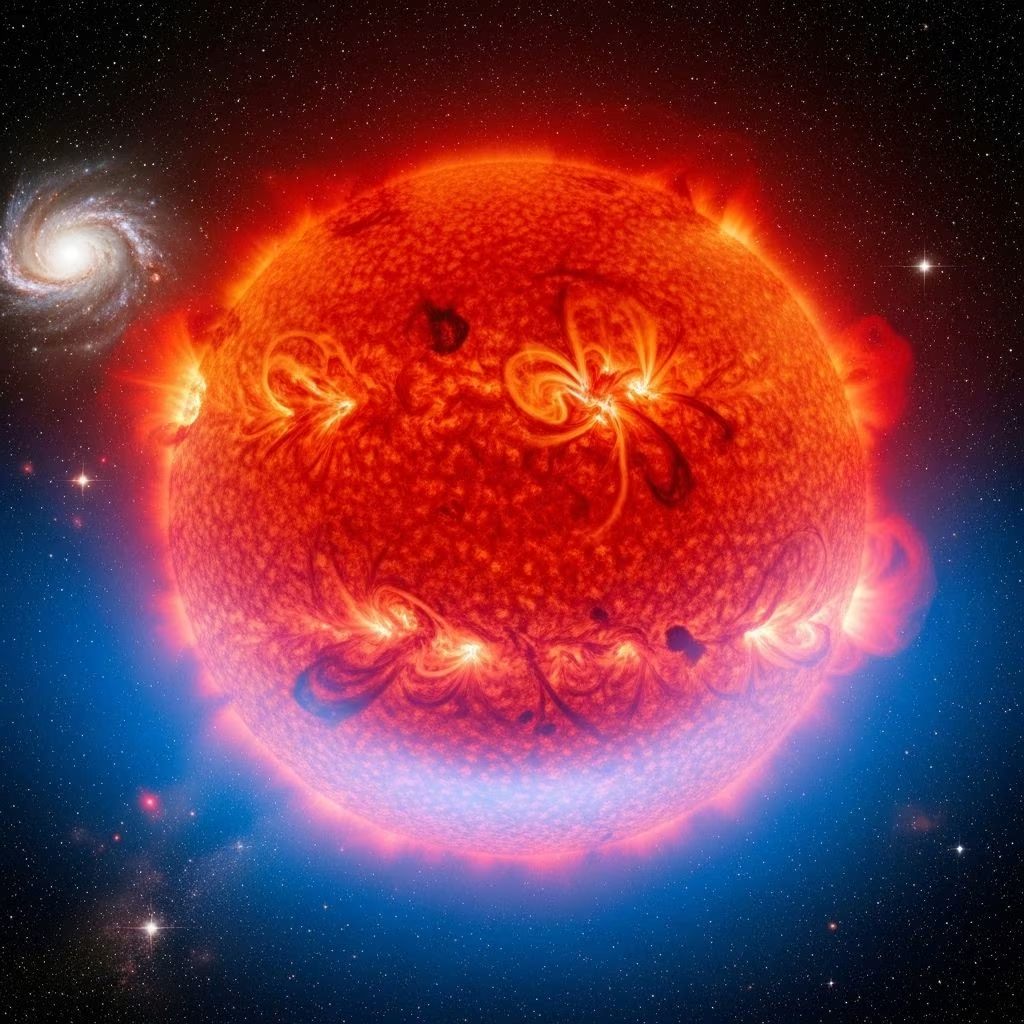
The summer solstice in 2025 will occur on Friday, June 20, 2025, at 10:42 p.m. EDT . As the Earth’s axis tilts the Northern Hemisphere directly toward the Sun, this astronomical event marks the beginning of summer and brings the year’s longest period of daylight to millions across the globe.
What Is the Summer Solstice?
The word “solstice” comes from the Latin sol (Sun) and sistere (to stand still), reflecting how the Sun appears to pause in its northward journey before reversing direction . During a solstice, Earth’s axial tilt (about 23.5 degrees) points closest or farthest from the Sun. The summer solstice is when Earth’s North Pole is tilted furthest toward the Sun, resulting in the most sunlight for the Northern Hemisphere and the shortest night of the year .
Why Does the Solstice Occur?
- Earth’s Tilt: Earth’s axis is tilted, not perpendicular to its orbital plane; this tilt causes varying sunlight angles throughout the year .
- Orbit Around the Sun: As Earth orbits the Sun, the orientation of the tilt determines the seasons and the day lengths .
Timing of the 2025 Solstice
Unlike fixed calendar dates, the solstice’s timing is determined by planetary geometry. In 2025, the exact moment of the solstice will be June 20 at 10:42 p.m. EDT (or June 21, 02:42 UTC) . This event occurs at the same instant for everyone, but local time varies by location.
| Hemisphere | Date & Time (Local) | Event |
|---|---|---|
| Northern Hemisphere | June 20, 2025, 10:42 p.m. EDT | Longest Day / Start of Summer |
| Southern Hemisphere | December 21, 2025, 10:03 a.m. EST | Shortest Day / Start of Winter |
Sun’s Path and Daylight on the Solstice
On the solstice, the Sun is directly overhead at noon at the Tropic of Cancer (23.5° North latitude), bathing northern regions in extended daylight. Cities close to the Arctic Circle experience phenomena like “midnight sun,” where the Sun never fully sets, while equatorial regions see minimal day-length change .
- Washington, DC: Sunrise ~5:42 a.m.; Sunset ~8:37 p.m.; ~14 hours, 55 minutes of daylight.
- London, UK: Sunrise ~4:43 a.m.; Sunset ~9:22 p.m.; ~16 hours, 39 minutes of daylight.
- Reykjavik, Iceland: Near continuous daylight (midnight sun).
The further north you travel, the longer your daylight during the solstice.
Why Doesn’t the Solstice Happen on the Same Date Each Year?
The precise date of the solstice varies year to year between June 20 and 22. This is due to:
- Leap Years: The Gregorian calendar does not align perfectly with Earth’s orbit around the Sun.
- Earth’s Orbit: Earth’s movement around the Sun is not a whole number of days, causing minor shifts in solstice timing .
What Causes Summer and the Seasons?
Many believe seasons are caused by changes in Earth’s distance from the Sun; however, it’s the 23.5-degree tilt of the Earth’s axis that drives seasonal change. When the North Pole is tilted toward the Sun (as in June), northern lands bask in warmth and extended daylight, while southern lands brace for winter’s chill .
Global Celebrations and Cultural Traditions
People have observed the solstice for thousands of years, celebrating renewal, harvest, and nature’s power. Today, the solstice remains a time for festivals, rituals, and communal gatherings around the world:
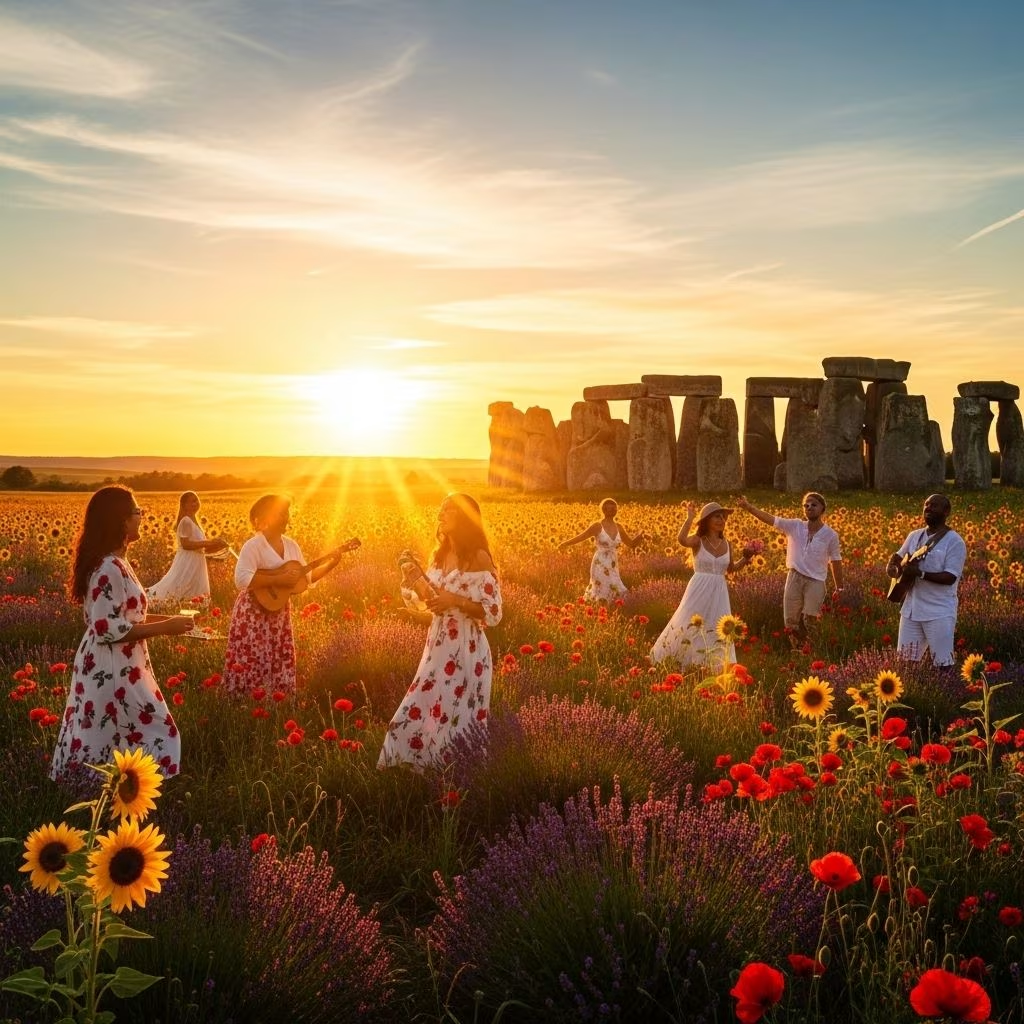
- Stonehenge (England): Crowds gather to watch the sunrise align with the ancient stones, a practice dating back millennia .
- Sweden: Midsummer is marked by maypole dancing, flowers, and feasting.
- Norway: Bonfires are lit to honor the midnight sun, and music and dance fill long evenings.
- United States: Communities host outdoor events, sunrise yoga, and nature hikes.
- Latvia & Lithuania: People weave flower crowns and celebrate with folk songs and overnight festivities.
Why Is Stonehenge Associated with the Solstice?
Stonehenge’s ancient structure is aligned with the rising Sun on the summer solstice. This connection highlights the significance of the solstice to early cultures, who tracked seasonal change for agricultural and religious reasons.
Solstice Science: The Sun “Stands Still”
Astronomers note that for a few days around the solstice, the Sun’s noon position changes very little, appearing to “stand still” on the horizon—hence sol (sun) stice (to stand still). After the solstice, daylight hours begin to shorten as Earth’s orbit progresses, leading toward autumn .
- Equinox vs. Solstice: Unlike the solstice (maximum tilt), equinoxes feature equal day and night, with the Sun crossing the celestial equator.
- Declination: The Sun’s angular declination reaches its peak at solstice.
Summer Solstice in the Southern Hemisphere
As the Northern Hemisphere revels in light, the situation reverses south of the equator. There, June 20 marks the winter solstice, the shortest day and longest night of the year. For southern lands, summer begins six months later, around December 21 .
| Hemisphere | June Solstice | December Solstice |
|---|---|---|
| Northern | Longest Day | Shortest Day |
| Southern | Shortest Day | Longest Day |
Solstice Myths and Misunderstandings
- Myth: The solstice is always the hottest day of the year.
Fact: Peak temperatures typically occur later in summer, due to the lag effect as the Earth absorbs and releases energy. - Myth: Seasons are determined by Earth’s distance from the Sun.
Fact: Seasons are caused by axial tilt, not proximity.
Stargazing During the Solstice
With shorter nights, stargazing becomes more challenging in northern regions. However, the solstice offers unique opportunities to observe:
- Planets: Venus, Mars, and Jupiter can be seen in late evening.
- Constellations: Summer staples like Lyra, Cygnus, and Aquila dominate the sky.
- Twilight: Extended twilight provides longer evening visibility before darkness.
Tips to Celebrate and Observe the Summer Solstice
- Wake Up Early: Watch the sunrise at its northern-most point.
- Host an Outdoor Gathering: Take advantage of long daylight for picnics or barbecues.
- Try a Nature Ritual: Meditate, practice yoga, or simply enjoy nature.
- Discover Local History: Attend a solstice event at a local landmark.
- Night Walk or Stargazing: Observe the changing sky after sunset.
Frequently Asked Questions (FAQs)
Q: What exactly happens during the summer solstice?
A: The Sun reaches its highest elevation in the sky at noon, and northern regions experience the longest period of daylight all year. The Earth’s North Pole points closest toward the Sun .
Q: Why does daylight start to decrease after the solstice?
A: After the solstice, Earth’s orbit causes the North Pole to gradually point away from the Sun, shortening the daylight until the autumn equinox .
Q: Is the summer solstice celebrated in the Southern Hemisphere?
A: No. In June, southern regions mark the start of winter and receive the least sunlight. Their summer solstice (longest day) occurs in December .
Q: Why isn’t the solstice always on June 21?
A: Calendar years don’t match exactly with Earth’s orbit, and leap years shift the solstice between June 20-22 .
Q: What are ways to see the solstice?
A: Travel north for midnight sun, join a local festival, or watch the sunrise at a site like Stonehenge.
Summary Table: Key Facts about the 2025 Summer Solstice
| Fact | Details |
|---|---|
| Date & Time | June 20, 2025, 10:42 p.m. EDT |
| Location of Sun | Directly overhead at Tropic of Cancer (23.5°N) |
| Daylight Duration (Northern Hemisphere) | Longest of the year |
| Start of Season | Astronomical beginning of summer in Northern Hemisphere |
| Cultural Observances | Festivals, sunrise gatherings, music, dance |
Further Reading and Observing
- Track sunrise and sunset times on astronomical calendars.
- Explore public events and star parties celebrating the solstice.
- Learn about local history and ancient solstice markers near you.
The 2025 summer solstice is more than an astronomical event—it’s a celebration of science, tradition, and the enduring connection between humanity and the cosmos.
References
- https://www.farmersalmanac.com/summer-solstice-first-day-summer
- https://en.wikipedia.org/wiki/Summer_solstice
- https://www.timeanddate.com/calendar/summer-solstice.html
- https://www.timeanddate.com/calendar/seasons.html
- https://abcnews.go.com/GMA/Living/summer-solstice-2025/story?id=122761311
- https://www.rmg.co.uk/stories/time/summer-solstice
- https://www.space.com/stargazing/summer-solstice-2025-is-here-today-marks-the-longest-day-of-the-year-for-the-northern-hemisphere
- https://www.space.com/stargazing/summer-solstice-2025-brings-changing-seasons-to-earth-on-june-20
- https://cimss.ssec.wisc.edu/satellite-blog/archives/65575
- https://www.usatoday.com/story/news/nation/2025/06/20/longest-day-of-year-summer-solstice/84285817007/
- https://in-the-sky.org/news.php?id=20250621_07_100
- https://www.livescience.com/space/the-sun/when-is-the-summer-solstice-in-2025-it-depends-on-your-time-zone
- https://www.usatoday.com/story/news/nation/2025/06/17/when-is-the-summer-solstice-2025/84240328007/
- https://www.calendardate.com/summer_2025.htm