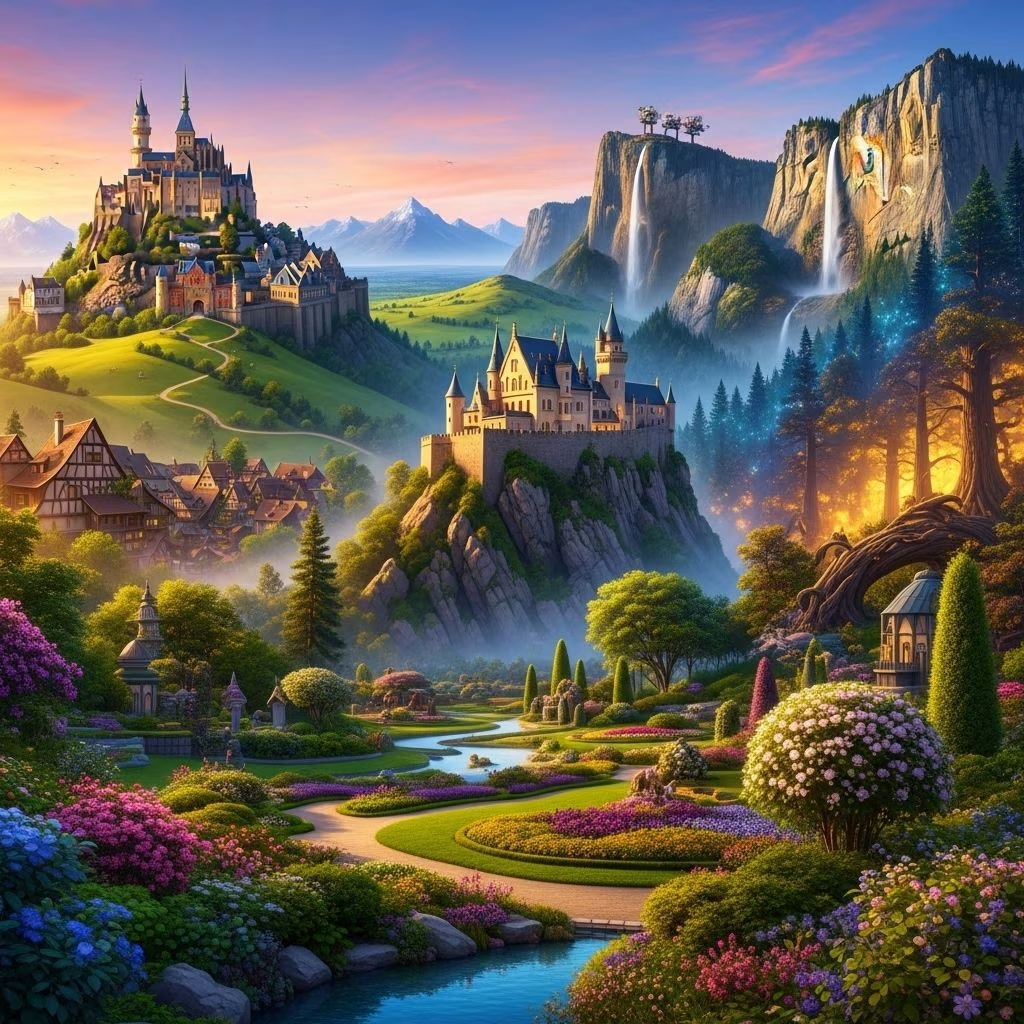
Disney movies have enchanted audiences for generations, transporting viewers to lands of imagination, magic, and timeless adventure. While these fantastical realms often seem entirely imaginary, many of Disney’s most iconic settings were inspired by breathtaking real-world locations. From majestic castles in Europe to vibrant villages and awe-inspiring natural wonders, discover the origins of the places that brought Disney’s animated classics to life. Whether you’re a globetrotter seeking travel inspiration or a Disney fan enchanted by cinematic worlds, this exploration reveals the magical intersections of fiction and reality.
1. Neuschwanstein Castle, Bavaria, Germany – Sleeping Beauty
Perched high in the Bavarian Alps, Neuschwanstein Castle is the very definition of a storybook fortress. Built in the 19th century by King Ludwig II, its fairy-tale spires and dreamy turrets inspired the design of Sleeping Beauty’s Castle—both in the 1959 animated film and at Disneyland parks worldwide.
- Architectural grandeur: The castle’s romantic, dramatic silhouette helped define the modern fairy-tale castle aesthetic.
- Role in film: The design set the tone for countless Disney castles to follow.
- Popular photo spot for visitors seeking a glimpse of real-life magic.
2. Mont Saint-Michel, Normandy, France – Tangled
The whimsical kingdom of Corona in Tangled was inspired by the mesmerizing island of Mont Saint-Michel. Rising dramatically from tidal flats off the French coast, this medieval abbey-town seems as if plucked from a fantasy:
- Striking setting: An island crowned by a Gothic abbey, surrounded by water at high tide.
- Visual parallels: The winding streets, stone walls, and soaring spires echo Corona’s design.
- One of France’s most recognizable landmarks, drawing millions of visitors annually.
3. Château de Chillon, Lake Geneva, Switzerland – The Little Mermaid
The royal castle on the shore of Lake Geneva, Château de Chillon, inspired the palace where Prince Eric resides in The Little Mermaid. Its lakeside position and fairy-tale architecture make it a perfect model for the film’s romantic backdrop.
- Location: Perched on a rocky island amidst sparkling blue waters.
- Historic atmosphere: With medieval towers and ramparts, it offers a fitting home for Disney royalty.
- Visitors can tour its dungeons, halls, and towers that echo scenes from the animated classic.
4. Segovia’s Alcázar, Spain – Snow White and the Seven Dwarfs
The evil queen’s castle in Disney’s first animated feature, Snow White and the Seven Dwarfs, draws heavily from the distinctive shapes of the Alcázar of Segovia. Set atop a rocky crag in central Spain, the fortress blends Gothic and Moorish architecture, making it as intimidating as it is beautiful.
- Inspiration: The castle’s pointed towers and dramatic facade influence the film’s iconic design.
- Atmosphere: Its high vantage point and winding river below bring a sense of fairy-tale isolation.
- Frequently cited as a must-see for history lovers and Disney devotees alike.
5. Château de Chambord, Loire Valley, France – Beauty and the Beast
The lavish, renaissance-era Château de Chambord provided the visual inspiration for the Beast’s castle in Beauty and the Beast. With more than 400 rooms, an ornate double-helix staircase, and elaborate towers, it embodies the film’s sense of old-world wonder.
- Opulent design: Its architectural complexity mirrors the enchanted, almost magical interiors from the film.
- French connection: The story’s roots in French folklore make this an authentic fit.
- Cultural heritage: UNESCO World Heritage site, open for public exploration.
6. Alsace, France – Belle’s Village (Beauty and the Beast)
Belle’s charming provincial town, with cobblestone streets, half-timbered homes, and bustling marketplaces, draws direct inspiration from the Alsace region in northeastern France. Towns like Colmar showcase the authentic beauty featured in the film’s opening scenes.
- Pastoral beauty: Rolling vineyards, colorful facades, flower-filled streets.
- Cultural ambiance: Traditional bakeries, bustling squares, and a sense of community life mirrored in Belle’s world.
- Perfect spot for fans seeking the “provincial life.”
7. Taj Mahal, Agra, India – Sultan’s Palace (Aladdin)
The Sultan’s Palace in Aladdin was inspired by the iconic Taj Mahal, with its gleaming white domes and ornate arches. While the film itself is set in the fictional city of Agrabah, the architectural influences are unmistakably Mughal Indian.
- Stunning symmetry: The palace silhouette matches the grandeur of the Taj Mahal’s domes and minarets.
- Exotic setting: Lush gardens and reflective pools evoke the film’s romantic ambiance.
- Recognized as a UNESCO World Heritage Site and one of the world’s new seven wonders.
8. Notre-Dame Cathedral, Paris, France – The Hunchback of Notre Dame
The entire setting for Disney’s The Hunchback of Notre Dame revolves around the monumental Notre-Dame Cathedral in Paris. This masterpiece of Gothic architecture, dating back centuries, stands as the film’s central character as much as Quasimodo himself.
- Architectural marvel: The stone gargoyles, stained-glass windows, and soaring spires define the film’s look.
- Historical resonance: Serves as the backdrop for themes of sanctuary, faith, and transformation.
- Major draw for tourists interested in art, history, and Disney lore alike.
9. Eilean Donan Castle & Scottish Highlands – Brave
The rugged landscapes and fortified castles of Scotland inspired the setting of Brave. While the kingdom of DunBroch is fictional, locations like Eilean Donan Castle and the lush Scottish Highlands provided the wild, untamed backdrop for Merida’s coming-of-age tale.
- Mythic landscape: Misty lochs, stony hills, ancient forests echo the film’s magical atmosphere.
- Eilean Donan Castle: Set on a small island, it is one of Scotland’s most iconic photogenic castles.
- Rich in folklore, with tales of kelpies, fairies, and legendary warriors.
10. St. Paul’s Cathedral & London Landmarks – Mary Poppins
From flying umbrellas to animated penguins, Mary Poppins captures the magic of London. Iconic sites like St. Paul’s Cathedral and Big Ben appear throughout her adventures, reinforcing the city’s position as a backdrop for the practical and the magical alike.
- Iconic locations: St. Paul’s domed silhouette and the feed-the-birds scene are cinematic highlights.
- Atmospheric settings: London’s parks, streets, and rooftops feature in memorable musical numbers.
11. Regent’s Park & Liberty London – 101 Dalmatians & Cruella
The leafy expanses of Regent’s Park and the elegant halls of Liberty London department store provided real-world inspiration for both One Hundred and One Dalmatians and its recent prequel, Cruella. The film’s animated and live-action versions showcase the city’s posh yet playful side.
- Backdrop for canine capers: The park’s sprawling greenery is the scene for puppies’ adventures.
- Fashion and flair: Liberty London’s striking interiors reflect Cruella’s bold, creative world.
12. Calanais Standing Stones, Isle of Lewis, Scotland – Brave
Shrouded in legend, the Calanais Standing Stones are ancient monolithic stones in Scotland’s Outer Hebrides. Their mysterious presence inspired key scenes and magical moments in Brave, where stone circles serve as portals to transformation.
- Mystical ambiance: The setting grounds the film’s supernatural elements in local folklore.
- Historical intrigue: Older than Stonehenge, the stones are a site of archaeological interest.
13. Ashdown Forest, England – Winnie the Pooh
The beloved Hundred Acre Wood of Winnie the Pooh draws directly from Ashdown Forest. Located in Sussex, England, it was the childhood playground of writer A.A. Milne’s son, Christopher Robin, and the inspiration for the books later brought to life by Disney.
- Tranquil beauty: Rolling heathland, ancient woods, and gentle streams evoke Pooh’s adventures.
- Literary legacy: Visit famous spots like Poohsticks Bridge and Piglet’s house.
14. Great Fosters, Surrey, England – Alice in Wonderland
During a 1935 tour of the UK, Walt Disney visited Great Fosters, a Tudor manor famed for its intricate topiary maze. The property’s gardens later inspired the fantastical hedge maze where Alice gets lost in Alice in Wonderland.
- Labyrinthine wonder: The topiary maze reflects the surreal, whimsical spirit of Lewis Carroll’s world.
- Architectural influence: The manor’s Tudor style fits the eccentric, dreamlike nature of Wonderland.
15. Norwegian Fjords, Norway – Frozen
Disney’s Frozen transports audiences to the snow-capped kingdom of Arendelle. Its dramatic, towering cliffs and sparkling fjords are inspired by western Norway’s landscapes—particularly the famous Nærøyfjord and Aurlandsfjord.
- Natural splendor: Glacial ski slopes, deep blue waters, and quaint villages evoke Arendelle’s magic.
- Cultural influence: Scandinavian architecture and folk art appear throughout the royal palace and town.
16. Machu Picchu, Peru – The Emperor’s New Groove
The zany adventures of The Emperor’s New Groove are set in a world strikingly similar to the Incan citadel of Machu Picchu. The mist-cloaked mountains and ancient stone terraces reinforce the film’s high-altitude escapades.
- Historical awe: Peru’s lush valleys and archaeological wonders inspire the setting’s look and feel.
- Cultural echoes: Architecture, clothing, and motifs draw on indigenous Andean traditions.
Table: Disney Movie Settings and Their Real-Life Inspirations
| Disney Movie | Fictional Setting | Real-World Inspiration | Country |
|---|---|---|---|
| Sleeping Beauty | Sleeping Beauty’s Castle | Neuschwanstein Castle | Germany |
| Tangled | Kingdom of Corona | Mont Saint-Michel | France |
| The Little Mermaid | Prince Eric’s Castle | Château de Chillon | Switzerland |
| Snow White | Queen’s Castle | Alcázar of Segovia | Spain |
| Beauty and the Beast | Beast’s Castle & Belle’s Town | Château de Chambord & Alsace | France |
| Aladdin | Sultan’s Palace | Taj Mahal | India |
| The Hunchback of Notre Dame | Notre-Dame | Notre-Dame Cathedral | France |
| Brave | DunBroch | Eilean Donan Castle & Scottish Highlands | Scotland |
| Frozen | Arendelle | Norwegian Fjords | Norway |
| The Emperor’s New Groove | Incan Empire | Machu Picchu | Peru |
Frequently Asked Questions (FAQs)
Q: Are these locations open to visitors?
A: Nearly all the real-world locations mentioned—castles, towns, natural sites, and even cathedrals—are popular tourist attractions open to the public, though some may have restrictions or ticketed entry. Always check local guidelines before visiting.
Q: How closely do the movies resemble their real-world inspirations?
A: Disney animators often take inspiration for architecture, atmosphere, and landscape, but typically add fantastical elements. Still, the resemblances are striking, and many fans enjoy spotting the real-life details in the films.
Q: Can I stay or get married at any Disney-inspired locations?
A: Some castles, such as Neuschwanstein and Château de Chambord, offer guided tours but not overnight stays. Others, like Great Fosters or certain Alsace villages, may offer room bookings, events, or even wedding packages. Always verify with the property’s official website for details.
Q: Are there guided tours themed around Disney movie locations?
A: Yes, several tour companies offer packages specifically highlighting Disney film locations, especially in Europe, including bespoke trips to castles, villages, and scenery featured in these classics.
Q: Did Disney use these places just for visual inspiration, or were real locations used in live-action adaptations?
A: The animated films drew heavily from these locations for design and storytelling inspiration. In recent live-action films, some sites (like Mont Saint-Michel or London’s landmarks) have been directly filmed or referenced to enhance authenticity.