The Spookiest Ghost Towns in America
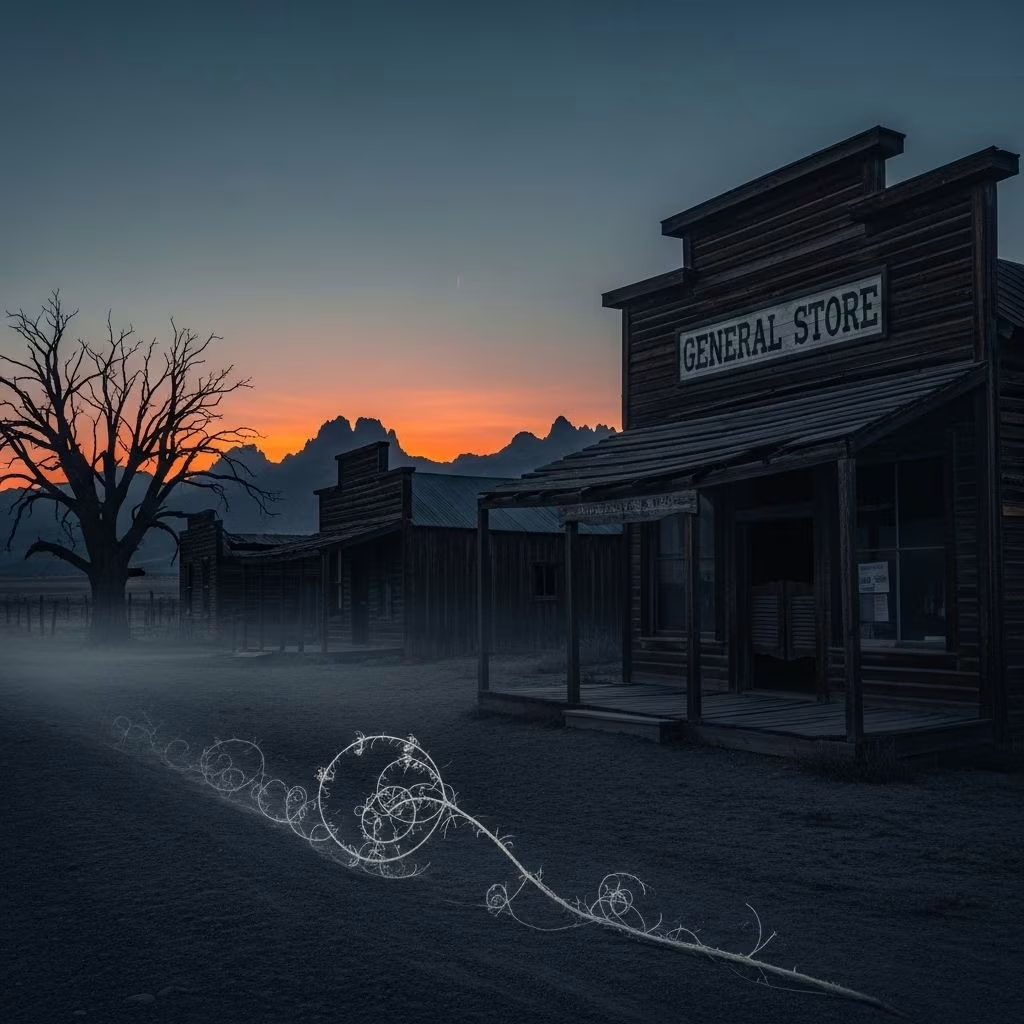
Across the vast landscape of the United States, there lie remnants of once-bustling towns—now standing empty, crumbling, and shrouded in tales of mystery and legend. These ghost towns are powerful reminders of the booms and busts that shaped American history, from gold rushes and industrial expansion to tragic natural disasters. Today, they offer eerie glimpses into the past and are favored destinations for adventurers, history buffs, and seekers of the supernatural.
What Is a Ghost Town?
A ghost town is typically defined as an abandoned settlement, often due to economic decline, natural disaster, or the exhaustion of nearby resources. Many American ghost towns sprung up during times of expansion—particularly in the 19th and early 20th centuries—as people chased fortunes in gold, silver, or oil, or clustered along vital railroads. When the resources ran out or circumstances changed, populations vanished, leaving behind silent main streets, derelict structures, and sometimes, chilling legends.
Why Are Ghost Towns So Fascinating?
- Rich History: Each town tells a unique story of hope, hardship, and sudden change.
- Eerie Atmosphere: Weathered buildings and overgrown streets evoke mystery and nostalgia.
- Paranormal Legends: Many ghost towns are rumored to be haunted, adding allure for supernatural enthusiasts.
- Scenic Ruins: The striking visuals of abandoned towns are favored by photographers and travelers alike.
America’s Most Haunted and Spookiest Ghost Towns
Below, journey through some of the most notorious and atmospheric ghost towns in the country. From California’s windswept mining camps to the storm-blasted ruins in Texas, each site has its own chilling tales and unique character.
Bodie, California
Bodie stands as one of America’s most iconic and best-preserved ghost towns. Founded in 1859 as a modest mining camp, Bodie transformed into a roaring gold rush hub with nearly 10,000 residents at its peak. The town earned a reputation for lawlessness—gunfights, robberies, and street violence were common. By the 1910s, gold production waned and Bodie’s population dwindled; by 1942, even the last mine closed. Today, Bodie is preserved in a state of ‘arrested decay’ by California State Parks, with over 100 buildings—schoolhouses, saloons, church, and homes—frozen in time. Visitors report ghostly sightings, especially around the old cemetery and the remnants of the town’s hotels and schoolhouse.
- Location: Mono County, CA
- Known for: Lawless past, preserved buildings, ghost legends
- How to visit: Enter Bodie State Historic Park (open seasonally; check conditions due to weather and road access)
Terlingua, Texas
The abandoned mining town of Terlingua lies near the Rio Grande and the border of Big Bend National Park. It thrived during the early 1900s thanks to cinnabar mining (a source of mercury), boasting saloons, a theatre, and a bustling main street. By World War II, the market collapsed and residents departed. Pick your way through the weathered stone homes, rusty mining equipment, and the haunting “ghostown cemetery” where simple markers tell tragic tales. Today, a quirky community and artists’ enclave have revived parts of the town, but much remains eerily deserted.
- Location: Brewster County, TX
- Known for: Mining ruins, desert wilderness, colorful Día de los Muertos celebrations
- Highlights: The Starlight Theatre (now a restaurant), mine tours, the haunted cemetery
Calico, California
Calico rose to prominence in the 1880s as a silver mining settlement boasting over 500 mines and a population surpassing 1,200. When silver prices crashed in the 1890s, the population rapidly declined. Calico is now meticulously restored as a County Regional Park, with shops and attractions recalling its boomtown days. Ghostly tales abound—visitors describe strange noises and unexplained occurrences in the preserved schoolhouse and Maggie Mine.
- Location: San Bernardino County, CA
- Known for: Family-friendly tours, historic reenactments, mining exhibits
- Ghost stories: Reports of children’s laughter, shadow figures
St. Elmo, Colorado
St. Elmo once flourished with nearly 2,000 residents in its mining heyday during the 1880s. The decline of local ore quality led to economic collapse, leaving behind a main street lined with well-preserved facades, a historic general store, and a reported ‘haunted’ hotel. The town’s photogenic remains and alpine setting have made it popular with travelers, especially during the summer months.
- Location: Chaffee County, CO
- Known for: Intact buildings, mountain scenery, paranormal activity in the hotel
- Best time to visit: Late spring to early autumn (roads may close in winter)
Centralia, Pennsylvania
The story of Centralia is a tragedy written in fire. This once-thriving coal town was largely abandoned after a mine fire ignited beneath it in 1962. The fire still burns underground, causing streets to crack and steam to drift eerily from fissures. Over the decades, homes were condemned and razed, leaving only a handful of residents and ghostly empty lanes. The site is infamous for its apocalyptic landscape—roads that end abruptly and the graffiti-laden “Graffiti Highway” (now closed to visitors).
- Location: Columbia County, PA
- Known for: Endless underground fires, surreal ruins, a town condemned by disaster
- Safety note: Much of Centralia is closed and potentially hazardous due to subsidence and toxic gases
Glenrio, Texas/New Mexico
Glenrio straddles the Texas-New Mexico border and was once a thriving Route 66 stopover for motorists. The boom faded quickly as the interstate bypassed the town in the 1970s. Today, crumbling motels, cafés, and service stations are frozen in time, whispering stories of the road-tripping era. Glenrio is noted for its ‘Main Street’—the original stretch of historic Route 66, attracting photographers and nostalgia-seekers alike.
- Location: Deaf Smith County, TX & Quay County, NM
- Known for: Classic Americana ruins, Route 66 heritage, filming locations
- Visitor tip: Easily accessed by car, on the Texas/New Mexico state line
Rhyolite, Nevada
Founded in 1904 during a gold rush, Rhyolite rapidly grew to house thousands and boasted concrete buildings, a bank, an opera house, and electricity. By 1920, the gold had run out and residents left almost overnight. Today, eerie ruins—including the famous bottle house and a skeletal three-story bank—stand at the edge of Death Valley. Installations by contemporary artists enhance its surreal landscape, making Rhyolite a must-see for those traveling through Nevada’s desert.
- Location: Nye County, NV
- Known for: Sculptures, bottle house, striking ruins
- Nearby: Death Valley National Park
Kennecott, Alaska
In the wilderness of Alaska, Kennecott is an engineering marvel-turned-ghost town. This copper mining outpost thrived between 1911 and 1938, extracting millions of dollars in ore. When the copper veins exhausted, the remote town was soon abandoned. Today, decaying mining structures, red mill buildings perched precariously on a mountainside, and remnants of worker life offer a haunting glimpse into the past. Kennecott is part of Wrangell-St. Elias National Park and is accessible via guided tours in summer months.
- Location: Wrangell-St. Elias National Park, AK
- Known for: Massive mining ruins, scenic glacier views, freezing weather
- Access: Summer only; guided tours recommended
Elkmont, Tennessee
Elkmont began as a logging camp, later becoming a mountain resort retreat for affluent families in the early 20th century. In 1934, the land was incorporated into the Great Smoky Mountains National Park and leases expired in the 1990s, leaving the area deserted. Surviving cabins, hotels, and clubhouses stand amidst thick woodland, giving passersby a glimpse into a forgotten Appalachian resort—some say the spirits of former guests remain.
- Location: Great Smoky Mountains National Park, TN
- Known for: Abandoned rustic cabins, scenic hiking trails, rumored hauntings
- Must see: Daisy Town and Wonderland Hotel ruins
Garnet, Montana
Tucked into the forests of western Montana, Garnet was founded in the late 1800s as a bustling mining town. It once hosted hotels, bars, and general stores for hundreds of hopeful prospectors. Economic downturns and a devastating fire led to its abandonment in the 1940s. Many wooden buildings survive remarkably intact, thanks to preservation efforts, and the area’s isolation. Visitors can explore restored structures and sometimes hear stories of spectral apparitions in the old saloons.
- Location: Granite County, MT
- Known for: Secluded location, well-preserved log buildings, scenic mountain backdrop
- Access: Best in summer months
Cahawba, Alabama
Once Alabama’s state capital, Cahawba now lies mostly in ruins, overtaken by the forest and floodplain. After the capital moved and repeated flooding, the population vanished by the early 20th century. Today, visitors tour silent cemeteries, collapsed brick structures, and the remains of grand antebellum homes. The cemeteries and mysterious orbs seen among ancient oaks have inspired a host of ghost stories.
- Location: Dallas County, AL
- Known for: State capital ruins, Civil War history, paranormal investigations
- Visitor tip: Look for the mysterious ‘ghostly lights’ seen by nighttime visitors
Table: Quick Guide to America’s Spookiest Ghost Towns
| Town | State | Era of Peak | Special Feature |
|---|---|---|---|
| Bodie | California | 1870s–1910s | Lawless gold rush town, preserved ruins |
| Terlingua | Texas | 1900s–1940s | Desert cemetery, mining relics |
| Calico | California | 1880s–1890s | Restored mining park, ghost stories |
| St. Elmo | Colorado | 1880s | Intact Wild West buildings |
| Centralia | Pennsylvania | 1960s | Underground coal fire, deserted streets |
| Glenrio | Texas/NM | 1950s–1970s | Route 66 Americana ruins |
| Rhyolite | Nevada | 1900s | Bank ruins, bottle house |
| Kennecott | Alaska | 1910s–1930s | Massive copper mill ruins |
| Elkmont | Tennessee | 1900s–1930s | Abandoned resort cabins |
| Garnet | Montana | 1890s–1940s | Remote, well-preserved log structures |
| Cahawba | Alabama | 1800s | Ruins of first state capital, ghostly lights |
Why Do People Visit Ghost Towns?
- Historical Exploration: Step back in time and imagine lives abruptly halted by tragedy or fortune’s change.
- Paranormal Experiences: Many claim to have witnessed apparitions, mysterious sounds, or unexplained phenomena.
- Adventure and Photography: The weathered structures and stark landscapes provide dramatic backdrops for exploration and photos.
- Cultural Events: Some ghost towns, like Bannack and Terlingua, now host annual festivals and historical reenactments.
Tips for Visiting America’s Ghost Towns
- Check seasonal accessibility—many ghost towns are unreachable or hazardous in winter.
- Respect private property and posted warnings. Many sites can be dangerous due to unstable buildings or environmental hazards.
- Be prepared: Bring water, sturdy shoes, and a camera (and perhaps, nerves of steel for the truly haunted locations).
- Support preservation efforts with donations or by following site rules.
Frequently Asked Questions (FAQs) About Ghost Towns in America
Q: What defines a ghost town?
A: A ghost town is an abandoned settlement, often left to decay due to economic collapse, exhausted resources, disaster, or other causes. Some ghost towns still harbor a handful of residents.
Q: Are ghost towns safe to explore?
A: Most ghost towns are safe if open to the public, but visitors should heed warnings about unstable structures or environmental hazards. Always research ahead and obey park or site rules.
Q: Why are so many ghost towns located in the American West?
A: The American West experienced rapid population booms due to gold, silver, and resource extraction in the 19th and early 20th centuries. When the resources ran out, many communities were deserted almost overnight.
Q: Do people really see ghosts in ghost towns?
A: Many visitors and locals claim paranormal encounters, from unexplained sounds to full apparitions. Whether real or legend, these stories are part of what makes ghost towns so intriguing.
Q: Can you stay overnight in a ghost town?
A: Some ghost towns, like Terlingua, offer quirky accommodations or camping nearby. However, most prohibit overnight stays inside historic structures for safety and preservation reasons.
References
- https://www.geotab.com/ghost-towns/
- https://www.christywanders.com/2024/08/top-ghost-towns-for-history-buffs.html
- https://www.visittheusa.com/experience/5-us-ghost-towns-you-must-see
- https://en.wikipedia.org/wiki/Lists_of_ghost_towns_in_the_United_States
- https://www.atlasobscura.com/lists/americas-best-preserved-ghost-towns
- https://www.youtube.com/watch?v=yeTVfoQxqJc
- https://www.atlasobscura.com/lists/united-states-of-abandoned-places
- https://www.youtube.com/watch?v=n4IZqKxN1Ds
- https://www.youtube.com/watch?v=Z69cNeuZGsA
- https://www.coyotecommunications.com/travel/ghosttowns.shtml