Rick’s Best Three-Week Germany Itinerary
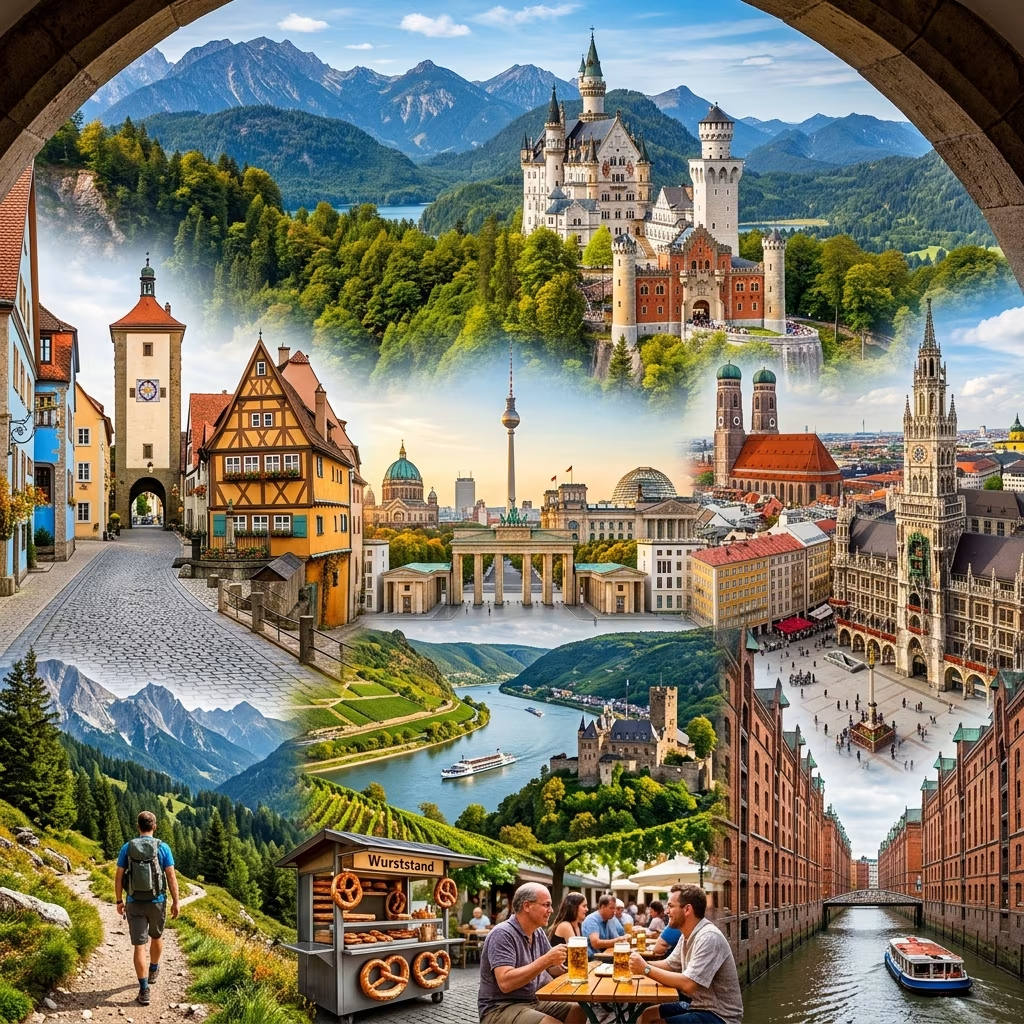
Germany is a tapestry of half-timbered towns, buzzy metropolises, fairy-tale castles, and pristine natural landscapes. This detailed three-week itinerary, blending car travel and train journeys, is designed for travelers who want to experience Germany’s greatest hits at a comfortable pace. Begin in the romantic Rhine Valley, wind through enchanting forests and historic cities, bask in alpine grandeur, and end your adventure in cosmopolitan Berlin. Whether you’re a first-timer or a seasoned Europhile, this guide ensures a memorable exploration of Germany’s highlights.
Itinerary Overview
| Day | Destination | Suggested Overnight |
|---|---|---|
| 1 | Arrive in Frankfurt, pick up car, drive to Rhine Valley | Bacharach |
| 2 | Explore the Rhine Valley | Bacharach |
| 3 | Burg Eltz, Mosel Valley, drive to Baden-Baden | Baden-Baden |
| 4 | Relax in Baden-Baden | Baden-Baden |
| 5 | Black Forest | Freiburg or Staufen |
| 6 | Bavarian Alps | Füssen or Reutte |
| 7 | Neuschwanstein and surrounding castles | Füssen or Reutte |
| 8 | Bavaria/Tirol, drive to Salzburg | Salzburg |
| 9 | Discover Salzburg | Salzburg |
| 10 | To Munich | Munich |
| 11 | Munich Sightseeing | Munich |
| 12 | Dachau, Romantic Road to Rothenburg | Rothenburg |
| 13 | Explore Rothenburg | Rothenburg |
| 14 | Rothenburg (or Würzburg), drive to Nürnberg, return car | Nürnberg |
| 15 | Nürnberg | Nürnberg |
| 16 | Train to Dresden | Dresden |
| 17 | Discover Dresden | Dresden |
| 18 | Train to Berlin | Berlin |
| 19 | Berlin Sightseeing | Berlin |
| 20 | Berlin or Surroundings | Berlin |
| 21 | Fly Home | – |
Day 1–2: The Rhine Valley — Castles and Vineyards
Begin your journey by flying into Frankfurt, then pick up your rental car and drive to the romantic Rhine Valley. Consider staying in Bacharach, a charming half-timbered village nestled on the riverbanks.
- Tour medieval castles like Rheinfels Castle or Marksburg Castle.
- Enjoy a scenic Rhine River cruise, gliding past legendary Loreley Rock and picture-stock towns.
- Sip local Riesling wine at riverside taverns.
- Stroll through Bacharach’s old town with its quaint shops and atmospheric marketplace.
Day 3: Burg Eltz & Mosel Valley
Drive along the scenic Mosel River to Burg Eltz, one of Germany’s best-preserved medieval castles, hidden deep in the woods and untouched by war. On the way to Baden-Baden, detour into the Mosel Valley, famed for its picturesque villages and steep vineyards.
- Visit Burg Eltz: Tour the atmospheric halls, treasury, and armory.
- Explore wine villages such as Cochem or Bernkastel-Kues.
- Arrive in Baden-Baden, spa capital of Germany.
Day 4: Baden-Baden — Spa Bliss
Baden-Baden is a stylish resort town renowned for its thermal baths and historic spa traditions.
- Indulge at the elegant Friedrichsbad Roman-Irish Bath or the family-friendly Caracalla Spa.
- Walk the Lichtentaler Allee, a leafy riverside promenade lined with flower gardens and belle époque villas.
- Try your luck at the Kurhaus Casino, once frequented by Dostoevsky and European aristocrats.
- Dine at gourmet restaurants serving local Baden cuisine paired with wines from the region.
Day 5: Into the Black Forest — Nature and Tradition
Head south to discover the dense, myth-shrouded woodlands of the Black Forest (Schwarzwald). Overnight in Freiburg or the small town of Staufen for an authentic experience.
- Visit an open-air Black Forest farm museum to see traditional architecture and crafts.
- Sample famous Black Forest cake (Schwarzwälder Kirschtorte) in a cozy café.
- Hike or cycle through forest trails to scenic viewpoints and waterfalls.
- Explore Freiburg’s medieval cathedral and bustling marketplaces.
Day 6–7: The Bavarian Alps — Castles and Alpine Beauty
Drive east towards the snow-capped Bavarian Alps, home to Germany’s most magical landscapes and storybook castles. Base yourself in Füssen (Germany) or Reutte (Austria) for easy access.
- Tour Neuschwanstein Castle, the dreamlike creation of King Ludwig II and inspiration for Disney’s Sleeping Beauty Castle.
- Visit the more intimate Hohenschwangau Castle nearby.
- Wander through alpine villages with painted facades and onion-domed churches.
- Take a cable car up to alpine meadows or the Zugspitze, Germany’s highest peak.
Day 8–9: Salzburg — Austrian Elegance
Cross the border into Austria and enter the romantic city of Salzburg, famed as Mozart’s birthplace and the setting for The Sound of Music. Stay for two nights to savor its Baroque beauty and musical legacy.
- Tour the lavish Mirabell Palace and Gardens.
- Visit Hohensalzburg Fortress for panoramic city views.
- Walk the quaint Getreidegasse, home to Mozart’s birthplace.
- Take in a classical concert or explore the city’s vibrant café culture.
Day 10–11: Munich — Culture and Cuisine
Return to Germany and journey to the dynamic Bavarian capital, Munich.
- Tour the world-class Deutsches Museum and treasures of the Residenz palace.
- Raise an overflowing stein at the iconic Hofbräuhaus beer hall.
- Shop in the lively Viktualienmarkt (food market).
- Relax in the lush English Garden or attend a football match if timing allows.
Day 12: Dachau & The Romantic Road to Rothenburg
Make a poignant stop in Dachau, site of the first Nazi concentration camp, for a sobering tour of this important memorial. Afterward, follow the Romantic Road, Germany’s celebrated scenic route, to Rothenburg ob der Tauber.
- Dachau Memorial Site: Guided tours provide context on wartime history and remembrance.
- Drive the Romantic Road, stopping in walled towns and scenic villages along the way.
- Arrive in Rothenburg — step into medieval magic with cobbled streets, towers, and glorious views.
Day 13: Rothenburg ob der Tauber — Medieval Magic
Take a full day to explore Rothenburg, Germany’s picture-perfect preserved medieval town.
- Climb the Town Hall tower for panoramas over terracotta rooftops.
- Walk the intact city walls and peer into defense towers.
- Tour the insightful Medieval Crime Museum.
- Sample the local pastry, Schneeball (“snowball”).
- Consider joining the famous Night Watchman’s walking tour.
Day 14: Rothenburg (or Würzburg) to Nürnberg
If you crave more wine country and churches, spend the morning in Würzburg, visiting the lavish Residenz Palace. Otherwise, make your way to Nürnberg (Nuremberg), returning your rental car for the remainder of the journey by train.
- Stroll along Würzburg’s Old Main Bridge and sample Franconian wine.
- In Nürnberg, visit the Imperial Castle and walk the historic Altstadt (Old Town).
Day 15: Nuremberg — Fascinating History
Nuremberg is loaded with historical intrigue from the Holy Roman Empire to WWII trials.
- Tour the Nuremberg Documentation Center on the Nazi rally grounds.
- Discover medieval lanes, bustling markets, and the city’s famous sausages.
- Visit the Toy Museum or soak up the vibrant square around the Schöner Brunnen (Beautiful Fountain).
Day 16–17: Dresden — Baroque Splendor
After breakfast, take an express train east to Dresden, once dubbed the “Florence on the Elbe” for its spectacular architecture and art.
- Tour the Frauenkirche (Church of Our Lady), meticulously rebuilt after WWII.
- Marvel at Old Masters paintings in the Zwinger Palace museum.
- Walk along the Brühl’s Terrace overlooking the Elbe River.
- As night falls, linger in outdoor cafes amid elegant Baroque squares.
Day 18–20: Berlin — Europe’s Capital of Cool
Board the train north to Berlin, Germany’s dynamic and ever-evolving capital. With three full days, immerse yourself in a mix of gritty history, world-class culture, and cutting-edge creativity.
- Visit the Reichstag parliament building and take in views from its glass dome.
- Pay respects at the Memorial to the Murdered Jews of Europe (Holocaust Memorial).
- Stroll the iconic Brandenburg Gate and Unter den Linden boulevard.
- Explore the fascinating Berlin Wall Memorial and potent street art at the East Side Gallery.
- Peruse museum treasures on Museum Island or relax lakeside in the Tiergarten park.
Day 21: Departure
After a final breakfast in Berlin, head to the airport for your onward flight, filled with memories of Germany’s diverse and captivating wonders.
Travel Tips for a Three-Week Germany Trip
- When to Go: Late spring (May–June) or early fall (September) offer mild weather, lighter crowds, and vibrant festivals.
- Getting Around: A combination of car (for scenic regions and flexibility in the countryside) and train (for major cities) is ideal for this route.
- Language: English is widely spoken in tourist areas, but learning a few German greetings goes a long way for cultural immersion.
- Packing: Germany’s climate is variable—pack layers, rain gear, and comfortable walking shoes.
- Reservations: Book castle tickets, some museum entrances, and hotels in advance, especially during festival seasons.
- Cuisine: Each region’s food specialties shine—seek out local dishes, from Swabian Maultaschen and Black Forest ham to Bavarian pretzels and sausages.
Frequently Asked Questions
Q: Can I do this itinerary by public transportation only?
A: While major destinations are linked by efficient trains, some scenic and rural stretches (especially the Rhine Valley, Mosel, and the Black Forest) are easier reached by car. However, with careful planning and flexibility, you can adapt much of this route to public transit.
Q: What is the best time of the year to travel this route?
A: Late spring (May–June) and early autumn (September–early October) deliver pleasant temperatures, lively festivals, and generally lighter tourist crowds.
Q: Are most attractions open year-round?
A: Major museums, castles, and historic sights are open year-round, but some rural attractions, river cruises, and smaller guesthouses may close or operate limited hours in the winter months.
Q: How much time should I plan for each city?
A: The itinerary provides a mix of one- to three-night stays; adjust based on your interests. Berlin and Munich are worth at least two full days. For smaller towns like Bacharach or Rothenburg, one to two nights suffice for exploring at a leisurely pace.
Q: Is it better to drive or take the train?
A: Driving offers flexibility for exploring the countryside, small villages, and off-the-beaten-path sights. Use the train for fast, comfortable connections between major cities like Nuremberg, Dresden, and Berlin.
Must-See Highlights (Quick Reference)
- Rhine river cruise past castles and vineyards
- Tasting wine in the Mosel Valley
- Steamy relaxation in Baden-Baden’s baths
- Hiking trails in the Black Forest
- Neuschwanstein Castle’s fairytale towers
- Strolling Salzburg’s baroque squares
- Munich’s beer gardens and museums
- Night Watchman’s tour in Rothenburg
- Dresden’s art-filled palaces
- Berlin’s dynamic neighborhoods, from Kreuzberg to Mitte
Suggested Packing List
- Passport and photocopies
- Comfortable walking shoes
- Weather-appropriate outerwear and layers
- Universal power adapter
- Reusable water bottle
- Small backpack or daypack
- Guidebook and pre-arranged tickets/vouchers
- Snacks for road and train travel
References
- https://www.youtube.com/watch?v=cwLYX6gwtYo
- https://www.ricksteves.com/europe/germany/itinerary
- https://www.ricksteves.com/tours/germany/best-germany-tour
- https://store.ricksteves.com/shop/p/germany-guidebook
- https://community.ricksteves.com/travel-forum/germany/summer-2025-itinerary
- https://www.ricksteves.com/tours/germany
- https://www.ricksteves.com/europe/germany
- https://www.ricksteves.com/watch-read-listen/video/travel-talks/germany-austria