Bucharest: Romania’s Little Paris of the East
Still haunted by legend and history, Bucharest stands as an enigmatic city at the crossroads of Europe, blending Parisian grandeur with traces of communist austerity, and a uniquely Romanian vibrancy. In this guide, journey through the core sights, cultural legacy, and multifaceted heritage of Romania’s capital—a city affectionately called the “Little Paris of the East.”
Complex Heritage: Bucharest at a Glance
Bucharest, home to nearly two million residents, is a muscular urban sprawl whose eclectic facade can be daunting at first. Between imposing apartment blocks and bustling boulevards, Bucharest’s layered past is woven into its streets—from the vestiges of 19th-century architecture to remnants of Ceaușescu’s socialist vision and the city’s ever-evolving modern life.
- Population: Approx. 2 million
- Location: Southeastern Romania, near the Danube and Black Sea
- Languages: Romanian (widely spoken, many understand English and French)
Why ‘Little Paris’?
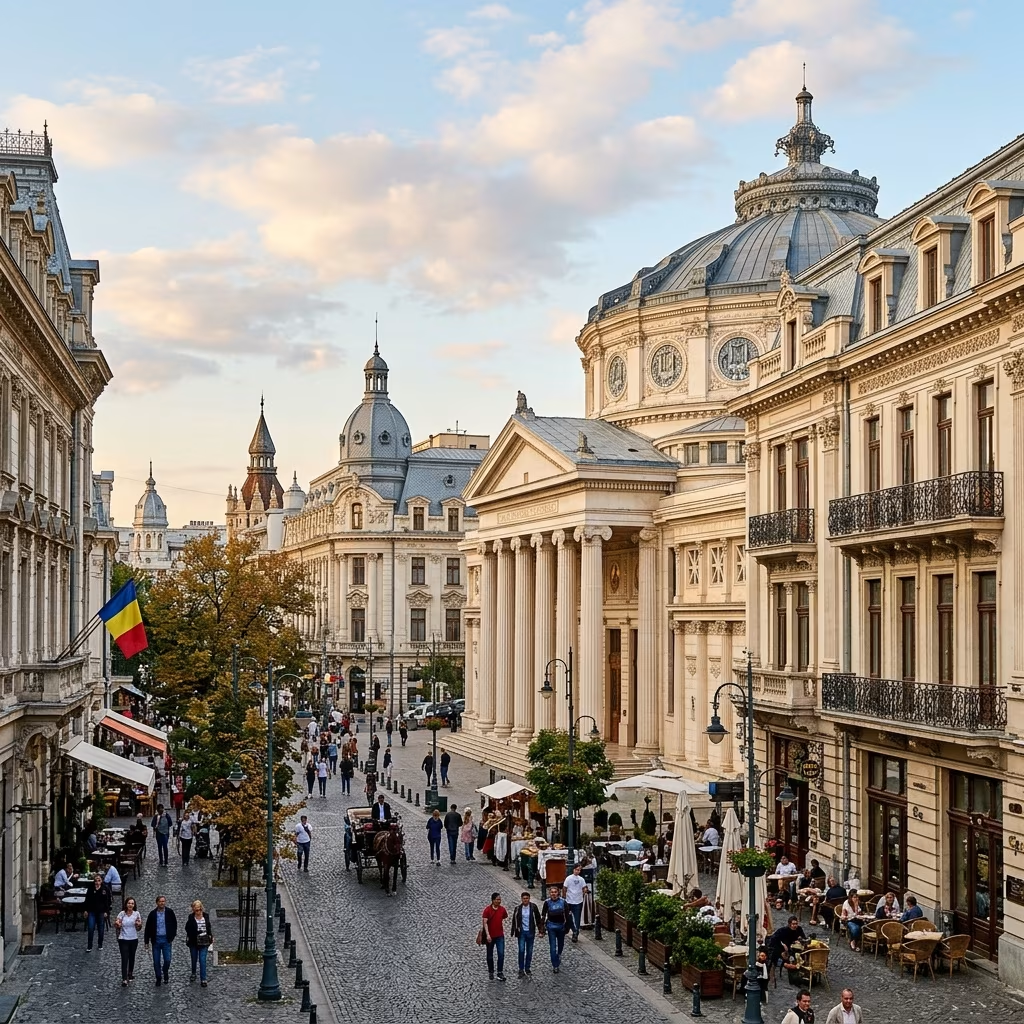
The nickname ‘Little Paris of the East’ emerged in the late 19th century, reflecting Bucharest’s rapid modernization and strong ties to French aesthetic and culture. Post-unification, the Romanian elite tapped French architects and urban designers to craft a cityscape rivaling the best in Europe. Elegant boulevards, ornate facades, and romantic public spaces quickly transformed the capital, creating an unmistakable Parisian imprint that persists today.
- Architecture: Grand boulevards, belle époque buildings, and Beaux-Arts landmarks
- Cultural Influence: French customs inspired dress, etiquette, and daily life among the upper class
- Historic Landmarks: The CEC Palace, National History Museum, and Victory Avenue showcase Parisian style
The Historical Tapestry of Bucharest
19th-Century Rise and Parisian Elegance
The late 19th century was transformative for Romania and its new capital. King Carol I, a German prince imported by the Romanian state to help anchor itself in Europe, championed reforms, independence, and a vigorous construction spree. Under his rule, Bucharest blossomed into a city of cosmopolitan airs—a Romanian Paris.
- King Carol I: Ruled 1866-1914, driving Western reforms and architectural ambitions
- French Architects: Led by Paul Gottereau and others, they designed signature buildings reflecting Paris’ grandeur
- Victory Avenue (Calea Victoriei): Bucharest’s showcase boulevard, famous for its belle époque façades and social significance
French Art and Beaux-Arts Influence
Bucharest’s architectural style was deeply shaped by French-trained artists and designers. Many Romanian architects honed their craft at the École des Beaux-Arts in Paris, bringing back skills and sensibilities that defined Bucharest’s visual identity. Grand public buildings, palaces, and cultural institutions pay homage to Beaux-Arts principles, blending opulence with classical detail.
- CEC Palace: Exemplifies Beaux-Arts, built by Paul Gottereau
- National History Museum: Another showcase of French-inspired design
- Other Notables: Royal Palace, Athenaeum, and various mansions throughout the Old Town
Strolling Victory Avenue: Genteel Bucharest
No visit is complete without a walk down Victory Avenue—once the beating heart of Romanian high society. Lined with restored, grand buildings and bustling life, it offers a living window into prewar elegance, with the equestrian statue of King Carol I marking an iconic focal point. Here, Bucharest’s romance persists, invigorated by preservation efforts and cultural pride.
- Statue of King Carol I: Symbol of national identity and a reminder of monarchic days
- Royal Palace: Historic center of power, now hosting art exhibitions
- Luxury Shops and Cafés: Modern leisure meets old-world glamour
The Communist Imprint: Ceaușescu’s Shadow
Legacy of a Dictator
Mid-20th-century Romania fell under the grip of Nicolae Ceaușescu’s brutal Communist regime. Bucharest was radically changed, as old neighborhoods made way for Soviet-style complexes and monolithic structures. The city’s most notorious landmark, the Palace of the Parliament, is both a testament to megalomania and a monument to endurance.
- Palace of the Parliament: World’s heaviest building, second largest by surface area globally
- Socialist Housing: Uniform, often drab apartment blocks remain prevalent in the city’s residential zones
- Demolished Neighborhoods: Much of historical Bucharest was razed for government projects
Despite this era’s hardships, Bucharest’s character persisted, with locals nurturing hidden beauty and spirit amidst the gray facades.
Resilience and Renaissance: Bucharest Today
The Rejuvenated Old Town
Following decades of neglect, Bucharest’s historic core has experienced a revival. The Old Town (Lipscani District), once derelict, now pulses as one of Eastern Europe’s liveliest nightlife and commercial zones. Restored facades, trendy bars, restaurants, and independent boutiques create a dynamic tapestry—where storied buildings and youthful energy intertwine.
- Bar Scene: Innovative cocktail lounges and time-honored cafes
- Shopping: Eclectic crafts, designer wares, local specialties
- Cultural Events: Art shows, music festivals, and seasonal fairs
Modern Bucharest: Cultural Fusion and Energy
Bucharest is far more than its old-world facades or communist relics. Contemporary culture beams from its theaters, art galleries, green spaces, and dynamic business districts. Bucharest’s creative pulse has made it a hub for tech startups, international cuisine, and progressive arts, attracting visitors and expats alike.
- Theaters & Opera: Romanian Athenaeum hosts music and drama
- Green Spaces: Herăstrău Park and Carol Park offer tranquil escapes
- Business: Romania’s center for finance, technology, and media
Grit and Charm: Why Bucharest Rewards Explorers
Bucharest can seem daunting—its rough edges, traffic, and architectural chaos may surprise first-time visitors. Yet, beneath the surface lies a city of hearty spirit, vibrant culture, and unexpected beauty. Adventurous travelers discover rewards for patience, including spontaneous encounters, flavorsome dining, quirky museums, and stories lingering at every street corner.
- Street Life: Outdoor markets, lively squares, and animated cafes
- Local Cuisine: Sarmale (stuffed cabbage), Mici (grilled sausages), Papanași (sweet cheese doughnuts)
- Museums: National Museum of Art, Museum of the Romanian Peasant
Not-to-Miss Sights in Bucharest
| Name | Description | Highlights |
|---|---|---|
| CEC Palace | Stately Beaux-Arts building, emblematic of French influence | Sculpted glass dome, ornate facade |
| Palace of the Parliament | Gigantic socialist monument built under Ceaușescu | Guided tours, panoramic city views |
| Romanian Athenaeum | Iconic concert hall with grand neoclassical design | Classical concerts, architectural marvel |
| Victory Avenue | Main shopping and cultural boulevard | Restored architecture, luxury boutiques |
| Lipscani (Old Town) | Historic district, vibrant nightlife, shops | Restaurants, pubs, live music |
Bucharest in Context: Traditions, Folklore, and Modernity
Folk Traditions and Multicultural Mix
Romania’s capital is more than its architectural blend; it is a living expression of the country’s epic history and ethnic diversity.
- Ethnic Mix: Romanian, Hungarian, German, Jewish, Greek and more
- Folk Heritage: Traditional crafts, music, and dance are celebrated in everyday life
- Legends: Tales of Vlad the Impaler (‘Dracula’) and haunted histories persist in popular imagination
Gateway to Romania’s Wonders
While Bucharest shines in its own right, it is also the perfect starting point for exploring Romania’s other treasures, from Transylvania’s medieval towns and forested mountains to the folk culture of Maramureș and the sun-washed beaches of the Black Sea.
- Transylvania: Castles, fortified churches, merchant towns
- Maramureș: Open-air museums, wooden churches
- Danube Delta: World-renowned wetlands and birdlife
Frequently Asked Questions (FAQs)
Q: Why is Bucharest called ‘Little Paris of the East’?
A: In the late 19th and early 20th centuries, Bucharest was transformed by French architects who designed grand boulevards and ornate buildings in the Parisian style, infusing the city with an air of romantic elegance similar to Paris.
Q: What are Bucharest’s must-see landmarks?
A: The CEC Palace, Palace of the Parliament, Romanian Athenaeum, Victory Avenue, and the rejuvenated Old Town are among the city’s most celebrated sites.
Q: How did communism affect Bucharest’s architecture?
A: Under Nicolae Ceaușescu’s rule, swathes of historic neighborhoods were replaced with Socialist-style apartment complexes and monumental government buildings, dramatically altering the city’s appearance.
Q: Is Bucharest a good destination for nightlife?
A: Yes. The Old Town has become a vibrant hub for bars, clubs, live music, and social events, making it one of Eastern Europe’s liveliest nightlife districts.
Q: What’s the best way to experience Bucharest?
A: Explore on foot, especially in the historic center and along Victory Avenue. Join a guided tour of significant landmarks, and take time to enjoy local cuisine and cultural performances.
Tips for Travelers
- Allow at least 2-3 days to explore the city’s highlights, heritage, and ambience.
- Visit museums and galleries to better understand Romania’s rich cultural history.
- Taste local specialties—many restaurants offer traditional Romanian dishes.
- Walk or use ridesharing apps; city traffic can be congested.
- Look beyond first impressions; Bucharest’s best secrets are revealed with patience and curiosity.
Final Thoughts: Embracing Bucharest
Bucharest remains a city of contrasts: a place where the splendor of ‘Little Paris’ coexists with stark reminders of communist rule, where folk traditions meet the pulse of modern European life. For the traveler seeking depth, complexity, and authentic urban energy, few destinations match the intrigue and rewards of Romania’s bustling capital.
References
- https://www.kpbs.org/news/arts-culture/2024/03/06/rick-steves-europe-romania
- https://www.travelerstoday.com/articles/50684/20240705/why-bucharest-is-called-little-paris-and-what-you-can-see-there.htm
- https://www.ricksteves.com/watch-read-listen/read/articles/bucharest-romania-little-paris-of-the-east
- https://www.ricksteves.com/watch-read-listen/video/tv-show/romania
- https://www.ricksteves.com/watch-read-listen/read/articles
- https://www.ricksteves.com/watch-read-listen/read/articles/the-best-and-worst-of-europe