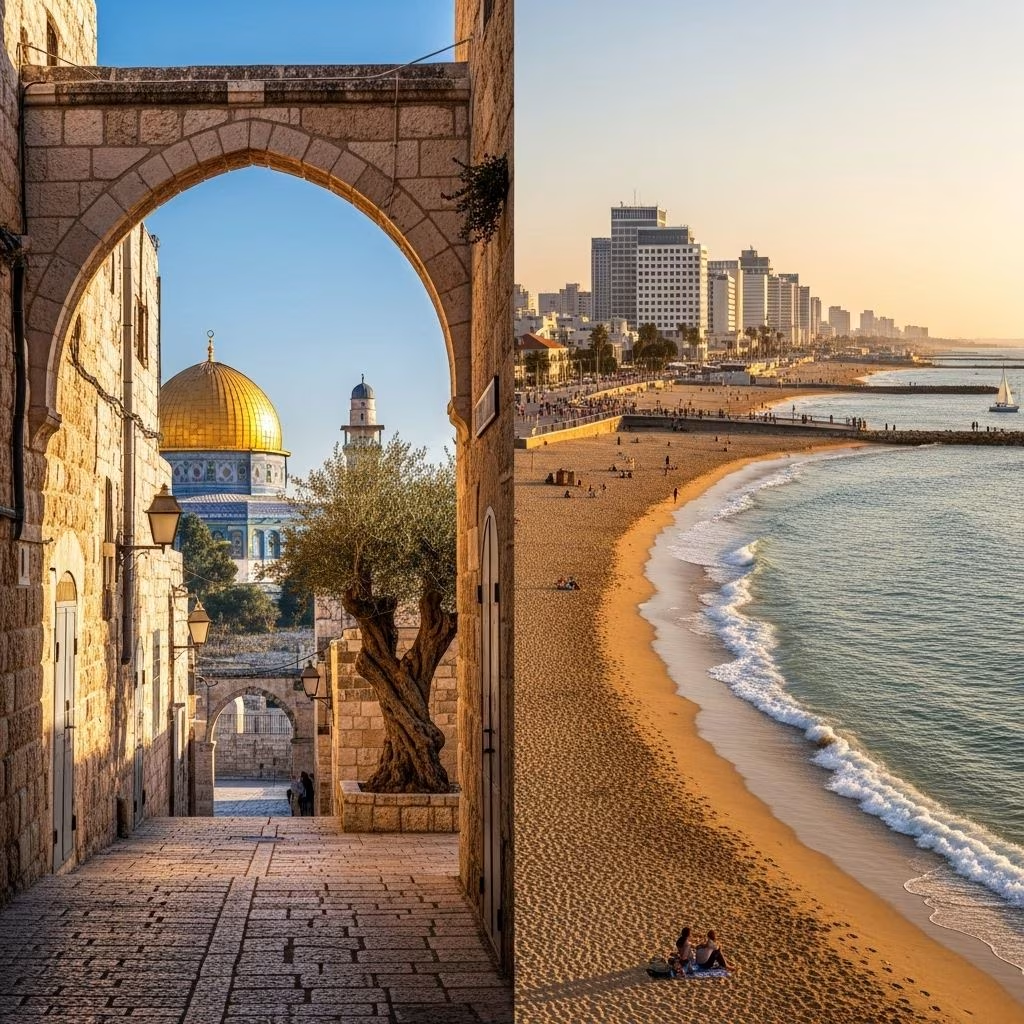
The Best of Israel: Sacred Cities, Timeless Stories, and Living Heritage
For billions around the world, Israel represents the very epicenter of religious meaning—a crossroads of ancient faiths, layered histories, and vibrant modern life. From Jerusalem’s sacred stones to the Mediterranean beaches of Tel Aviv, from the haunting expanse of the Dead Sea to the tranquil hills around the Sea of Galilee, this dynamic land invites travelers to explore, reflect, and connect.
Why Visit Israel?
Israel captivates travelers for its unique blend of:
- Religious heritage—with sites central to Judaism, Christianity, and Islam.
- Stunning landscapes—from green mountain ranges to arid deserts and coastal plains.
- Historic richness—where biblical stories and world history come alive.
- Lively cities—offering cosmopolitan energy, arts, and cuisine.
- Cultural diversity—with Jewish, Arab, Druze, Christian, and countless other influences.
Travel in Israel is straightforward, with modern highways, clear signage in Hebrew, Arabic, and English, and efficient public transportation connecting key destinations.
Jerusalem: The Heart of the Holy Land
No visit to Israel is complete without experiencing Jerusalem, a city of living spirituality and history layered under every stone.
The Spiritual Center
Jerusalem is sacred to three major world religions:
- For Jews: It’s home to the Western Wall—the last remnant of the ancient Temple of Solomon.
- For Christians: This city witnessed Jesus’s crucifixion and resurrection.
- For Muslims: The Dome of the Rock marks the site of Prophet Muhammad’s ascension to heaven.
Walking the Old City—enclosed by formidable walls and divided into Jewish, Christian, Muslim, and Armenian quarters—reveals a tapestry of faith and tradition unlike anywhere else.
Key Sights in Jerusalem
- The Western Wall: A sacred prayer site for Jews worldwide. Pilgrims from around the globe insert written prayers between its ancient stones.
- The Church of the Holy Sepulcher: Christianity’s holiest place, believed to encompass both the site of the crucifixion and Jesus’s tomb.
- The Dome of the Rock: An iconic golden dome, revered by Muslims, rising above the Temple Mount in a dazzling display.
- Via Dolorosa: The historic path followed by Jesus to his crucifixion, traced by faithful pilgrims every day.
- Mount of Olives: Offering panoramic views of Jerusalem and its holy sites.
Beyond religious monuments, Jerusalem pulses with daily life. Its bustling markets, aromatic with spices and fresh produce, let visitors feel the heartbeat of Israeli life.
Masada: Fortress of Defiance
Soaring dramatically above the Dead Sea is Masada, an ancient mountaintop fortress built over 2,000 years ago by King Herod and later immortalized by a dramatic siege.
The Story of Masada
- After the destruction of Jerusalem by Rome (~AD 70), about 1,000 Jewish rebels sought refuge on Masada’s summit.
- Roman legions surrounded the plateau, constructing a colossal ramp to breach its defenses.
- Rather than face defeat and slavery, the Jewish defenders chose mass suicide—a tragic and inspirational episode in Jewish history.
Today, visitors can ascend by gondola or hiking trail to explore the remains of Herod’s palaces, storerooms, and defensive walls. The panoramic views across the Dead Sea and Judean Desert are breathtaking.
The Dead Sea: Nature’s Lowest Point
Traveling along the surreal landscape of the Dead Sea—the lowest point on Earth at more than 400 meters below sea level—offers a once-in-a-lifetime experience. The sea’s hyper-saline water (about 10 times saltier than the ocean) allows you to float effortlessly like a cork.
Why Visit the Dead Sea?
- Natural buoyancy: Floating in the Dead Sea is an almost magical sensation.
- Mineral-rich mud: Used by visitors for spa treatments reputed to benefit the skin.
- Geological wonders: Dramatic cliffs, salt formations, and stark desert scenery.
- Historical significance: Close proximity to sites such as Qumran, where the Dead Sea Scrolls were discovered.
Tel Aviv: Mediterranean Modernity
In vibrant contrast to Jerusalem’s deep spirituality, Tel Aviv dazzles with modern urban life, a bustling Mediterranean coastline, and a thriving arts and café culture.
- Laid-back vibe: Enjoy sandy beaches, lively promenades, and seaside cafés.
- Modern architecture: The ‘White City’ district—famed for its Bauhaus buildings, now a UNESCO World Heritage Site.
- Nightlife and dining: The city comes alive after sunset with restaurants, clubs, and street performances.
- Historic Jaffa: Wander the atmospheric streets of this ancient port city, now part of metropolitan Tel Aviv.
Tel Aviv’s cosmopolitan energy is matched by its openness, tolerance, and creative spirit, making it a favorite destination for both locals and international travelers.
The Sea of Galilee: Spiritual and Natural Beauty
The Sea of Galilee is both a sacred landscape and a recreational haven.
Biblical Connections
- Site of many Gospel stories, including Jesus walking on water.
- Surrounded by holy towns: Capernaum (Jesus’s home base) and Tabgha (miracle of loaves and fishes).
Natural and Modern Attractions
- Scenic drives and hikes: Verdant hills, flowing Jordan River, and wildflowers in spring.
- Outdoor recreation: Water-skiing, boating, and family-friendly beaches.
- Gateway to the Golan Heights: Offers hiking, vineyards, and panoramic views, as well as a glimpse into modern security realities.
Haifa & Cosmopolitan Israel
Haifa, Israel’s third-largest city, is noted for its multicultural harmony, scenic setting on Mount Carmel, and thriving café life.
- Bahá’í Gardens: Staggering terraced gardens drawing pilgrims from around the world.
- Pluralsim and tolerance: Jewish, Muslim, and Christian communities coexist, reflected in everyday life and politics.
- Maritime history: Haifa’s port has long welcomed travelers and traders.
Israel’s diversity is especially vivid here—in Haifa’s street markets, dark-coffee cafes, and festivals of music and art.
The Modern Mosaic: Israel’s Society and Challenges
Today’s Israel is a tapestry of ancient and modern identities:
- Jewish Majority: Including Ashkenazi, Sephardi, and Mizrahi communities, each with unique traditions.
- Arab Minority: Palestinian citizens and other non-Jewish populations make up roughly 20% of the country.
- Migrant communities: From Ethiopian Jews to Russian immigrants and beyond.
Israel faces ongoing challenges—security concerns, questions of land and identity, and hopes for peace with neighbors—yet it continues to innovate and adapt. Coffee shops and outdoor markets teem, old religious debates echo in new voices, and daily life goes on, reflecting the resilience and aspirations of its people.
Practical Travel Tips for Israel
- Getting around: Modern freeways, clear road signs (in Hebrew, Arabic, and English), and good bus/train connectivity.
- Cultural etiquette: Modest dress is required at religious sites; always ask before photographing people.
- Safety: Tourist sites are generally very safe; always stay updated on local advisories.
- Local cuisine: Don’t miss fresh falafel, hummus, goat cheese, and the summer delicacy, sabra (cactus fruit).
- Shopping: Machane Yehuda (Jerusalem) and Carmel Market (Tel Aviv) pulsate with fresh produce, spices, and local crafts.
Frequently Asked Questions (FAQs)
Q: Is it safe to travel to Israel?
A: The vast majority of visits to Israel are trouble-free, especially in the main cities and tourist areas. Authorities maintain robust security, and no tourist centers have ever been targeted. Common sense precautions apply as in any international destination.
Q: What languages are spoken in Israel?
A: Hebrew and Arabic are the two official languages, and English is widely spoken throughout the country, especially in urban and tourist environments.
Q: How should I dress at religious sites?
A: Modest attire is expected—shoulders and knees should be covered. Some places (such as the Western Wall or churches) may offer shawls or wraps for visitors.
Q: What’s the food like?
A: Israeli cuisine reflects the country’s diversity—think fresh produce, grilled meats, vibrant salads, falafel, hummus, goat cheese, and unique regional treats like sabra (cactus fruit).
Q: Can I visit both Israel and Palestinian territories?
A: Yes, many travelers easily visit both. Always carry your passport, check travel advisories, and be mindful of shifting political situations surrounding access to areas like Bethlehem or Jericho.
Israel at a Glance
| Region | Main Highlights | Notable Sites |
|---|---|---|
| Jerusalem | Spiritual and historical center | Western Wall, Dome of the Rock, Church of the Holy Sepulcher |
| Masada & Dead Sea | Ancient fortress, unique natural wonders | Masada, Qumran, Dead Sea resorts |
| Tel Aviv & Jaffa | Modern city life, beaches, nightlife | White City, Promenade, Old Jaffa |
| Sea of Galilee & Golan | Biblical sites, recreation, natural beauty | Capernaum, Tabgha, Golan vineyards |
| Haifa | Multi-cultural harmony, gardens, port | Bahá’í Gardens, Mount Carmel |
Experience the Living Land
From ancient stones to vibrant beach scenes, from the thunderous silence of Masada to the lively energy of Tel Aviv, Israel is a land of resilience, renewal, and inspiration. It is both a place of remembrance and a laboratory for the future—where past, present, and possibility are woven together under the Middle Eastern sun.
References
- https://www.ricksteves.com/watch-read-listen/video/tv-show/israel
- https://www.ricksteves.com/watch-read-listen/video/tv-show/tv-specials/holy-land
- https://www.ricksteves.com/watch-read-listen/read/articles/why-visit-israel
- https://www.youtube.com/watch?v=4JAQJ16W6wg
- https://blog.ricksteves.com/blog/category/israel/
- https://community.ricksteves.com/travel-forum/beyond-europe/what-is-the-best-guide-book-for-israel
- https://www.youtube.com/playlist?list=PLF43F3DCE1F084D38
- https://www.youtube.com/playlist?list=PL1OajwstW05GTVkk609CBUy-AMuVnLSgR