Understanding Football in Italy: More Than Just a Sport
Football—known as calcio in Italy—is far more than an athletic distraction. It is the beating heart of Italian social life, a focus of family gatherings, and an explosive source of national pride and local identity. On any given Sunday, towns and cities from Sicily to the Alps come to a virtual standstill, as millions gather in cafes, homes, and stadiums to cheer on their local heroes. To truly understand Italian culture, one must first understand its football.
The Rise of Italy’s National Obsession
The passion for football in Italy is both deep-rooted and pervasive. Throughout the 20th century, football became Italy’s own “religion of the masses”—a phenomenon that united families and communities just as much as any spiritual celebration. While Marx claimed that opium was the religion of the masses, modern Italians have cheerfully revised this: today, football is the new faith, with stadiums as temples and Sunday matches as weekly rituals.
Even Italy’s clergy acknowledge calcio’s sway: in the 1960s, a cardinal famously declared, “Football is the religion of Italy.” Sundays—traditionally for family—now see relatives huddled around televisions, passions running high, and allegiances sometimes overriding even blood ties.
The Beautiful Game and Its Dark Side: From Political Turmoil to Stadium Violence
Football’s fervor often spills well beyond the pitch and living room. Italy’s stadiums can be electric—and at times, volatile. The 1970s were marked by political violence across the country, but as unrest faded, the energy migrated to football grounds. By the 1980s, headlines about political conflict were replaced by tales of ultras (hardcore fans) clashing at matches. In one notorious incident, a heated derby between Roman rivals was overshadowed by violence, with one fan killing another with a flare gun.
The press plays a central role in fanning these flames. Italy’s best-selling daily is La Gazzetta dello Sport—devoted almost entirely to football. The Monday edition after a major game sets the nation abuzz for the coming week. When Italy lifted the World Cup trophy in 1982, Gazzetta’s sales reached their all-time high—a reflection of football’s magnitude in the national psyche.
For Players: Stardom and Scrutiny
Italian footballers are more than athletes—they are superstar celebrities. With salaries in the millions, they are trailed by paparazzi, featured on talk shows, and idolized by children who dream of recreating their exploits. Their every move, both on and off the field, is dissected in exhaustive detail on television, newspapers, and in endless coffee bar chatter.
This stardom comes with immense pressure. Players are not just representing their teams—they become vessels for local, regional, and even personal pride. Week after week, they carry the weight of a nation’s hopes, and sometimes, its frustrations.
Football as a Battleground of Identity and Community
If Europe once fought its battles on open fields, today, much of that competitive energy is channeled into football. Regional pride, historical resentments, and local rivalries—sometimes stretching back centuries—are now played out in stadiums, with fans fiercely loyal to their colors.
- Siena: Famous for the brutal Palio horse race, Siena’s medieval anger survives in football. The club’s stadium is rumored to be one of the most intense and unruly in Italy, reflecting a persistent identity rooted in their lost city-state status.
- Rome, Milan, and Turin: These cities host legendary teams (AS Roma, Lazio, AC Milan, Inter, Juventus) whose supporters create some of Europe’s fiercest atmospheres. The Rome derby, Milan’s Diavolo vs. Nerazzurri, and the Derby d’Italia between Inter and Juventus all trigger weeks of impassioned preparation and citywide tension.
Inside the Stadium: Fans, Rituals, and Rivalries
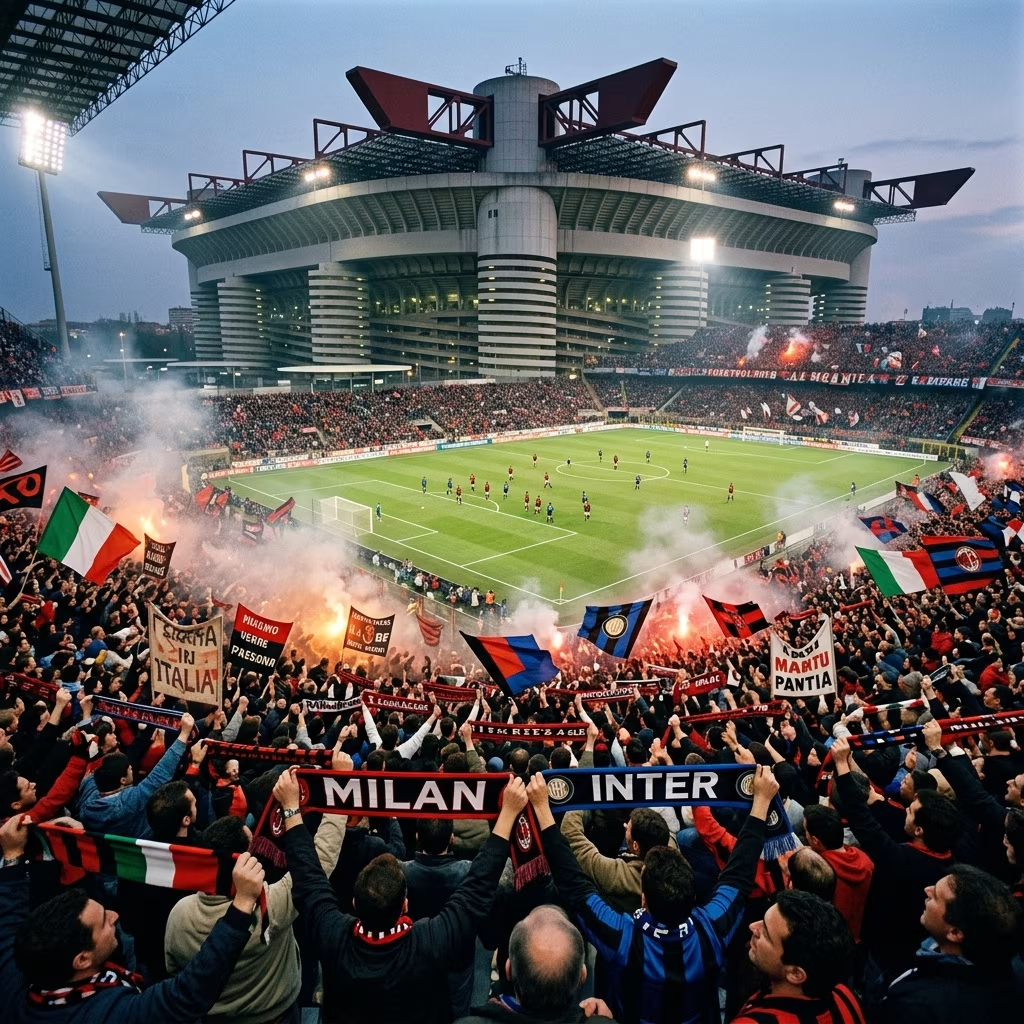
A matchday experience in Italy is a cultural spectacle. True supporters never sit down—they stand, wave flags, chant, sing team anthems, and hurl insults at rival fans or the referee for the entire ninety minutes. Stadiums are strictly segregated, with designated sections for home and visiting supporters, overseen by a massive police presence.
- Fans commonly wear their team’s colors, scarves, and even face paint, transforming stands into seas of coordinated color.
- Alcohol is readily available inside stadiums—or fans bring their own, intensifying the already high-decibel celebrations and, sometimes, the tempers.
- Unlike in the United States, European fans rarely applaud opponents’ good play. Here, the opposition is not just a sporting rival—they are, for 90 minutes, the enemy.
This fiery atmosphere means that attending an Italian match is bracing—and sometimes, dangerous. While most fans seek only to express their devotion, occasional outbursts among the ultras (fanatic supporters) make police intervention and post-match cleanup routine aspects of Italian football.
Serie A and Italian Football’s Many Competitions
The pinnacle of professional football in Italy is Serie A, featuring some of the world’s most famous clubs. Serie A is part of a complex calendar that includes domestic and international competitions:
- Serie A: The country’s top league, comprising professional for-profit clubs similar to America’s NFL or NBA.
- Coppa Italia: Italy’s national cup competition, open to clubs from multiple divisions, adding another layer of rivalry and excitement.
- European Tournaments: Many Italian teams compete in the Champions League and Europa League, facing off against top clubs from Spain, England, Germany, and beyond.
- International Play: The national team, La Squadra Azzurra, participates in the World Cup, European Championships, and friendly matches, requiring players to shift loyalties week by week.
The intense schedule means elite players may play for their club on Sunday, their country midweek, and back again for a high-stakes European fixture before the weekend ends. This relentless pace keeps them—and the fans—perpetually on edge.
Football and Family: A Weekly Ritual
Each Sunday, football shapes the rhythm of Italian family life. Home-cooked meals are timed to halftime, and arguments over tactics and refereeing can last late into the night. For many Italian families, team allegiance is part of their heritage, passed down through generations. In some households, loyalty is compulsory—for one father, the message to his son was clear: “Support Roma, or you get no food in this house.”
The Media: Fueling the Fire
Italian media is obsessed with football, amplifying every success, controversy, and scandal. The press stirs drama with constant analysis, high-pitched debates, and sometimes, outright sensationalism. The proliferation of sports-dedicated newspapers, weekly talk shows, and radio call-ins means that football talk saturates every aspect of public life.
Scandals—sometimes dubbed with the “-gate” suffix (inspired by Watergate)—regularly dominate headlines. When the Italian national team found itself embroiled in controversy or triumph, the entire country mobilizes emotionally, uniting or dividing along sporting lines.
Controlling the Chaos: Security, Policing, and Regulation
Given the passion and potential for unrest, Italian football matches demand significant police resources. Before, during, and after matches, officers line the streets and stadium perimeters, ready to intervene at the slightest provocation. While the worst incidents of hooliganism are rare in Italy compared to some northern European countries, authorities are constantly vigilant.
Local governments invest heavily in crowd control and cleanup, understanding that post-game celebrations often spill into city streets, with convoys of honking cars and impromptu parades prolonging the festivities long after the final whistle.
Football’s Place Amid Other Italian Passions
While calcio reigns supreme, Italians also embrace other sports with gusto. Italy boasts world-class skiers, cyclists, and motorcycle racers. Formula One and MotoGP racing attract huge audiences, as do cycling’s Giro d’Italia and tennis Grand Slams. Yet nothing matches the collective drama of a top-flight football match. The unparalleled intensity of calcio is a testament to its status as Italy’s premier passion and national calling card.
Football and Tradition: The Roots of Rivalry
Italy’s football rivalries are ancient, often rooted in historic, political, or even religious divisions. The country’s north-south dichotomies, city-state rivalries, and lingering memories of medieval republics all play out through the game:
- The Rome derby (“Derby della Capitale”) between AS Roma and Lazio is not just a contest of skill, but a battle of neighborhood and worldview.
- Milan’s rivalry (AC Milan vs. Inter Milan) reflects historical differences spanning class, politics, and city geography.
- Even in towns famed for peace, like Siena, the football pitch becomes an outlet for ancient anger and local pride—a modern echo of medieval rivalries.
Frequently Asked Questions (FAQs)
Q: What is Serie A?
A: Serie A is Italy’s premier professional football league, featuring the nation’s best clubs and attracting fans from across the globe.
Q: Why are Italian football rivalries so intense?
A: Rivalries in Italy often reflect not just sporting competition, but deep-rooted historical, political, and regional identities. These can make local derbies especially passionate—and sometimes volatile.
Q: Is it safe to attend a football match in Italy?
A: Most matches are safe, especially if you sit in family or neutral areas and follow stadium guidelines. However, certain high-profile derbies can see heightened tension and heavy police presence. Exercise caution and heed local advice.
Q: What role does football play in Italian family life?
A: Football is a central part of Italian family routines, especially on Sundays. Meals, gatherings, and weekly schedules often revolve around match times—and supporting a team is a matter of family identity.
Q: Do Italian players play for both club and country?
A: Yes, Italy’s top players juggle commitments to their club teams (like Juventus, Roma, Milan) as well as the national team, frequently switching allegiances within a single week for different competitions.
The Lasting Legacy of Italian Football
To witness a Sunday match in Italy is to experience a spectacle that is equal parts sport, drama, and cultural ritual. Whether seen in a crowded trattoria, a city square filled with honking cars, or a raucous, color-soaked stadium, football in Italy remains a mirror of the country itself: proud, passionate, and, above all, alive to the joy and agony of competition. For many, calcio is not just a game—it is Italy’s soul on display.
References
- https://www.ricksteves.com/watch-read-listen/read/articles/understanding-football-in-italy
- https://www.ricksteves.com/watch-read-listen/read/articles/italian-sports
- https://www.ricksteves.com/watch-read-listen/video/travel-talks/italy-travel-skills
- https://www.ricksteves.com/europe/italy
- https://www.ricksteves.com/watch-read-listen/read/articles
- https://www.ricksteves.com/watch-read-listen/read/articles/europes-wide-world-of-traditional-sports
- https://www.youtube.com/playlist?list=PL2203FB5B8E4D4D99