Little Europe: A Journey Through Five Micro-Countries
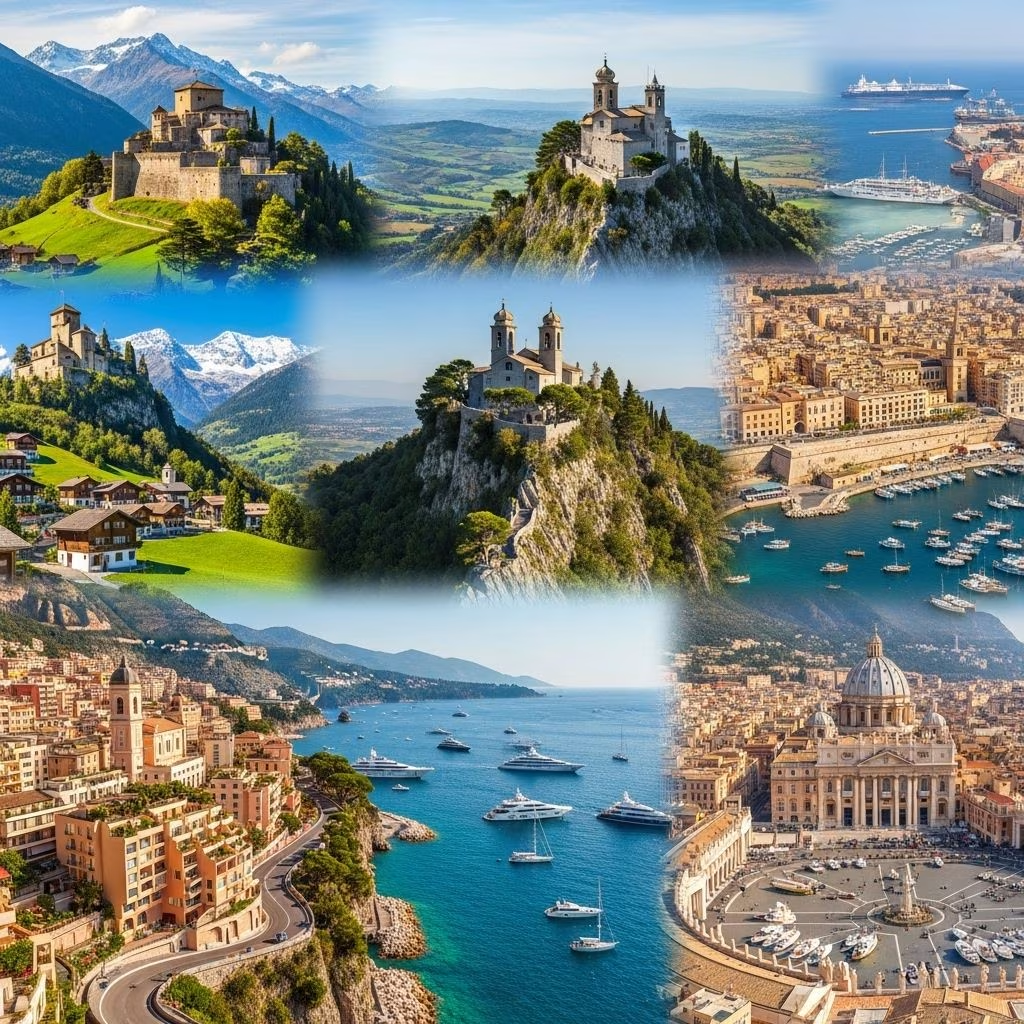
Europe is dotted with minuscule nations—remnants of a medieval tapestry once woven from hundreds of tiny dukedoms and princedoms. Today, just a handful of these “don’t-blink-or-you’ll-miss-’em” states remain: Andorra, Liechtenstein, Monaco, Vatican City, and San Marino. Though small in size, these micro-countries are rich in culture, history, and personality. Embark on a whirlwind tour to uncover their unique allure, historical roots, and highlights.
The Legacy of Tiny States
Medieval Europe resembled a mosaic of tiny realms. Where you now find large countries, there used to be hundreds of city-states and fiefdoms. Modern Germany, for instance, was once fragmented into over 300 such entities—each with its own ruler, weights, measures, and even curfews. These domains were often limited to the range of a cannon shot from the city walls. Today, only a few of these “mini-nations” have survived, standing as living remnants of Europe’s layered history.
Vatican City: The World’s Smallest State
Vatican City is both a sovereign country and the spiritual epicenter of the Catholic world. Nestled within the city of Rome, this 0.17-square-mile country boasts some of the world’s most celebrated religious and artistic treasures—most notably St. Peter’s Basilica, the planet’s largest church.
- Papal Home: Residence of the Pope and the seat of the Roman Catholic Church.
- Artistic Legacy: Home to the Sistine Chapel, adorned with Michelangelo’s famous frescoes.
- Global Significance: Despite its tiny size, it wields considerable religious and diplomatic influence worldwide.
Walking through Vatican City feels like stepping into a living museum—mosaics of devotion and marble echoing with centuries of spiritual significance.
Monaco: Glamour on the Riviera
Monaco sits on the dazzling French Riviera, a sliver of a state synonymous with luxury, royalty, and high-stakes entertainment.
- Monte Carlo Casino: The ornate casino is world-renowned, attracting high rollers from across the globe. Its Belle Époque architecture encapsulates Monaco’s opulent charm.
- Grand Prix: The annual Monaco Grand Prix Formula 1 race transforms the principality’s winding streets into a showcase of speed, glamour, and thrills.
- Scenic Beauty: Steep cliffs offer panoramic views of luxury yachts, shimmering Mediterranean waters, and grand hotels dotting the coastline.
- Royal Heritage: Home to the Grimaldi family, Monaco has retained its sovereign status for centuries. The Prince’s Palace serves as both a historic monument and the official residence of the ruling prince.
Monaco is a magnet for luxury tourism, nightlife, and celebrity sparkle—a microcosm of Riviera elegance packed into just over two square kilometers.
San Marino: The Last Independent Hill Town
Clinging to the rugged ridges of Monte Titano near Italy’s Adriatic coast, San Marino is Europe’s oldest surviving republic—a fiercely independent town-state.
- Medieval Fortifications: The skyline is dominated by three striking medieval towers that once protected the city from would-be invaders.
- Historic Continuity: Founded in AD 301, San Marino boasts a constitution dating back to the 17th century and a proud legacy of self-governance.
- Cultural Distinctiveness: Though enveloped by Italy, San Marino retains its own legal system, postage stamps, and traditions.
- Spectacular Vistas: Visitors can enjoy panoramic views stretching from the Apennine Mountains to the Adriatic Sea.
Timeworn stone streets wind through the old town, telling stories of resilience and independence at every corner. San Marino’s compact yet formidable presence makes it both an architectural and historic marvel.
Liechtenstein: An Alpine Principality
Liechtenstein nestles in the Alps between Switzerland and Austria. Though diminutive in area, this nation packs castles, alpine beauty, and historic intrigue into just 62 square miles.
- Vaduz Castle: Perched dramatically above the capital, the castle remains the residence of the princely family. While not open to the public, its silhouette dominates the skyline.
- Outdoor Adventure: Liechtenstein is a haven for hikers and skiers, boasting well-marked trails and pristine mountain air.
- Economic Niche: Known for its strong financial sector, it also boasts a robust arts scene in its compact capital, Vaduz.
- Historic Roots: A remnant of the Holy Roman Empire, Liechtenstein has managed to retain its sovereignty through centuries of European upheaval.
With its picture-perfect villages and mountain panoramas, Liechtenstein invites travelers seeking quiet charm and nature’s grandeur.
Andorra: A Shopper’s and Hiker’s Paradise
Tucked high in the Pyrenees, Andorra straddles the border between France and Spain. This tiny principality draws visitors with tax-free shopping, rugged landscapes, and a distinct blend of Catalan culture.
- Mountain Leisure: Andorra’s scenic valleys offer some of Europe’s finest hiking and winter sports.
- Retail Haven: Its capital, Andorra la Vella, is famed for duty-free shopping—fashion, electronics, and perfume at attractive prices.
- Cultural Mélange: A blend of French and Spanish influences gives Andorra a unique linguistic and culinary identity, centered around vibrant Catalan traditions.
- Scenic Drives: Winding roads reveal picturesque villages, Romanesque churches, and panoramic mountain farmlands.
Whether seeking adventure on the slopes or searching for bargains downtown, Andorra offers an eclectic mix of experiences in an untamed alpine setting.
Micro-Countries: Modern Relevance
These micro-countries, though tiny on the map, have outsized significance. They represent:
- Historical Survival: Living relics of an era when political fragmentation was the norm.
- Distinct Cultures: Each maintains unique identities, languages, and customs, resisting homogenization despite their neighbors’ dominance.
- Travel Appeal: Micro-countries offer compact itineraries rich in both culture and scenery—a refreshing change from sprawling capitals.
- Economic Ingenuity: Most thrive on niche economies: tourism, finance, tax-free retail, or religious administration.
Their continued sovereignty demonstrates the resilience of smallness and the fascination of preserving tradition in a changing continent.
Planning Your Micro-Country Adventure
Visiting all five of Europe’s micro-countries is a unique travel feat. While distances between them are considerable, each can be easily incorporated into a regional itinerary:
- Andorra: Best reached by road from Barcelona, Spain, or Toulouse, France.
- Liechtenstein: Accessible by train to nearby Swiss cities, then a scenic drive or bus ride into Vaduz.
- Monaco: Served by train from Nice or longer routes along the scenic French Riviera.
- San Marino: Reachable via Rimini, Italy, with regular buses bringing visitors up the winding mountain roads.
- Vatican City: Located within Rome—simply walk from the city center or take Rome’s extensive transit network.
| Country | Area (sq. mi.) | Population | Highlights |
|---|---|---|---|
| Vatican City | 0.17 | ~800 | St. Peter’s Basilica, the Vatican Museums, Papal audience |
| Monaco | 0.78 | ~39,000 | Monte Carlo Casino, Grand Prix, Royal Palace |
| San Marino | 23.6 | ~33,000 | Three Towers, medieval old town, panoramic views |
| Liechtenstein | 62 | ~39,000 | Vaduz Castle, alpine hiking, fine arts museum |
| Andorra | 181 | ~77,000 | Duty-free shopping, ski resorts, scenic hiking |
Essential Travel Tips for Micro-Country Explorers
- Pack Light: Space in these countries’ historic centers is often at a premium—bring only what you need.
- Embrace Local Cuisine: Sample regional specialties—be it cassoulet in Andorra, truffle pasta in San Marino, or Riviera seafood in Monaco.
- Visit Off-Peak: Especially in Monaco and Vatican City, visiting outside peak tourist seasons means fewer crowds and a more intimate experience.
- Respect Local Etiquette: Each country, no matter how small, fiercely guards its traditions—observe customs and show respect in holy or royal places.
Frequently Asked Questions (FAQs)
Q: How many micro-countries are there in Europe?
A: There are generally considered to be five major European micro-countries: Andorra, Liechtenstein, Monaco, San Marino, and Vatican City.
Q: Do these countries have their own passports and currencies?
A: All five issue their own passports; some share currency arrangements (e.g., Monaco and San Marino use the euro, while Liechtenstein uses the Swiss franc). Each maintains a distinct national identity.
Q: Can I visit all five micro-countries in a single trip?
A: It is possible with careful planning and ample travel time, typically involving flights, trains, and road travel across several regions in Western Europe.
Q: What makes these countries appealing to travelers?
A: Their appeal lies in a unique mix of history, cultural distinctiveness, scenic beauty, and the novelty of visiting a country in just a day or two.
Q: Are these countries members of the European Union?
A: Only Monaco has a special relationship; none are full EU members, though most use the euro and maintain open borders with surrounding EU states.
Final Thoughts
Europe’s five micro-countries are vibrant pockets of identity and tradition, offering more than their small size might suggest. Whether you’re seeking artistic splendor, alpine vistas, royal excitement, or simply a passport stamp from somewhere few have ventured, the micro-countries are gateways to adventure, reflection, and discovery—all in miniature. Set your sights on these sovereign enclaves, and savor the ultimate little big adventure.
References
- https://www.ricksteves.com/travel-tips/travel-classes/monday-night-travel/little-europe
- https://www.kpbs.org/news/arts-culture/2019/03/18/rick-steves-europe-little-europe-five-micro-countr
- https://www.youtube.com/watch?v=b8v9Vj224qs
- https://www.ricksteves.com/watch-read-listen/video/tv-show/little-europe
- https://www.youtube.com/watch?v=eSqoEhWd9cM
- https://www.ricksteves.com/syndicated-content
- https://www.ricksteves.com/watch-read-listen/read/articles/little-little-liechtenstein
- https://www.youtube.com/watch?v=_MTVLKLze3E
- https://www.ricksteves.com/watch-read-listen/read/articles