The Treasures of Luxor: Journey Into Egypt’s Ancient Heart
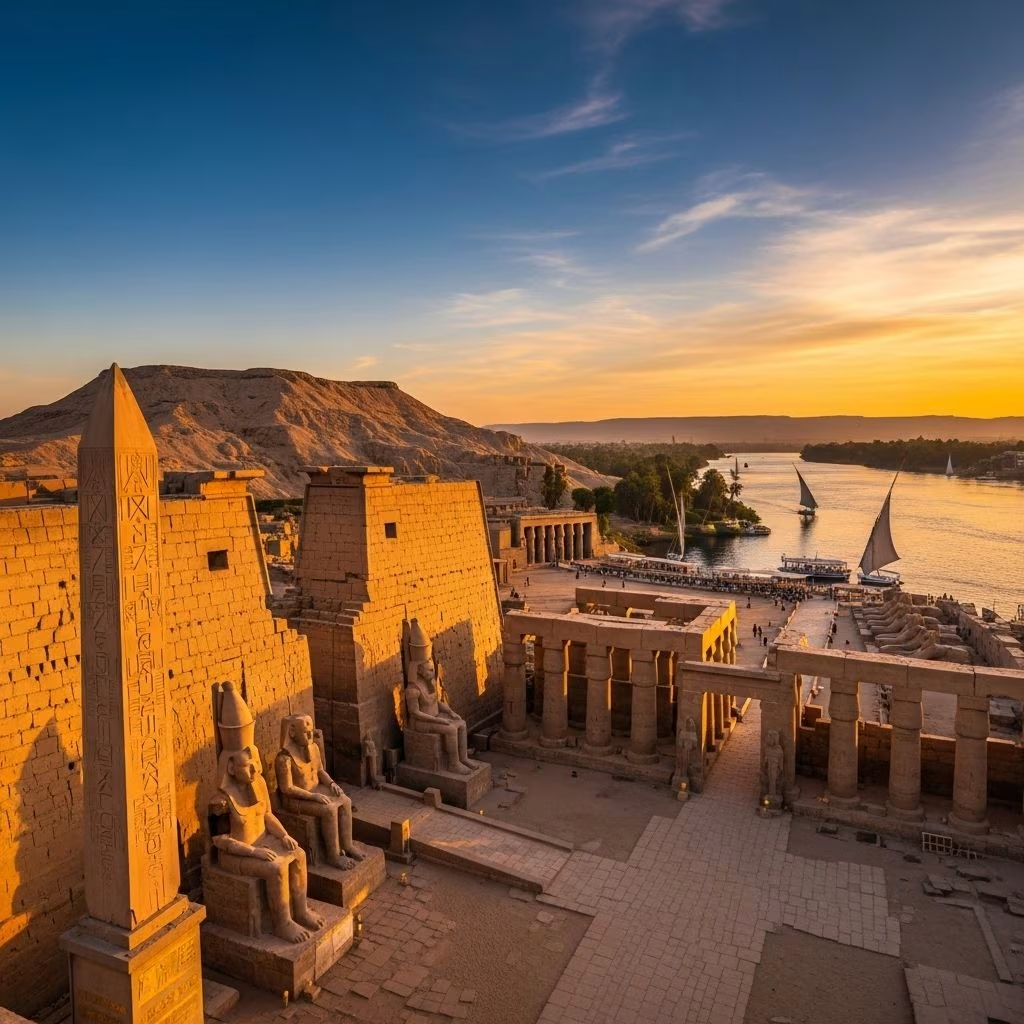
Luxor, set on Egypt’s iconic Nile River, is a world-renowned repository of human history and culture. Once ancient Thebes, Luxor today is a crossroads where the legacy of pharaohs, vivid local traditions, and the timeless landscape of the Nile converge to create an immersive journey into human civilization’s epic past. Travelers venturing here step into an open-air museum, encountering some of the world’s greatest monuments and the lush rhythms of everyday riverside life.
Luxor’s Nile: The Life-Giving Ribbon and Its People
Egypt’s desert vastness is punctuated by the Nile—a green and brown ribbon running through its heart. Along this fruitful strip, sugarcane, date palms, and reeds paint the landscape. The river’s edge supports nearly all of Egypt’s population, drawing locals and visitors into daily scenes colored by traditional agriculture, timeless villages, and vibrant market life.
- Felucca rides—enjoying the breeze on classic sailboats that have plied the river for millennia
- Riverbank scenes—rustic villages, silhouetted palms, and a palpable tranquility as the sun sets over the water
- Local life—fishermen, farmers, and children play and work at the water’s edge, where daily rhythms echo ancient routines
As the river brings sustenance and commerce, its presence is deeply interwoven into Luxor’s identity, shaping not only the land but the experience of every traveler here.
East Bank Wonders: Monuments to Egypt’s Greatness
The eastern side of Luxor is an epicenter of grand temples built as testaments to the power and piety of Egypt’s rulers. It was here the living carried out great religious ceremonies under the watchful gaze of monumental stonework and hieroglyphic messages.
Karnak Temple: Egypt’s Supreme Holy Sanctuary
Karnak is the largest ancient religious complex ever constructed, serving centuries of pharaohs as Egypt’s main place of worship. Entering the precinct, visitors are surrounded by carved pylons, colonnades, and a sprawling forest of statues and sphinxes.
- Great Hypostyle Hall—134 massive stone columns towering 75 feet above, adorned with intricate hieroglyphic carvings
- Avenue of Sphinxes—a ceremonial path once connecting Karnak to Luxor Temple for festival processions
- Sacred lake and obelisks—central features symbolizing purity and royal achievement
Each ruler left his imprint here, and today, Karnak’s labyrinthine ruins invite visitors to trace changing tastes, religious ideas, and ambitions through the ages. Illuminated night tours highlight the temple’s awesome majesty and spiritual energy.
Luxor Temple: Pharaoh’s Gateway to the Divine
Located near the heart of downtown Luxor, this temple was dedicated to the rejuvenation of kingship—a ritual site where pharaohs were transformed into living gods. Its impressive facade, massive statues, and delicate reliefs offer a close-up encounter with the engineering and artistry of Egypt’s golden age.
- Colossal statues of Ramses II—the greatest builder of the New Kingdom
- Court of Amenhotep III—a broad, open space for processions and rituals
- Roman and Christian overlays—Luxor Temple’s later history is visible in ruins of a Roman-era chapel and an Islamic mosque built atop the site
Evenings at Luxor Temple reveal its haunting beauty under spotlights, when the ancient columns and sculptures glow against the night sky.
West Bank Mysteries: World of the Dead
Across the river, Luxor’s west bank reveals Egypt’s legendary necropolis—a land devoted to eternity. In sharp contrast to the bustling east, the west is a desert expanse of burial valleys and mortuary temples built to ensure rulers’ safe passage into the afterlife.
The Valley of the Kings: Where Pharaohs Sleep
The Valley of the Kings, a stretch of arid hills, is home to more than 60 tombs belonging to New Kingdom pharaohs, most famously King Tutankhamun. Each tomb was carved deep into rock to hide treasures from grave robbers and to preserve ritual scenes for eternity.
- King Tutankhamun’s Tomb—discovered by Howard Carter in 1922, its treasures, including the iconic golden mask, remain touchstones of global fascination
- Ramesses tombs—lavish burial sites with wall paintings of the underworld, spells, and celestial journeys
- Visitation tips—several tombs are open to the public, rotated regularly for preservation; King Tut’s tomb requires a special ticket
Valley of the Queens and Nobles: The Royal Household
Nearby, the Valley of the Queens holds the tombs of pharaohs’ wives and children, including the stunning tomb of Queen Nefertari, renowned for its vibrant colors and artistic mastery. The Valley of the Nobles offers insight into the lives of courtiers and officials, whose burial chambers feature vivid depictions of daily life, not just the afterlife.
Mortuary Temples: Commemorating Light and Power
Built to honor the dead and stage rituals, Luxor’s west bank temples are archaeological wonders. Among them:
- Temple of Hatshepsut—a visionary, multi-tiered monument for Egypt’s great woman pharaoh, nestled into the cliff face at Deir el-Bahari
- Ramesseum—ruins of Ramses II’s memorial, famed for its colossal fallen statue and poetic inscriptions
- Medinet Habu—Ramses III’s fortress-temple, uniquely preserved with colorful reliefs of ritual and battle
These sites bear witness to the colossal resources and spiritual aspirations that shaped the New Kingdom’s imperial power.
Experiencing Luxor: Practical Travel Insights
Luxor’s treasures are best explored at a slow pace, savoring both their visual impact and historical depth. Modern Luxor welcomes visitors with efficient infrastructure and approachable hospitality, making it an accessible destination for seasoned Egyptologists and first-time tourists alike.
- Getting around—taxis, horse-drawn carriages, river ferries, and organized tours are ubiquitous
- Best time to visit—autumn and winter months offer cooler temperatures and ideal light for photography
- Local customs—respect for religious sites, modest clothing, and polite negotiation in markets contribute to smoother interactions
- River cruises—multi-day ship tours along the Nile reveal morning and dusk scenes, rural communities, and Old Kingdom marvels between stops
Luxor’s daily life is inseparable from its history. Travelers can visit bustling souks (markets), sample fresh dates, or sip tea in Nile-view cafés in between archaeological marvels.
Luxor Beyond the Ruins: Living Heritage
The city’s heritage is not confined to ancient stones. Luxor pulses today with festivals, artisan crafts, and a young generation forging new dreams amid the shadows of pharaohs. Traditional music and costume enliven the streets during religious holidays and weddings; local families preserve artisanal weaving, pottery, and open markets that date back millennia.
- Festivals—Luxor Festival sees colorful processions, music, and local foods
- Souks—shopping offers everything from alabaster carvings to vibrant textiles
- Nile culture—riverbank picnics and evening strolls bring together generations and travelers
Visitors are encouraged to engage with cultural living traditions as much as with monumental history, for the true soul of Luxor is found in the resilience and hospitality of its people.
Luxor’s Role in Egyptian Civilization
Luxor (ancient Thebes) was Egypt’s capital during its golden age (c. 1500–1000 BCE) and a vital religious and political center. Its monuments make explicit the ambitions, achievements, and anxieties of rulers seeking immortality and unity. The city’s strategic location—midway along the Nile—allowed it to channel resources, political influence, and artistic innovation throughout the land.
| Monument | Function | Notable Features |
|---|---|---|
| Karnak Temple | Main religious complex | Vast hypostyle hall, avenue of sphinxes |
| Luxor Temple | Festival and ritual site | Colossal statues, processional route |
| Valley of the Kings | Royal necropolis | Hidden tombs, King Tutankhamun |
| Temple of Hatshepsut | Mortuary temple | Terraced structure amid cliffs |
| Medinet Habu | Temple, fortress | Colorful reliefs |
Frequently Asked Questions about Luxor, Egypt
Q: What is the best way to visit Luxor’s main sites?
A: Most visitors divide their time between the East Bank (temples) and West Bank (tombs and mortuary temples), using taxis, carriages, or guided tours. Multi-day Nile cruises often include expert-led stops at Luxor’s top attractions.
Q: Is Luxor safe for travelers?
A: Yes. Luxor is regarded as one of Egypt’s safest destinations for tourists, with visible security and friendly locals. Standard awareness of surroundings and modest dress is advised.
Q: How many tombs can be visited in the Valley of the Kings?
A: About 8–10 tombs are typically open to the public at any one time, with opening schedules rotated for preservation. King Tutankhamun’s tomb requires a separate ticket due to its unique appeal.
Q: What are the most memorable experiences beyond monuments?
A: Sunset felucca sails, walking through village markets, tasting fresh dates, and attending a local festival are authentic ways to experience Luxor’s unique heartbeat.
Q: What is Luxor’s legacy for Egypt and the world?
A: Luxor preserves the memory and achievements of a civilization whose architecture, myth, and symbols influenced countless cultures. Its monuments continue to inspire awe and curiosity across generations.
Travel Tips for a Rewarding Luxor Visit
- Start early—morning visits to temples and tombs avoid crowds and maximize the magical light
- Hydrate—bring water, as Luxor’s climate is dry and sometimes intense
- Hire a guide—local experts bring context and ensure access to hidden sites
- Show respect—observe local customs at sacred or rural sites; photography limits may apply in tombs
- Explore beyond the monuments—walk through a rustic village or market to connect with daily life
Few places rival Luxor’s combination of awe-inspiring history, living culture, and stunning landscapes. For travelers seeking connection to the world’s ancient roots—and Egypt’s vibrant present—it is not just a destination, but a revelation.
References
- https://www.ricksteves.com/travel-tips/travel-classes/monday-night-travel/egypt-nile
- https://www.youtube.com/watch?v=XAESzAMpi24
- https://www.ricksteves.com/watch-read-listen/video/tv-show/egypt-nile
- https://www.ricksteves.com/watch-read-listen/read/egypt
- https://www.ricksteves.com/watch-read-listen/read/articles/the-treasures-of-luxor-egypt
- https://blog.ricksteves.com/blog/a-single-day-in-luxor/
- https://blog.ricksteves.com/blog/luxor-the-city-of-palaces/