Westminster Abbey: England’s Living Chronicle
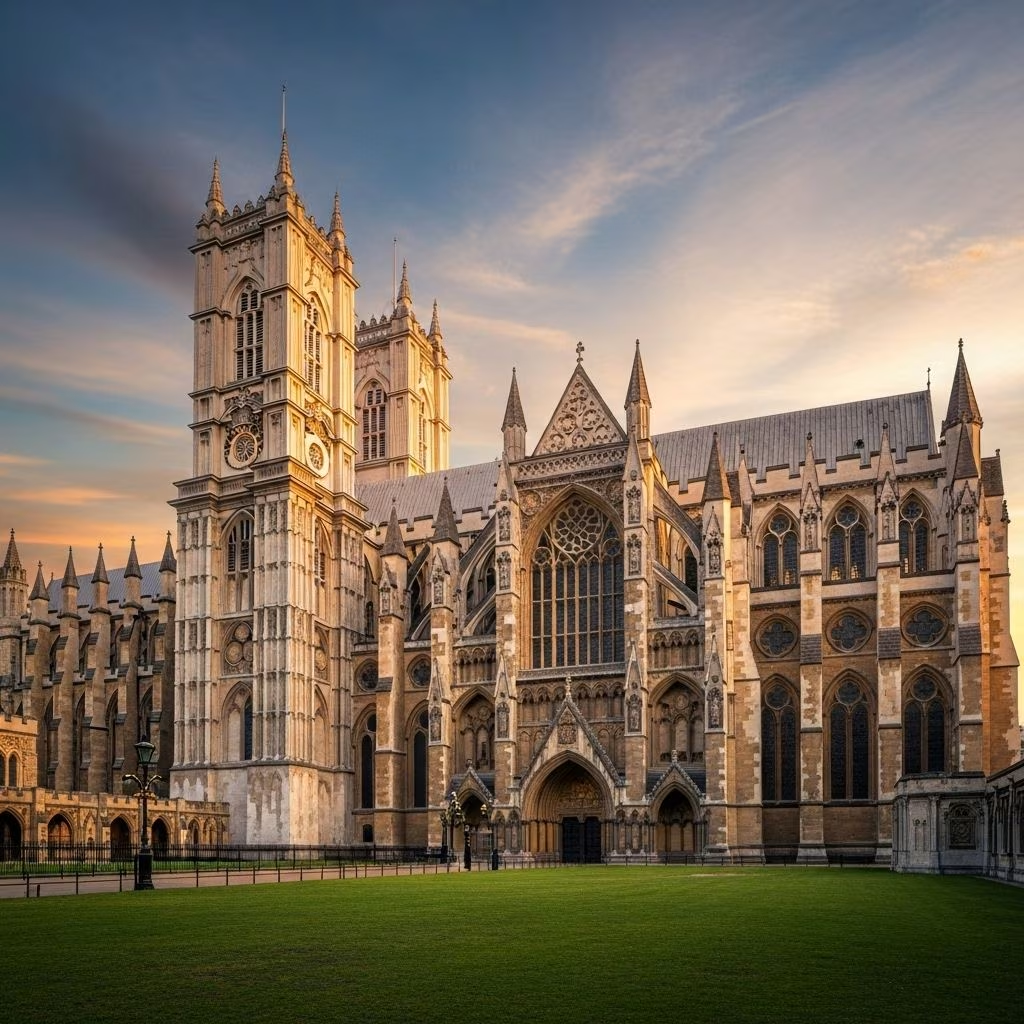
Westminster Abbey stands at the heart of London, both literally and figuratively. More than an architectural masterpiece, it is a spiritual, cultural, and historical landmark woven into the fabric of the nation’s story. For nearly a thousand years, this Gothic wonder has watched over England’s kings and queens, sheltered the remains of its brightest minds, and echoed the prayers of its people. To step inside is to walk in the footsteps of monarchs, statesmen, poets, soldiers, and pilgrims alike.
The Religious and National Heart
The Abbey is not merely a place of worship; it is intertwined with England’s sense of self. Every English coronation since 1066 has taken place within its hallowed walls, and its floor stones mark the resting places of kings, queens, scientists, soldiers, and artists who shaped the nation. The church’s Gothic architecture—soaring arches, intricate vaults, and glowing stained glass—provides a fitting backdrop for its solemn ceremonies and national commemorations.
- Spiritual Center: The Abbey remains an active church, with daily services and special ceremonies marking the rhythms of faith and national life.
- National Soul: Its walls preserve the memories of triumph and tragedy, royal majesty and artistic genius, communal grief and collective hope.
A Sanctuary of History and Memory
Entering Westminster Abbey, visitors are immediately struck by the palpable weight of history. The central aisle draws the eye down a procession of arches—like rows of folded hands in prayer—towards the high altar. Stained glass floods the nave with colored light, illuminating marble effigies and solemn memorials. Saints gaze down from their windows, heroes stand immortalized in carved stone, and underfoot, the tombstones of the nation’s greats quietly whisper their stories.
The Jerusalem Chamber: Hidden Scholarship
Not all of the Abbey’s most important moments happened in public view. The Jerusalem Chamber, typically closed to tourists, is steeped in intellectual and spiritual significance. Here, between 1604 and 1611, a group of scholars convened to produce the King James Bible. Their translation, rendered directly from ancient Greek and Hebrew into the people’s English, shaped not only religious life but also the language and literature of Britain and beyond.
- Bible Translation: The dangers and challenges faced by those bringing sacred texts into the vernacular are vividly remembered in the chamber’s quietude.
- Tangible Legacy: The influence of the King James Bible remains profound in Western culture, literature, and spirituality.
Coronations, Royal Weddings, and National Moments
The Abbey has served as the grand stage for every British coronation since William the Conqueror ascended in the 11th century. The Coronation Chair—each monarch’s seat at the moment they are crowned—rests before the high altar, poised upon the symbolic ‘Stone of Scone’ or ‘Stone of Destiny’ (historically, but now on display separately). The ceremony is rich with tradition, from the sacred anointing to the procession of regalia: the sword, ring, ceremonial cup, scepter, and the moment the Archbishop of Canterbury sets the crown upon the sovereign’s head.
- Royal Weddings: The world has watched as royal couples traverse the long nave, surrounded by the splendor and drama of this sacred stage.
- National Farewells: The Abbey has also hosted funerals and remembrance services for Britain’s most beloved figures, acting as a gathering place for communal mourning and celebration.
Heroes in Carved Stone: Tombs and Memorials
To walk the Abbey’s aisles is to find oneself among the giants of England’s past. Shrines and tombs gather beneath soaring arches, forming silent, dignified ensembles of memory. Some of the most notable resting places include:
- Edward the Confessor: The founder of the Abbey, his shrine marks the spiritual nave’s heart, surrounded by the tombs of 29 other kings and queens.
- Queen Elizabeth I: Her marble effigy, sculpted from a death mask, is regarded as among the most accurate likenesses of any British monarch.
- Britain’s Unknown Soldier: A simple but powerful tomb lined with red poppies honors all those lost in World War I. The US Medal of Honor, awarded by General John J. Pershing, hangs in tribute nearby.
- Martin Luther King Jr.: Added as an honorary member among the English host, his statue stands above the Great West Door, symbolizing unity and moral courage.
Monarchs Surrounding the Founder
The tombs of kings and queens are clustered around Edward the Confessor’s shrine, a testament to centuries of continuity and change in England’s monarchy. The site radiates royal history—from the ornate chest tombs of medieval monarchs to the stately effigies of the Tudor and Stuart dynasties.
Poets’ Corner: The Literary Pantheon
No visit to Westminster Abbey is complete without a reflective stroll through Poets’ Corner. Located near the South Transept, this area is the final resting place and tribute gallery for some of the greatest names in English literature. Here, the tomb of Geoffrey Chaucer—the author of “The Canterbury Tales”—was the first to be honored, and he is now surrounded by memorials to luminaries such as Charles Dickens, Rudyard Kipling, and Jane Austen. Not every honoree is buried here, but all are celebrated as pillars of Britain’s creative heritage.
- Commemorated Writers: Besides those interred, plaques and busts pay tribute to other major literary figures, including Shakespeare, Lord Byron, and the Brontë sisters.
- Pilgrimage for Readers: For literature lovers, Poets’ Corner serves as a touchstone, a place to connect with the nation’s storytellers and thinkers.
Henry VII’s Lady Chapel: Glory in Stone and Glass
The Lady Chapel, commissioned by King Henry VII, brings a burst of color and intricate artistry to the Abbey’s east end. Its elegant, “fan-vaulted” ceiling—an engineering marvel of its time—rises above rows of carved stalls adorned with heraldic banners denoting the Order of the Bath, an esteemed order of chivalry. The chapel’s atmosphere is festive yet reverent, reminiscent of a medieval pageant or a royal celebration.
- Order of the Bath: The Chapel is the ceremonial home to this ancient order, whose members are honored with elaborate banners overhead.
- Memorial Windows: Modern stained glass commemorates, among others, the Royal Air Force and the pilots—and their international comrades—who died defending Britain during World War II.
A Living Church: Worship and Admission
Despite its stature as a tourist draw, Westminster Abbey is first and foremost a living church, hosting two or more daily services amid the centuries-old stones. Guests seeking to experience the Abbey as intended—as a house of prayer—can do so during scheduled worship times. Particularly memorable are the free musical evensong services offered several evenings each week, during which the Abbey’s soaring acoustics play host to the voices of its world-renowned choir. This spiritual music provides a moving, atmospheric encounter with England’s enduring faith traditions.
- Admission Fees: Most tourists pay an entrance fee, which includes an in-depth audio tour narrated by actor Jeremy Irons—an exceptional resource for uncovering the Abbey’s treasures.
- Free Entry for Worship: All are welcome, regardless of faith, to attend services, reflect, and take in the Abbey’s sacred spirit without charge.
Experience and Reflection: The Visitor’s Perspective
Visitors to Westminster Abbey are often struck by the duality of the space: it is at once a place of bustling tourist activity and deep, contemplative silence. The Abbey invites both communal celebration—during national events—and individual reflection, as even the busiest hours leave room for reverence. Many find the most moving moments come while sitting quietly in a pew, allowing the echoes of history, music, and memory to settle in.
- Audio Tours: A self-guided experience with the Abbey’s audiowand reveals details that casual observation might miss, immersing guests in stories spanning centuries.
- Seasonal Visits: The Abbey hosts both daily rituals and seasonal celebrations, including Christmas, Easter, and significant royal anniversaries.
Table: Westminster Abbey at a Glance
| Feature | Description |
|---|---|
| Founded | Est. 960s (as a Benedictine monastery); current church largely dates to the 13th & 14th centuries |
| Architectural Style | English Gothic |
| Coronations | All English—and later British—monarchs since 1066 |
| Notable Burials | Elizabeth I, Edward the Confessor, Poets’ Corner luminaries, Unknown Soldier |
| Poets’ Corner | Memorials & tombs of major literary figures |
| Admission | Entrance fee for tourists (includes self-guided audio tour); free for worshippers |
| Daily Services | Morning Prayer, Holy Communion, Musical Evensong |
Frequently Asked Questions (FAQs)
Q: Can visitors attend a service for free?
A: Yes. Anyone is welcome to attend public worship services—such as Evensong—free of charge, regardless of religious belief.
Q: What is the best way to explore Westminster Abbey?
A: The Abbey provides a self-guided audio tour, included in the admission fee, which takes visitors through key sites with informative narration.
Q: Are there areas of the Abbey not open to tourists?
A: Yes, certain chambers—such as the Jerusalem Chamber—are generally closed to the public, reserved for special occasions or private reflection.
Q: Who is buried in Poets’ Corner?
A: Many of England’s celebrated writers are buried or memorialized here, including Chaucer, Dickens, and Kipling. Not all commemorated have their bodies here; many are honored with plaques or statues.
Q: When is the Abbey open for visitors?
A: Opening hours vary, generally from morning until late afternoon, with limited access during religious services or on special occasions. Checking the Abbey’s official website for the current schedule is highly recommended.
Conclusion: More Than a Monument
Westminster Abbey is far more than a historical monument or a tourist site. It is a living chronicle—a sacred space that continues to shape, reflect, and sustain the identity of a nation. From its Gothic arches and radiant windows to its ancient tombs and quiet chapels, the Abbey invites each visitor to become part of the ongoing story. Whether in moments of grand pageantry or quiet contemplation, its spirit endures at the very heart of England.
References
- https://www.ricksteves.com/watch-read-listen/read/articles/inside-the-religious-heart-of-england
- https://blog.ricksteves.com/blog/westminster-abbey/
- https://www.youtube.com/watch?v=afzg6fvI55c
- https://www.ricksteves.com/watch-read-listen/video/westminster-abbey
- https://community.ricksteves.com/travel-forum/england/from-the-crypts-to-the-crown-at-westminster-abbey
- https://www.ricksteves.com/syndicated-content
- https://www.ricksteves.com/watch-read-listen/video/tv-show/london-historic-and-dynamic