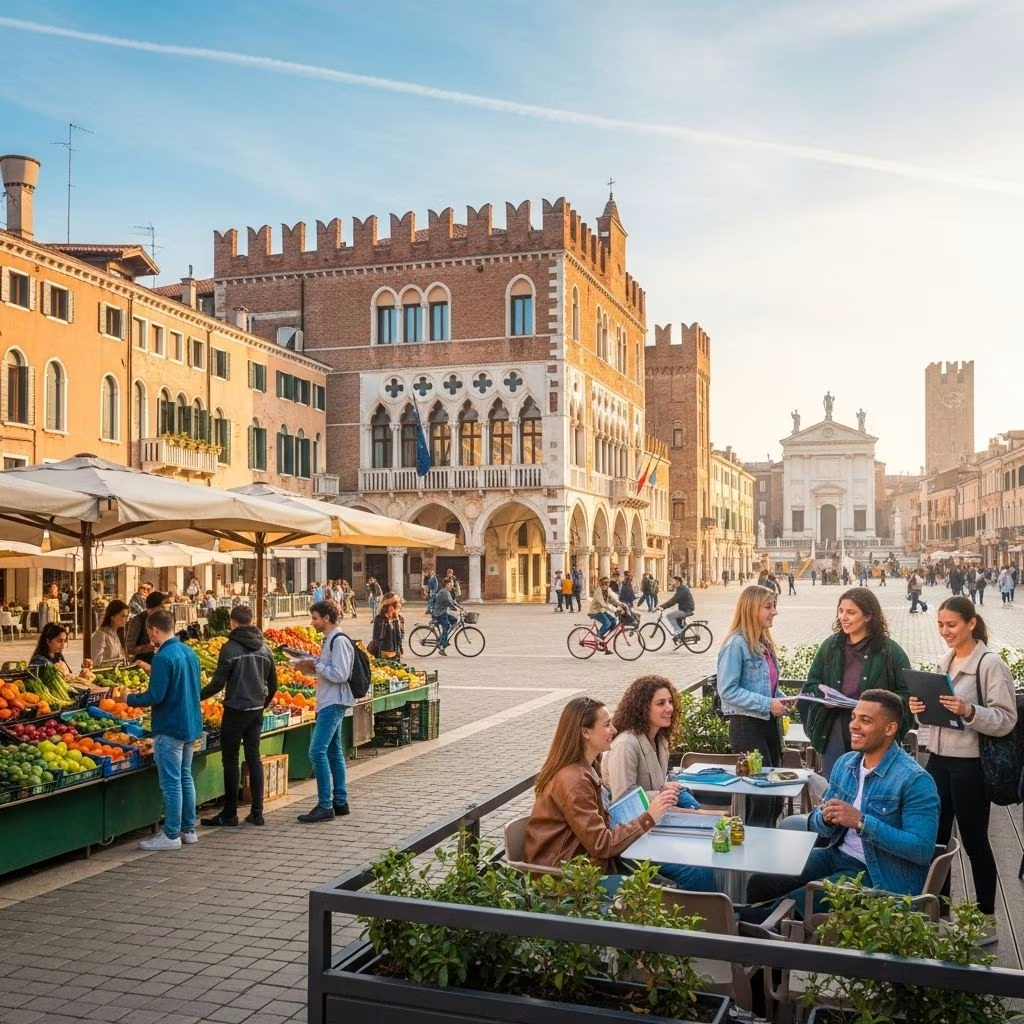
Playful Padua: Where Timeless History Meets Lively Student Spirit
Just a half-hour from Venice, yet truly a world apart, Padua (known as Padova in Italian) is a city that charms visitors with its irresistible fusion of artistic legacy, scholarly vibrance, and inviting public spaces. Though it enjoys proximity to Italy’s grandest tourist magnet, Padua stands confidently on its own, famed for its prestigious university, revered churches, and atmosphere that feels authentic, youthful, and distinctly untouristy.
Padua’s Historic Core: Colonnades and Squares
Strolling Padua’s old town center is a time-travel experience. Lined with stately colonnades, its streets open onto squares that have welcomed travelers, merchants, and students for centuries. The architecture blends medieval and Renaissance, punctuated by bustling squares perfect for lingering over an aperitivo as local life unfolds. Unlike many Italian cities, Padua remains refreshingly untouristy — its hotels are reasonably priced, and the crowds tend to be local rather than foreign.
- Piazza delle Erbe: Bustling marketplace and social hub.
- Piazza della Frutta: Renowned for its fresh produce and vibrant energy.
- Piazza dei Signori: Historic venue for civic events.
- Mercato: Living tradition in Padua, ever-present in its central squares.
Rambling these squares, visitors encounter remnants of the city’s mercantile past, with stone canopies recalling the days when merchant scales regulated commerce for the region.
The Brain of Veneto: Padua’s University Legacy
Nicknamed “the Brain of Veneto”, Padua’s stature springs largely from its university, one of Europe’s oldest, founded in 1222. Over the centuries, the University of Padua has attracted some of the brightest minds in history:
- Galileo — the legendary astronomer and scientist who called his 18 years teaching here “the best of his life.”
- Copernicus — renowned astronomer and mathematician.
- Dante — the immortal poet.
- Petrarch — humanist and scholar.
This legacy persists today, with some 60,000 students infusing Padua with a spirited, youthful energy that spills across its historic squares and laneways.
The Joyful Pulse of Student Life
As you wander Padua, its student culture is palpable. Young people make themselves at home in public places, congregating under medieval monuments and centuries-old porticoes. With limited private space in their apartments, the city itself becomes their living room, their lounge, even their venue for romance. The atmosphere radiates warmth and exuberance, especially in the late afternoons when impromptu gatherings bloom outside campus buildings.
- Groups lounge beneath ancient tombs and ornate columns.
- Public displays of affection are commonplace among Padovan students — reflecting the city’s open, celebratory vibe.
- Historic surroundings blend effortlessly with modern campus life, offering a unique collision of past and present.
The university’s flexible graduation schedule means that mini graduation parties break out throughout the year, filling the city with joyous, multi-generational celebrations where family pride bursts onto the streets.
Graduation Traditions: A Local Rite of Passage
Padua’s student life is celebrated in colorful, boisterous graduation rituals that have become local legend. When graduates complete their degree (which can happen anytime they defend their thesis), the city transforms:
- Green laurel wreaths adorn graduates as symbols of accomplishment.
- Formal group photos capture the joy, pride, and warmth of families coming together.
- As night falls, the streets around the university are taken over by graduates and their friends, launching into hilarious, riotous “roasts.”
The cornerstone of the ritual is the creation of a giant butcher-paper poster depicting the graduate in wild, often obscene caricature. Adorned with funny photos and anecdotes about the graduate’s journey, the poster is read aloud and then taped to the university wall for all to see — a tradition both endearing and irreverent.
| Tradition | Description |
|---|---|
| Laurel Wreath | Symbolic graduation crown presented to new graduates. |
| Graduation Roast | Friends create and read a cheeky poster with stories and caricatures. |
| University Anthem | Crowds sing a catchy, slightly profane local song to maintain humility and celebrate the graduate’s achievement. |
| Public Poster Display | Poster remains taped to university walls for 24 hours as public record of fun and camaraderie. |
This vivacious tradition highlights the warmth, humor, and easy camaraderie of Padua’s student community. For visitors, it’s an unforgettable example of how heritage and youthful exuberance blend in everyday city life.
Spiritual Treasures: Basilica of St. Anthony
No visit to Padua is complete without experiencing its powerhouse religious site: the Basilica of St. Anthony. This vast Romanesque-Gothic basilica, begun soon after the saint’s death in 1231, quickly became a focal point for pilgrims across Europe. Anthony of Padua, a beloved friar and patron of travelers, amputees, pregnant women, barren women, flight attendants, and pig farmers, was sainted just one year after his passing — testament to his immense influence in the medieval church.
- St. Anthony’s Tomb: The faithful assemble to touch his tomb and view his well-preserved lower jaw and tongue.
- Architectural Marvel: The basilica boasts Byzantine-style domes atop a Romanesque/Gothic framework, mixing influences from several epochs.
- Legacy: For nearly 800 years, the basilica has attracted a steady stream of pilgrims, making Padua a spiritual beacon in Italy.
Inside, visitors encounter a tapestry of faith and art — a place where centuries of devotion and architectural brilliance converge to create an atmosphere at once somber and hopeful.
Artistic Highlights: Giotto’s Scrovegni Chapel
Padua is also a pilgrimage site for admirers of early-Renaissance art, thanks to the Scrovegni Chapel and its breathtaking frescoes by Giotto. These 14th-century masterpieces offer a vivid visual recounting of biblical scenes, celebrated for their revolutionary realism, emotional depth, and narrative power.
- Giotto Frescoes: Groundbreaking use of three-dimensional perspective and naturalistic detail.
- Legacy: Marked the dawn of a new era in Western art; many art historians view Giotto’s Padua works as precursors to the Renaissance.
- Experiential Art: The site is frequently described as a “must-see” for art lovers and scholars alike.
This artistic treasure, coupled with Padua’s lively contemporary spirit, invites visitors to experience the city as both museum and living community.
Living the Moment: Padua Today
The soul of Padua lies in its ability to connect the glory of the past with the spontaneous pleasures of the present. From its gentle squares where history is palpable, to the contagious energy of graduation parties and student life, Padua is a city for lingering, learning, and laughing.
Whether you’re here to marvel at art, reflect in ancient churches, mingle with the university crowd, or simply savor a local wine at sunset, Padua offers its guests a chance to live in the moment — while never losing touch with the timeless winds of history swirling all around.
- Atmosphere: Unpretentious, authentic, and irresistibly Italian.
- Experiences: Blend contemplative art appreciation with the lively camaraderie of student gatherings.
- Local Culture: Padua’s traditions, rituals, and humor form an essential part of the visitor’s encounter with the city.
Frequently Asked Questions (FAQs)
Q: How do I reach Padua from Venice?
A: Padua is easily accessible by train, with regular departures from Venice lasting about 30 minutes.
Q: What is the Scrovegni Chapel famous for?
A: The chapel is world-renowned for Giotto’s frescoes, which mark a turning point in Western art and are celebrated for their emotional realism and innovative perspective.
Q: Are the university graduation rituals open to tourists?
A: Graduation celebrations take place frequently in Padua’s public spaces, and while technically private, they are visible and enjoyed by all who pass by.
Q: Is Padua suitable for families and travelers seeking a quiet Italy experience?
A: Absolutely. Padua offers a blend of historic wonders, safe streets, and an untouristy atmosphere ideal for families and those seeking genuine local culture.
Q: What are the must-see sites in Padua?
- Basilica of St. Anthony
- Scrovegni Chapel
- Padua University historical sites
- Piazza delle Erbe and Piazza della Frutta
- Local markets and wine bars
SEO Tips for Traveling Padua
- Padua combines Veneto history, Renaissance art, and student life for diverse experiences.
- Expect a non-touristy vibe and authentic Italian hospitality.
- Its proximity to Venice makes Padua a rewarding day trip or overnight destination.
- Religious pilgrims and art lovers will find Padua especially meaningful.
References
- https://www.ricksteves.com/watch-read-listen/read/articles/playful-padua
- https://blog.ricksteves.com/blog/you-say-padua-they-say-padova/
- https://www.ricksteves.com/watch-read-listen/video/tv-show/season-8/italys-veneto-verona-padua-and-ravenna
- https://www.travelagentcentral.com/destinations/rick-steves-playful-padua
- https://blog.ricksteves.com/blog/tag/padua/
- https://www.ricksteves.com/syndicated-content
- https://blog.ricksteves.com/blog/tag/padua/page/2/