Rothenburg ob der Tauber: A Living Medieval Fairytale
In the heart of Bavaria, perched above the winding Tauber River, lies Rothenburg ob der Tauber—a town where the Middle Ages seem to linger in every half-timbered facade, archway, and cobblestone alleyway. Revered as one of Germany’s most beautifully preserved medieval towns, Rothenburg stands as a living storybook, inviting visitors to step back in time amidst timeless architecture and centuries-old traditions. With its formidable walls, picturesque squares, and year-round festive spirit, it’s no wonder Rothenburg has enchanted travelers, photographers, and dreamers for generations.
Why Rothenburg Captivates: A Timeless Escape
Unlike many European towns that have had their historic quarters lost to modernity or war, Rothenburg retains an authentic, immersive medieval character. Its entire old town appears little changed since the 16th century, offering a rare opportunity to walk streets much as they were centuries ago. With each turn, visitors encounter ancient towers, tranquil squares, and vibrant markets, all set against the lush Franconian landscape.
- Architectural Preservation: Miles of city walls, gated towers, and original buildings dating back to the Middle Ages remain remarkably intact.
- Cultural Richness: Museums, churches, and festivals keep local history alive and thriving.
- Festive Atmosphere: World-famous Christmas markets and summer festivals make Rothenburg an inviting destination year-round.
The Heart of the Town: Exploring the Old Town
The medieval Altstadt (Old Town) is a labyrinth of red-roofed buildings, stone gates, and charming taverns—best experienced on foot. The entire district, enclosed by formidable town walls, conjures images of knights, merchants, and artisans from centuries past.
Marktplatz: The Historic Center
At the heart of Rothenburg lies the Marktplatz (Market Square), a bustling plaza lined with ornate Renaissance buildings and crowned by the imposing Town Hall (Rathaus). The square, once a center for medieval trade and civic events, now hosts market days, open-air festivals, and the town’s celebrated Christmas Market each winter.
- Town Hall: A blend of Gothic and Renaissance styles, with a tower that offers panoramic views. Constructed originally in the 13th century, its present form dates from a 16th-century rebuild.
- Ratstrinkstube (Councillors’ Tavern): A beautifully adorned building dating to 1446, famous for its astronomical clock that reenacts the town’s legendary history each hour.
- St. George’s Fountain: An exquisitely carved 15th-century fountain anchoring the north side of the square.
Plönlein: Rothenburg’s Fairy-Tale Corner
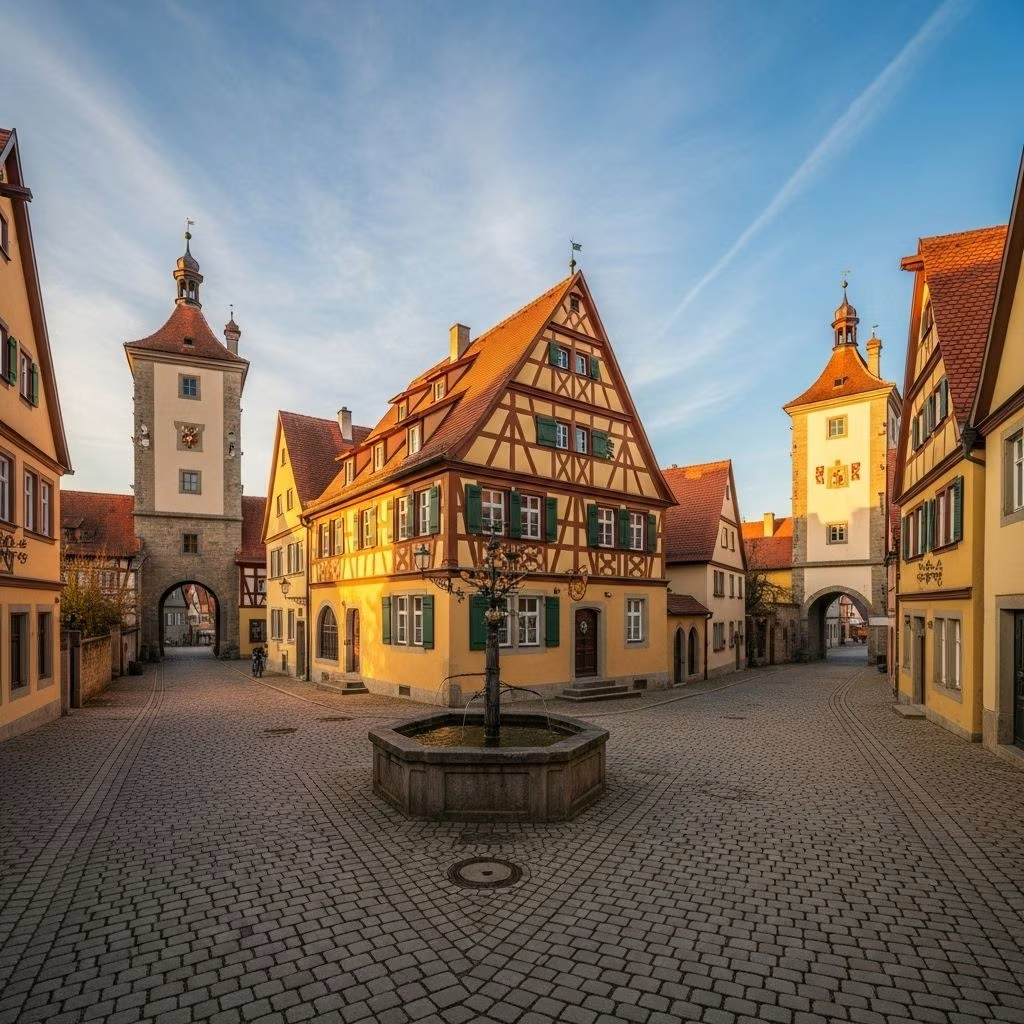
Perhaps the most iconic image of Rothenburg is the charming fork at Plönlein—a tiny square defined by its crooked yellow half-timbered house, framed by two medieval towers and a stone fountain. Photographed by millions and immortalized in travel guides, this view perfectly captures the town’s storybook atmosphere. Arrive early in the morning or late in the day for the most peaceful experience and the best photos.
Strolling the Town Walls
One of Rothenburg’s unique pleasures is a walk along the medieval ramparts that encircle the old town. These fortifications, complete with watchtowers and gatehouses, stretch for nearly two miles, providing sweeping views over the rooftops and countryside.
- Walls & Towers: More than 40 towers and gates, each with their own history and character.
- Walkways: Well-marked and accessible, the walls can be explored freely at your own pace.
Architectural Splendors and Sacred Spaces
Rothenburg is a showcase of architectural evolution, from Romanesque churches and Gothic spires to Baroque and Renaissance facades. Every street offers something to discover.
St. Jacob’s Church (St. Jakobskirche)
This grand Gothic church, completed in the late 15th century, is renowned for its soaring stained-glass windows and the Holy Blood Altarpiece, an intricately carved masterpiece by Tilman Riemenschneider. Legend holds that this relic contains a drop of Christ’s blood, making the church an important pilgrimage site.
St. Wolfgang’s Church
Tucked against Rothenburg’s towers, this richly decorated church at the Klingentor gate is famous for its art and quiet beauty.
Museums: Windows into Rothenburg’s Past
For a deeper understanding of life in medieval and Renaissance Germany, Rothenburg’s museums offer exhibits that both educate and intrigue.
- Medieval Crime Museum: A fascinating dive into law, justice, and punishment through the ages—displaying ancient instruments of discipline, torture, and legal documents that paint a vivid (and sometimes chilling) picture of the past.
- Imperial City Museum: Housed within a former convent, here you’ll find period furniture, art, and artifacts tracing Rothenburg’s rise as a Free Imperial City.
- Old Craftsman’s House: Step inside an authentically preserved 13th-century home to experience the daily life of medieval artisans and their families.
- Christmas Museum: Explore the origins of German Christmas traditions through historical ornaments, toys, and festive displays. Open year-round, this museum pairs perfectly with a visit to the Käthe Wohlfahrt Christmas Village, the largest Christmas shop in Europe.
Year-Round Festivals and Timeless Traditions
Rothenburg refuses to be just a relic of the past—it’s very much alive, animated by festivals that celebrate history, music, food, and the unique customs of the region.
Summer: Music and Medieval Splendor
- Taubertal Open Air Festival: International and local musicians come together for Germany’s premier open-air music event each August.
- Weindorf Wine Festival: Taste local Franconian wines and traditional cuisine in a festive, community-focused atmosphere.
- Imperial City Festival: Historical parades, period costumes, and reenactments bring Rothenburg’s imperial past vividly to life.
- Night Watchman’s Tour: As dusk descends, join the famous Night Watchman for a lantern-lit walk through Rothenburg’s dimly lit lanes. His entertaining stories shed light on town legends, crime, and superstition.
winter: Germany’s Most Magical Christmas Market
No town celebrates Christmas quite like Rothenburg. Each Advent, Marktplatz transforms into a winter wonderland during the Reiterlesmarkt:
- Wooden stalls brim with hand-crafted ornaments, nutcrackers, and gifts.
- Delightful treats like roasted chestnuts, grilled sausages, and the unique schneeballen (snowball pastries)—a deep-fried dough delicacy dusted with sugar or chocolate.
- Warm up with a mug of spiced mulled wine as choirs and brass bands perform by twinkling lights.
The festive atmosphere lingers all year at museums and specialty shops, but this annual event is widely considered one of the most enchanting Christmas markets in Germany.
Natural Beauty: Gardens and Countryside Escapes
Surrounded by the gentle hills of Franconia, Rothenburg is a perfect base for scenic walks, bike rides, and relaxation amid nature.
- Tauber Valley: Picturesque trails lead down from the town to the lush Tauber valley, dotted with vineyards, cherry trees, and idyllic farms.
- Asian Water-Garden: A tranquil retreat featuring waterfalls, ornamental ponds, and exotic plants—the ideal place to unwind after a day of sightseeing.
Practical Tips: Getting There and Exploring
Rothenburg’s location along the famed Romantic Road makes it an easy addition to any southern Germany itinerary. The city is accessible by train, car, and coach, with well-signposted routes for travelers arriving from Bavaria, Baden-Württemberg, and beyond.
- By Train: Regular services connect Rothenburg to major cities like Würzburg and Munich.
- By Car: Driving the Romantic Road offers unparalleled flexibility and access to nearby scenic villages and castles.
- On Foot: The compact Old Town is pedestrian-friendly—cars are restricted, making it easy to soak in the town’s ambiance and history.
Gastronomy: Tasting Local Flavors
Bavarian hospitality shines in Rothenburg’s cozy inns, wine taverns, and bakeries. Enjoy traditional Franconian dishes—like roast pork with dumplings, hearty sausages, and regional wines—served with warmth and pride. Don’t miss the beloved schneeballen pastry; sampling one is a rite of passage for first-time visitors!
Frequently Asked Questions (FAQs)
Q: What’s the best time to visit Rothenburg ob der Tauber?
A: Any season offers something unique! Spring and summer feature lively festivals and mild weather. Autumn brings grape harvests and golden scenery. Winter is magical thanks to the Christmas Market, festive lights, and a warm community spirit.
Q: Which sights are must-sees for first-time visitors?
A: Don’t miss the Marktplatz, Plönlein corner, town walls, St. Jacob’s Church, Medieval Crime Museum, and the Christmas Village—even outside the holiday season.
Q: How much time should I spend in Rothenburg?
A: While it’s possible to take in the highlights in a day, one to two nights let you experience sunrise and sunset in the empty streets, savor local food, and join a night-time walking tour.
Q: Is Rothenburg suitable for families?
A: Absolutely. Kids love the town’s fairy-tale setting, the quirky museums, and hands-on activities (like making their own schneeballen).
Q: What should I buy as a souvenir?
A: Hand-carved wooden ornaments, traditional Christmas decorations, and locally made schneeballen pastries are all popular choices.
Quick Table: Top Attractions in Rothenburg ob der Tauber
| Attraction | Highlights |
|---|---|
| Marktplatz | Renaissance Town Hall, Councillors’ Tavern, Christmas market |
| Plönlein | Iconic medieval vista, half-timbered house, two towers |
| Town Walls | 2 miles of walkable ramparts, 40+ towers and gates |
| St. Jacob’s Church | Stained-glass windows, Riemenschneider altarpiece, pilgrimage site |
| Medieval Crime Museum | Historical justice, ancient instruments of punishment |
| Christmas Museum & Village | Year-round Christmas displays, Europe’s largest festive shop |
| Weindorf Festival | Wine tasting, regional cuisine, folk music |
Experience the Fairytale: Why Visit Rothenburg?
To visit Rothenburg ob der Tauber is to step into a world where the distant past feels close at hand—where every season brings new delights, and the magic of storybook Germany is real. Whether drawn by the picturesque scenery, vibrant culture, or simple romance of its old-world streets, you’ll leave with unforgettable memories and, perhaps, the urge to return again and again.
References
- https://www.expedia.com/Rothenburg-Ob-Der-Tauber.dx5252
- https://www.germany.travel/en/cities-culture/rothenburg.html
- https://auslanderblog.com/rothenburg-ob-der-tauber-travel-guide/
- https://johnnyafrica.com/rothenburg-travel-guide/
- https://globetrotterkyle.com/the-ultimate-travel-guide-to-rothenburg-ob-der-tauber/
- https://www.rothenburg.de/en/
- https://happytowander.com/how-to-spend-the-perfect-day-in-rothenburg-ob-der-tauber/
- https://www.ricksteves.com/europe/germany/rothenburg-ob-der-tauber
- https://chasinghippoz.com/travel-photo-blog/my-photography-amp-travel-guide-to-rothenberg-ob-der-tauber-germany
- https://www.youtube.com/watch?v=uadKTVZI0Q0