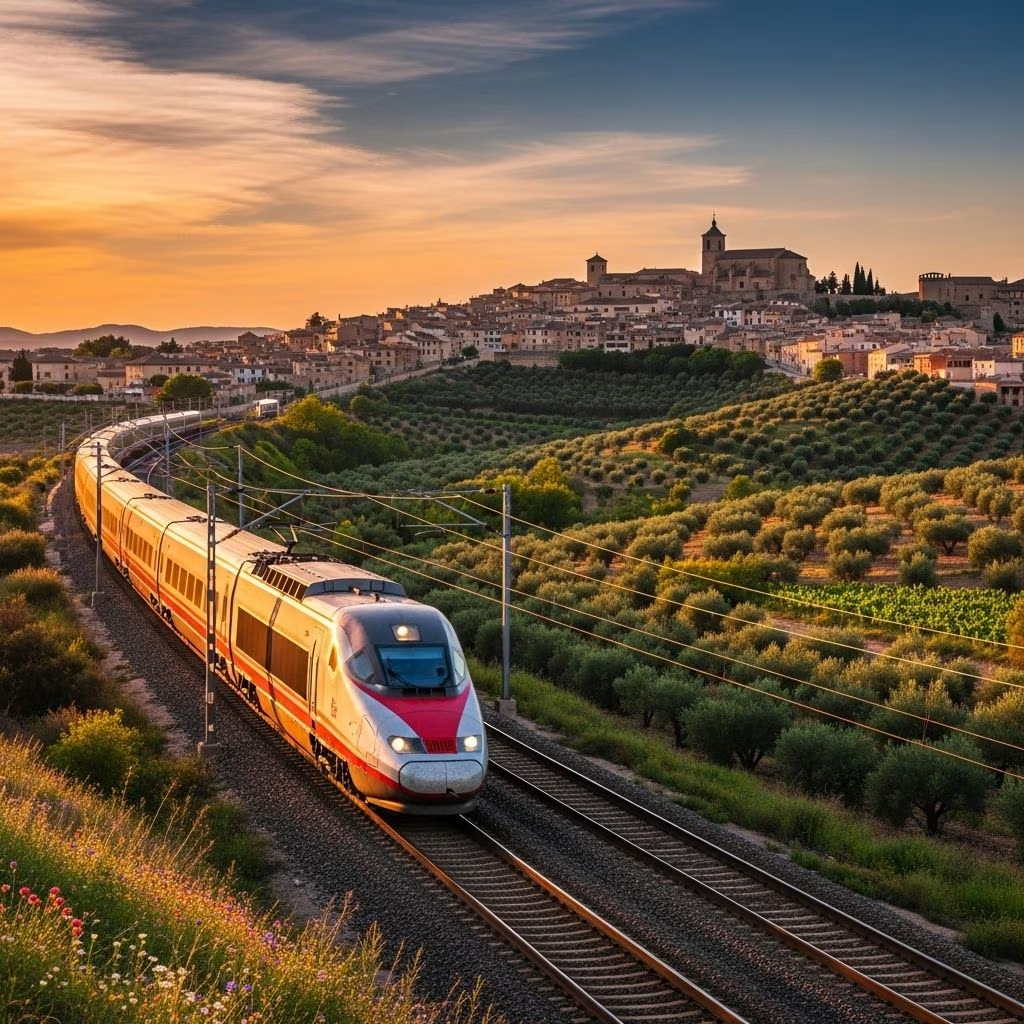
Traveling across Spain by train offers a comfortable and scenic way to experience the country’s diverse regions. However, understanding whether a rail pass offers value, how seat reservations work, and the nuances between trains and other transportation can make a significant difference in your travel budget and experience. This guide delivers clear, up-to-date advice on getting the most out of train travel in Spain, including rail pass options, when to buy point-to-point tickets instead, and practical tips on maximizing savings and convenience.
Should You Buy a Rail Pass for Spain?
Spain’s rail system is renowned for its modern, high-speed trains, but a rail pass doesn’t usually offer hop-on, hop-off convenience as it does elsewhere in Europe. Almost all long-distance trains and many regional services require paid seat reservations. This crucial detail impacts the value of a rail pass and the spontaneity of travel:
- Spanish high-speed trains (AVE, Alvia, Euromed, Avant, and IRYO) typically require advance seat reservations, even for pass holders.
- Unlike some neighboring countries, most train schedules in Spain don’t allow you to simply jump aboard with a pass; a reserved seat is essential for nearly every journey.
- Point-to-point tickets—especially when purchased well in advance—are often cheaper and guarantee you a seat for your preferred departure.
- Some regions in Spain, particularly rural or less-visited areas, have limited or no train service, making buses or even short-haul flights a better option for those itineraries.
Recommendation: To determine if a rail pass is worthwhile, use a fare map or online booking tools to estimate pay-as-you-go fares for your planned routes. Then, compare the total cost (including reservation fees) with the price of a suitable rail pass.
Pros and Cons of Spanish Rail Passes
| Pros | Cons |
|---|---|
| Flexibility on certain multi-city itineraries | Most trains require additional reservation fees |
| Access to Renfe-run national trains, including slow coastal lines | Reservations can sell out, reducing flexibility |
| Discounts on some international ferries | Privately run trains and important routes may not be covered |
How to Decide Between a Rail Pass and Point-to-Point Tickets
The decision is rarely straightforward. Here’s how to make an informed choice:
- Calculate your itinerary’s total cost by adding up individual fares (including required reservations) for each planned route.
- Check reservation policies for your targeted routes; required seat reservations can quickly diminish the value and “freedom” typically promised by a rail pass.
- Compare with pass prices for the number of travel days you’ll need. Pay special attention to supplementary reservation fees.
- Factor in regional limitations—if your itinerary involves bus-exclusive routes (not covered by rail passes), tickets or bus passes may be preferable.
- If mostly traveling between major cities (Madrid, Barcelona, Seville), point-to-point tickets—booked in advance—almost always save money.
Spanish Rail Pass Options
Several types of rail passes are available for travelers interested in exploring Spain by train:
- Eurail Spain Pass: Allows travel within a fixed number of days across Spain’s Renfe trains. Eurail passes are best for non-European residents.
- Interrail Spain Pass: For European residents only. Similar coverage to Eurail but for residents of Europe.
- Renfe Spain Pass: Offered by the Spanish national rail company, this pass provides a set number of journeys over a validity period. Importantly, it includes reservation fees—a feature not matched by Eurail passes—but applies only to Renfe-run trains and does not cover all services or private lines.
Review each pass’s terms and compare them with your travel plans to ensure the best fit.
What’s Covered (and What Isn’t) by Spanish Rail Passes?
- Included: Most Renfe-operated long-distance, high-speed, and regional trains, including some slow coastal trains.
- Discounted: Some local transit services around major cities (e.g., Barcelona local trains: 50% off for pass holders).
- Not included:
- Trains operated by private competitors (e.g., AVLO, OUIGO high-speed services)
- Private, regional lines such as north-coast routes between San Sebastián and Bilbao (where buses are faster anyway)
- Local service around Valencia outside the Renfe system
- International ferry lines except those specifically listed as discounted
Travel Note: Some stretches, such as Madrid-Toledo, offer little to no financial sense for pass usage, since the reservation fee nearly equals the entire cost of a standard ticket.
Seat Reservations: The Essential Detail
Unlike the stereotypical European rail experience, seat reservations are nearly always required for Spanish high-speed and most long-distance trains:
- Reservations can sell out well in advance, especially during busy seasons or on high-demand routes.
- Typical cost: $10–$20 in second class; up to $35 in first class (sometimes includes a meal).
- Children under 4—who ride free—still require their own (free) seat reservation.
- Pass holders must obtain a reservation before boarding; showing up with only a pass will not grant access.
Tip: Always check reservation requirements before planning a train journey, and secure reservations for key routes as soon as your travel dates are set.
Types of Spanish Trains
- AVE: Spain’s premier high-speed network connecting key cities (Madrid, Barcelona, Seville, Valencia, etc.).
- Alvia: High-speed services designed for both electrified and non-electrified tracks—expanding reach beyond core AVE routes.
- Euromed: High-speed link along Mediterranean coastlines, e.g., Barcelona–Valencia–Alicante.
- Avant: Medium-distance, high-speed trains for regional connections.
- Media Distancia/Regional Express: Serve lesser-visited towns, slower but more frequent stops.
- Cercanías: Urban and suburban trains, ideal for daily commuters within and near large cities.
Point-to-Point Ticket Tips
If a rail pass proves uneconomical for your plans, buying individual tickets makes sense. Here’s how to maximize value and minimize hassle:
- Round-trip tickets often cost around 20% less than buying two one-way fares.
- Senior Savings: Travelers aged 60+ can purchase a Tarjeta Dorada (about €6 from any Spanish station) for substantial discounts—though it cannot be purchased online in advance.
- Advance-purchase discounts are available for AVE and other expensive services, usually appearing about 60 days ahead of the travel date. These discounted tickets offer the lowest fares but come with restrictions and limited availability.
- Tickets can now be booked on the Renfe website using PayPal. Credit card acceptance (particularly U.S. cards) is sometimes unreliable.
When Train Isn’t Best: Buses and Flights
Not all Spanish regions are connected by trains. For some destinations, buses or flights might provide faster or more convenient service:
- Buses cover many regions and stand as the only option on some routes.
- Domestic flights can be the quickest way to access islands or distant cities without direct rail connections.
First vs. Second Class: Should You Upgrade?
On Spain’s modern trains, the gap between first-class (Preferente or Comfort) and second-class (Turista) is relatively modest:
- First class offers wider seats, more legroom, and (on some routes) complimentary snacks or meals—especially on longer AVE journeys.
- For short distances, or if you’re on a budget, second class is usually more than sufficient.
Always compare the cost difference and perks for your routes rather than assuming first class will markedly improve your experience.
General Train Travel Advice for Spain
- Always double-check train times and platforms—train schedules in Spain can change, especially on weekends or holidays.
- Arrive at the station early for major departures: security screening, platform checks, and other procedures can add time.
- For international journeys (e.g., Spain–France), trains and tickets differ in rules and booking channels; cross-border trains generally require advanced reservations.
- Food and drink aboard is available on most high-speed and long-distance services.
- Major stations offer luggage storage, staffed ticket windows, information desks, and often have English-speaking staff.
Frequently Asked Questions (FAQs)
Do I need a seat reservation for all Spanish trains?
Nearly all long-distance and high-speed trains in Spain require an advance seat reservation, even if you hold a rail pass. Some regional trains and commuter (Cercanías) services do not, but always check in advance for specific routes.
Can I use a rail pass on all trains in Spain?
No. While passes generally cover most Renfe-operated trains, they do not cover all private, regional, or competitor-operated routes such as AVLO and OUIGO or certain regional lines (notably between San Sebastián and Bilbao). Always verify route coverage before relying on a pass.
Is it cheaper to book train tickets in advance?
Yes. For AVE and most high-speed lines, booking in advance (up to 60–90 days out) can result in significant savings and ensure seat availability, especially during peak travel times.
How do I get a senior discount on trains in Spain?
Seniors over 60 can buy the Tarjeta Dorada discount card (for about €6) at any main Spanish train station. The card must be purchased in Spain and presented when booking tickets to receive discounts; discounts generally can’t be applied to tickets bought before you arrive.
Are round-trip tickets better value in Spain?
Generally, yes. Purchasing a round-trip ticket is usually about 20% cheaper than two separate one-way tickets, making it a practical choice if your plans are fixed.
What should I choose: train, bus, or plane?
Spain’s extensive train network serves most major cities efficiently, but for towns without direct rail access—or journeys to the islands—buses and domestic flights are often faster, cheaper, or the only available option.
Comparison Table: Pass vs. Point-to-Point Tickets
| Category | Rail Pass | Point-to-Point Tickets |
|---|---|---|
| Flexibility | Good, but depends on seat reservation availability | Must travel on booked dates/times |
| Total Cost | Often higher after adding reservation fees | Can be very low if booked in advance |
| Covered Services | Renfe only (plus selected discounts) | All rail routes available a la carte |
| Reservation Hassle | Required, often limited availability | Guaranteed with ticket; simple online booking |
| Best for | Multi-city or non-fixed itineraries covering long distances | Short trips, fixed plans, budget-conscious travelers |
Final Tips for Train Travel in Spain
- Double-check all reservation and coverage rules before relying on a rail pass for multiple journeys.
- Buy advance tickets online as soon as you know your travel dates, especially for popular routes or during busy seasons.
- If a pass does not perfectly align with your plans, mix and match with buses, flights, or separate tickets for maximum value.
- Keep your travel documents, seat reservation printouts, and ID handy onboard—conductors check tickets and IDs regularly.
- Allow time at the station for checks, security, and boarding, especially with high-speed or international trains.
References and Further Reading
- Renfe (Spanish National Railways) official site
- Seat61: Beginner’s guide to train travel in Spain
- Spanish Tourism Board: Transportation Information
References
- https://www.ricksteves.com/travel-tips/transportation/trains/spain-rail-passes
- https://community.ricksteves.com/travel-forum/spain/spain-railpasses
- https://community.ricksteves.com/travel-forum/spain/rail-pass-in-spain-531e60c4-a114-4018-963b-e62faaea7efd
- https://www.ricksteves.com/travel-tips/transportation/trains
- https://www.ricksteves.com/travel-tips/transportation/trains/how-to-choose-rail-passes
- https://www.ricksteves.com/travel-tips/transportation/trains/buying-tickets
- https://community.ricksteves.com/travel-forum/spain/website-for-train-tickets-in-spain