Granada’s Sacromonte District: Where Roma Soul Meets Flamenco Fire
Set on a dramatic hillside just north of the iconic Alhambra and to the east of the Albayzín, Granada’s Sacromonte district is famed for its Roma (Gypsy) community, cave dwellings, and a deep-rooted flamenco heritage. In this vivid enclave, the rhythms of Romani tradition animate every street—offering visitors both authentic artistry and dazzling Andalusian panoramas.
The Heart of Roma Granada: Naming and Heritage
The word Gypsy in English, and its Spanish equivalent gitano, originate from the mistaken belief that these people came from Egypt. Today, Roma is the preferred term globally due to the derogatory associations of “Gypsy.” However, in Granada’s Sacromonte, many embrace the term gitano, distinguishing the word “Roma” mainly for their language, Romani. Here, these communities maintain and celebrate their own customs with pride, undeterred by shifting terminology elsewhere.
- Origins: The Roma migrated from India in the 14th century, settling primarily in Muslim-ruled southern Europe.
- Skills and Tolerance: Under medieval Islamic rulers, Roma groups found relative acceptance thanks to their skills in blacksmithing, animal husbandry, and crafts.
- Arrival in Granada: The Roma likely entered with Christian forces during the Reconquista (late 15th century), establishing homes on the outskirts, specifically in the Sacromonte hillside caves.
Sacromonte’s Landscape and Cave Dwellings
Unlike the sprawling, maze-like Albayzín, Sacromonte is notably compact and steep. Its topography is carved into whitewashed caves, dug out of the soft hillside cliffs. These cave homes, ingeniously adapted over centuries, are both affordable and practical—naturally insulated from Granada’s winter cold and summer heat.
- Main Street: Camino del Sacromonte runs through the district, hosting caves-turned-restaurants and music venues—now catering mostly to the tourist crowd.
- Hidden Lanes: Above Camino del Sacromonte is Vereda de Enmedio, a parallel backstreet less affected by tourism and known for its authentic residential spirit.
- Preservation: Many of these homes remain inhabited, while others have become venues for flamenco performances or folklore museums.
Community and Identity: Social Ties in Sacromonte
An estimated 50,000 Roma live in Granada, most still within the bounds of Sacromonte. Here, the Roma community is more distinct and tight-knit compared to elsewhere in Spain, where more have assimilated into mainstream society.
- Some locals accuse the Roma of self-segregation, but within the community, they regard themselves as stewards of unique traditions.
- Granadans are often called payos (whites) by the Roma. The social blending of payos and Roma is sometimes referred to as gallipavo (rooster-duck), a tongue-in-cheek nod to mixed heritage.
- The sense of belonging is strong, supported by extended families, community events, and an enduring pride in ancestry.
The Cave Museum of Sacromonte: Living History
For those seeking a window into the Roma cave-dwelling way of life, the Cave Museum of Sacromonte—also called the Center for the Interpretation of Sacromonte—occupies several restored caves atop the ridge. While the museum’s exhibits focus more on traditional dwellings and crafts than the evolving Roma community itself, it provides crucial context for the neighborhood’s past.
- Authentic Caves: The museum offers atmospheric recreations of typical cave homes, complete with period kitchens and domestic scenes.
- Local Crafts: Displays highlight Roma craftsmanship in metal and pottery—skills that have become emblematic of Sacromonte identity.
- Panoramic Views: Visitors enjoy stunning vistas of the Alhambra and the city skyline from the museum’s ridge location.
- Cultural Events: In the summer, the museum doubles as a venue for open-air flamenco and classical guitar concerts, bringing the living artform back to its origins.
Flamenco: The Pulse of Sacromonte
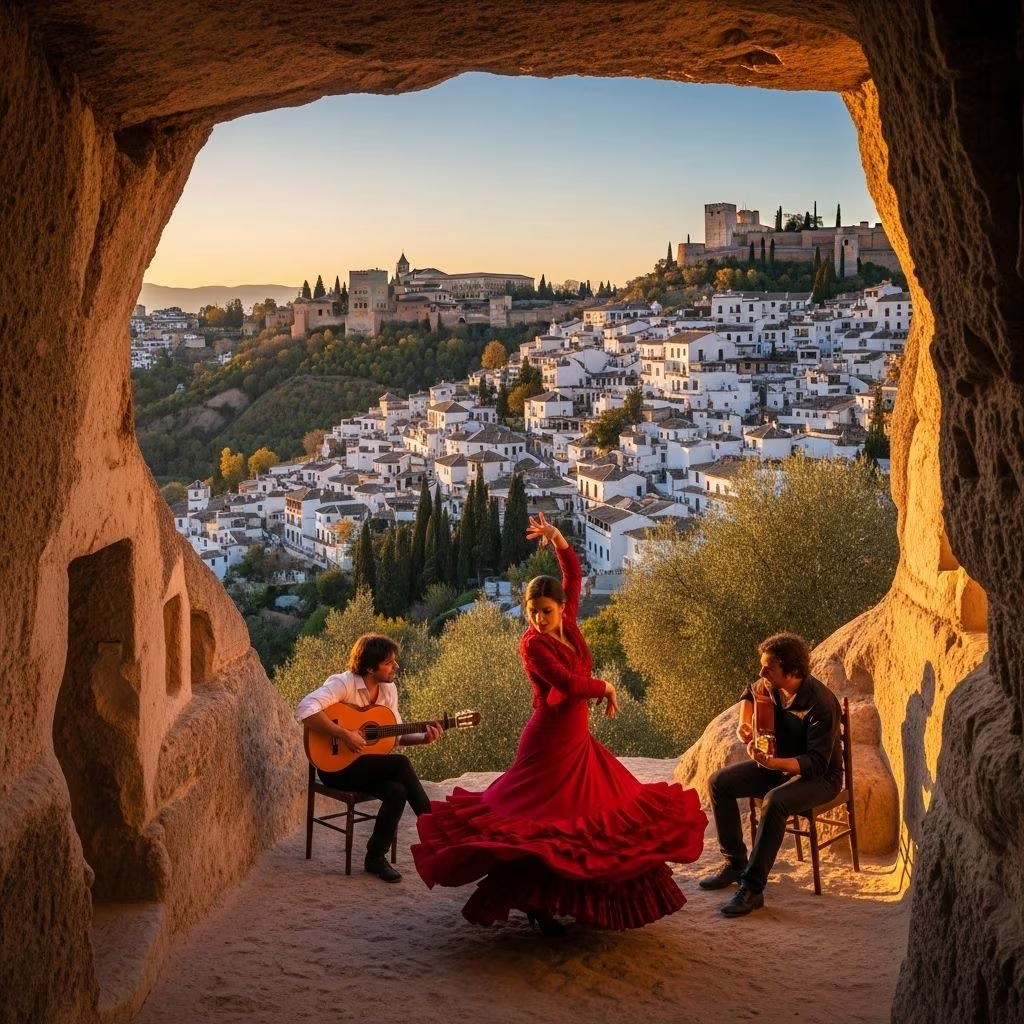
Sacromonte is synonymous with flamenco, Spain’s searing musical and dance tradition. Here, Roma communities helped shape a unique local variation, infusing it with passion and personal history, and making it a hallmark of Andalusian culture.
The district is especially known for zambra—a flamenco variation where dancers and singers are often one and the same, creating an intimate, hypnotic atmosphere in the cave venues.
- Zambra Evenings: Several cave-bars along the main street host nightly zambra sessions, where audiences can witness the raw, spontaneous energy of this live artform.
- Historic Venues: Notable establishments include Zambra Cueva del Rocío and María la Canastera cave, both celebrated for their long flamenco traditions.
- In Situ Art: Experiencing flamenco inside a whitewashed cave, surrounded by rough stone and the echoing rhythm of hands and heels on tile, is an experience unlike any theater-bound performance.
Sacromonte vs. Albayzín: Neighborhood Contrasts
| Feature | Sacromonte | Albayzín |
|---|---|---|
| Community | Primarily Roma (gitano), distinct traditions | Diverse; Moorish roots and Andalusian mix |
| Architecture | Cave dwellings, whitewashed hillsides | Narrow streets, Moorish houses, cobblestones |
| Main Attractions | Flamenco caves, Cave Museum | Miradores (viewpoints), tea houses, old mosques |
| Vibe | Compact, rustic, artsy | Labyrinthine, historic, scenic |
| Tourism | Targeted flamenco experiences | Broader historical and architectural interest |
The Living District: Everyday Life in Sacromonte
Despite its fame among tourists, Sacromonte remains a lived-in neighborhood. Many of the cave homes are still occupied, with generations of families preserving elements of traditional Roma life alongside the hustle of a changing city.
- Outdoor Living: Terraced rooftops and patios are filled with potted geraniums, hanging laundry, and the scent of simmering Andalusian stews, especially on festival days.
- Sociability: Life spills out onto the narrow lanes, where neighbors gather and music drifts from open windows.
Visiting Sacromonte: Tips for Travelers
- Access: The steep walk up to Sacromonte from the city center is part of the adventure; however, public minibuses also serve the area for those seeking easier access.
- What to Expect: Sacromonte is more expensive than Granada’s other districts, especially for food and performances, but in return promises an immersion in one of Spain’s most evocative traditions.
- Best Time to Visit: Evenings offer the most atmosphere, with the city and Alhambra softly illuminated and flamenco music calling out from cozy caves.
Frequently Asked Questions about Sacromonte
Q: What is the historical significance of Sacromonte’s caves?
A: The caves were settled by Roma communities after their arrival in Granada in the late 15th century. Their natural climate control made them ideal homes for displaced or marginalized people. Today, they represent a visible testament to the area’s Roma heritage and ingenuity.
Q: What makes Sacromonte’s flamenco unique?
A: The zambra style, where singer and dancer often become one, differentiates Sacromonte flamenco. Its performances are closely tied to the everyday life and celebrations of the Roma community, making them intimate, raw, and emotionally charged.
Q: Are the cave homes still inhabited?
A: Yes, many caves remain private homes, though some have been converted into museums, restaurants, or venues for flamenco. The residential areas, especially off the main tourist streets, still reflect living traditions.
Q: Is Sacromonte accessible on foot?
A: Sacromonte is accessible on foot from Granada’s center; expect steep inclines and cobbled paths. For those less able, minibuses provide regular service up the hillside.
Q: Why do some Roma in Granada prefer to be called Gypsies?
A: In Granada, many locals identify with gitano pride, reserving “Roma” to describe their language, not their people. While the global Roma community often prefers “Roma,” Granada’s community is comfortable with “Gypsy,” viewing the term as a marker of local heritage rather than as a slur.
Plan Your Visit: Essential Sacromonte Highlights
- Cave Museum of Sacromonte: For insight into traditional crafts, home life, and the hillside’s unique habitat.
- Flamenco Cave-Bars: Including Zambra Cueva del Rocío and María la Canastera for unforgettable performances.
- Camino del Sacromonte & Vereda de Enmedio: Stroll the district’s two main arteries to discover both tourist and authentic local life.
- Mountain Views: Enjoy panoramic vistas stretching across Granada and the Alhambra, particularly magical at dusk.
Experience Sacromonte: A Living Canvas in Granada
In Sacromonte, centuries of migration, adaptation, and cultural expression converge. Whether wandering among cave dwellings, attending a passionate flamenco performance, or pausing for a sunset above the city, every visit promises a blend of past and present—profoundly Andalusian, yet uniquely its own. Sacromonte’s Roma community remains the creative heart of this hillside, ensuring that its music, traditions, and distinct identity continue to animate the slopes above Granada far into the future.
References
- https://www.ricksteves.com/watch-read-listen/read/articles/granadas-sacromonte-district
- https://www.theepochtimes.com/bright/rick-steves-europe-taking-in-the-splendor-of-granada-spain-5721956
- https://www.ricksteves.com/watch-read-listen/video/tv-show/granada-cordoba-and-spains-costa-del-sol
- https://www.ricksteves.com/watch-read-listen/read/articles/granada-moor-than-the-sum-of-its-parts
- https://www.ricksteves.com/europe/spain/granada
- https://www.tripadvisor.com/ShowTopic-g187441-i416-k4363671-My_barrio_is_not_dangerous-Granada_Province_of_Granada_Andalucia.html
- https://community.ricksteves.com/travel-forum/spain/what-would-you-do-with-1-afternoon-in-granada-after-the-alhambra-in-the-morning