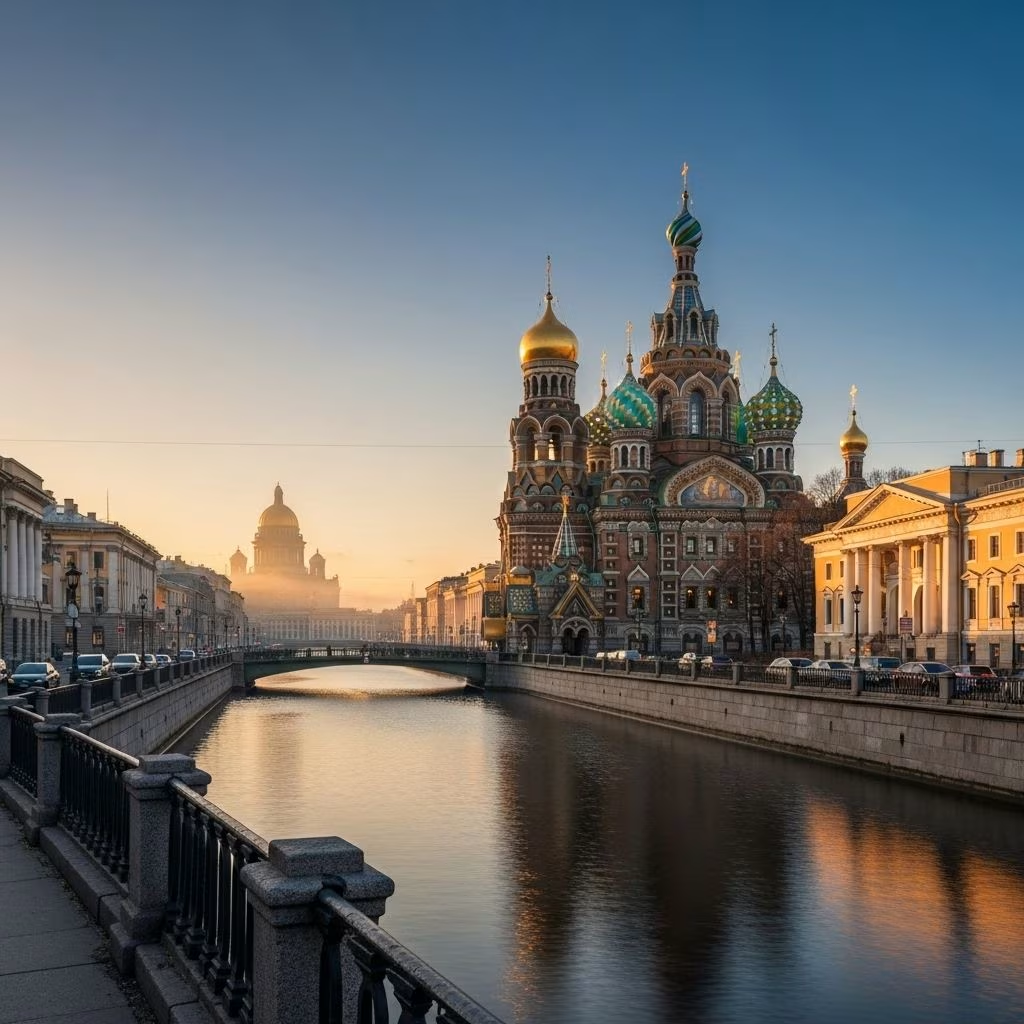
St. Petersburg: Russia’s Cultural Showcase
St. Petersburg stands as Russia’s showcase and is widely celebrated for its sophisticated beauty, elegant planning, and rich tapestry of history. More than just Russia’s cultural capital, it represents a vision set into motion by Czar Peter the Great—who dreamt of a European city on Russian soil and succeeded in making it a bridge between two worlds.
The atmosphere of St. Petersburg is unmistakably different from Moscow’s immense, sometimes overwhelming urban energy. Here the city presents a more compact, stately, and accessible face of Russia, inviting visitors to engage with its imperial past, thriving present, and cosmopolitan aspirations.
The Imperial Vision: Peter the Great’s Dream
Founded in 1703 by Czar Peter the Great (1672–1725), St. Petersburg emerged from the boggy banks where the Neva River meets the Baltic Sea. Peter, frustrated with the insular ways of Moscow’s court, traveled widely in Europe, where he absorbed Western customs and technologies. His clandestine work in an Amsterdam shipyard inspired a central theme for his new city: openness to the West, efficiency, and grandeur.
- Peter enforced sweeping reforms, from demanding men shave their beards to commissioning elaborate buildings in Western styles.
- He employed leading engineers and artisans from Holland, Germany, and Italy to fill in swamps, cut canals, and raise palaces and cathedrals above the marshes.
- The grid-planned neighborhoods, ornate bridges, and wide boulevards crafted under his watch ushered in a uniquely European sensibility—one that has marked St. Petersburg as Russia’s “window on Europe.”
Atmosphere and Character: A Showcase City
St. Petersburg today still revels in its role as Russia’s showcase city. The local residents (‘Petersburgers’) often embrace a subtly international outlook, prefer Western styles, and tend to be more welcoming to tourists compared to their Muscovite cousins.
While Moscow can seem brash, frenetic, and modern, St. Petersburg stands out for its noble demeanor and serene architectural unity. Pastel-colored palaces, manicured parks, and a web of grand squares combine to give the city an aristocratic grace, layered with the residue of both imperial extravagance and revolutionary tumult.
The Pulse of the City: Nevsky Prospekt
No exploration in St. Petersburg is complete without walking along Nevsky Prospekt. This vibrant boulevard is more than a main street—it is the social and architectural spine of the city, stretching from the historical Winter Palace on the Neva River all the way past the Moscow train station.
- It offers dazzling examples of Baroque, Art Nouveau, and classical architecture.
- Street life is lively, with young Petersburgers crowding cafes, businesspeople bustling between meetings, and a seemingly endless parade of fashion and urban style.
- The avenue is studded with iconic landmarks, cathedrals, theaters, and markets—providing a microcosm of Russian urban life, both historic and modern.
The Hermitage Museum: Crown Jewel of St. Petersburg
Among the many attractions, the Hermitage Museum stands at the very summit of St. Petersburg’s must-see list. Housed in the former Winter Palace of the Romanov Czars, the Hermitage is both an art lover’s paradise and an opulent walk through imperial history.
| Highlight | Description |
|---|---|
| Vast Art Collection | Boasts works by da Vinci, Rembrandt, Matisse, Picasso, and many European masters. |
| Imperial Splendor | Features grand ballrooms, glittering throne rooms, and gold-encrusted interiors that testify to czarist excess. |
| Dual Experience | Visitors enjoy both one of the world’s greatest art museums and a direct encounter with the grandeur of Russia’s ruling dynasty. |
Unlike museums that can be seen in a rush, the Hermitage rewards those who linger. It is said that the museum’s vast galleries could occupy a keen visitor for days on end, leaving them with a deep sense of both awe and curiosity about the city and the dynasties that shaped it.
Beyond the Museums: Savoring the Russian Experience
Yet, as spectacular as the Hermitage and other grand museums are, St. Petersburg’s true character is best found outside of guidebook ‘top sights.’ Experienced travelers will relish the city’s everyday face through:
- Backing away from main arteries to browse local markets, with their colorful piles of pickled cucumbers, marinated beets, jars of honey of every hue, and the chatter of neighborhood vendors.
- Stepping into bustling pastry shops and rustic eateries, perfect for sampling Russian favorites. Try a piping hot portion of borscht, blini pancakes, or a savory pirozhok.
- Visiting intimate neighborhood Orthodox churches with a local guide. Here you can glimpse the candle-lit devotion central to Russian faith, and observe the deeply rooted role of the church in daily life.
- Joining a themed walking tour to learn about the revolutionary tales or the aristocratic intrigue that once swept through these streets.
Revolutionary Shadows: St. Petersburg’s Complex Past
The city’s elegance is underpinned by its turbulent history. Beyond the pastel facades and imperial parks, St. Petersburg was the stage for the 1917 Russian Revolution, and many pivotal moments that would shape the entire world. Much of this history is now marked by:
- The Museum of Russian Political History, which details the collapse of the czarist regime and the rise of the Bolsheviks.
- Monuments such as the Battleship Aurora, which played a symbolic role in the October Revolution.
- Residences and workplaces of figures like Lenin, still preserved amid the city’s 18th- and 19th-century grandeur.
While memory of these turbulent times may not always be celebrated, for those seeking to understand the full tapestry of Russian history, St. Petersburg offers an unparalleled firsthand encounter.
Cultural Vibrancy and Today’s St. Petersburg
Modern St. Petersburg is a city in motion. After the gray decades of Soviet rule, the city experienced a remarkable renaissance in the 2000s.
Today you’ll find:
- Inviting eateries, sweet shops, and cafes opening up throughout gentrifying neighborhoods.
- Trendy public spaces like the recently rejuvenated New Holland Island—a former naval outpost, now transformed by the vision of modern patrons and oligarchs into a place of relaxation, culture, and arts.
- A lively nightlife and creative scene, with young artists, musicians, and entrepreneurs infusing the city with fresh energy.
- Efficient public transportation that allows visitors to explore everything from historic palaces to the growing district of modern architecture.
Practical Tips: Making the Most of Your Visit
- Language: You’ll find far more English spoken here than in Moscow, and many signs are bilingual.
- Guides: A guided walking tour is highly recommended for first-time visitors, offering both depth and access to off-the-beaten-path experiences.
- Time Management: Prioritize key sights, but don’t rush—allow time to linger at the Hermitage and to wander the city’s leafy side streets.
- Travel Connections: Trains, boats, and public transit make day trips to Catherine Palace, Peterhof, and Tsarskoye Selo convenient additions to a St. Petersburg itinerary.
St. Petersburg in Reflection: The First Visit and Beyond
St. Petersburg is a city that rewards those who return. For first-time visitors, it offers a dynamic taste of Russia and something irresistibly European. The city’s art, music, history, and daily street life ensure that each trip reveals new dimensions.
From the grandeur of a czarist ballroom to the warmth of a market vendor’s smile, St. Petersburg captures an essence that is distinctly Russian yet undeniably international. For travelers, each visit deepens the connection, leaving them with memories and the persistent desire for another journey back.
Frequently Asked Questions (FAQs)
Q: What makes St. Petersburg different from Moscow?
A: Compared to Moscow’s sprawling, intense urban atmosphere, St. Petersburg is more compact, serene, and has a distinctly European flavor, reflected in its architecture and culture.
Q: Is English widely spoken in St. Petersburg?
A: Yes. Visitors will find more English speakers and bilingual signage in St. Petersburg than in most other Russian cities, making it especially friendly for travelers.
Q: How much time should I spend at the Hermitage Museum?
A: Ideally, at least half a day or more. The museum is vast; many travelers find even a second day worthwhile due to its dual appeal as an art collection and a historical palace.
Q: What local foods should I try while visiting?
A: Sample Russian borscht, blini (thin pancakes), savory pastries like pirozhki, and visit markets for honey and pickled vegetables.
Q: What are the top must-see attractions in St. Petersburg?
A: Top sites include the Hermitage Museum, Nevsky Prospekt, Peterhof Palace, the Church of the Savior on Spilled Blood, St. Isaac’s Cathedral, and various neighborhood markets.
References
- https://www.youtube.com/watch?v=bDu-mQCP2bs
- https://www.ricksteves.com/watch-read-listen/read/articles/st-petersburg-russias-showcase
- https://www.ricksteves.com/europe/russia/st-petersburg
- https://www.ricksteves.com/watch-read-listen/read/articles/dazzling-st-petersburg
- https://www.ricksteves.com/watch-read-listen/read/articles/russia-revolution-st-petersburg
- https://www.ricksteves.com/watch-read-listen/read/articles/the-babushki-of-st-petersburg
- https://www.ricksteves.com/watch-read-listen/read/articles/st-petersburg-grand-city-of-the-czars
- https://www.youtube.com/watch?v=DCEj-05KxV0
- https://community.ricksteves.com/travel-forum/russia/st-petersburg-hopefully