Three Weeks in Central & Eastern Europe: The Ultimate Itinerary
Central and Eastern Europe offer travelers a dazzling mix of history, culture, architectural wonders, and natural beauty. For those hoping to savor the greatest hits of Poland, the Czech Republic, Austria, Hungary, Slovakia, and Slovenia, this three-week itinerary is meticulously designed to help you maximize your journey. Mixing iconic capitals with charming towns and restful countryside, it ensures you experience each country’s distinctive flair.
Why Visit Eastern and Central Europe?
- Rich History: The region is a tapestry of medieval kingdoms, Habsburg grandeur, WWII sites, and centuries of cultural crossroads.
- Stunning Architecture: From Prague’s fairy-tale skyline to Budapest’s imperial grandeur and Kraków’s cobbled charm.
- Cultural Depth: Enjoy world-class music, art, local traditions, and hearty cuisine in every stop.
- Natural Beauty: Discover pristine Alpine lakes, dramatic rivers, and scenic countryside escapes.
- Affordability: Many destinations remain more budget-friendly than their western European counterparts.
Planning Your Trip: A Flexible Overview
Depending on your available time, prioritize destinations as follows. This approach allows you to scale your adventure from a few days to nearly a month, gradually incorporating each additional highlight.
| Trip Length | Suggested Destinations |
|---|---|
| 3 days | Prague |
| 5 days | + Budapest |
| 7 days | + Český Krumlov, slow down pace |
| 10 days | + Kraków, Auschwitz |
| 14 days | + Ljubljana, Lake Bled |
| 16 days | + Vienna |
| 18 days | + Julian Alps, Bratislava |
| 20 days | + Eger, slow pace |
| 25 days | + Gdańsk, Warsaw, Toruń (or for a Poland-focused journey) |
Detailed Three-Week Itinerary
This route is designed for independent travelers using public transport (primarily trains and buses) with the option to add flights for longer jumps. It balances major cities, day trips, and scenic detours.
- Day 1: Arrive in Kraków (overnight in Kraków)
- Day 2: Explore Kraków’s Old Town, Wawel Castle, and Kazimierz Quarter (overnight in Kraków)
- Day 3: Day trip to Auschwitz-Birkenau Memorial and Museum (overnight in Kraków)
- Day 4: Travel to Prague by train, bus, or cheap flight (overnight in Prague)
- Day 5: Discover Prague’s Old Town and Charles Bridge (overnight in Prague)
- Day 6: Tour Prague Castle; enjoy a concert or Black Light Theater (overnight in Prague)
- Day 7: Day trip to Kutná Hora to see the Bone Church (overnight in Prague)
- Day 8: Train to Český Krumlov, visit Konopiště Castle en route (overnight in Český Krumlov)
- Day 9: Explore Český Krumlov’s old town and riverside (overnight in Český Krumlov)
- Day 10: Shuttle or bus to Vienna (overnight in Vienna)
- Day 11: Vienna city highlights (Stephansdom, Hofburg Palace) (overnight in Vienna)
- Day 12: Vienna museums and a classical concert (overnight in Vienna)
- Day 13: Train to Budapest with a stop in Bratislava, Slovakia (overnight in Budapest)
- Day 14: Budapest City Park, Parliament, thermal baths (overnight in Budapest)
- Day 15: Buda Castle, Danube cruise (overnight in Budapest)
- Day 16: Day trip to Eger for wine tasting and Turkish baths (overnight in Budapest)
- Day 17: Travel to Ljubljana, Slovenia (overnight in Ljubljana)
- Day 18: Ljubljana walking tour, castle, café culture (overnight in Ljubljana)
- Day 19: Day trip to Lake Bled, pletna boat ride, castle (overnight in Ljubljana or Lake Bled)
- Day 20: Explore the Julian Alps—Vršič Pass, Triglav National Park (overnight in the mountains or Lake Bled)
- Day 21: Depart from Ljubljana or nearby airport
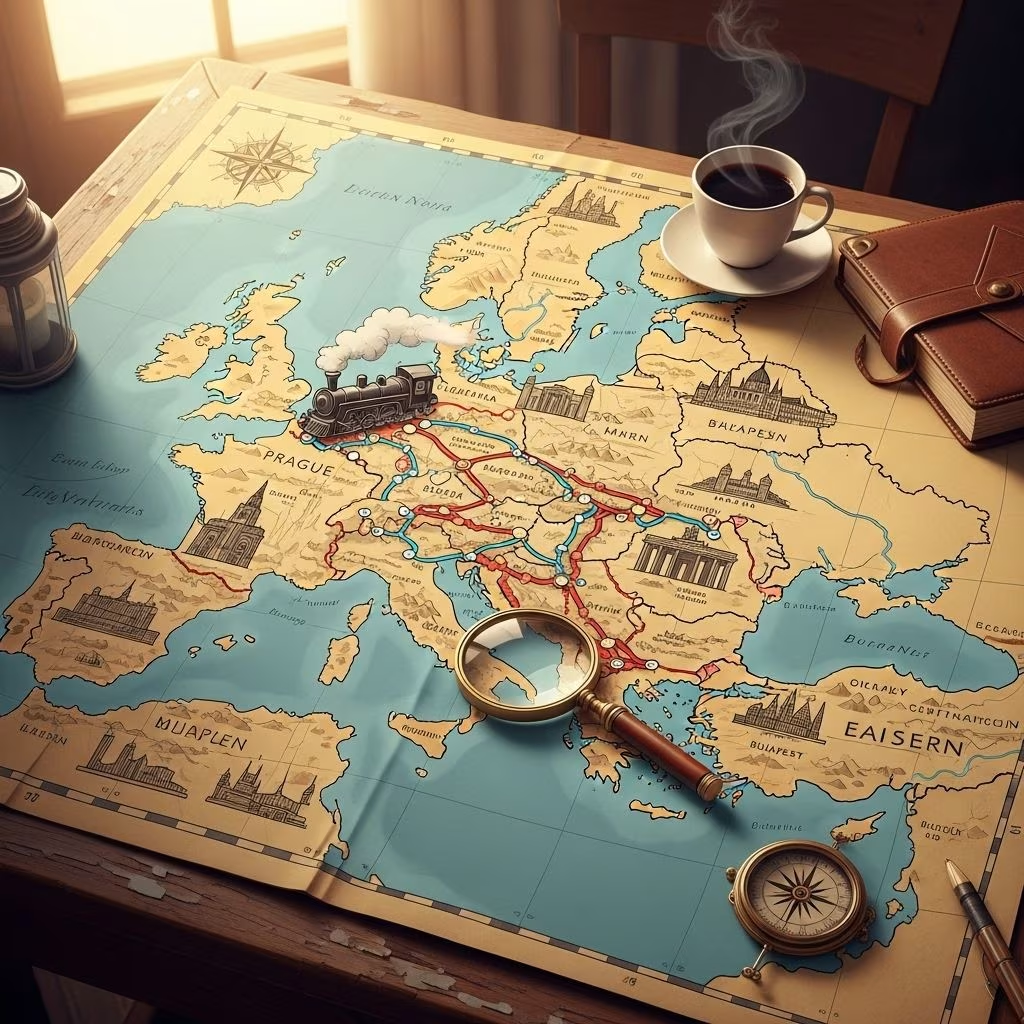
Map Overview
(Insert a Google Maps-based travel path from Kraków to Ljubljana, via the main cities listed above.)
Highlights and Recommended Activities by Destination
Kraków, Poland
- Wander the medieval Main Market Square and climb St. Mary’s Basilica tower for panoramic views.
- Tour the Wawel Castle and Cathedral, seat of Polish kings.
- Explore the Jewish heritage and café scene in the historic Kazimierz Quarter.
- Take a sobering excursion to Auschwitz-Birkenau, the infamous Holocaust site (reserve in advance).
Prague, Czech Republic
- Lose yourself in the storybook lanes of Old Town (Staré Město), and gaze up at the astronomical clock.
- Cross the picturesque Charles Bridge early to avoid crowds.
- Tour the sprawling Prague Castle: St. Vitus Cathedral, Old Royal Palace, St. George’s Basilica, and the Golden Lane.
- Attend a classical concert or experience quirky Czech Black Light Theater.
- Day trip to Kutná Hora to see the haunting Sedlec Ossuary (Bone Church).
Český Krumlov, Czech Republic
- Meander through the cobblestone lanes of this perfectly preserved Renaissance town.
- Visit the state castle and its Baroque theater.
- Enjoy river rafting or riverside dining in summer.
Vienna, Austria
- Marvel at Stephansdom (St. Stephen’s Cathedral), Vienna’s Gothic center.
- Tour the Hofburg Palace, home to imperial treasures and the Spanish Riding School.
- Wander the Museum Quarter (Kunsthistorisches, Albertina).
- Relax in historic coffeehouses and sample Sachertorte.
- Experience Mozart, Beethoven, or Strauss at a world-class concert hall.
Budapest, Hungary
- Visit Parliament and stroll along the Danube embankment.
- Bathe in the legendary Szechenyi or Gellért Thermal Baths.
- Explore Buda Castle Hill, Fishermen’s Bastion, and Matthias Church.
- Enjoy a Danube river cruise by night for illuminated views.
- Day trip to Eger, famed for its wines and Ottoman minaret.
Bratislava, Slovakia (En Route)
- Walk through the compact old town and up to the hilltop Bratislava Castle for river views.
- Visit local cafés and enjoy Danube riverside promenades.
Ljubljana & Lake Bled, Slovenia
- Stroll along the Ljubljanica riverfront, visit the colorful Central Market, and ride the funicular to Ljubljana Castle.
- Sample local flavors at atmospheric cafés and bakeries.
- Take a classic pletna boat to the island church on Lake Bled and climb to Bled Castle for scenic views.
- Hike or drive through the Julian Alps for fresh air and alpine vistas.
When to Go
- Late Spring (May–June) and Early Fall (September) offer ideal weather, fewer crowds, and lively local festivals.
- Summer (July–August): Greatest tourist influx and higher prices. Book in advance, especially in Prague and Lake Bled.
- Winter: Magical Christmas markets, but shorter daylight and cold conditions.
Tips for Traveling in Central & Eastern Europe
- Use public transport: Trains and buses are frequent, reliable, and scenic (but book tickets ahead for long-distance routes).
- Mix hotels, guesthouses, and local inns: Enjoy friendly hospitality and central locations.
- Pack layers and rain protection: Weather can be changeable, even in summer.
- Reserve entry for major sites: Auschwitz, Prague Castle, and concerts may sell out in peak periods.
- Carry a small amount of local currency: While credit cards are widely accepted, you’ll need cash for some small purchases and rural areas.
Sample Budget (Per Person, Per Day)
| Expense | Range (EUR/USD) |
|---|---|
| Accommodation | €50–€120 / $55–$130 |
| Meals (food, cafés, & restaurants) | €20–€45 / $22–$50 |
| Sightseeing/Admission | €10–€25 / $12–$27 |
| Transportation | €15–€40 / $17–$44 |
| Daily Total (average) | €95–€230 / $104–$250 |
Frequently Asked Questions (FAQs)
Q: Do I need visas to travel between these countries?
A: Most travelers from Europe, North America, Australia, and New Zealand can enter Poland, Czech Republic, Austria, Hungary, Slovakia, and Slovenia visa-free for short stays. Check latest requirements before departure.
Q: Is language a challenge for tourists?
A: English is commonly understood in tourist zones, hotels, and restaurants. Basic greetings in Polish, Czech, Hungarian, and Slovenian are appreciated by locals.
Q: What’s the best way to get around?
A: Trains and buses link all the main cities; car hire is worthwhile for remote mountain or countryside excursions in Slovenia.
Q: Will I need to exchange currency often?
A: Yes. While Austria and Slovenia use the euro, Poland (zloty), Czech Republic (koruna), and Hungary (forint) have their own currencies. Bank cards and contactless payments are widely accepted, though cash remains useful in markets and smaller towns.
Q: Are these countries safe for solo and family travelers?
A: Central and Eastern Europe are generally regarded as very safe for travelers, with low rates of violent crime. As anywhere, remain mindful of petty theft in crowded spots.
Conclusion: The Magic of Central & Eastern Europe Awaits
Combining world-class cities, legendary natural beauty, poignant history, and inviting hospitality, this three-week circuit promises an unforgettable journey. Tailor the route to match your pace, and prepare for discovery at every turn—from the bustling marketplaces of Kraków to the placid waters of Lake Bled. Central and Eastern Europe invite the curious and the adventurous—so pack your bags, charge your camera, and get ready to immerse yourself in one of Europe’s most rewarding regions.
References
- https://www.travelstride.com/trips/rick-steves-best-of-eastern-europe-in-16-days-tour
- https://www.ricksteves.com/europe/eastern-europe-itinerary
- https://www.ricksteves.com/tours/eastern-europe/central-europe-tour
- https://www.ricksteves.com/tours/eastern-europe
- https://community.ricksteves.com/travel-forum/general-europe/eastern-europe-itinerary-planning-for-first-timers
- https://www.ricksteves.com/watch-read-listen/video/travel-talks/czech-republic-poland-hungary-with-cameron-hewitt
- https://www.youtube.com/playlist?list=PL5F01C886ABB21D28
- https://store.ricksteves.com/shop/guidebooks/eastern-europe
- https://www.youtube.com/watch?v=vzodAaeMCkY