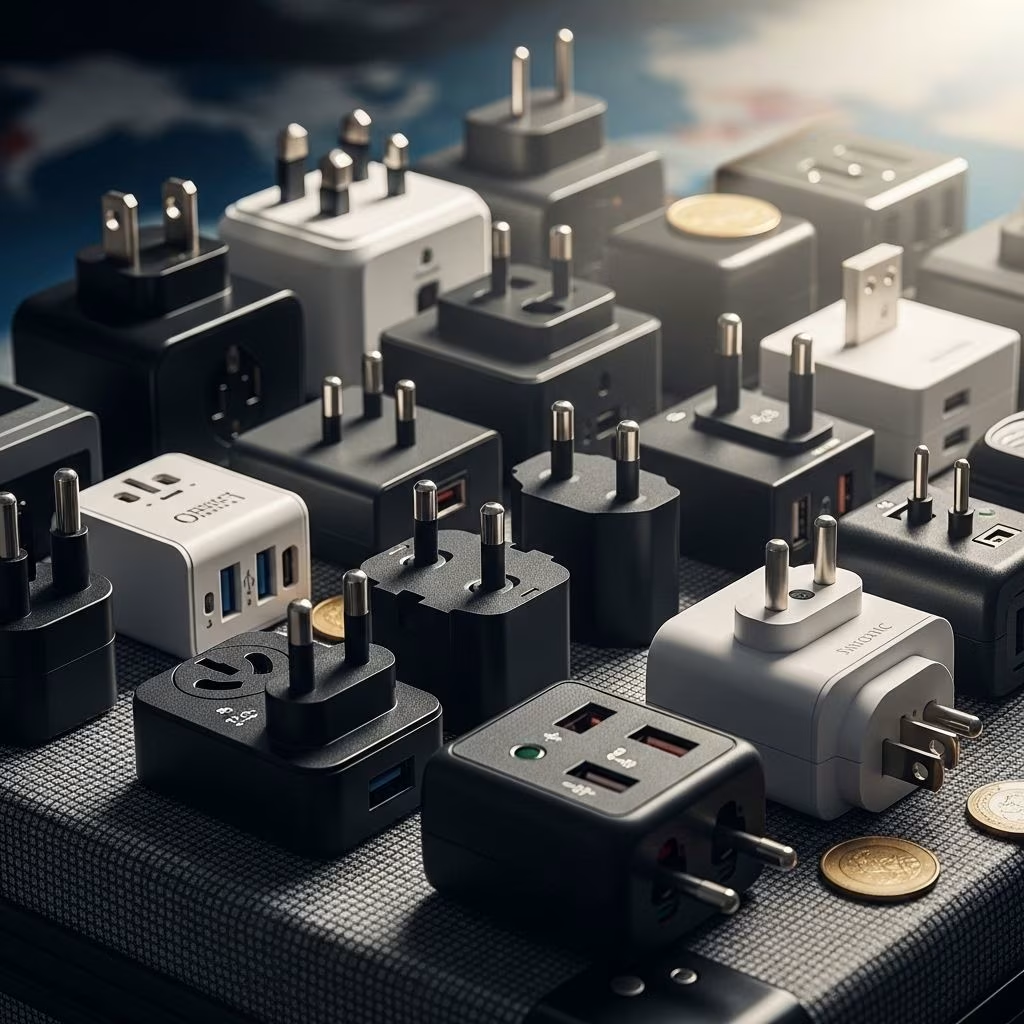
Adapters and Converters: Powering Your Devices Abroad
The modern traveler carries a variety of electronic devices—smartphones, cameras, laptops, and more. Yet, keeping them powered overseas can be confusing due to differences in electrical systems worldwide. Understanding the roles of adapters and converters, knowing your destination’s standards, and taking proper safety steps will keep your gadgets running and your trip stress-free.
Understanding the Basics: Why Are Plugs and Voltage Different?
Every country has evolved its own standards for electricity, resulting in dozens of types of wall outlets and varying electrical voltages. Two major differences trip up most travelers:
- Plug Shape: The physical configuration of the wall socket and appliance plug.
- Voltage: Most North American homes use 110–120V power, while much of Europe, Asia, Africa, and Australia uses 220–240V.
Plugging a device directly into the wrong voltage can damage your equipment. Using the wrong type of plug is simply impossible—if the pins don’t fit, you can’t connect. To solve these problems, travelers need adapters (which get your plug into the wall) and sometimes converters (which change voltage).
Adapters vs. Converters: What’s the Difference?
| Feature | Adapter | Converter |
|---|---|---|
| Function | Modifies plug shape so it fits a foreign outlet | Changes electrical voltage from 220–240V down to 110–120V (or vice versa) |
| Needed for | Any device with a plug shape that doesn’t match the socket | US devices that can’t accept 220–240V |
| Does it alter voltage? | No | Yes |
| Common examples | Plugging a US charger into a UK or European outlet | Using a US-only hair dryer in Europe |
About Electric Plug Adapters
Adapters are simple devices that let you plug your device into a socket of a different shape. They do not convert voltage. When traveling abroad, you will need adapters for the plug type(s) used at your destination.
- Universal Adapters: All-in-one models cover many countries but can be bulky. Helpful for multi-country trips and long-term travel.
- Single-Country Adapters: Compact and inexpensive; ideal for shorter trips to just one country or region.
- USB Adapters: Many travel gadgets now use USB charging; look for multi-port USB adapters designed for global voltages.
Before traveling, check the plug types for your specific destination, as Europe alone features several variations between countries like the UK, Italy, and Switzerland.
Popular Adapter Types by Region
- Continental Europe: Two round pins (Type C, E, F)
- United Kingdom and Ireland: Three large rectangular pins (Type G)
- Australia/New Zealand/China: Slanted flat pins (Type I)
- North America: Two flat parallel pins with/without a ground (Type A/B)
Packing Tip
If you have multiple devices, bring two or three adapters to charge several items simultaneously. Many travelers also pack a compact power strip to multiply outlets in hotel rooms.
About Voltage Converters
Converters are for travelers whose devices do not support dual voltage. They adjust a country’s electrical output (e.g., stepping down 220–240V to 110–120V) so your standard appliances don’t fry. However, converters are heavy and only suitable for low-wattage devices for a limited period of use.
- Necessary for: Older or single-voltage appliances (like some hair dryers, curling irons, and electric shavers).
- Not required for: Modern electronics such as phones and cameras, which are typically dual voltage.
- Limitations: Converters do not work with all appliances—avoid them with electronic controls or clocks, and check the wattage carefully.
Converters also need an adapter to fit into the local socket. For most travelers, dual-voltage gadgets make this tool obsolete, but knowing when it’s needed (and when not to use it) prevents costly accidents and ruined devices.
Understanding Dual-Voltage Devices
Most modern electronics (laptops, phone chargers, USB devices, and cameras) are dual voltage, capable of handling both 110–120V and 220–240V. Check your device’s power label; it should read something like “Input: 100-240V, 50/60Hz.”
- If you see this range, you only need a plug adapter
- If it only says 110V or 120V, you will need a voltage converter and an adapter
Hair dryers and some heated appliances are often single-voltage; leave them at home or invest in a travel-friendly dual-voltage model if you need one abroad. Many hotels abroad provide hair dryers anyway.
Examples of Device Labels
- Dual-Voltage: “100–240V 50/60Hz”—safe worldwide with just an adapter
- Single-Voltage: “120V 60Hz”—needs a voltage converter in Europe, Asia, etc.
Regional Differences in Electric Outlets and Voltage
It pays to know your region’s power standards before you travel. Here’s a quick overview:
| Region | Voltage | Plug Types |
|---|---|---|
| North America (US, Canada, Mexico) | 110–120V @ 60Hz | Type A/B |
| Continental Europe | 220–240V @ 50Hz | Type C/E/F |
| UK & Ireland | 230V @ 50Hz | Type G |
| Australia & New Zealand | 230V @ 50Hz | Type I |
| Asia/Africa (varies) | 220–240V @ 50Hz (most) | Type C, G, I, M (varies by country) |
Safety Precautions and Practical Travel Tips
- Always check your device’s power requirements before plugging into foreign electricity.
- Do not use a converter or adapter with high-wattage appliances (e.g., irons, kettles) unless specifically rated.
- Use a surge protector for sensitive electronics. Power fluctuations are not uncommon in some regions.
- Remember that a plug adapter does not ground non-grounded (two-prong) devices. Be aware of potential safety issues.
- Consider purchasing extra adapters at your destination—they’re often easy to find in local electronics shops.
- For extended travel, a compact power strip with universal outlets and surge protection helps manage multiple devices.
Choosing the Right Adapter or Converter for Your Trip
To select the correct adapter or converter, follow these steps:
- Make a list of all electronics you plan to bring.
- Read the power label of each device to check if it is dual voltage.
- Determine your destination’s plug and voltage standards.
- Get the necessary plug adapters (single-region or universal) and, if any devices are NOT dual voltage, a voltage converter rated for the correct wattage.
- Pack accordingly; bring spares if you expect to charge multiple devices simultaneously.
Quick Packing Checklist
- Plug adapter(s) for each region
- Dual-voltage USB charger (if possible)
- Optional: surge protector or multi-port charging block
- Optional: voltage converter (only if needed)
Frequently Asked Questions (FAQs)
Q: Will I need a voltage converter for my phone, camera, or laptop?
A: Most modern phones, cameras, and laptops are dual voltage (100–240V) and only require the correct plug adapter. Always check your device’s label to be safe.
Q: What happens if I use the wrong voltage?
A: Plugging a device into a higher voltage than it’s rated for can permanently damage or destroy it. Smoke, blown fuses, or even fire are possible results; always check voltage compatibility.
Q: Are universal adapters better than single-region adapters?
A: Universal adapters offer versatility for multi-country travel but are often bulkier. Single-region adapters are more compact and affordable; choose based on your itinerary.
Q: I heard most hotels supply hair dryers. Should I bother packing one?
A: It’s true—most European and international hotel rooms now supply hair dryers. Unless you have special needs, save space and avoid voltage issues by using theirs.
Q: How many adapters should I take?
A: Take at least two, especially if you need to charge multiple devices at once. A small power strip can also be handy.
Q: Is it safe to use a power strip or extension cord with plug adapters?
A: Generally, yes—if the strip is rated for dual voltage and you’re not overloading it. Never plug a North American-only power strip into a 220–240V outlet unless it’s labeled for that voltage.
Final Thoughts: Power Up and Travel Smart
Understanding the basics of adapters, converters, and voltage keeps your devices running and your journey hassle-free. Double-check what you need for your unique destination, invest in quality plug adapters, and bring only dual-voltage gadgets whenever possible. With a little planning, you can stay powered and connected wherever your travels take you.
References
- https://store.ricksteves.com/shop/p/travel-power-adapter
- https://www.youtube.com/watch?v=IeAWQS9wbfM
- https://community.ricksteves.com/travel-forum/tech-tips/travel-converter-adaptor-suggestions
- https://store.ricksteves.com/shop/p/uk-power-adapter
- https://www.goinginstyle.net/not-sure-read-our-adapter-guide
- https://www.ricksteves.com/travel-tips/phones-tech/electric-adapters-converters
- https://www.tripadvisor.com/ShowTopic-g274881-i262-k14496169-US_to_Budapest_electric_adapter_and_or_converter-Hungary.html