Annuloplasty: Heart Valve Repair Procedure and Recovery
Annuloplasty is a specialized surgical procedure used to repair damaged or leaky heart valves. By implanting a supportive ring—crafted from metal, plastic, or mesh—the procedure restores the valve’s shape and function, preventing blood from leaking backward and helping the heart pump efficiently. Understanding why annuloplasty is performed, what the process involves, and what recovery looks like can help patients prepare for surgery and optimize outcomes.
Overview: What Is Annuloplasty?
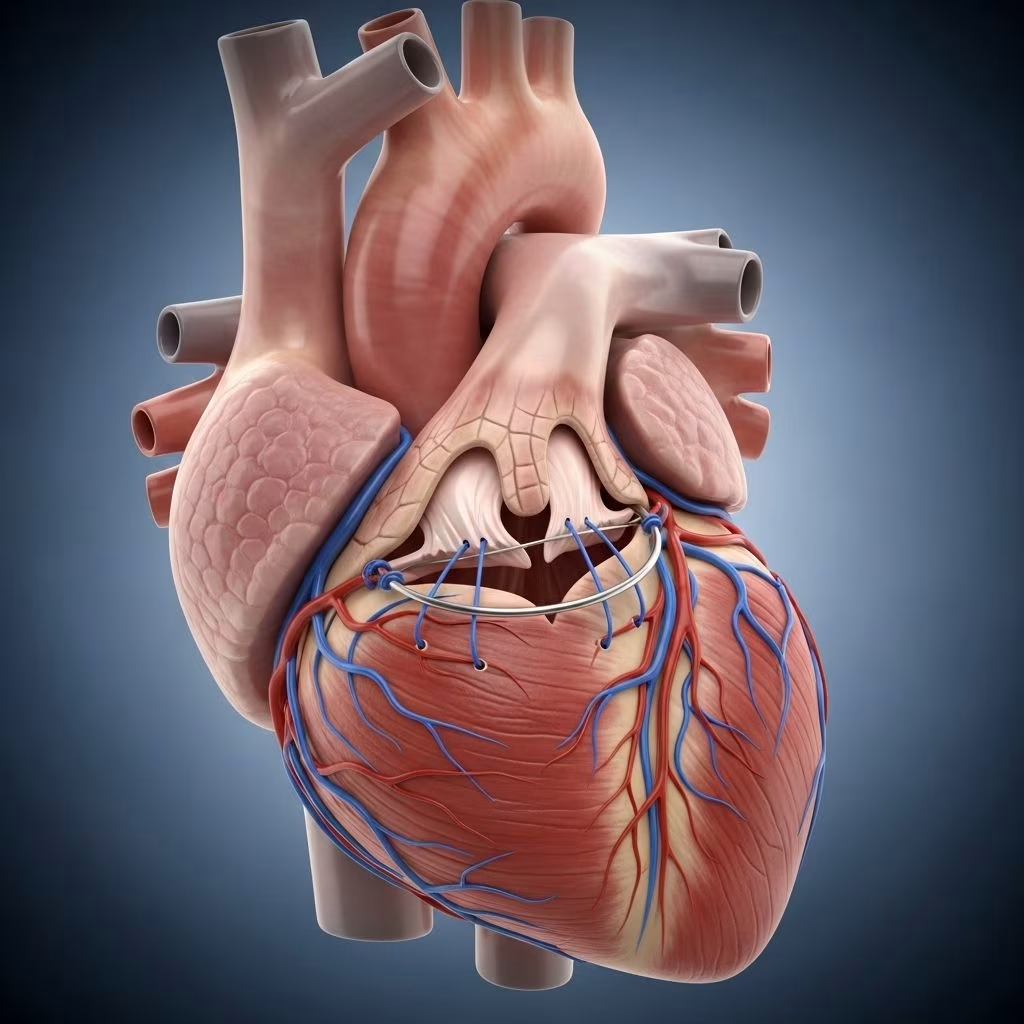
The heart has four valves—the mitral, tricuspid, pulmonary, and aortic valves. These valves control the directional flow of blood by opening and closing to regulate passage between the heart’s chambers. If the annulus (the ring-like structure around a valve) becomes stretched or misshapen, the valve may not close properly, causing blood to leak backward, a condition known as regurgitation. Annuloplasty is used to reinforce, tighten, or reshape this ring, restoring normal valve function.
- Annuloplasty involves placing a ring, band, or band-like implant around the heart valve’s annulus.
- The ring supports the native valve, enabling it to open and close more effectively.
- This repair is most commonly applied to the mitral or tricuspid valves, but may also be used for other heart valves.
When Annuloplasty Is Needed
Annuloplasty is recommended for individuals experiencing valve dysfunctions that cannot be managed with medication or lifestyle changes alone. The two most common issues that lead to the need for annuloplasty are:
- Valve regurgitation: When valves become floppy or stretched, blood can flow backward into the chamber it just left.
- Valve stenosis: The valve annulus becomes tightened and restricts blood flow due to disease or age-related changes.
Conditions that can cause damage to the heart valves include:
- Rheumatic fever
- Infective endocarditis
- Age-related valve degeneration
- Congenital (birth) defects
- Cardiomyopathy or heart enlargement
Symptoms that may prompt a provider to recommend annuloplasty include:
- Shortness of breath, especially with physical activity
- Fatigue and weakness
- Swelling in the legs, ankles, or abdomen (edema)
- Heart palpitations or irregular heartbeat
- Chest discomfort
- Dizziness or fainting
Types of Annuloplasty Rings
The ring used during annuloplasty can be:
- Rigid: Offers firm support and corrects severe dilation or distortion.
- Flexible: Allows for more natural movement with each heartbeat.
- Semi-rigid: Balances support and limited flexibility.
Material choices include metal alloys, medical-grade plastics, and polyester or other mesh fabrics. The specific type and size of annuloplasty ring are selected based on individual anatomy and the location of the faulty valve.
Preparing for the Annuloplasty Procedure
Planning for annuloplasty involves several steps:
- A full medical evaluation to assess heart structure and function, which may include an echocardiogram, cardiac MRI, or cardiac catheterization.
- Discussion with the surgical team regarding existing health conditions, medications, and anesthesia risks.
- Preoperative instructions, such as fasting the night before the procedure and pausing certain medications that can affect bleeding.
How Annuloplasty Is Performed
Annuloplasty may be performed using several surgical approaches:
- Open-heart surgery: Traditional method requiring a large incision through the sternum. Used when access to more than one valve or other combined procedures are necessary.
- Minimally invasive surgery: Involves smaller chest incisions and specialized instruments, leading to less pain and quicker recovery.
- Transcatheter (catheter-based) annuloplasty: Currently under research and available in select centers. A catheter is moved through a blood vessel to reach the heart and deploy the ring, offering a less invasive alternative.
During the procedure, surgeons:
- Measure the valve annulus to determine the correct ring size
- Suture the ring or band around the valve annulus
- Assess and test the valve’s function following repair
- Check for any leaks or residual regurgitation
Procedure Table: Annuloplasty Steps
| Step | Description |
|---|---|
| Anesthesia | Patient is given general anesthesia to ensure comfort and stillness during surgery. |
| Valve Access | Surgical or catheter-based approach is used to reach the affected valve. |
| Valve Exposure | The valve is visualized and assessed for damage or leakage. |
| Annuloplasty Ring Placement | The ring is sized, then sewn or anchored around the valve’s annulus. |
| Function Testing | The surgeon ensures valve leaflets move correctly and there is no leak. |
| Incision Closure | All incisions are carefully closed; patient is moved to recovery. |
Effectiveness of Annuloplasty
Annuloplasty is generally considered a highly effective treatment for leaky or stretched heart valves when performed on appropriately selected patients. The goals of the procedure are:
- Restore normal valve function and eliminate backflow (regurgitation)
- Improve symptoms, such as fatigue or shortness of breath
- Reduce the risk of complications like heart failure or arrhythmia
- Enhance longevity and quality of life
Most individuals notice a significant improvement in exercise tolerance and quality of life after recovery from an annuloplasty. Repeat procedures on the same valve are rarely needed, highlighting the durability of the repair in most cases.
Potential Risks and Complications
While annuloplasty is considered safe and beneficial for most candidates, as with any cardiovascular procedure, there are potential risks. These include:
- Bleeding during or after the operation
- Infection at surgical site or internally (endocarditis)
- Blood clots forming around the prosthetic ring
- Irregular heart rhythms (arrhythmias) post-surgery
- Stroke or heart attack (rare)
- Needed reoperation for residual valve leak or stenosis
- Allergic reaction to anesthesia or surgical materials
Your heart team will discuss all potential benefits and risks and provide strategies to minimize complications, such as perioperative antibiotics and careful monitoring.
Recovery After Annuloplasty
Recovery time varies depending on the type of surgical approach used and the individual’s preoperative health. Here’s what most patients can expect:
- Hospital stay is usually 5–7 days following open-heart annuloplasty, and shorter after minimally invasive approaches.
- Initial recovery involves cardiac monitoring, respiratory exercises, physical therapy, and gradual resumption of walking and daily activities.
- Restrictions on heavy lifting, strenuous activity, and driving for several weeks.
- Regular follow-up appointments to track healing and valve performance via echocardiogram or other imaging.
- Medications may be prescribed to manage pain, prevent infection, or address blood clotting risks.
- Gradual return to work and regular activities over 4–8 weeks, if progress is smooth and there are no complications.
Most people regain energy, strength, and confidence to resume daily activities and exercise after recovery, with continued improvements over the following months.
Long-Term Outlook and Living with an Annuloplasty Ring
With successful surgery and adherence to follow-up care, the long-term outlook for patients who undergo annuloplasty is excellent. Lifestyle changes to protect heart health are encouraged:
- Maintain a healthy diet, low in sodium and saturated fats
- Exercise regularly according to your doctor’s recommendations
- Manage chronic conditions like hypertension, diabetes, or high cholesterol
- Avoid smoking and limit alcohol
- Attend regular cardiac checkups
Most annuloplasty rings are not felt or noticed after recovery, and activity restrictions are seldom needed long-term, except for rare situations of abnormal heart rhythms or infection risk.
Alternative Valve Procedures
Depending on valve anatomy and disease severity, other procedures may also be considered, including:
- Valve replacement: Removing the damaged valve and replacing it with a mechanical or tissue prosthetic valve.
- Other valve repair techniques: Patching, reshaping, or removing excess valve tissue in addition to annuloplasty.
- Medications: May help control symptoms, but do not correct structural valve problems.
- Transcatheter therapies: Certain newer technologies allow for repairs without traditional surgery, best for select patients at high surgical risk.
Frequently Asked Questions (FAQs)
What is the main goal of annuloplasty?
The primary aim is to restore the heart valve’s proper function by tightening or reshaping the annulus, enabling the valve to close tightly and prevent leakage.
How do I know if I need annuloplasty?
Individuals with valve regurgitation or stenosis who have symptoms such as shortness of breath, swelling, or fatigue, and whose condition does not improve with medications, may be referred for an evaluation.
Is annuloplasty the same as valve replacement?
No. Annuloplasty retains the person’s own valve and adds a ring for support. Valve replacement, in contrast, removes the entire diseased valve and substitutes it with an artificial or donor valve.
What are the risks of having an annuloplasty ring?
Though generally safe, there are small risks of bleeding, infection, blood clots, or valve malfunction after surgery. These risks are manageable with precautions and follow-up care.
How long does the ring last?
Annuloplasty rings are engineered for durability and typically last a lifetime, rarely requiring replacement.
Can annuloplasty be performed through minimally invasive methods?
Yes, annuloplasty can often be performed using smaller incisions and less invasive tools, which can result in a shorter hospital stay and faster recovery.
How soon can I return to normal activities?
Most patients return to their usual routines within a few weeks, with increased activities guided by their healthcare team and based on recovery progress.
The Bottom Line
Annuloplasty is a proven, effective procedure for repairing leaky or malformed heart valves. When performed by experienced surgical teams, it restores normal valve function, improves symptoms, and can significantly enhance the long-term quality of life. With proper preparation, clear understanding of the procedure, and committed post-surgical care, patients typically enjoy excellent outcomes and a return to active daily living.
References
- https://www.healthline.com/health/heart/annuloplasty
- https://www.mayoclinic.org/tests-procedures/annuloplasty/pyc-20384965
- https://my.clevelandclinic.org/health/treatments/22224-annuloplasty
- https://www.healthline.com/health/heart/leaky-heart-valve-treatment
- https://pubmed.ncbi.nlm.nih.gov/25469460/
- https://www.medicalnewstoday.com/articles/repair-of-mitral-valve
- https://medlineplus.gov/ency/article/007411.htm
- https://pmc.ncbi.nlm.nih.gov/articles/PMC11927056/
- https://www.heartandstroke.ca/heart-disease/treatments/surgery-and-other-procedures/heart-valve-surgery