Dermatomyositis and Small Cell Lung Cancer: What Are They?
Dermatomyositis (DM) is a rare autoimmune disorder characterized by inflammation of the skin and muscles, causing symptoms like rashes, muscle weakness, and difficulty swallowing. Small Cell Lung Cancer (SCLC) is a rapidly progressing cancer type, representing 10%–15% of all lung cancers and known for its tendency to grow and spread faster than non-small cell lung cancer (NSCLC).
Can Dermatomyositis Cause Small Cell Lung Cancer?
While dermatomyositis does not directly cause small cell lung cancer, people with DM have a 6-fold higher risk of developing cancer compared to the general population. Cancer is detected in 10%–25% of DM cases, and risk is highest within the first year after DM diagnosis, continuing to be elevated for up to 5 years or longer.
- Lung cancer, specifically SCLC, is frequently linked to dermatomyositis.
- The risk persists even after the initial 5-year period post-DM diagnosis.
A notable finding from small studies is that SCLC is the most common lung cancer type associated with dermatomyositis.
Understanding Small Cell Lung Cancer (SCLC)
SCLC accounts for about 10%–15% of all lung cancers. It grows and spreads more quickly than NSCLC and often presents with greater aggressiveness at diagnosis.
- SCLC usually originates in the central part of the lungs.
- It is known for early metastasis to lymph nodes and distant organs.
Common Symptoms of SCLC
- Persistent cough
- Shortness of breath
- Chest pain
- Fatigue and weight loss
- Frequent lung infections
The Link Between Dermatomyositis and Small Cell Lung Cancer
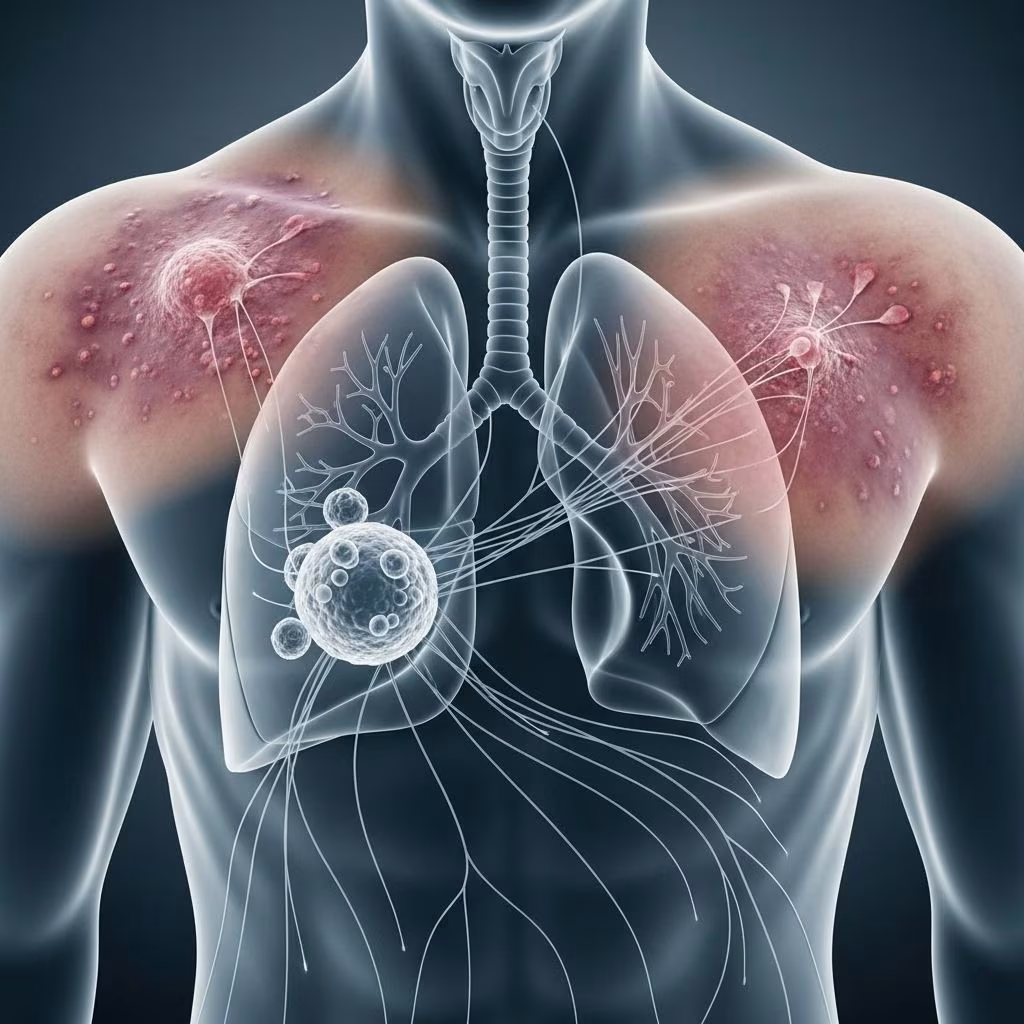
The cause-and-effect relationship between DM and cancer, including SCLC, is not fully understood. Many experts theorize that dermatomyositis can be a paraneoplastic syndrome—a set of autoimmune symptoms triggered by an underlying malignancy.
- Paraneoplastic syndromes may occur due to abnormal immune responses to tumors.
- Some tumors secrete hormones or peptides, contributing to syndromic manifestations.
- Dermatomyositis may be triggered by antibodies produced in response to tumor antigens, attacking normal tissue in skin and muscles.
Role of Anti-TIF1-Gamma Antibodies
- DM is often associated with antibodies targeting TIF1-gamma, a tumor suppressor protein.
- Mutations in TIF1-gamma may lead to unchecked cell growth and cancer.
- Up to 84% of people with anti-TIF1-gamma antibodies have dermatomyositis linked to cancer.
The cross-reactivity between antibodies against mutated tumor antigens and normal tissue proteins explains why DM and cancer often co-occur.
Symptoms and Diagnosis of Dermatomyositis
Dermatomyositis is characterized by:
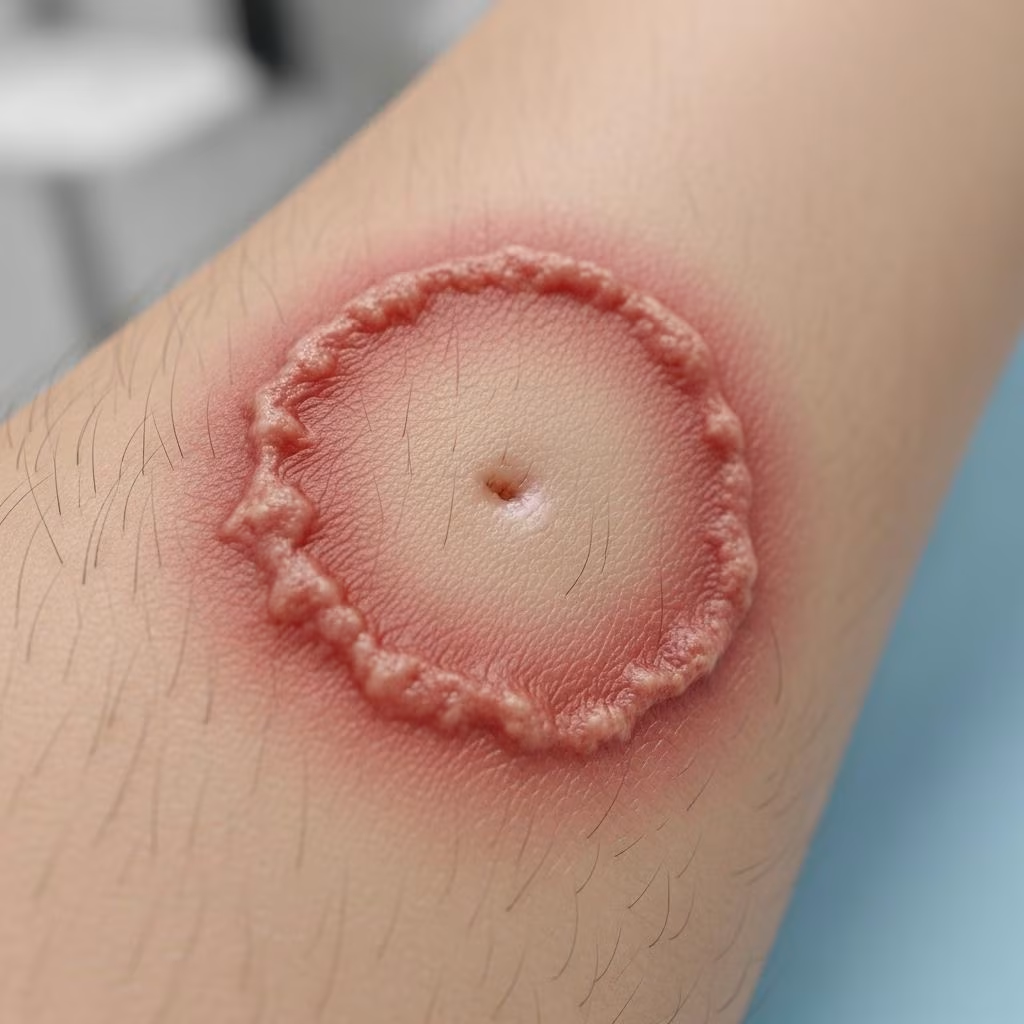
- Skin manifestations: Purple or reddish rash, usually on the face, eyelids, knuckles, elbows, knees, chest, and back.
- Muscle weakness: Difficulty lifting objects, climbing stairs, standing from a seated position.
- Swallowing difficulties (dysphagia)
- Fatigue
Diagnostic Criteria
According to Bohan and Peter (1975), the diagnosis of dermatomyositis involves:
- Muscle weakness
- Confirmation of myositis via muscle biopsy
- Elevated serum creatine kinase (CK)
- Abnormal electromyography findings
- Presence of characteristic skin rash
Skin and muscle biopsies are used to confirm diagnosis, showing changes such as muscle fiber degeneration and specific skin abnormalities.
Case Example: Dermatomyositis as a Paraneoplastic Syndrome
Recent clinical case studies highlight the occurrence of DM as a paraneoplastic syndrome, often following a dual diagnosis with SCLC. In one case, a 60-year-old male initially presented with rash, muscle weakness, and dysphagia. Standard hormone therapy did not improve symptoms, prompting further investigations due to cough and respiratory issues. Imaging (CT, PET-CT) and pathological biopsy confirmed limited-stage SCLC. Treatment involved:
- Multiple cycles of chemotherapy (etoposide plus cisplatin or carboplatin)
- Radiotherapy
- Adjustments of hormone therapy as malignancy regressed
As the cancer responded to therapy, DM symptoms markedly improved and hormone dosage was reduced. Notably, tumor regression correlated directly with decreased DM symptom severity, underscoring the paraneoplastic nature of DM in select cases.
Diagnosis and Screening: The Importance of Cancer Screening in DM Patients
Because up to 30% of dermatomyositis cases are linked with underlying malignancies, comprehensive cancer screening is essential when DM is diagnosed.
- Early identification of cancer can improve outcomes and treatment for both DM and cancer.
- Screening protocols may include CT scans, PET-CT scans, tumor markers, and targeted biopsies.
- Lung cancer should be highly suspected in DM patients with respiratory symptoms, chronic cough, or unexplained changes in health.
Persistent or refractory DM—especially when hormone therapy is ineffective—warrants prompt investigation for possible cancer etiology.
Treatment Approaches: Managing Both Conditions
Dermatomyositis Treatment
- First-line therapy: Immunosuppressive drugs such as corticosteroids (prednisone).
- Immunosuppressants or steroid-sparing agents for long-term management.
- Physical therapy and supportive care for muscle strength restoration.
- IV immunoglobulin or biologics in refractory cases.
Hormone therapy alone may be inadequate when DM is associated with malignancy.
Small Cell Lung Cancer Treatment
- Chemotherapy: Common regimens include etoposide plus cisplatin or carboplatin.
- Radiotherapy: Often combined with chemotherapy for limited-stage disease.
- Targeted therapy: Investigational but increasingly used in specific contexts.
- Palliative care for advanced cases.
Treatment for SCLC can simultaneously result in improvement of DM symptoms, especially when DM is paraneoplastic in origin.
Coordinated Care
- Multidisciplinary teams are crucial for managing complex overlapping conditions.
- Treatment plans should be individualized based on cancer stage, patient’s overall health, and DM severity.
Prognosis and Follow-up
Prognosis depends on both DM and SCLC management. Early identification of cancer, aggressive treatment, and regular monitoring are vital.
- The risk of cancer recurrence after DM diagnosis is high; ongoing surveillance recommended.
- Patients who respond well to cancer therapy often experience significant improvement in DM symptoms.
- Long-term cancer risk remains elevated beyond the initial years after DM diagnosis, requiring periodic follow-ups.
Frequently Asked Questions (FAQs)
Can dermatomyositis directly cause small cell lung cancer?
No, DM does not directly cause SCLC but significantly increases cancer risk due to immune system dysfunction and associated antibodies.
How soon after a dermatomyositis diagnosis should cancer screening be done?
Screening should begin immediately following a DM diagnosis and continue regularly for at least five years, as cancer risk is highest during this period.
What are common signs that dermatomyositis is linked with cancer?
- Lack of improvement with standard hormone therapy
- Rapid progression of muscle weakness or skin rash
- New or worsening respiratory symptoms
- Systemic symptoms, such as weight loss or chronic cough
Does DM always accompany cancer?
No, but up to 25–30% of DM cases are associated with cancer. Not all DM patients will develop malignancy.
Is DM curable if it is paraneoplastic in origin?
DM symptoms often improve or resolve when the underlying cancer is treated successfully; however, ongoing monitoring and supportive care remain important.
Summary Table: Key Facts
| Feature | Dermatomyositis (DM) | Small Cell Lung Cancer (SCLC) |
|---|---|---|
| Nature | Autoimmune inflammatory disorder | Fast-growing lung cancer |
| Symptoms | Rash, muscle weakness, dysphagia | Cough, chest pain, weight loss, fatigue |
| Association | Up to 30% cases linked with malignancy | Most common lung cancer associated with DM |
| Diagnostics | Biopsy, CK levels, EMG, clinical features | Imaging, biopsy, tumor markers |
| Treatment | Hormones, immunosuppressants | Chemotherapy, radiotherapy |
| Prognosis | Varies, improves with cancer control | Depends on stage, responsive to aggressive treatment |
When to Consult Your Doctor
- If you have unexplained muscle weakness, rash, or trouble swallowing
- If you are diagnosed with DM, seek comprehensive cancer screening
- Report new or worsening respiratory, systemic, or neurological symptoms promptly
- Keep up with regular cancer surveillance if you have DM
Takeaway
Dermatomyositis is a rare disorder but carries a significantly higher risk of cancer, including small cell lung cancer. Understanding the link between these conditions can promote early diagnosis, coordinated care, and improved prognosis. If you or a loved one has been diagnosed with DM, work with your healthcare team to ensure vigilant cancer screening and integrated management.
References
- https://www.healthline.com/health/lung-cancer/dermatomyositis-small-cell-lung-cancer
- https://www.frontiersin.org/journals/oncology/articles/10.3389/fonc.2024.1325991/full
- https://pmc.ncbi.nlm.nih.gov/articles/PMC10898245/
- https://www.spandidos-publications.com/10.3892/mco.2019.1851
- https://pmc.ncbi.nlm.nih.gov/articles/PMC9861216/
- https://journalpulmonology.org/en-dermatomyositis-as-first-manifestation-lung-articulo-S2173511513000158
- https://journals.sagepub.com/doi/abs/10.1177/030089161209800628