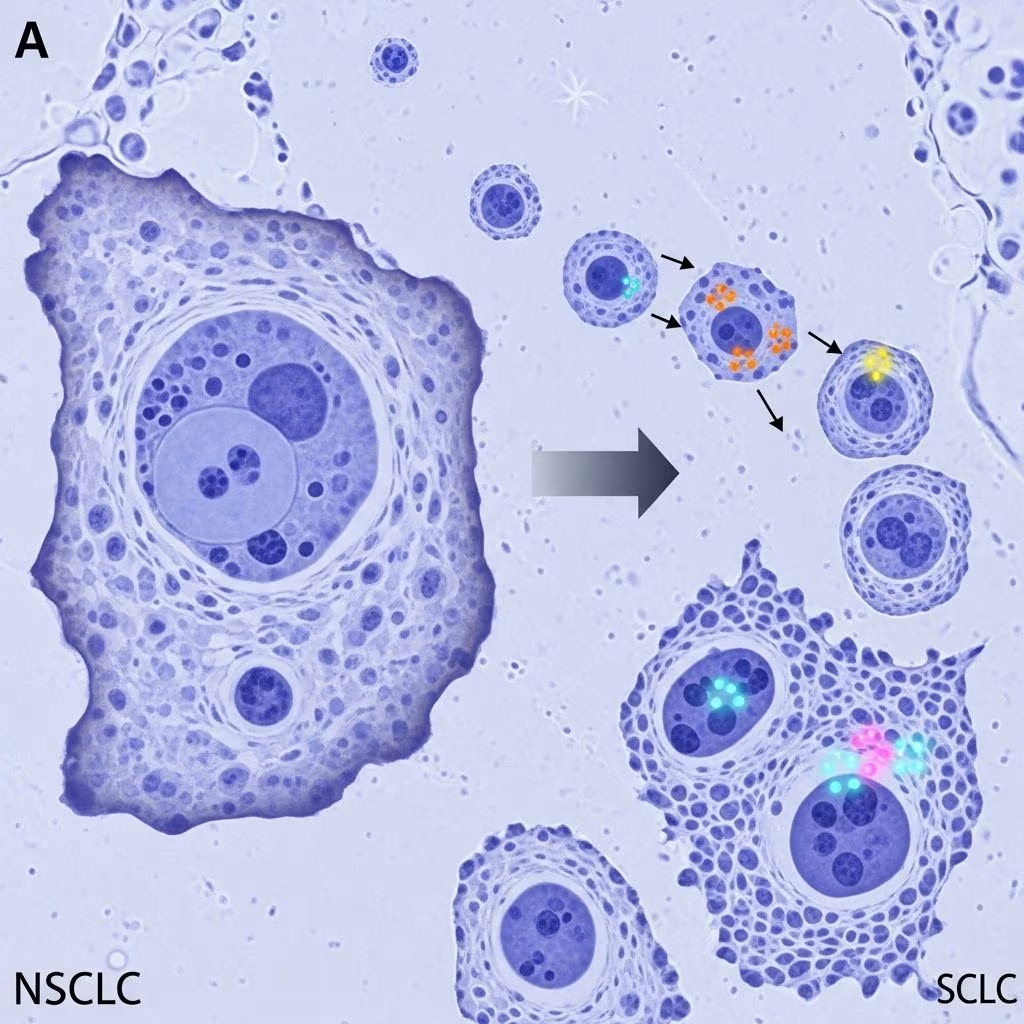
Non-small cell lung cancer (NSCLC) accounts for the majority of lung cancers, making up about 8085% of all lung cancer diagnoses, while small cell lung cancer (SCLC) represents 1015% and is generally much more aggressive. In rare but clinically significant scenarios, NSCLC may transform into SCLC, especially after certain cancer treatments and as tumors develop resistance. This transformation impacts the way lung cancer is managed, its prognosis, and the symptoms experienced by people with lung cancer. This comprehensive guide explores the mechanisms behind this transformation, how it is detected, its influence on treatment approaches, prognosis, and answers to frequently asked questions.
Overview: NSCLC vs. SCLC
| Feature | NSCLC | SCLC |
|---|---|---|
| Incidence | 80-85% of lung cancers | 10-15% of lung cancers |
| Growth Rate | Slower | Rapid/fast-growing |
| Aggressiveness | Less aggressive | More aggressive |
| Common Treatments | Surgery, chemotherapy, targeted therapy, immunotherapy | Chemotherapy, sometimes immunotherapy |
| Prognosis | More favorable in early stages | Poor, majority advanced at diagnosis |
Can NSCLC Transform into SCLC?
Transformation from NSCLC to SCLC is a rare but recognized phenomenon, mostly observed in people whose NSCLC initially responds to treatments such as targeted therapy (especially those targeting the EGFR gene) but then the cancer recurs with a different, more aggressive SCLC pattern. This phenomenon is not exclusive to EGFR-targeted therapies and can also occur following immunotherapies, sometimes with different mutations in genes that regulate basic cellular behavior.
- SCLC transformation usually involves a switch from a type of NSCLC called adenocarcinoma to SCLC.
- This change often follows the development of resistance to certain cancer treatments, especially EGFR-tyrosine kinase inhibitors (TKIs).
- This transformation alters the cancer’s biological characteristics, symptoms, responsiveness to treatments, and ultimately its prognosis.
Why Does NSCLC Sometimes Transform Into SCLC?
The transformation of NSCLC to SCLC is complex and still not fully understood, but researchers have identified some contributing factors and genetic clues:
- Resistance to Treatment: Often occurs after treatment with EGFR-TKIs, a targeted therapy for NSCLC.
- Certain Genetic Mutations: Defects in genes such as TP53 and RB1 (both tumor suppressors) are commonly associated with this transformation.
- Coexisting Cancer Cells: It’s possible that some tumors initially contain a small minority of SCLC-like cells that later become dominant after NSCLC treatment eliminates more sensitive cells.
- Stem Cell-like States: Recent research suggests that as NSCLC transforms to SCLC, it may pass through an intermediate, stem cell-like phase that allows the change in fate and behavior.
Genetic and Molecular Mechanisms
The most commonly implicated genetic changes in NSCLC to SCLC transformation include:
- TP53 gene mutation or loss (about 79% of reported cases with transformation)
- RB1 gene mutation or loss (about 58%)
- Additional mutations: PIK3CA, BRAF, WNK1, and others in select cases
These damaged genes play vital roles in regulating the cell cycle and preventing uncontrolled growth. When both are mutated or lost, the cells become more prone to the aggressive and rapidly spreading behavior of SCLC.
When Does Transformation Usually Occur?
Transformation from NSCLC to SCLC is most likely to be observed:
- During or after EGFR-TKI treatment: Particularly in lung adenocarcinoma with EGFR mutations that initially respond to therapy but develop resistance.
- After immunotherapy or other targeted treatments: Less common but described in recent research.
- Usually months or years after initial NSCLC diagnosis: Median time to SCLC transformation reported as about 1718 months.
Symptoms of NSCLC to SCLC Transformation
The transition to SCLC can change the pattern and severity of symptoms. Some signs and symptoms that may suggest this transformation include:
- Rapid worsening of lung cancer symptoms (such as coughing, shortness of breath, chest pain)
- New or rapidly growing masses or tumors in the lungs or other organs
- Symptoms related to cancer spread (metastasis): unexplained weight loss, severe fatigue, bone pain, neurological symptoms
- Paraneoplastic syndromes: SCLC may be more likely to cause hormone-related complications, such as SIADH (syndrome of inappropriate antidiuretic hormone secretion), Cushing syndrome, or neurological effects
Importantly, these symptoms can overlap with the progression of NSCLC or treatment side effects. Therefore, clinical suspicion is often raised by rapid clinical deterioration or changes in imaging findings after a period of cancer stability or improvement.
How Is Transformation Diagnosed?
Detecting the transformation from NSCLC to SCLC is crucial for guiding therapy. The diagnosis typically follows this sequence:
- Clinical suspicion triggers the workup, often because of new or worsening symptoms or unusual imaging findings during or after NSCLC treatment.
- Imaging studies (CT, PET scans) may show new areas of rapid tumor growth or patterns more typical of SCLC.
- Biopsy and pathological review are essential: Cancer tissue is collected again and examined under a microscope. SCLC has smaller, rounder, denser cells that look different from NSCLC cells. Special stains and molecular tests further confirm the diagnosis and check for specific gene mutations.
Because these transformations can only be confirmed with a new biopsy, they are likely underdiagnosed if tissue is not re-examined after resistance to therapy develops.
Treatment Options After Transformation
Treatment strategy changes significantly when NSCLC transforms to SCLC. The new SCLC component is usually:
- More aggressive and less responsive to treatments used for NSCLC
- More sensitive to traditional SCLC chemotherapy regimens, though responses are often shorter-lived compared to newly diagnosed (“de novo”) SCLC
Standard Approaches
- Chemotherapy: The mainstay, typically with platinum-based drugs (etoposide plus cisplatin or carboplatin) as first-line treatment after transformation.
- Clinical trials: Participation in cutting-edge research studies is encouraged, as outcomes are often poor and therapies rapidly evolving.
- Immunotherapy: May be considered in select cases, but its role after transformation is less well established. Some SCLCs, especially after transformation, show lower response rates.
- Palliative care: Used to manage symptoms and improve quality of life, and is particularly important for advanced or resistant cases.
Challenges in Treatment
- Limited options: There is no established standard of care for transformed SCLC, especially for those who have already failed other therapies.
- Shorter remission durations: Responses to SCLC-directed chemotherapy after transformation are usually shorter than responses in newly diagnosed SCLC.
Prognosis and Outlook
The outlook for individuals with SCLC transformed from NSCLC is generally worse than for those with NSCLC that does not transform, and potentially also worse than those with “de novo” SCLC. This is due to:
- The aggressive nature of SCLC, which tends to grow and spread rapidly
- Frequent resistance to both targeted therapies and chemotherapy
- The fact that by the time transformation is detected, the cancer may already be advanced or widely spread
Median survival after transformation is typically less than one year, highlighting the urgent need for more effective treatments and close monitoring of individuals at risk.
Frequently Asked Questions (FAQ)
Q: Who is at risk of NSCLC transforming into SCLC?
A: People with NSCLC, especially those with adenocarcinoma featuring EGFR mutations treated with EGFR-targeted tyrosine kinase inhibitors, are at greatest risk. However, transformation can also occur after immunotherapy or in NSCLC that lacks EGFR mutations.
Q: Is it possible to predict which NSCLC cases will transform to SCLC?
A: While loss or mutation of TP53 and RB1 tumor suppressor genes are risk factors, transformation remains unpredictable and occurs in a minority of treated cases.
Q: Does transformation only happen after treatment?
A: Transformation typically occurs after exposure to therapies like EGFR-TKIs or immunotherapy, but in exceptional cases, combined NSCLC-SCLC tumors can be present from the outset.
Q: Can the transformation be prevented?
A: Currently, there are no proven methods to prevent transformation. Close monitoring during therapy and repeat biopsies when cancers progress are the only way to detect transformation early.
Q: Does transformed SCLC respond to treatment as well as “original” SCLC?
A: Unfortunately, responses are typically shorter and less robust than in newly diagnosed SCLC, but SCLC-based chemotherapy is still the recommended first-line option after transformation.
Takeaway: What You Need to Know
- Transformation of NSCLC to SCLC is a recognized mechanism of treatment resistance, especially in cases initially characterized by adenocarcinoma with EGFR mutations treated with targeted therapies.
- Transformation leads to a more aggressive disease that may require a revised approach to therapy, typically SCLC-directed regimens.
- Recognizing possible transformation is critical; new or rapidly worsening lung cancer symptoms, changes on imaging, or failure of expected treatment responses should prompt doctors to consider a repeat biopsy.
- Ongoing research is needed to better understand, detect, and treat this phenomenon, which remains a significant challenge for people living with lung cancer and their care teams.
References
- https://pmc.ncbi.nlm.nih.gov/articles/PMC10646212/
- https://www.healthline.com/health/lung-cancer/transformation-from-non-small-cell-lung-cancer-to-small-cell-lung-cancer
- https://news.weill.cornell.edu/news/2024/02/how-one-type-of-lung-cancer-can-transform-into-another
- https://tcr.amegroups.org/article/view/28004/html
- https://pmc.ncbi.nlm.nih.gov/articles/PMC4470698/
- https://www.atsjournals.org/doi/full/10.1164/rccm.202410-1959PP