Femoral Anteversion: Overview
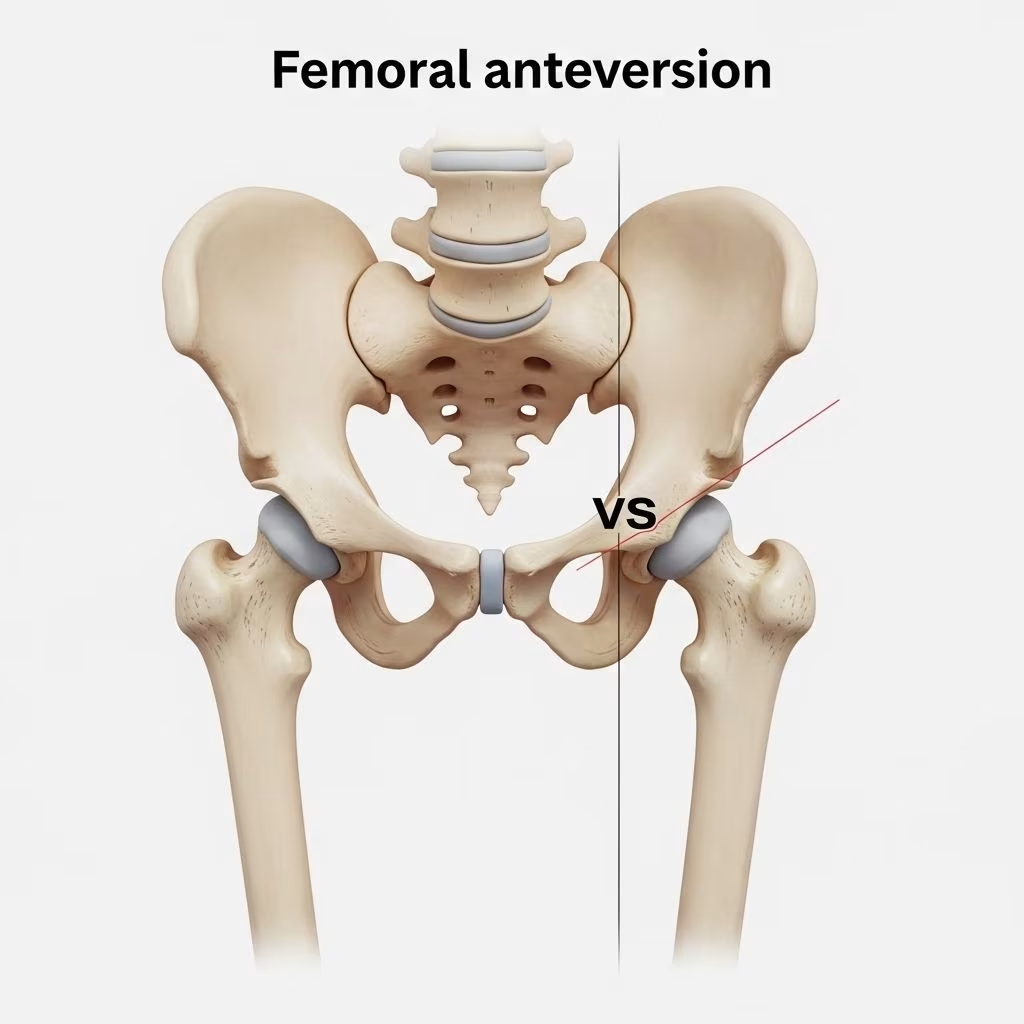
Femoral anteversion is a condition where the femur (thigh bone) is abnormally twisted inward relative to the hip, causing the knees and feet to turn inward. This leads to a type of gait known as in-toeing or “pigeon-toed” walking. The condition predominantly affects children but can also persist into adulthood or develop later as a result of trauma or other health conditions.
Key Facts
- Femoral anteversion is congenital and commonly presents in early childhood.
- Most children outgrow the condition by adolescence, often without treatment.
- Persistence or late development in adults can impact mobility and quality of life.
- Surgical correction is available for severe or persistent cases.
What Is Femoral Anteversion?
Femoral anteversion is an inward twisting (rotation) of the femur. This results in the knee and toes pointing toward each other when walking. The opposite problem, femoral retroversion, involves the femur rotating outward, causing the knees and toes to point away from each other.
| Condition | Direction of Femur Twist | Gait Appearance |
|---|---|---|
| Femoral Anteversion | Inward | In-toeing (pigeon-toed) |
| Femoral Retroversion | Outward | Out-toeing |
Causes of Femoral Anteversion
The exact cause of femoral anteversion is not fully understood. The condition is believed to develop in the womb, influenced by the position of the fetus and potentially by genetic factors as it often runs in families. In children, the twisting may be linked to stiff hip muscles resulting from fetal positioning.
- Genetic predisposition: Children whose parents had femoral anteversion may be more likely to inherit it.
- Position in utero: Babies exposed to constrained positions during development may have increased risk.
- Sex differences: Females seem to be affected about twice as often as males.
- Trauma: Complex torsional deformity can develop after bone fractures heal incorrectly or following certain injuries, notably in adults.
- Associated conditions: Adults may develop femoral anteversion due to acetabular dysplasia, hip impingement, or cerebral palsy.
Signs and Symptoms
The manifestations of femoral anteversion vary by age and severity. Many children present with an inward-rotated gait, while adults may experience pain or difficulty with mobility.
- In-toeing gait: The toes and knees point inward when walking.
- Bowed legs: Children may maintain a wider stance for balance.
- Sitting in “W” position: Legs bent in front and spread outward, common in children with anteversion.
- Awkward running style: Increased tendency to trip or fall.
- Snapping sound in the hip: Audible clicks or pops during walking.
- Hip, knee, or ankle pain: Usually mild or absent in children, but can be pronounced if other issues exist.
- Patellofemoral maltracking: Kneecap moves abnormally during leg movement.
- Instability: Difficulty walking or running, increased risk of tripping.
Pain is generally not associated with femoral anteversion in children. However, persistent anteversion or coexistence with external tibial torsion (shin bone twisted outward) can cause joint discomfort, especially knee pain.
Diagnosis
Diagnosis is generally made in children between ages 4 and 6, often when they begin walking. Careful evaluation is necessary because symptoms can mimic other musculoskeletal conditions. For adults, diagnosis may occur later if symptoms persist or develop following trauma.
- Physical Examination: Doctors evaluate gait, posture, and perform hip rotation tests.
- Medical History: Includes birth history and family incidence of the condition.
- Imaging: X-rays or CT scans may be ordered to assess femoral rotation, particularly in complex cases. However, these imaging techniques may have limitations as rotational deformities occur in the axial plane and may not be fully visible.
Complex cases may involve “tetra-torsional malalignment,” where combined femoral anteversion and tibial torsion keep feet parallel while masking deeper rotational issues. This can lead to pain despite a seemingly normal gait, making diagnosis more challenging.
Treatment Options
Treatment strategies depend on age, symptom severity, and overall health. Many cases in children improve naturally as growth occurs and muscles strengthen.
- Observation: Most children do not require treatment. Their gait often becomes normal by ages 8 to 10.
- Physical Therapy: Strengthening and stretching exercises for hip muscles may be recommended, mainly to improve balance and coordination.
- Braces or Corrective Shoes: Studies indicate these interventions are generally ineffective for correcting femoral anteversion.
- Surgery: Reserved for severe cases that do not resolve with age and lead to functional problems. The procedure, often called femoral derotation osteotomy, involves surgically realigning the femur.
| Age Group | Common Treatment | Outcome |
|---|---|---|
| Children (mild to moderate) | Observation | Usually outgrows condition |
| Children (severe) | Surgery | Improved alignment and gait |
| Adults | Surgical correction, physical therapy | Symptom management, improved function |
It is important to note that femoral anteversion typically does not lead to arthritis or long-term joint damage. Early intervention in severe cases helps optimize walking and prevent chronic discomfort.
Femoral Anteversion in Adults
While femoral anteversion usually presents in childhood and resolves naturally, some adults may experience persistent or newly developed symptoms. These cases are often more severe and may be linked to the following factors:
- Delayed correction from childhood
- Physical trauma or sports injuries
- Malunion after femur fracture
- Comorbid conditions: acetabular dysplasia, hip impingement, cerebral palsy
Adults with femoral anteversion may show articular cartilage damage, labral tears, reduced abductor lever arm, and joint impingement. Symptoms can include hip and knee pain, instability, tripping, and difficulty walking or running. Timely diagnosis and appropriate correction or therapy can greatly improve mobility and quality of life.
Living with Femoral Anteversion
For children, living with femoral anteversion may involve adjusting to balance challenges and changes in running or walking style. Parents may notice frequent tripping, awkward gait, or a preference for sitting in the “W” position. The risk of arthritis or other complications is low, and most children do not experience pain or long-term problems.
Adults may require tailored rehabilitation, including physical therapy and targeted exercises. In rare cases, surgical intervention becomes necessary to restore function and reduce pain.
Frequently Asked Questions (FAQs)
Q: When should I seek medical attention for my child?
Consult your healthcare provider if your child has persistent in-toeing, appears to be tripping more than usual, expresses pain, or if you notice progression of symptoms after age 8. Early evaluation can rule out other underlying causes.
Q: Will my child need surgery for femoral anteversion?
Most cases do not require surgery. Observation and time resolve the majority of mild to moderate cases. Surgical correction is only considered in severe cases when symptoms affect daily activities and do not improve by adolescence.
Q: Are braces or special shoes effective treatments?
Research indicates braces and corrective shoes are not effective in treating femoral anteversion. Time and natural growth remain the best remedies for most children.
Q: Can femoral anteversion lead to joint problems later in life?
No, femoral anteversion typically does not increase the risk of arthritis or other joint issues if it resolves by adulthood. Chronic, untreated severe cases may lead to mobility concerns but not necessarily joint deterioration.
Q: Is femoral anteversion hereditary?
Yes, genetics play a strong role. The condition frequently runs in families, and children often share walking styles with affected parents.
Key Points to Remember
- Femoral anteversion is a mostly benign, congenital inward rotation of the thighbone.
- Symptoms include in-toeing, bowed legs, awkward gait, and preference for W-sitting.
- The condition is usually self-limiting and resolves with age. Severe, persistent cases may require medical intervention.
- Timely evaluation ensures accurate diagnosis and management, especially for atypical or complex presentations.
- Femoral anteversion does not typically lead to long-term health problems, and most children lead normal, pain-free lives.
Resources for Further Information
- Consult pediatric orthopedic specialists for personalized evaluation and advice.
- Educational materials at reputable children’s hospitals and orthopedic clinics can provide guidance for parents.
- Physical therapy recommendations may be helpful for balance and coordination improvement.
References
- https://www.hss.edu/health-library/conditions-and-treatments/list/hip-femoral-anteversion
- https://www.benjamindombmd.com/blog/femoral-anteversion-in-adults/?bp=35363
- https://www.ucsfbenioffchildrens.org/conditions/femoral-anteversion
- https://www.stlouischildrens.org/conditions-treatments/femoral-anteversion
- https://www.orthobullets.com/pediatrics/4059/femoral-anteversion
- https://phoenixchildrens.org/specialties-conditions/femoral-anteversion-children
- https://www.urmc.rochester.edu/childrens-hospital/orthopaedics/conditions-we-treat/femoral-anteversion
- https://www.simphysio.com.au/blog/hip-anteversion-hip-retroversion