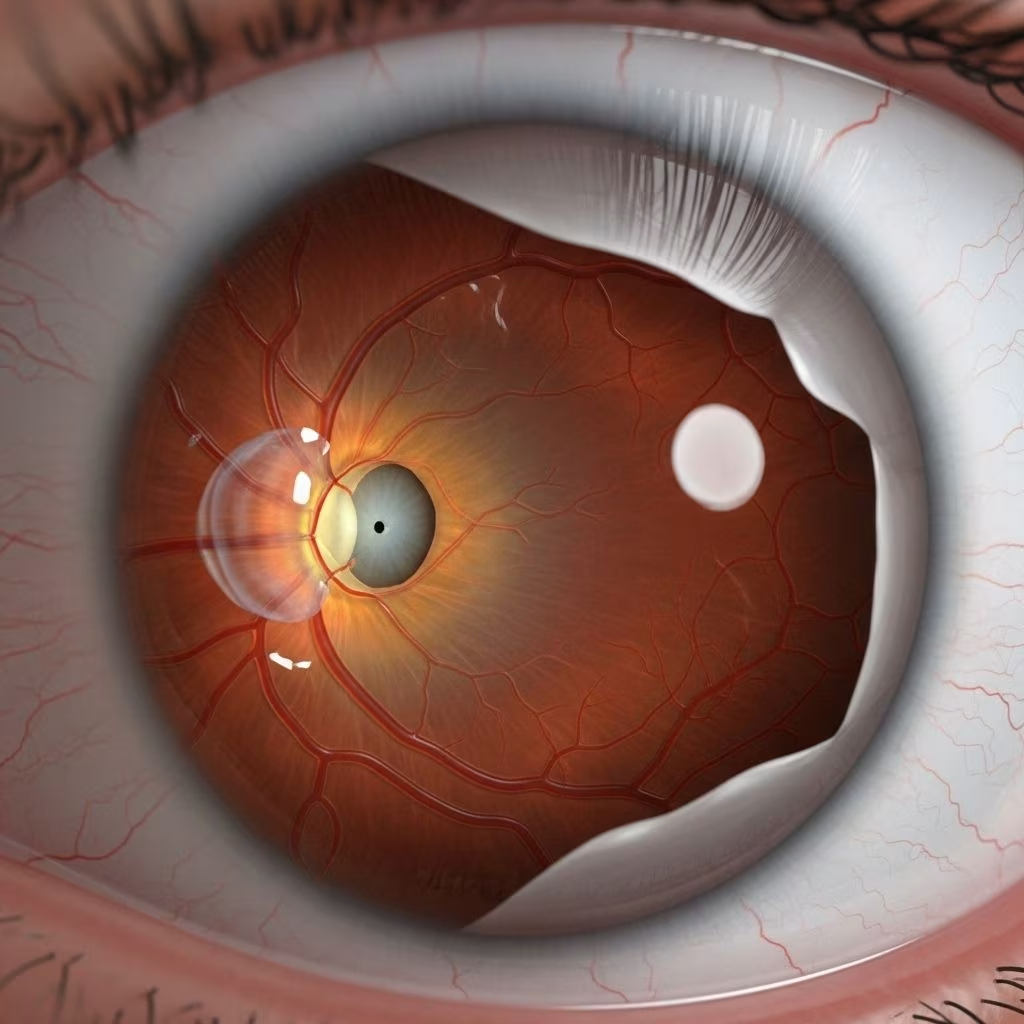
A macular hole is a small break or opening in the macula, the central part of the retina responsible for detailed, sharp vision. This condition primarily affects older adults and can have a major impact on daily activities by causing blurriness or blank spots in the center of your vision. With timely diagnosis and treatment, most cases result in improved or stabilized vision, but untreated macular holes can progressively worsen.
What is a Macular Hole?
The macula is located in the center of the retina at the back of the eye. It is essential for tasks that require fine detail perception, such as reading, recognizing faces, and driving. A macular hole forms when an opening develops in this area, typically due to pulling (traction) on the retinal tissue. The condition can compromise your central vision while usually preserving peripheral (side) vision.
- Location: Central retina (macula)
- Effect: Loss or distortion of clear central vision
- Not painful: Macular holes do not cause pain
Symptoms
Symptoms of a macular hole often begin subtly and worsen over time. Early detection is crucial for effective treatment and vision preservation.
- Blurry or distorted central vision
- Straight lines appear wavy or bent
- Difficulty with daily activities: Reading, driving, recognizing faces
- Blank or dark spots in the center of your vision (central scotoma)
- Missing words or letters when reading
It is important to note that peripheral vision remains unaffected and macular holes do not result in total blindness. The condition is often painless, meaning many may not notice symptoms until considerable vision changes occur.
When to See a Doctor
If you notice any distortion, blurriness, or new blind spots in your central vision, you should promptly consult an eye care professional. Early intervention usually offers the best outcome.
Causes and Risk Factors
Macular holes most frequently develop due to age-related changes, but other factors can contribute to their formation.
- Age: Most common in adults over 60 years old
- Gender: Women are affected more than men
- Nearsightedness (Myopia): Increases risk
- Eye trauma: Previous eye injuries may trigger hole formation
- Retinal detachments or other eye diseases
- Inflammatory conditions: Chronic eye inflammation
In the majority of cases, macular holes are idiopathic, meaning no identifiable cause other than age-related changes in the vitreous gel inside the eye. Natural shrinkage or separation of this gel can tug on the macula and, in some cases, create a hole.
Stages of a Macular Hole
Not all macular holes are the same. They are categorized according to their size and progression:
| Stage | Description | Symptoms |
|---|---|---|
| Stage 1 | Foveal detachment; tissue begins to pull away, but no full-thickness hole yet. | Mild distortion or blurring; best chance for spontaneous closure |
| Stage 2 | Small full-thickness macular hole forms. | Worsening distortion, central blind spot emerging |
| Stage 3 | Larger, full-thickness hole; partial vitreous detachment | Significant vision loss in central area, persistent symptoms |
| Stage 4 | Larger hole with complete separation of vitreous from retina | Persistent, severe vision loss in the center of the visual field |
Early detection is key to halting progression and maximizing treatment success. Some holes—particularly Stage 1—may close spontaneously, but most require intervention.
Diagnosis
A comprehensive eye exam by an ophthalmologist will determine if you have a macular hole. Diagnosis typically involves:
- Visual acuity test: Checks central vision sharpness
- Slit-lamp examination: Microscopic eye inspection
- Dilated fundus exam: Doctor inspects retina and macula directly
- Optical Coherence Tomography (OCT): Imaging test for detailed cross-section of the retina, confirming presence, size, and stage of the macular hole
Treatment Options
The optimal treatment for a macular hole depends on its stage and whether symptoms are worsening. In some early cases, the hole might close on its own, but most benefit from treatment. The primary aim: restore or preserve central vision and prevent further vision loss.
Observation
- Very small or Stage 1 holes: May close on their own, particularly if symptoms are mild
- Scheduled monitoring with regular eye exams and imaging
Medicated Eye Drops (Emerging Research)
- For select small holes: Medicated anti-inflammatory or fluid-absorbing eye drops might help closure within weeks in some people
- This non-surgical approach is relatively new and under study, but may allow some to avoid surgery
Vitrectomy Surgery
- Most common treatment for persistent or advanced macular holes
- Procedure: The surgeon removes the vitreous gel pulling on the macula, repairs the retina, and places a gas bubble inside the eye to hold the hole edges together
- The gas bubble acts as a temporary bandage, gradually disappearing as natural fluid replaces it
- After the procedure, patients must typically keep their face down for some time to keep the bubble in contact with the macula (called “face-down positioning”)
- Surgery is performed on an outpatient basis and may improve vision in the majority of cases
Outlook After Surgery
- Anatomic closure rates approach 96% with one or two operations
- Significant improvement or stabilization of vision is common
- Some permanent central vision loss is possible, especially if surgery is delayed
- It may take several months for vision to improve after surgery
Risks and Complications
As with any surgery, risks exist. Possible complications include:
- Cataract development
- Retinal tears or detachment
- Infection
- Reopening of the macular hole
- Persistent visual changes
Your eye care provider will discuss potential risks vs. benefits based on your unique situation.
Living with a Macular Hole
A macular hole can significantly impact daily life, especially if it interferes with activities such as reading, driving, or using computers. The visual changes often affect only the central vision of one eye, especially at first. Many people find they can adjust by relying more on their unaffected eye, using visual aids or magnifiers, and employing good lighting.
- Most remain independent with careful adaptation
- Prompt detection and treatment help preserve vision
- Ongoing follow-ups are essential for monitoring vision
Prevention and Monitoring
There are no guaranteed ways to prevent a macular hole, but you can take steps to protect your eye health:
- Schedule regular, comprehensive eye exams, especially if you are over 60
- Seek medical attention for any new vision changes (blurred, distorted, or dark central spots)
- Protect your eyes from trauma
- Manage health conditions such as diabetes that can affect the retina
Early recognition and management offer the best chance to save sight.
Frequently Asked Questions (FAQs)
What is the difference between a macular hole and macular degeneration?
A macular hole is a physical break or tear in the central retina, while macular degeneration refers to gradual deterioration of the macula without a hole forming. Both affect central vision, but their causes, treatments, and outlooks differ.
Can a macular hole heal without surgery?
Some small, early-stage holes may close spontaneously, especially Stage 1. However, most macular holes require treatment—typically surgery—to restore or preserve vision.
Will I go blind from a macular hole?
Macular holes affect only central vision, not peripheral (side) vision. They do not cause complete blindness, but untreated, they can lead to permanent central vision loss.
How long does recovery take after macular hole surgery?
Visual recovery can begin within weeks but may take several months for maximal improvement. Face-down positioning may be required for several days, and vision may initially seem worse before it improves. Most people notice significant improvement within 3-6 months.
What happens if a macular hole comes back?
Rarely, the hole may reopen. Repeat vitrectomy surgery may be considered, with good chances of closure in many cases.
Can both eyes be affected by a macular hole?
It is possible for a macular hole to develop in the other eye, though the overall risk is low. Regular checkups help spot any new issues early.
Key Takeaways
- Macular holes are a rare, often age-related eye condition that impacts central vision
- Main symptoms: Blurry or distorted central vision, blank spots
- Diagnosis requires a dilated eye exam and retinal imaging
- Most cases benefit from surgical repair (vitrectomy), with excellent success rates
- Prompt medical attention and monitoring are essential to avoid permanent vision loss
References
- https://pmc.ncbi.nlm.nih.gov/articles/PMC1994732/
- https://www.medicalnewstoday.com/articles/macular-hole
- https://resources.healthgrades.com/right-care/eye-health/macular-hole
- https://www.uchicagomedicine.org/forefront/research-and-discoveries-articles/2021/january/medication-closes-small-macular-holes
- https://eyewiki.org/Macular_Hole
- https://www.healthline.com/health/eye-health/hole-in-retina
- https://www.ncbi.nlm.nih.gov/books/NBK559200/
- https://www.newvisioneyecenter.com/blog/macular-hole-explained/