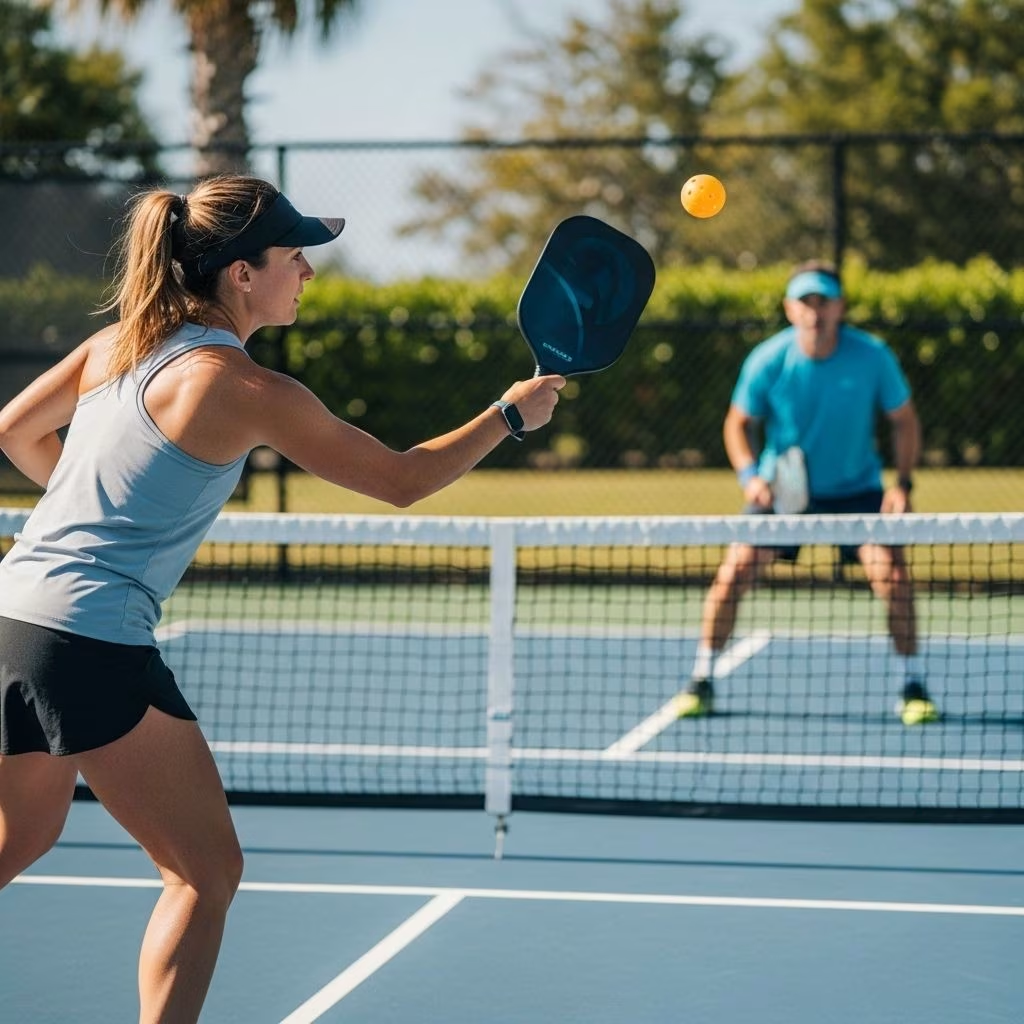
Pickleball, one of the fastest-growing sports across the United States, combines elements of tennis, badminton, and ping-pong into a dynamic and accessible game for people of all ages and abilities. Simple to learn but endlessly engaging, pickleball can be played in singles or (more commonly) doubles and is known for its unique rules and distinctive court. If you’re new to the sport or need a rulebook refresher, this comprehensive guide will walk you through the primary rules, gameplay basics, serving mechanics, scoring techniques, and much more—so you can hit the court with confidence.
Understanding the Game: What Is Pickleball?
Pickleball is a paddle sport that blends several racket sports, played either one-on-one (singles) or, more commonly, with pairs (doubles). The game takes place on a court similar in size to a badminton court but uses a net that’s slightly lower than a tennis net. Players use solid-faced paddles made of wood or composite materials to volley a perforated plastic ball—similar to a wiffle ball—over the net.
- Can be played both indoors and outdoors.
- Appeals to all ages and fitness levels due to simple rules and moderate physical requirements.
- Focuses on strategy, placement, and quick reflexes rather than pure power or speed.
Pickleball Court Dimensions and Layout
Understanding the pickleball court dimensions is key for gameplay and mastering the rules:
- Court size: 20 feet wide x 44 feet long. The same size for singles and doubles play.
- Net height: 36 inches high at the sidelines, 34 inches high in the center.
- Non-volley zone (“the kitchen”): 7 feet from the net on both sides, marked as a no-volley zone.
- Service courts: Divided into right and left sections by center lines; serves must land in the diagonal service court across the net.
- Baselines and sidelines: Out-of-bounds areas surrounding the court; the serve and play must stay within these lines.
Every line on the court is considered “in” for play, except the non-volley line, which is specially regulated (see the kitchen rule below).
Key Rules of Pickleball: Gameplay and Scoring
Pickleball’s basic rules are designed for fairness and fast-paced play. Here are the core guidelines every player needs to know:
- Only the serving team can score points.
Points are only awarded to the team that serves. Games are usually played to 11 points, and the winner must be ahead by at least 2 points (for example, 11–9).
- The game begins with a serve from the right side.
Players determine the initial server by a fair method (coin toss or local rules). The first serve always starts from the court’s right-hand side and must go diagonally across to the opponent’s right service box.
- Rotating serve positions based on score.
When the server’s score is even (0, 2, 4, etc.), the serve takes place from the right-hand box. For odd scores (1, 3, 5, etc.), the server moves to the left side. This applies in both singles and doubles play.
- Serving must be underhand and below the waist.
- Hold the paddle below the waist and swing in an upward arc.
- Serve must be underhand; serves made overhand are faults.
- Paddle contact with the ball must be below the navel at the time of the serve.
- At least one foot must stay behind the baseline until after the serve is struck; do not step on the baseline or court during the serve.
- Serves must be made diagonally cross-court.
Serves are directed from the server’s right-hand position to the opponent’s right service court (from the receiver’s perspective), and the pattern repeats on the left after each point, depending on the server’s score.
- Scoring system and serving sequence.
- The score is called as three numbers (e.g., 3-4-1):
First number = Serving team’s score
Second number = Receiving team’s score
Third number = Server number (1 or 2 in doubles) - The starting score for any game is always called as “0-0-2”.
- In doubles, both players on a team get a chance to serve before the serve “sides out” to the opponent—except at the very start of the game, when only one serve is allowed before side out.
- The score is called as three numbers (e.g., 3-4-1):
- The double-bounce rule.
When the ball is served, the receiving team must let it bounce once before returning it. In turn, the serving team must let the returned shot also bounce once before playing it. After these two bounces, either team may volley (hit in the air) or allow further bounces.
- The “kitchen” (non-volley zone) rule.
- The area within 7 feet of the net on both sides is called the “non-volley zone” or kitchen.
- No player may volley (hit the ball in mid-air) while standing in or touching this zone.
- It is a fault if a player’s momentum carries them into the kitchen after volleying, even after contact.
- You may enter the kitchen to play a ball after it bounces.
- Balls landing on a line are considered “in.”
If any part of the ball touches a boundary or service line, it is considered “in” and play continues.
- Serves must clear the net and avoid the kitchen.
A serve that lands in the kitchen (including the non-volley line) is a fault, and the serve goes to the next player or side out.
Serving in Pickleball: Mechanics and Sequence
Proper serving is crucial for maintaining gameplay flow and fairness:
- Both feet must be behind the baseline during the serve.
- Players should announce the score aloud before serving each point.
- The server continues serving, alternating sides, until a fault is committed.
- A missed or illegal serve results in a fault; no second chance is given.
- In doubles, after one player’s fault, their partner serves next; once both fault, the serve changes to the other side (called a “side out”).
Diagram: Example Pickleball Score Call
| Call | Explanation |
|---|---|
| 2-0-2 | Serving team has 2 points, receiving team has 0, second server is serving. |
| 6-8-1 | Serving team has 6, receiving team 8, first server is serving. |
Common Pickleball Faults and How to Avoid Them
Faults interrupt play and can lead to a loss of serve or points for the opponent. Understanding and minimizing these errors is crucial for consistent play:
- Failing to serve underhand or above the waist.
- Stepping on or over the baseline while serving.
- Allowing the served ball to land in the kitchen or on the kitchen line.
- Hitting volleys while standing in the kitchen or letting momentum carry into the zone after a volley.
- Not observing the double-bounce rule on serve and return.
- Hitting the ball out of bounds or into the net at any time.
- Serving out of turn or from the incorrect court.
How to Start a Game and Keep Score
Each game begins with a serve from the right side. Players or teams can decide who will serve first using a coin toss, spinning a paddle, or following local court traditions (such as always starting from the north side).
- At the start, only one member of the first-server team gets a single serve. If a fault occurs, it’s a side out and the serve passes to the opponents.
- From the second side out onwards, both teammates play as servers before giving up the serve (unless in singles).
- The server should always announce the full score—including the server number—before serving.
Here’s a brief scoring recap:
- Only the serving team can earn points.
- First to 11 wins, but must win by at least two points.
- Switch server sides (right to left) after each point won by the serving team.
All About the Kitchen: The Non-Volley Zone
The kitchen is a distinctive feature of pickleball and is central to the game’s strategy. Understanding the kitchen rule is essential for all players:
- No volleys may be hit while standing in the kitchen or touching any part of it, including the line.
- A volley is a shot where the ball is hit in the air without bouncing first.
- Players may enter the kitchen to return a shot only after it bounces; otherwise, it is a fault.
- Momentum can’t carry players into the kitchen after volleying; it is still a fault even if the violation occurs post-contact.
Effective use of the kitchen affects placement, drop shots, and dinking strategies, adding a unique tactical dimension to competitive play.
Top Tips and Strategies for New Pickleball Players
- Focus on placement and consistency over raw power.
- Observe the double-bounce rule and practice patience early in the rally.
- Communicate regularly with your doubles partner to coordinate court coverage and shot strategy.
- Stay alert to avoid stepping into the kitchen during volleys.
- Use underhand serves with a controlled upward swing for accuracy and compliance.
Frequently Asked Questions (FAQs) About Pickleball Rules
Can you volley in the kitchen?
No. Players may not volley (hit the ball in the air) while standing in the kitchen or even touching any part of the kitchen line. After playing a volley, momentum can’t carry you into the zone—doing so is a fault.
What is a “side out” in pickleball?
A “side out” occurs when the serving team loses both service turns (in doubles) or their serve (in singles), and the opposing team gains the right to serve.
How do you start a pickleball game?
A fair method—like a coin toss or established local rules—decides which team or player serves first. The starting server plays from the right side, calling the initial score as “0-0-2.”
What happens if the ball hits the line?
Any ball (except a serve landing on the kitchen line) that touches a boundary line is considered “in.” Play continues as normal.
How many points do you need to win?
Pickleball games are played to 11 points. A team must lead by at least 2 points to win (e.g., 11–9 or 12–10).
Can you hit the ball before it bounces?
Yes, but only after both the serve and the serve return have bounced once on either side. After those two bounces, volleys (hits in the air) are allowed except within the kitchen.
Additional Resources and Getting Started
- Consider watching official USA Pickleball Association videos for rules demonstrations.
- Pickleball paddles and balls are available at most sporting goods stores.
- Find community courts or recreation centers near you for beginner-friendly play.
Whether you’re joining a local league or just looking for a fun and social way to stay active, mastering these essential pickleball rules will help you fully enjoy your time on the court. Happy playing!
References
- https://www.goodhousekeeping.com/health/fitness/a41889595/pickleball-rules/
- https://www.pickleheads.com/guides/how-to-play-pickleball
- https://forwrd.co/blogs/pickleball/pickleball-rules-a-guide-for-everything-you-need-to-know
- https://pickleland.com/pickleball-rules/
- https://www.playpickleball.com/pickleball-etiquette-rules/
- https://www.cordilleraranchliving.com/pickleball-rules-etiquette/
- https://rhinopickleball.com/blogs/pickleball-tips-and-tricks/indoor-pickleball-court-etiquette-rules-and-best-practices
- https://betterpickleball.com/pickleball-serving-rules-are-you-violating-this-one/
- https://www.pickleballhut.com/here-are-the-pickleball-rules-you-need-to-know-now-2/