Type 1 Diabetes and Broken Bones: A Comprehensive Guide
Type 1 diabetes is an autoimmune condition that requires lifelong management. While the focus often lies on managing blood sugar and preventing complications like neuropathy, retinopathy, and cardiovascular issues, research highlights a significant but less recognized concern: the impact of type 1 diabetes on bone health and an increased risk of fractures throughout life.
Overview: Why Bone Health Is at Risk in Type 1 Diabetes
People living with type 1 diabetes (T1D) face a noticeably higher risk of bone fractures compared to people without diabetes. This risk appears to affect both young and older individuals and is not solely explained by classical osteoporosis or reductions in bone mineral density (BMD). Recent studies indicate bone fragility in T1D is multifactorial, involving changes in both bone structure and bone quality.
- Fracture risk in T1D is three to six times higher compared to peers without diabetes.
- Hip fractures and vertebral fractures are especially elevated in T1D.
- Women with T1D have a higher risk of fracture than men with T1D.
- Fracture risk begins in childhood and persists throughout life for T1D patients.
How Type 1 Diabetes Affects Bones
Multiple mechanisms contribute to bone fragility in T1D, including lower bone mineral density, changes in bone structure, poor tissue quality, and increased risk of falling due to diabetes complications.
Reduced Bone Mineral Density (BMD)
BMD measures the amount of minerals in your bones and is a key marker for osteoporosis risk. While T1D patients generally show modest reductions in BMD, these alone do not completely explain the elevated fracture risk:
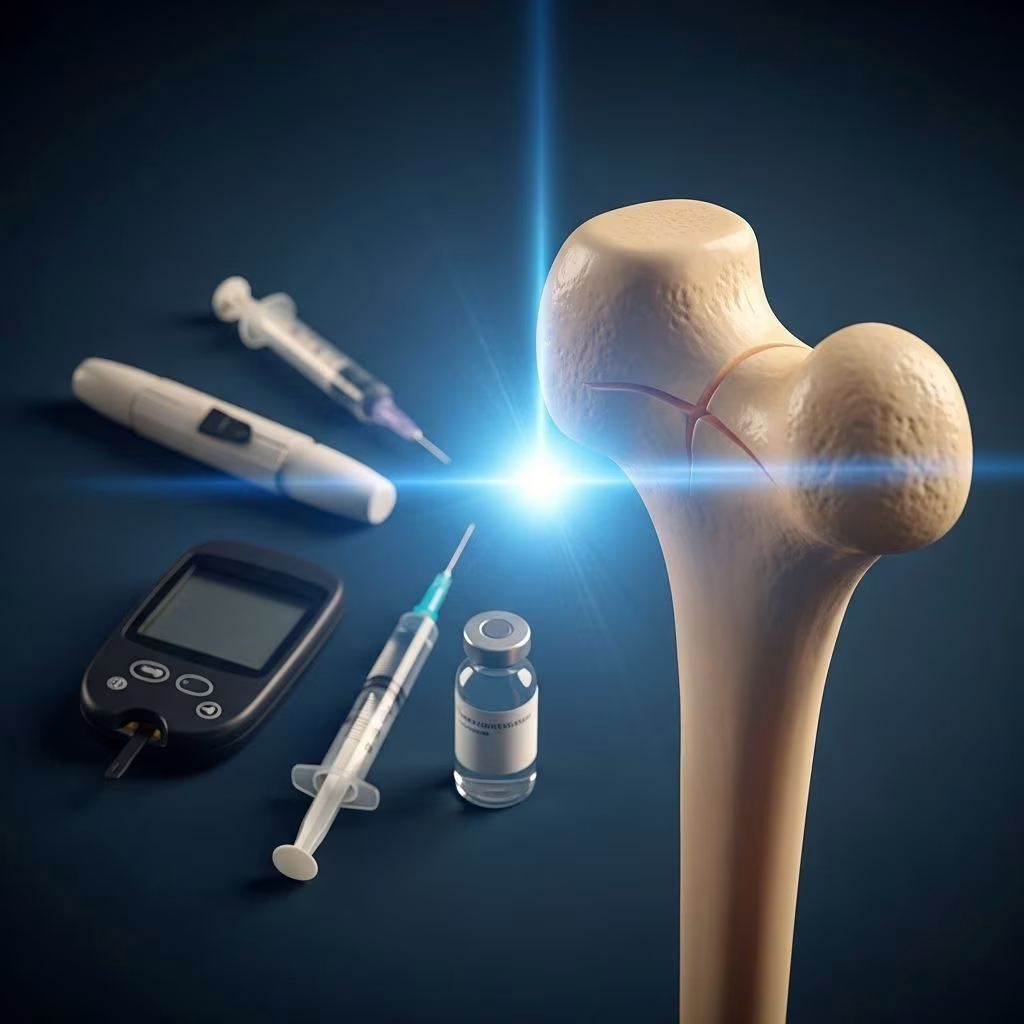
- BMD is typically lower at sites like the femoral neck (part of the hip) in people with T1D.
- Both males and females with T1D are affected by reduced BMD.
- BMD tends to remain relatively stable over time, but T1D patients may have uniquely lower baseline levels.
- Patients with diabetes-related complications (e.g., neuropathy, retinopathy, nephropathy) tend to have even lower BMD.
Bone Structure and Quality
Modern scanning techniques reveal that people with T1D have subtle but important changes in bone structure:
- Thinner bone cortices (less sturdy outer layer of bone).
- Altered trabecular bone with thinner and more widely spaced trabeculae (the lattice in spongy bone).
- Changes are intensified in those with microvascular complications—damage to small blood vessels common with diabetes.
- Tissue-level impacts include accumulation of advanced glycation end products (AGEs) in bone collagen and occlusion of bone vasculature, further impairing bone strength.
These changes can make bones more brittle and prone to fracture, even if BMD is only modestly reduced.
Low Bone Turnover
Type 1 diabetes often involves insulin deficiency, a state which can slow down bone remodeling:
- Insulin is important for bone formation; low insulin levels disrupt normal turnover.
- Low bone turnover may lead to accumulation of older, less resilient bone tissue.
Diabetes Complications and Increased Fall Risk
T1D complications can increase the likelihood of falls, contributing to fracture risk:
- Neuropathy (nerve damage) affects balance and sensation.
- Retinopathy (vision loss) makes it harder to avoid hazards.
- Hypoglycemic episodes can cause dizziness and fainting.
- Medications (like antihypertensives) can contribute to instability.
Who Is Most at Risk?
All individuals with type 1 diabetes should be aware of their elevated risk for broken bones, but some groups face even greater danger:
- Children and adolescents: Fracture risk begins early and persists into adulthood.
- Women: Higher risk than men, possibly due to hormonal factors and lower peak bone mass.
- Long-term T1D patients: Longer disease duration increases complication rates and thus fracture risk.
- Individuals with microvascular complications: Those with retinopathy, nephropathy, or neuropathy have lower BMD and poorer bone structure.
Broken Bones in Type 1 Diabetes: Common Sites and Outcomes
- Hip fractures:
- Most common and most serious in terms of health impact.
- Frequently requires hospitalization, surgery, and extensive rehabilitation.
- Higher risk of poor outcomes and complications vs. non-diabetic peers.
- Spinal (vertebral) fractures:
- Often underdiagnosed but linked to severe pain and disability.
- Associated with lower trabecular bone score, indicating microarchitecture compromise.
- Extremity fractures:
- Notably increased risk for arm and leg fractures beginning in childhood.
- Falls are a major contributing factor.
Why Are Fracture Rates So High?
Bone fragility in T1D is not driven solely by osteoporosis. Key contributing factors include:
- Modestly lower BMD compared to non-diabetic individuals.
- Poor bone quality due to changes in bone tissue and structure not detected by standard BMD tests.
- Advanced glycation end products weaken bone collagen through a process linked to chronic hyperglycemia.
- Microvascular damage promotes structural deficits.
- Fall risk due to complications and treatments associated with diabetes.
Diagnosing Bone Health Problems in Type 1 Diabetes
There are currently no specific guidelines for osteoporosis screening or fracture prevention exclusively tailored to people with type 1 diabetes. However, general approaches include:
- DXA (dual-energy X-ray absorptiometry) scans to measure BMD—useful but does not capture all bone quality issues.
- Trabecular bone score offers indirect insight into bone microarchitecture.
- High-resolution peripheral quantitative computed tomography (HR-pQCT) may detect subtle bone changes in research settings.
When Should Screening Occur?
- Adults with T1D—especially those with complications, history of fractures, or prolonged disease duration—should consider early and regular bone health evaluations.
- Children and adolescents with T1D may also benefit from routine assessment as fracture risk starts early.
Prevention Strategies: Protecting Bones in Type 1 Diabetes
Early intervention is vital to reduce fracture risk and prevent osteoporosis in people with T1D. Recommended steps include:
- Optimize glycemic control to minimize effects of chronic hyperglycemia on bone tissue.
- Prevent and manage microvascular complications to protect bone structure and function.
- Fall prevention:
- Regular balance and strength training.
- Home safety modifications (e.g., remove trip hazards, install grab bars).
- Vision and neuropathy screening.
- Bone-healthy lifestyle:
- Weight-bearing exercise (walking, jogging, resistance training).
- Calcium-rich diet and adequate vitamin D intake.
- Avoid smoking and limit alcohol consumption.
- Medication review:
- Discuss osteoporosis drugs (bisphosphonates, etc.) if at high fracture risk.
- Review all medications for side effects that may increase falls.
- Regular screening for bone health issues and prompt assessment after any fracture.
Treating Osteoporotic Fractures in T1D
Treatment approaches are similar to those for osteoporosis in the general population, though research suggests outcomes may be poorer and recovery slower:
- Prompt medical attention for any suspected fracture.
- Comprehensive rehabilitation post-fracture, including physical therapy and fall prevention education.
- Address underlying diabetes complications that may hinder healing.
- Medication for osteoporosis where indicated to strengthen bone and reduce risk of future fractures.
Healthcare teams may include endocrinologists, orthopedists, physical therapists, and diabetes educators for coordinated care.
Special Considerations: Children, Teens, and Adults
Bone health is important at all ages for people with T1D. Early onset of the disease can affect peak bone mass attainment in youth, while adults may deal with the cumulative effects of long-term hyperglycemia and complications.
Tips for Different Life Stages
- Children/Teens: Focus on physical activity, nutrition, and good diabetes control to support bone growth.
- Young Adults: Maintain healthy habits and watch for early signs of bone issues.
- Older Adults: Be vigilant for falls, fractures, and seek regular bone density assessments.
Summary Table: Bone Health in Type 1 Diabetes
| Factor | Impact | Prevention/Treatment |
|---|---|---|
| Bone Mineral Density | Modestly reduced at hip, stable in spine; not sole cause of fracture | DXA screening, calcium/vitamin D, lifestyle |
| Bone Structure/Quality | Altered trabeculae, thin cortex, AGEs in bone collagen | Glycemic control, complication management |
| Diabetes Complications | Retinopathy, neuropathy, nephropathy worsen bone health and increase falls | Regular screening/treatment of complications |
| Fall Risk | Higher due to balance issues, vision loss, hypoglycemia | Strength/balance training, home modifications |
| Fracture Outcomes | Greater risk, poorer outcomes, longer recovery | Prompt treatment, rehab, multi-disciplinary care |
Frequently Asked Questions (FAQs)
How does type 1 diabetes affect bones?
Type 1 diabetes lowers bone mineral density, alters bone structure, and increases the risk of falls due to complications, making fractures more likely.
Do children with T1D also have a higher risk of fractures?
Yes, fracture risk is increased beginning in childhood and persists throughout life for people with T1D.
Is osteoporosis common in type 1 diabetes?
Osteoporosis may occur due to modest reductions in bone density, but fracture risk in T1D is related more to bone quality changes than classical osteoporosis alone.
What treatments help prevent fractures in T1D?
Steps include optimizing diabetes control, staying active, eating a bone-healthy diet, fall prevention, and considering osteoporosis medications if indicated.
What should I do if I have broken a bone and have T1D?
Seek medical attention promptly for proper fracture management, ensure coordinated care among specialists, and address underlying diabetes complications that may impact healing and recovery.
References
- https://pmc.ncbi.nlm.nih.gov/articles/PMC8142684/
- https://pmc.ncbi.nlm.nih.gov/articles/PMC6899065/
- https://diabetesjournals.org/diabetes/article/65/7/1757/16247/Skeletal-Metabolism-Fracture-Risk-and-Fracture
- https://diabetesjournals.org/care/article/44/8/1898/138878/Bone-Mineral-Density-and-Type-1-Diabetes-in
- https://www.endocrinology.org/endocrinologist/154-winter-24/features/bone-health-in-diabetes-the-hidden-risk-of-fragility-fractures/
- https://www.osteoporosis.foundation/news/new-review-highlights-impact-diabetes-bone-health-and-fracture-risk-20250618-0945
- https://academic.oup.com/jbmr/article/36/12/2371/7516460