What It Means to Have a Wrinkled Retina
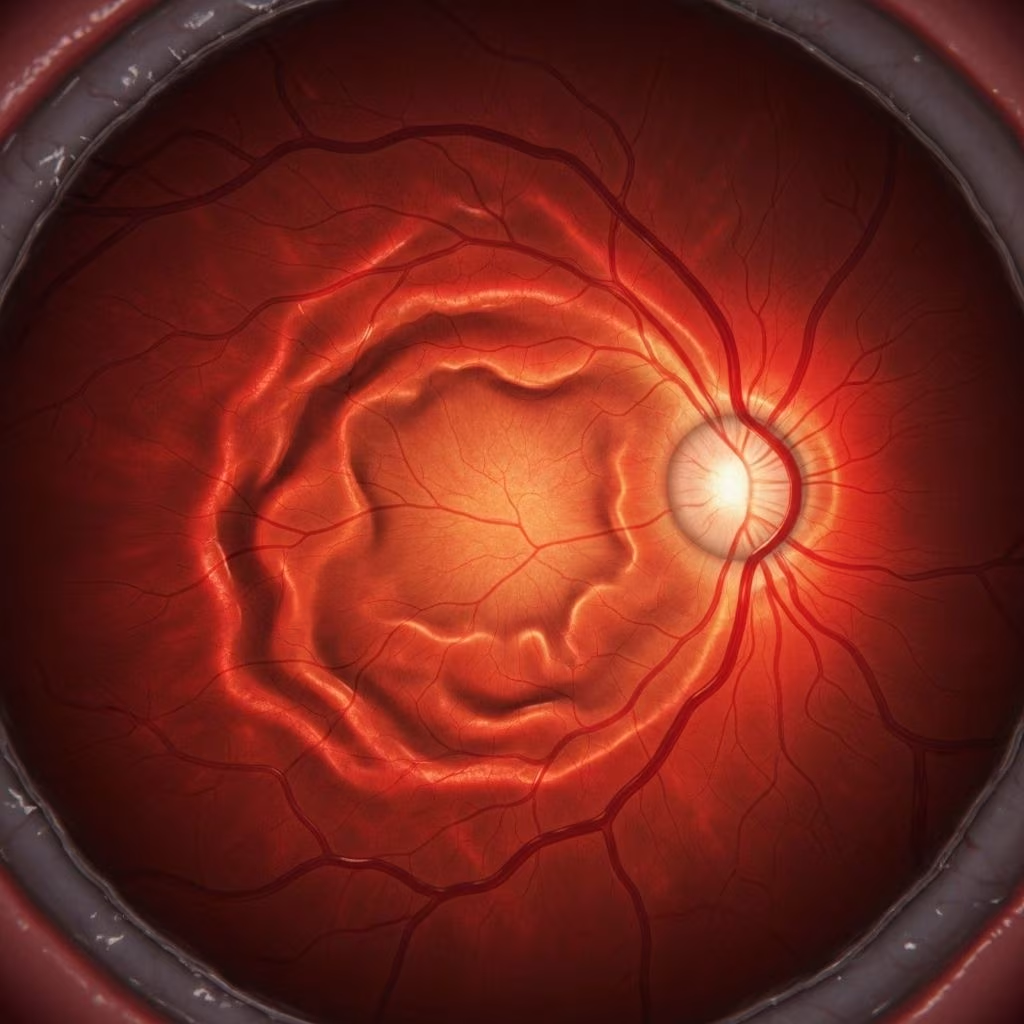
A wrinkled retina—which is medically known as macular pucker—is a condition characterized by the formation of fine wrinkles or a thin layer of scar tissue on the macula, the central part of the retina. This delicate area is crucial for central vision and enables detailed tasks such as reading and driving. Macular pucker is considered rare, impacting the retina’s ability to lie flat against the back of the eye and significantly affecting visual clarity and central vision.
Key Facts About the Retina and Macula
- The retina is the light-sensitive tissue lining the back of the eye, responsible for transmitting images to the brain.
- The macula sits at the center of the retina, enabling sharp, central vision essential for recognizing fine details.
- A healthy macula needs to remain flat; when it develops wrinkles or puckers, it impairs central vision.
Causes of Wrinkled Retina
The exact cause of wrinkled retina remains uncertain, but several contributing factors are widely recognized. The condition primarily affects older adults, with age-related changes in the vitreous – the gel-like substance filling most of the eye – playing a pivotal role.
- Age-related vitreous changes: As people age, the vitreous shrinks and may separate from the retina. Usually, this process is benign, but sometimes a portion of the vitreous remains attached, forming a membrane that tugs on the macula, causing wrinkles.
- Scar tissue formation: The scar tissue, called epiretinal membrane (ERM), can develop following minor retinal injuries or inflammation.
- Other causes:
- Eye surgeries (such as retinal or cataract procedures)
- Eye inflammation (due to infection or autoimmune disorders)
Symptoms of a Wrinkled Retina
Symptoms range widely from mild to severe. Many individuals may experience no noticeable signs, while others face significant visual disruptions.
- Blurry or distorted vision, especially while reading or driving
- Wavy or bent lines (straight lines appear distorted)
- Difficulty discerning fine details (reduced central visual acuity)
- Dark spots or areas of partial vision loss in severe cases
These symptoms tend to progress slowly, and in most cases, daily activities remain manageable. However, severe wrinkling can diminish vision to the level defined as legal blindness, but total blindness is exceedingly rare.
Risk Factors
- Increasing age (particularly over 50 years)
- History of eye injury
- Anterior or posterior eye surgery
- Inflammatory eye conditions (such as uveitis)
- Retinal vascular disorders
- Retinal tears or detachment
Diagnosis
Proper diagnosis is essential to differentiate wrinkled retina from other retinal diseases and to assess severity. Eye specialists use several methods:
- Comprehensive dilated eye exam: The doctor examines the retina and macula for wrinkles or abnormal membranes using special lenses and microscopes.
- Optical Coherence Tomography (OCT): A non-invasive imaging technique that maps the layers of the retina, highlighting areas of thickening or wrinkling.
- Fluorescein angiogram: This test assesses blood vessel leakage in the retina, which can indicate macular edema (more serious swelling due to fluid leakage).
| Diagnosis Method | Purpose | Advantages |
|---|---|---|
| Eye Exam | Visual assessment of macula and retina | Quick, painless, widely available |
| OCT Scan | Detailed cross-section imaging | Detects subtle wrinkling and thickness |
| Fluorescein Angiogram | Detects fluid leakage or macular edema | Identifies severity, guides treatment |
Treatment Options
Treatment for wrinkled retina depends on how much the condition interferes with daily activities and the presence of other complications. Mild cases often need no intervention beyond regular monitoring, while more severe cases may require surgery.
Non-Surgical Management
- Observation: Most patients are monitored without immediate treatment if vision is not severely affected. The condition tends to be stable or progress very slowly.
- Non-invasive therapies: Managing associated eye inflammation or optimizing visual function with corrective lenses.
Surgical Treatment
- Vitrectomy with Membrane Peeling: This is the primary surgical option. The surgeon removes the vitreous gel and carefully peels away the epiretinal membrane to restore the macula’s flat surface.
- Internal Limiting Membrane (ILM) Peeling: Sometimes performed during vitrectomy to further reduce scar tissue and prevent recurrence.
Outcomes of Surgery: Most patients experience improvement in visual clarity, although full restoration of central vision is not guaranteed. Recovery may take weeks to months, and complications like infection or retinal detachment are rare but possible.
Recovery and Prognosis
Most patients recover well following surgery, with gradual improvement in vision. The risk of blindness from wrinkled retina is extremely low, and serious vision loss affects only a minority of patients. In mild cases, vision remains stable without worsening.
- Postoperative care includes regular eye exams, visual acuity monitoring, and prompt reporting of new symptoms (such as flashes or sudden visual changes).
- Long-term outlook: Wrinkled retina is typically a slow-progressing condition. Bilateral cases (where both eyes are involved) are rare—about 10%—and one eye is usually more affected than the other.
Complications and Related Conditions
- Macular edema: Fluid leakage causing swelling and greater risk of visual decline.
- Progressive membrane thickening: Leading to increased wrinkling and sometimes blind spots.
- Retinal detachment: Rare, but possible with extensive scarring.
Prevention
Because most cases occur without symptoms or warning, complete prevention is difficult. However, the following steps can help minimize risk:
- Get regular eye exams, especially after age 50.
- Report new visual symptoms promptly.
- Manage underlying eye conditions or systemic diseases (e.g., diabetes).
- Avoid eye injuries by using protective eyewear during risky activities.
Frequently Asked Questions (FAQs)
Q: Is a wrinkled retina the same as macular degeneration?
A: No, macular pucker (wrinkled retina) and macular degeneration are different conditions. Macular pucker is caused by the formation of a membrane on the retina, while macular degeneration involves deterioration of the macular tissue itself.
Q: Can wrinkled retina be reversed?
A: Wrinkling caused by epiretinal membrane can often be improved—though not completely reversed—through vitrectomy and membrane peeling. Visual recovery depends on the extent of macular damage.
Q: Will I lose my sight completely if I have a wrinkled retina?
A: Total blindness is extremely rare. Most cases result only in mild to moderate vision impairment. Prompt diagnosis and appropriate management can preserve much of your vision.
Q: Is the condition hereditary?
A: Most cases are not hereditary and seem largely related to aging, trauma, or inflammation.
Q: Which eye is likely to be affected?
A: Most people develop the condition in one eye, with about 10% experiencing bilateral involvement. Usually, one eye is more affected than the other.
Q: How long does recovery take after surgery?
A: Vision typically improves gradually over several months after vitrectomy or membrane peeling. Multiple follow-up visits may be needed to monitor progress.
Takeaway
Wrinkled retina (macular pucker) is an uncommon but impactful eye condition linked mostly to aging and changes in the vitreous gel. Symptoms often develop slowly and may be mild, but some cases result in significant visual distortion. Early detection and proper management—including surgery when necessary—can help preserve central vision and maintain quality of life. If you experience wavy or blurry vision, consult an eye specialist promptly for an accurate diagnosis and individualized treatment options.
References
- https://www.eyespecialist.com/retina-tampa/wrinkled-retina/
- https://www.healthline.com/health/eye-health/wrinkled-retina
- https://piemagazine.org/a-wrinkle-in-your-retina-and-macula/
- https://pmc.ncbi.nlm.nih.gov/articles/PMC8297538/
- https://www.healthline.com/health/eye-health/epiretinal-membrane
- https://www.brightfocus.org/resource/macular-pucker/
- https://www.ncbi.nlm.nih.gov/books/NBK560703/
- https://www.mayoclinic.org/diseases-conditions/retinal-diseases/symptoms-causes/syc-20355825