


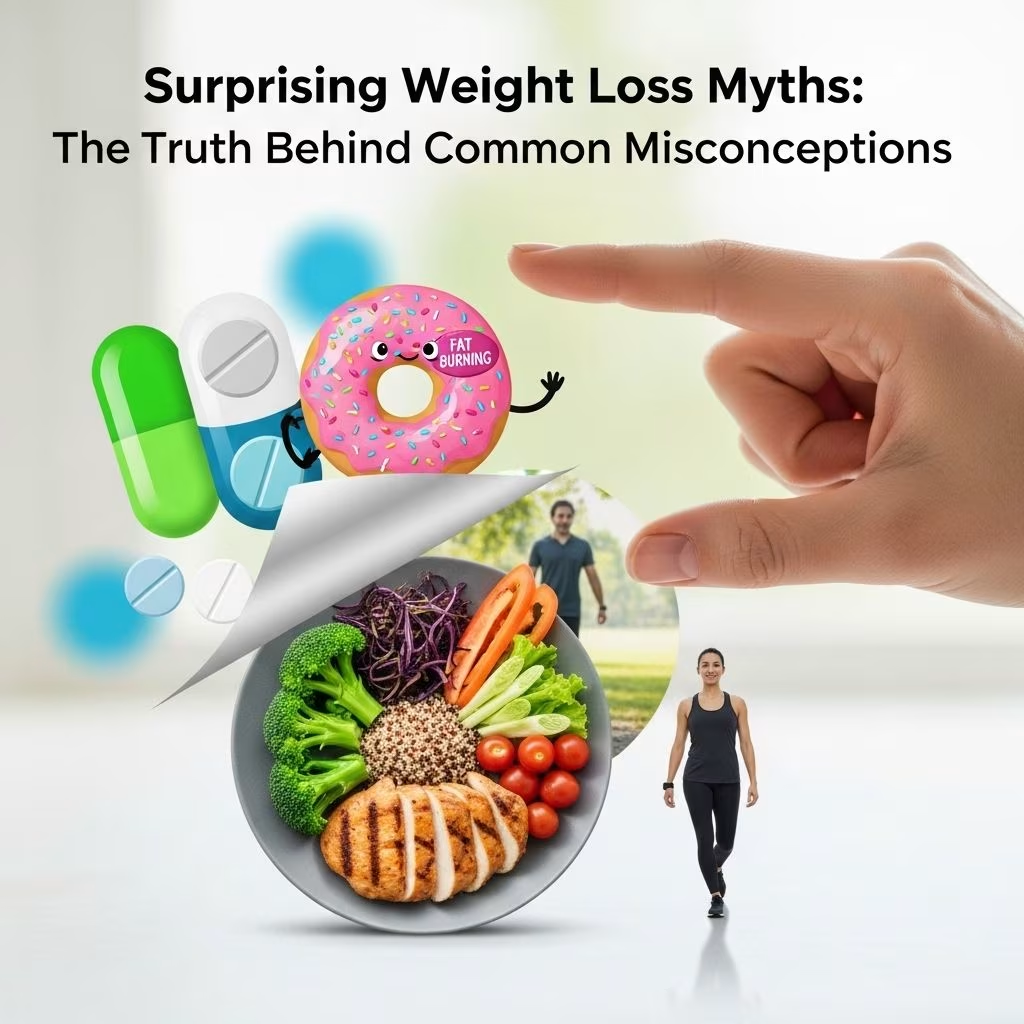
Surprising Weight Loss Myths: The Truth Behind Common Misconceptions
Weight loss journeys are often complicated not just by what’s on your plate, but by the avalanche of advice, rumors, and misleading beliefs circulating in media, wellness circles, and even among healthcare professionals. These persistent misconceptions can sabotage your progress, undermine motivation, and even harm your health. This article exposes the most common weight loss myths, highlights what science really says, and offers practical tips to help you lose weight intelligently and confidently.
Myth 1: Eating Breakfast Is Essential for Weight Loss
For decades, ‘don’t skip breakfast’ has been treated as gospel for anyone aiming to slim down. Countless studies seemingly confirmed that breakfast eaters were more successful at losing weight. However, many of these studies were funded by cereal and breakfast food manufacturers, raising questions about bias in the findings.
Recent research with hundreds of participants over several months found no significant difference in weight loss between breakfast eaters and skippers. Skipping breakfast doesn’t necessarily lower metabolism or cause you to gain weight.
- Tip: If you’re not a breakfast person, don’t force it. But keep a healthy snack handy for mid-morning hunger to avoid making impulsive, unhealthy choices.
- Focus on real hunger cues rather than routine or cultural expectations.
Myth 2: You Can Lose Weight Eating Whatever Foods You Like, As Long as You Watch Calories
Counting calories is only part of the equation. The quality of your calories matters just as much as the quantity. Highly processed foods, even if low-calorie, can interfere with hormones that govern hunger and fullness, and may lead to overeating later.
Whole foods rich in fiber, lean proteins, and healthy fats support satiety, better blood sugar control, and overall well-being.
- Choosing real, nutrient-dense foods (vegetables, lean protein, whole grains) maximizes health and satiety.
- Minimizing processed snacks and artificial sweeteners helps avoid cravings and blood sugar crashes.
Myth 3: You Burn a Lot of Calories Exercising, So You Can Eat More
This myth leads to a phenomenon called the halo effect: after exercising, we feel justified in rewarding ourselves with extra food or treats. While physical activity does burn calories and is essential for health, it is not a license to neglect dietary choices. Most people overestimate the calories burned during exercise and underestimate the calories consumed afterward, stalling or reversing progress.
- Track post-exercise snacks thoughtfully and hydrate adequately: thirst is often mistaken for hunger.
- Consider a healthy, protein-rich snack if genuinely hungry after workouts.
- The main driver of weight loss remains eating less food overall, not simply burning off what you eat.
Myth 4: You Should Eat the Same Number of Calories Every Day to Lose Weight
Many people believe that you need to eat a consistent number of calories every day to lose weight. However, intermittent fasting and calorie cycling strategies have shown that varying caloric intake can be equally effective for weight loss and may even help reset hunger cues. Participants in studies often do not overeat on non-fasting days, making these approaches sustainable for some individuals.
- If you’re interested in intermittent fasting, try restricting calories only one day per week—or start with a very simple protocol and adapt.
- Listen to your hunger and fullness cues rather than rigid calorie totals.
- More research is underway, but for now, calorie variation can work for those who find daily restriction difficult.
Myth 5: Strength Training Will ‘Bulk You Up’
Many, especially women, avoid weights out of fear of getting ‘bulky.’ In reality, muscle is denser than fat and takes up less space. Strength training improves body composition, increases metabolic rate (even at rest), and results in a firmer, more toned appearance. According to research, lifting heavy weights as few as 3-6 times per set can increase metabolic rate by up to 8% overnight—translating to meaningful fat loss over months or years.
- Building muscle helps shape the body and enhances metabolism.
- Don’t fear heavier weights: proper guidance and progression ensure safety and results.
- Strength training is vital for bone health, injury prevention, and long-term fat loss.
Myth 6: You Can Out-Exercise a Poor Diet
It’s tempting to believe that hours spent working out can compensate for poor dietary choices. However, exercise is not a substitute for a healthy, balanced diet. Excess exercise without proper nutrition can lead to fatigue, injury, and a lack of progress. Most importantly, dietary changes account for the majority of weight loss results—even among athletes.
- Maintain a balanced approach: prioritize whole foods and regular physical activity.
- Aim for consistency rather than perfection in both eating and exercise.
Myth 7: Health and Fitness Mean Always Having a ‘Normal’ BMI
Body Mass Index (BMI) has long been used as the primary measure of healthy weight. However, BMI misses nuances: muscle weighs more than fat, so individuals who gain muscle and lose fat may actually see an increase on the scale or BMI calculation—even as their health improves.
Research reveals that people can remain healthy across a wide range of body sizes and shapes. BMI also fails to account for genetics, bone structure, and ethnic differences.
The BMI thresholds were changed in 1998, partly due to influence from pharmaceutical companies selling weight loss drugs, not purely medical consensus.
- Focus on overall health, energy, fitness, and well-being—not just the number on a scale or chart.
- Measure progress using waist circumference, strength, activity levels, and how you feel.
- BMI is one data point, but not the only—or best—indicator of health.
Myth 8: Eating Healthy and Exercising Always Lowers Your BMI
While healthy eating and exercise often contribute to lower weight and BMI, this isn’t universally true. Adding muscle through exercise and healthy habits can result in weight gain—while improving health markers and body composition. Doctors may sometimes wrongly stigmatize patients who are heavier, regardless of their healthy behaviors.
- You can improve fitness and health markers independently of your BMI.
- Judge health based on labs, fitness, and how you feel—not just BMI.
Myth 9: Low-Fat or Fat-Free Foods Automatically Help You Lose Weight
Many fat-free packaged foods compensate for the lack of fat by adding sugars, artificial sweeteners, or other additives—all of which can undermine weight loss efforts. Natural fats trigger satiety and help the body absorb key nutrients. Instead of fearing fat, choose healthy sources such as avocado, nuts, seeds, and fatty fish.
- Avoid foods labeled ‘low-fat’ or ‘fat-free’ if they are highly processed or contain added sugars.
- Healthy fats support fullness and long-term weight management.
Myth 10: Extreme Diets Guarantee Rapid Weight Loss
Fad diets and severe restriction promise quick results, but nearly always backfire. Rapid weight loss is typically unsustainable, leading to binge eating, metabolic slowdown, muscle loss, and regaining weight. The key is small, steady changes that fit your lifestyle for the long run.
- Focus on healthy habits, mindful eating, and gradual progress.
- Sustainable weight loss is built on realistic approaches—no shortcuts.
Quick Reference: Key Weight Loss Myths and Realities
| Myth | Truth |
|---|---|
| Breakfast is essential | Not necessary; skip if not hungry |
| Calories are all that matter | Food quality, fiber, protein matter too |
| Exercise allows unlimited eating | Weight loss depends on nutrition first |
| Same calories daily required | Calorie cycling/intermittent fasting can work |
| Strength training bulks you | Firms/tightens; boosts metabolism |
Frequently Asked Questions (FAQs)
Q: Is skipping breakfast unhealthy for everyone?
A: No. Recent studies show that skipping breakfast doesn’t hinder weight loss or metabolism for most people, unless it leads to excessive hunger and overeating later in the day.
Q: Will lifting weights make women bulky?
A: No. Women typically lack the testosterone needed to gain significant muscle mass. Strength training leads to a leaner, firmer physique and increases calorie burn.
Q: Can I rely exclusively on exercise for weight loss?
A: No. Exercise helps weight loss, but a healthy diet is far more crucial. Many people overestimate calories burned and use exercise to justify unhealthy eating.
Q: Are BMI charts the best way to measure health?
A: Not always. BMI can be misleading; muscle mass, bone density, and fitness matter more for health. Use a mix of measures to track your progress.
Q: Do low-fat or fat-free foods accelerate weight loss?
A: Not necessarily. Many processed fat-free foods contain added sugars and chemicals, which may hinder weight loss efforts. Focus on whole foods and healthy fats for lasting results.
Conclusion: Moving Beyond Myths for Real Weight Loss
Understanding the scientific truth behind weight loss myths transforms not only your weight loss results, but your lifelong relationship with food and fitness. Ditching popular misconceptions helps you focus on what works: awareness, consistency, and self-compassion through every step. Choose evidence-based strategies, stay flexible, and remember: success is found in small, lasting changes made day by day.
References
- https://www.prevention.com/weight-loss/a20467668/5-myths-about-weight-loss-that-are-holding-you-back/
- https://www.prevention.com/weight-loss/a20478047/10-diet-and-fitness-rumors-that-slow-weight-loss/
- https://www.prevention.com/health/g20481372/5-bmi-myths-you-need-to-stop-believing/
- https://www.prevention.com/weight-loss/g20514096/metabolic-myths-holding-you-back-from-fat-loss/
- https://www.prevention.com/weight-loss/a20471253/surprising-weight-loss-myths/
- https://www.prevention.com/weight-loss/a30393486/weight-loss-surgery-myths/
- https://www.prevention.com/weight-loss/a30188568/lose-weight-without-exercise-0/
- https://www.prevention.com
- https://www.prevention.com/food-nutrition/a62823922/intermittent-fasting-myths/


