


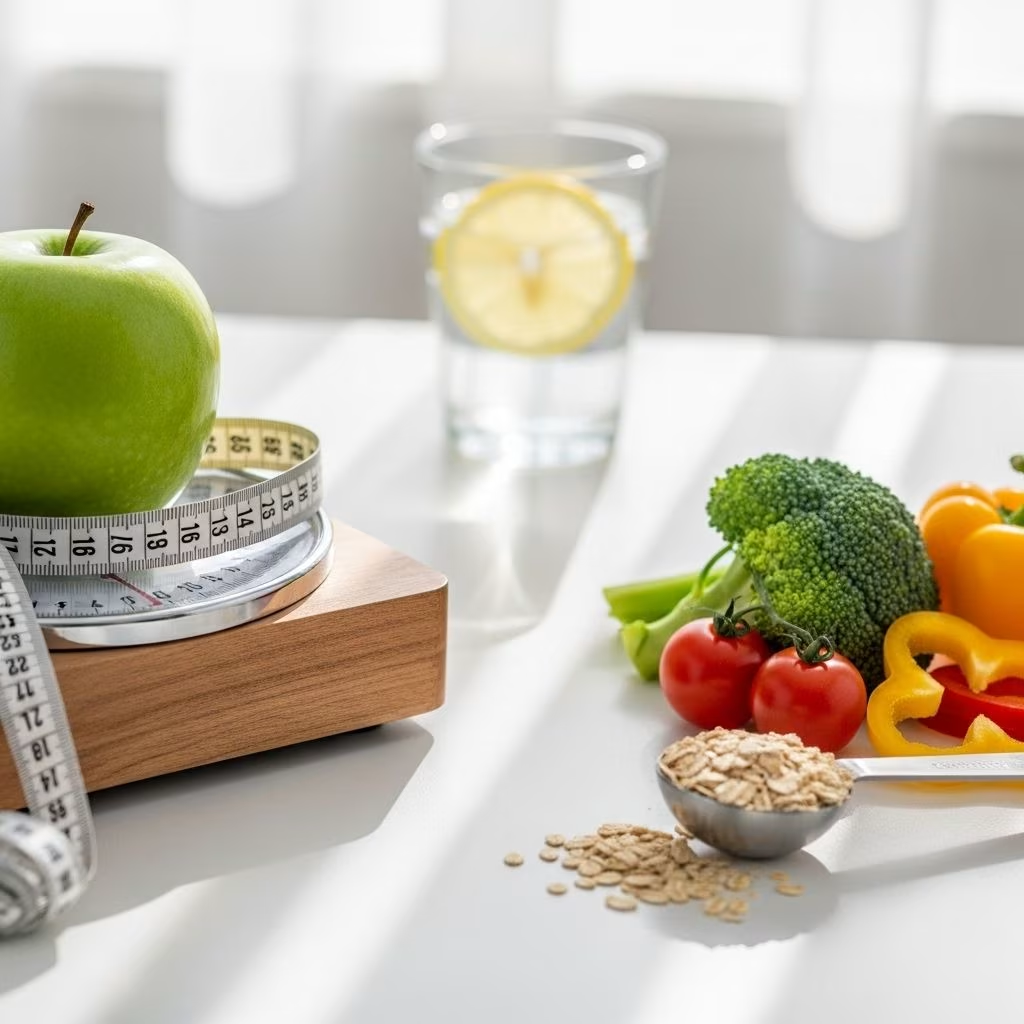
Calories and Diets: What You Really Need to Know
When it comes to weight loss and healthy eating, understanding calories is crucial. For decades, diets have centered on counting and cutting calories, but recent research and expert advice reveal there’s far more to successful, long-term weight control than just numbers. Whether you’re trying to lose weight, maintain your current size, or simply eat more mindfully, knowing the facts about calories—and their role in your body—can help you make smarter choices.
Calories: The Basics
Calories are a measure of energy. Everything you eat and drink (except water) contains calories that your body uses for every function—from breathing and thinking to running and lifting groceries. If you eat more calories than your body burns, you gain weight; eat fewer than you burn, and you lose weight. But the real picture is more complex.
How Are Calories Determined?
- Carbohydrates: 4 calories per gram
- Protein: 4 calories per gram
- Fat: 9 calories per gram
- Alcohol: 7 calories per gram
Manufacturers estimate calories using these values plus standardized tests, but actual absorption varies between foods and people.
Why Calories Matter (and When They Don’t)
For basic weight control, calories are king. If your body burns 2,000 calories a day, and you eat 2,500, you’ll likely gain weight. That’s the simple math—except real life, and biology, are not that simple.
How Many Calories Do You Need?
The Dietary Guidelines for Americans provide daily calorie needs by age, sex, and activity level. For example:
| Group | Sedentary | Active |
|---|---|---|
| Women | 1,600-2,000 | 2,000-2,400 |
| Men | 2,000-2,400 | 2,400-3,000 |
Your unique needs depend on genetics, age, weight, muscle mass, hormones, and lifestyle. For example, active women over 50 need about 1,800-2,200 calories daily. Men, particularly those active or younger, run higher.
To lose weight, experts commonly recommend reducing daily intake by 500–750 calories, which translates to roughly one to one-and-a-half pounds lost per week. However, crashing too low can backfire, slowing metabolism and risking nutrient deficiencies.
Why Everyone’s Calorie Needs Are Different
While calorie guidelines are helpful, they don’t tell the whole story. There are huge individual differences in calories burned due to:
- Muscle mass: Muscle burns more calories than fat, even at rest.
- Age: Metabolism slows with age, so older adults generally need fewer calories.
- Genetics: Some bodies are simply more efficient at conserving or burning energy.
- Hormones & Sleep: Stress, lack of sleep, and hormonal changes can profoundly affect energy use and hunger.
- Physical activity: More active people burn more calories.
How to Estimate Your Needs
While metabolic testing is the gold standard, most people use online calculators based on height, weight, age, and activity level. Tools like the NIH Body Weight Planner provide a personalized estimate, though these are only estimates.
The Problem with Focusing Only on Calories
Many diets and weight loss plans emphasize ‘counting calories’ as the path to results. But research and nutritionists increasingly argue that where your calories come from matters even more. Foods affect the body differently depending on their nutrient content, digestibility, and even the time of day you eat them.
Why Calorie Counting Can Backfire
- Overlooked nutrients: Many low-cal or fad diets neglect vitamins, minerals, and macronutrient needs.
- Hunger and deprivation: Strict limits may promote cravings or unhealthy obsession with food.
- Ignoring food quality: You could eat nothing but 1,200 calories of candy and chips—potentially losing weight, but endangering health, mood, and muscle mass.
- Body adapts: Extreme reduction slows metabolism, leading to weight loss plateaus.
- Long-term sustainability: Few people can (or want to) track calories forever.
Nutrition Quality Over Numbers: What Matters Most
Food is not just fuel—it’s information for your body. Certain foods are more filling, more nutritious, and help you maintain energy better than others. Modern research and leading dietitians advocate focusing on the quality of your calories, not just the quantity.
Best Practices for Smarter Eating
- Eat more whole foods: Vegetables, fruits, lean proteins, beans, nuts, seeds, and whole grains.
- Include healthy fats: Avocado, olive oil, fatty fish, and nuts help with fullness and brain health.
- Limit highly processed foods with added sugars, refined flours, and unhealthy fats, as they often deliver lots of calories with little nutrition.
- Choose high-fiber foods such as beans and whole grains, which slow digestion and help control appetite.
- Stay hydrated: Often, thirst can masquerade as hunger, leading to extra calorie intake.
Sample Healthy Plate
- Half the plate: Non-starchy vegetables (broccoli, leafy greens, peppers)
- Quarter of the plate: Lean proteins (chicken, tofu, beans, fish)
- Quarter of the plate: Whole grains or starchy vegetables (brown rice, quinoa, sweet potato)
- Add healthy fats: A drizzle of olive oil or a few nuts
Practical Strategies for Smarter Eating
Beyond counting calories, consider building habits that help you naturally eat fewer, more nourishing calories:
- Meal planning: Preparing meals and snacks ahead minimizes impulsive choices.
- Keep healthy foods visible: Place fruits and prepared vegetables at eye level in the fridge or counter.
- Avoid eating from packages: Serve single portions on a plate to prevent mindless snacking.
- Eat slowly: It takes about 20 minutes for your brain to register fullness, so slow down and savor.
- Mind meal timing: Regular meals help regulate hunger and metabolism, while erratic schedules can trigger overeating.
Making Calorie Knowledge Work for You
Understanding calories provides a framework for eating, but letting go of the ‘numbers game’ in favor of a focus on nutrition may be more sustainable for most people.
Portion Control and Mindful Eating
One of the most effective and underrated tools for healthy eating is learning portion control. Even healthy foods can push you over your needs if eaten in large amounts. Consider these tips:
- Use smaller plates and bowls to visually cue yourself to eat less.
- Fill half your plate with veggies at every meal to add volume and fiber with low calories.
- Read labels, paying special attention to serving sizes—they may be smaller than you think.
- Practice mindful eating by removing distractions (screens, work) at meals and paying attention to smell, taste, and fullness signals.
- Learn to spot hidden calories: Dressings, sauces, oils, and beverages can significantly increase intake.
Portion Size Examples
- Protein (meat/fish): Deck of cards (3 oz)
- Cooked grains: Cupped palm (half cup)
- Nuts/Seeds: Golf ball (one ounce)
- Cheese: Four dice (one ounce)
- Fruit: Tennis ball (medium-sized fruit)
Frequently Asked Questions (FAQs)
Q: Does eating fewer calories guarantee weight loss?
A: Not always. While a calorie deficit is fundamental, the quality of your calories, how your body processes food, hormonal health, sleep, stress, and physical activity all play important roles. A balanced approach is usually more effective—and sustainable—than extreme restriction.
Q: How low can I safely go with calories?
A: Most experts recommend not going below 1,200 calories per day for women or 1,500 for men unless supervised by a doctor. Extremely low-calorie diets can slow your metabolism, cause nutrient deficiencies, and make it harder to keep weight off long-term.
Q: Do all calories affect my body the same way?
A: No. Whole foods with fiber, protein, and healthy fats increase satiety and require more effort to digest, helping regulate appetite and metabolism. Highly processed foods, even at the same calorie count, may be absorbed quickly and trigger overeating.
Q: Should I count calories forever?
A: Calorie tracking can be useful as a learning tool, but is rarely necessary as a lifelong practice. As you gain familiarity with portions and food choices, most people benefit more from focusing on overall diet quality and mindful eating.
Q: Can exercise alone help me lose weight without changing calories?
A: While exercise helps burn calories and is vital for health, it’s harder to out-exercise a poor diet. For best results, combine increased movement with more nutritious food choices and portion awareness.
Key Takeaways
- Calories count, but so does quality: Focus on nutrient-rich whole foods as much as numbers.
- Everyone’s needs are different: There’s no universally perfect calorie amount.
- Mindful eating and portion control are just as important as calorie tracking for lasting results.
- Sustainable weight loss is about healthy habits, not quick fixes or rigid numbers.
Additional Resources
- National Institutes of Health Body Weight Planner (personalized calorie calculator)
- Healthier meal planning tools and apps (MyFitnessPal, FatSecret, Control My Weight)
- Consult a registered dietitian or nutritionist for individualized guidance
Understanding calories is just one piece of the journey toward better health. Prioritize nourishment, balance, and self-compassion for results you can maintain for life.
References
- https://www.prevention.com/weight-loss/a20456360/400-calorie-meals-how-to-get-started/
- https://www.prevention.com/weight-loss/diets/a38916282/calorie-deficit-diet/
- https://www.prevention.com/weight-loss/a28400225/how-many-calories-to-lose-weight/
- https://www.prevention.com/weight-loss/diets/a44373604/what-is-a-low-calorie-diet/
- https://www.prevention.com/weight-loss/diets/
- https://www.prevention.com/weight-loss/diets/a60578947/how-to-lose-weight-fast-safely/
- https://www.prevention.com/food-nutrition/g41055022/low-calorie-meals/
- https://www.prevention.com/weight-loss/
- https://www.prevention.com
- https://www.prevention.com/food-nutrition/g20428211/25-ridiculously-low-calorie-foods/


