


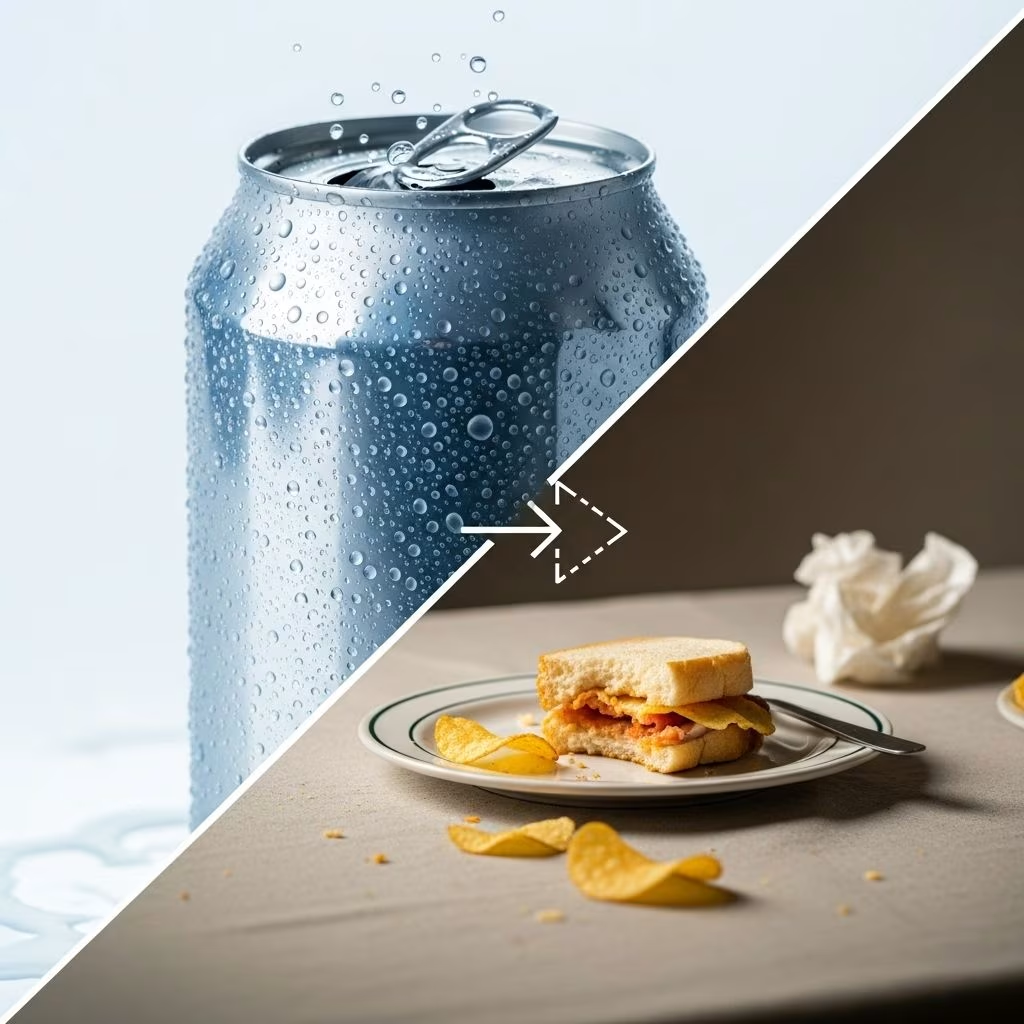
Diet Soda and Overeating: What Science Really Says
For years, diet sodas have attracted controversy and curiosity alike. Marketed as a calorie-free way to enjoy sweet beverages, they appeal to millions hoping to manage weight or reduce sugar intake. But a growing body of research, media headlines, and popular beliefs suggest a glaring paradox: could diet sodas actually make us eat more and gain weight? This article examines the central question—are artificially sweetened drinks, like diet soda, truly linked to overeating or weight gain? We break down current studies, expert opinions, potential mechanisms, and what it all means for your daily drink choices.
Why Is Diet Soda So Popular?
Diet sodas have become a staple for many people watching their calories, often seen as a guilt-free alternative to sugary drinks. Major soda brands offer diet versions of their flagship products, leading consumers to believe that switching to zero-calorie soda should help with weight management. But the real impact of these drinks on appetite and eating patterns remains debated.
- Zero calories, same taste: Diet sodas typically use artificial sweeteners—such as aspartame, sucralose, or saccharin—to replicate the sweetness of sugar without the calories.
- Widely available and promoted: Advertised heavily as a smart choice for dieters and those concerned about obesity or diabetes.
- Social & cultural influence: Many people drink diet soda during meals, especially when indulging in higher-calorie foods, based on the belief it will “cancel out” the additional calories.
What Studies Have Discovered: Diet Soda and Food Intake
Recent research has raised challenging questions about whether consuming diet soda might actually increase cravings and overall food intake. Several controlled and observational studies examine the relationship between artificially sweetened beverages and hunger, satiety, and eating behavior.
The Paradox: Why Would Diet Soda Make You Eat More?
The central hypothesis discussed in many studies and news articles is based on the idea that artificial sweeteners “trick” the brain and disrupt normal signals of fullness. The sensation of sweetness, usually a cue for incoming calories, isn’t matched by actual energy in the case of diet sodas. This may lead to altered eating patterns later in the day.
- Brain & Hormones: Researchers hypothesize that consuming sweet-tasting but non-caloric drinks may impair the body’s ability to accurately register calorie intake and satiety.
- Appetite & Cravings: Some evidence suggests artificial sweeteners can stimulate appetite, increasing the likelihood of reaching for additional snacks or indulging in larger meal portions.
Key Experimental Findings
A growing number of both animal and human studies have investigated the effects of artificially sweetened beverages on hunger and subsequent calorie consumption.
- Short-term appetite changes: Some trials find that people who drink diet soda report modest increases in hunger or desire for sweet foods, especially soon after consumption.
- Mixed results on food intake: In certain controlled settings, people who drink diet sodas eat more at subsequent meals, though not always to a statistically significant degree.
- Long-term effects are unclear: Most studies focus on short-term outcomes, making it difficult to draw conclusions about chronic diet soda consumption and weight gain.
Notable Study: Appetite and Calorie Compensation
In a referenced experiment, participants who consumed foods and drinks sweetened with artificial sweeteners did not compensate by eating fewer calories later in the day, resulting in a net increase in total calorie intake. This is in contrast to consumption of real sugar, which normally leads people to naturally decrease subsequent calorie intake due to greater feelings of satiety.
Observational Studies: Long-Term Associations
Observational studies provide another lens for exploring the link between diet soda consumption and body weight. While they can’t prove causation, large-scale tracking studies repeatedly find that regular diet soda drinkers are more likely to gain weight over time than those who abstain.
- San Antonio Heart Study: Followed over 5,000 adults for 7–8 years. Diet soda drinkers were more likely to become obese during the study, and those who drank more diet sodas showed greater weight gain.
- Framingham Heart Study: Tracked 9,000 middle-aged adults for four years and found similar increased risk of metabolic syndrome among both sugar-sweetened and diet soda drinkers, compared to non-soda consumers.
It’s important to note these studies are observational—meaning they can demonstrate a link, but not prove that drinking diet soda directly causes weight gain. Other factors, such as dietary habits and health behaviors, could play a major role.
Possible Explanations: Reverse Causality & Confounding
Several explanations have been suggested for these associations:
- Reverse causality: Individuals who gain weight or have concerns about weight may opt for diet soda as a response, not a cause, of their weight gain.
- Poor dietary patterns: Diet soda drinkers may also be more likely to consume calorie-dense foods—sometimes jokingly known as the “Big Mac and Diet Coke” mentality.
- Other lifestyle habits: Less physical activity, higher baseline risk of weight gain, and existing health conditions could contribute to observed weight changes.
The Role of Artificial Sweeteners in Appetite and Metabolism
To understand the controversy around diet soda, it’s essential to look at how artificial sweeteners might interact with our physiology:
- Taste without calories: Artificial sweeteners activate sweet taste receptors in the mouth but provide no energy, which may disrupt metabolism or appetite regulation.
- Potential hormonal responses: Some studies suggest sweeteners may influence hormones like insulin or ghrelin, which affect hunger and fat storage. However, results remain inconsistent across studies.
The Psychology of Diet Soda Consumption
Beyond biology, psychology plays a critical role in how people use diet sodas:
- Eating disorder associations: Research indicates excessive diet soda intake is especially common among individuals with eating disorders, notably bulimia nervosa. This appears to be related both to increased appetitive drive (especially a strong desire to eat) and heightened concern about weight.
- Reward and restraint: For some, diet soda offers a way to experience sweet flavors while believing they are exercising dietary restraint. But in individuals with a high drive for thinness and a strong appetite, this can lead to significant overconsumption.
Is Diet Soda a Friend or Foe for Weight Loss?
Not all evidence paints diet sodas in a negative light. Some research, including randomized controlled trials (which aim to eliminate many confounding factors), finds that substituting diet soda for regular sugary beverages may aid weight loss, at least in the short term:
- 2014 Controlled Study: In a 12-week trial, overweight participants assigned to drink diet sodas lost an average of 13 pounds, compared to 9 pounds in a group assigned to only drink water (all participants were already regular diet soda consumers before the study).
- Reduced hunger: The group consuming diet soda reported less hunger compared to the water group.
However, the difference in weight loss was modest, and the long-term effects of sustained diet soda use have not been firmly established. Additionally, the study was funded by the American Beverage Association and included co-authors with industry ties, warranting careful interpretation.
Frequently Asked Questions (FAQs)
Q: Does drinking diet soda directly cause weight gain or overeating?
A: No study has conclusively proven that diet sodas directly cause weight gain or increased food intake. Most findings are observational, showing a correlation rather than causation. Other lifestyle factors may explain the association.
Q: Why do some experts think diet soda might trigger overeating?
A: Artificial sweeteners provide sweetness without calories, which may confuse the body’s hunger and fullness signals. This could potentially stimulate appetite or increase cravings for sweet, calorie-dense foods, though the evidence is mixed.
Q: Is switching from regular soda to diet soda healthier?
A: Replacing sugary drinks with artificially sweetened beverages may reduce calorie intake in the short term and support weight loss for some people, but it’s unclear if this strategy is effective—or safe—for long-term health. Water remains the healthiest, calorie-free choice.
Q: Who is most likely to consume excessive amounts of diet soda?
A: Individuals with high concerns about weight, high appetitive drive (strong desire to eat), and those with certain eating disorders, particularly bulimia nervosa, are more likely to consume higher-than-average amounts of diet soda.
Q: Are some artificial sweeteners worse than others?
A: The scientific community is still debating whether specific sweeteners (aspartame, sucralose, saccharin, etc.) have different effects on appetite and metabolism. Current research is inconclusive.
Should You Worry About Your Diet Soda Consumption?
Given all of the above, should you stop drinking diet soda?
- Moderation is key: There’s no definitive evidence that occasional diet soda consumption is harmful for most people. But using it as a daily habit or to justify unhealthy food choices (“diet soda with a supersized meal”) may undermine the intended calorie savings.
- Watch total dietary patterns: Consider not just what you drink, but overall eating patterns. A diet high in processed foods, whether accompanied by diet beverages or not, remains a risk factor for weight gain and metabolic disease.
- Listen to your body: If you find that drinking diet soda makes you feel hungrier or tempts you to overeat, consider reducing or replacing it with water, seltzer, or unsweetened tea.
Expert Tips: Managing Sweet Beverage Cravings
- Substitute with flavored water (use fresh fruit or herbs) for a satisfying and low-calorie alternative.
- If you choose diet soda, keep intake moderate—one can per day or less is a reasonable guideline for most healthy adults.
- Avoid pairing diet soda with high-calorie foods, which may blunt the intended reduction in energy intake.
- Pay attention to your own hunger and fullness signals. Monitor whether you eat more after consuming diet beverages.
Table: Summary of Research Findings on Diet Soda and Appetite
| Study Type | Key Findings | Limitations |
|---|---|---|
| Short-term experimental | May increase short-term appetite or cravings; inconsistent effects on actual calorie intake. | Small sample sizes; results may not apply to long-term consumption. |
| Observational | Diet soda drinkers more likely to gain weight over several years. | Cannot prove causation; confounding lifestyle factors. |
| Randomized controlled trial (2014) | Diet soda group lost slightly more weight than water group over 12 weeks. | Participants were all pre-existing diet soda drinkers; industry-funded. |
| Eating disorder studies | Individuals with bulimia and high weight concerns consume more diet soda than average. | Limited to clinical populations; not generalizable. |
Conclusion: The Takeaway on Diet Soda and Overeating
The relationship between diet soda and overeating is complex. While some studies suggest a link between artificially sweetened drinks and increased food intake or weight gain, others find little or no effect, or even a modest benefit for weight control when switching from sugary beverages to diet soda. Psychological, behavioral, and biological factors all play a role—meaning personal response may vary.
Until clearer answers emerge, aim for moderation, focus on whole and minimally processed foods, and choose natural thirst quenchers like water or unsweetened tea most of the time. Remember, no single change—such as swapping soda for diet soda—will determine your health or weight in isolation. It’s your overall pattern that matters most.
References
- https://www.webmd.com/diet/features/diet-sodas-and-weight-gain-not-so-fast
- https://pmc.ncbi.nlm.nih.gov/articles/PMC3670085/
- https://www.aicr.org/news/water-diet-soda-and-weight-loss/
- https://www.uclahealth.org/news/article/observational-studies-shed-light-on-diet-soda-consumption
- https://www.health.harvard.edu/blog/zero-weight-loss-from-zero-calorie-drinks-say-it-aint-so-2021032222204
- https://www.uhhospitals.org/blog/articles/2024/06/think-diet-soda-is-a-healthy-choice-think-again
- https://www.mayoclinic.org/healthy-lifestyle/nutrition-and-healthy-eating/expert-answers/diet-soda/faq-20057855
- https://www.purdue.edu/newsroom/releases/2013/Q3/prof-diet-drinks-are-not-the-sweet-solution-to-fight-obesity,-health-problems.html


