


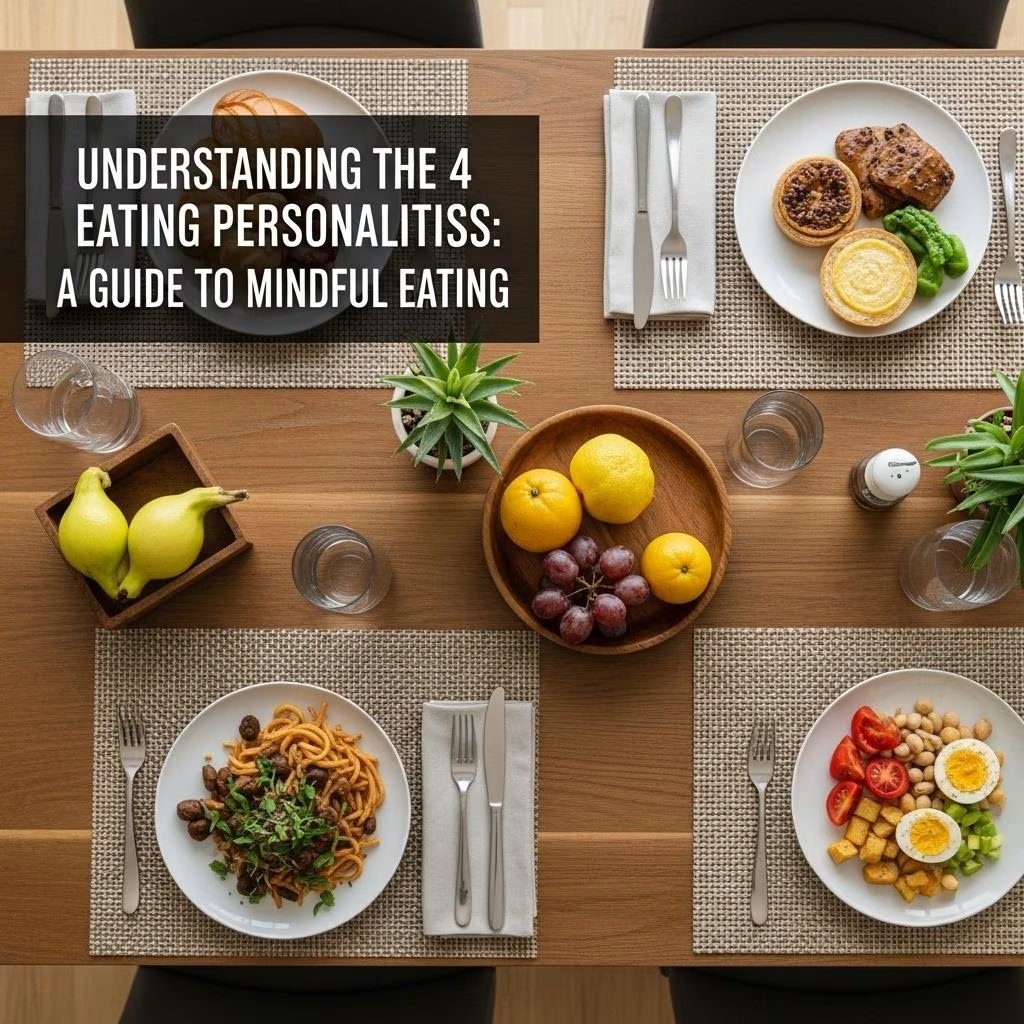
Your relationship with food is about more than just what you eat—it’s deeply connected to your thoughts, habits, emotions, and daily life. Many people struggle to lose weight or stick to dietary changes because they don’t recognize the patterns driving their food choices. By exploring eating personalities, you can gain vital insight into your food habits and take meaningful steps toward a healthier, happier relationship with eating.
What Are Eating Personalities?
Eating personalities describe distinct patterns in how people approach food and eating decisions. Recognizing your eating personality can help you identify triggers, break unhealthy cycles, and make sustainable changes. Most people exhibit traits from several eating personalities, but usually, one style is dominant.
- The Intuitive Eater
- The Professional Dieter
- The Careful Eater
- The Unconscious Eater
Let’s examine each type, their defining characteristics, and effective strategies to promote better eating habits.
The Intuitive Eater
The Intuitive Eater listens closely to internal hunger and fullness cues, eating in response to true physiological need—not external rules, restrictions, or emotions. This person’s choices are guided by body signals, satisfaction, and pleasure in eating.
- Their eating is flexible and unapologetic. They eat when hungry and stop when full.
- Avoid strict diets, calorie counting, or food ‘rules.’
- Value satisfaction, health, and enjoyment equally.
- Rarely experience guilt or conflict about food choices.
Key strengths: Intuitive eaters usually maintain healthy body weight and a balanced approach to nutrition. They display low risk for chronic overeating or food preoccupation.
Potential pitfalls: During periods of stress, routine changes, or external pressure, intuitive eaters might drift away from their natural instincts.
How to cultivate intuitive eating:
- Practice tuning into hunger and fullness rather than eating by the clock or diet plan.
- Let go of guilt or moral judgments related to food.
- Prioritize food satisfaction as much as nutrition.
- Honor your cravings in moderation—no ‘good’ or ‘bad’ foods.
The Professional Dieter
The Professional Dieter is always on some form of diet, believing that tightly controlled eating is necessary for weight management or health. This style involves frequent cycles of dieting, weight loss, regain, and often frustration or disappointment.
- Highly knowledgeable about calorie counts, points, or macros.
- Often jumps from one diet plan to another—always searching for the ‘right’ solution.
- May experience cycles: initial enthusiasm, strict adherence, eventual burnout, binging or giving up, and returning to another diet.
- Food choices are guided more by external rules than internal signals.
- Guilt and self-blame are common after perceived ‘failures.’
Key strengths: Professional dieters are goal-oriented and demonstrate strong willpower—at least temporarily. They’re often motivated by genuine health concerns.
Potential pitfalls: Rigid diets are hard to maintain for life, often triggering feelings of deprivation, preoccupation with food, and unhealthy binge/restrict cycles.
Steps to break the professional dieting cycle:
- Shift focus from perfection to progress—aim for long-term habits, not quick fixes.
- Learn to recognize physical hunger and fullness rather than relying exclusively on diet rules.
- Ignore temporary fluctuations in weight; prioritize how you feel, not just numbers.
- Seek guidance from a nutritionist to develop sustainable strategies beyond strict diets.
The Careful Eater
The Careful Eater is deeply invested in making healthy, nutritionally sound choices. This personality type is commonly focused on ingredient labels, fat grams, sugar content, and food purity. While these habits can promote health, they can also slip into obsession or anxiety about food imperfections.
- Examines nutrition labels and ingredient lists intensely.
- Avoids foods perceived as ‘unhealthy,’ ‘processed,’ or ‘fattening.’
- Tends to moralize eating—feeling good or bad based on dietary choices.
- May skip treats or social meals out of concern for purity, content, or caloric value.
- Sometimes struggles with eating guilt or anxiety if food doesn’t meet high standards.
Key strengths: Careful eaters are often genuinely committed to health and self-care. They are mindful and cautious about food intake.
Potential pitfalls: Obsessing over ingredients may sap the joy from eating, exclude variety, or foster guilt around indulgence and normal eating ‘slip-ups.’
Tips to balance careful eating:
- Adopt an ’80/20′ mindset—most choices healthy, with some flexibility for treats and social eating.
- Be wary of moral language around food (good/bad, allowed/forbidden).
- Find satisfaction in moderation and variety—not just perfection.
- Challenge food fears by occasionally including less-than-perfect foods without guilt.
The Unconscious Eater
The Unconscious Eater consumes food with little to no awareness, often while multitasking or distracted. This style can lead to overeating, missed hunger/fullness cues, and limited enjoyment of meals.
- Regularly eats while distracted (watching TV, working, driving).
- Often snacks mindlessly—hardly noticing it happened.
- Doesn’t recall what or how much was eaten.
- Rarely acknowledges actual hunger or fullness signals.
- Might only notice hunger when ravenous, then eats rapidly.
Within this personality, several subtypes emerge:
- Chaotic Unconscious Eater: Eats erratically, usually due to an overscheduled, stressful lifestyle. Skips meals, grabs convenience foods, or waits until over-hungry to eat.
- Refuse-Not Unconscious Eater: Consumes food just because it’s available—regardless of actual hunger. Often grazes without awareness.
- Waste-Not Unconscious Eater: Eats to ‘clean the plate’ or avoid wasting food, ignoring satiety cues.
- Emotional Unconscious Eater: Eats in response to emotions—stress, boredom, sadness—instead of physiological hunger. May find comfort in mindless snacking.
Key strengths: Unconscious eaters may be flexible and spontaneous but often lack mindful engagement with eating, missing out on both health and enjoyment.
Potential pitfalls: Mindless eating is a major driver of overeating, weight gain, and loss of food satisfaction. Emotional eating in particular can create a negative cycle of comfort eating and guilt.
Simple strategies for greater eating awareness:
- Dedicate time for mindful, distraction-free meals whenever possible.
- Pause regularly during meals to assess fullness.
- Practice putting away screens or work while eating.
- Keep a simple food journal to recognize patterns and triggers.
- Anticipate busy days and pack nourishing snacks to prevent chaotic eating.
How Eating Personalities Overlap and Change
Few people fit one eating personality all the time. You may recognize aspects of several types in your approach to food, especially during stressful periods, life transitions, or after changes in routine. Eating personalities can evolve—developing awareness is the first step toward positive change.
Common Overlaps:
- A Professional Dieter may become a Careful Eater between diets.
- Unconscious Eating may surge during busy weeks, then give way to more Intuitive habits after rest or vacation.
- Some people swing between strict Careful Eating and mindless Unconscious Eating, depending on stress or energy levels.
Why Understanding Your Eating Personality Matters
Becoming aware of your dominant eating style can have a powerful impact on mind-body wellness. Key benefits include:
- Developing a healthier relationship with food—free from guilt and obsession.
- Identifying triggers for overeating, cravings, or sabotage.
- Breaking unhealthy cycles (yo-yo dieting, mindless snacking, food shaming).
- Building coping skills for stressful or emotion-driven eating episodes.
- Tailoring your wellness plan to your unique needs and challenges.
Table: Quick Comparison of Eating Personalities
| Eating Personality | Main Features | Common Triggers | Growth Strategies |
|---|---|---|---|
| Intuitive Eater | Follows body’s internal cues; eats with pleasure | Disrupted routine, stress | Tune into hunger/fullness, permit food satisfaction |
| Professional Dieter | Diet-focused, rule-driven choices, exerts strong control | Weight concerns, diet culture | Allow flexibility, challenge perfectionism, mindful moderation |
| Careful Eater | Scrutinizes food for health, avoids ‘unsafe’ foods | Health goals, body image worries | Balance, variety, release food guilt |
| Unconscious Eater | Eats distracted, misses hunger cues, mindless snacking | Busyness, stress, emotional lows, food accessibility | Practice mindful eating, pause, remove distractions |
Frequently Asked Questions (FAQs)
What if I identify with more than one eating personality?
It’s common to display characteristics from multiple types. Your approach may vary depending on context (stressful days, celebrations, health goals) or even shift over time. Understanding your patterns helps you respond more mindfully to changing needs.
Can eating personalities be changed?
Yes, eating personalities are fluid. Self-awareness and intentional practice can help you adopt healthier habits and respond differently to triggers over time.
Which eating personality is ‘best’ for health?
Intuitive Eating is generally considered the most balanced, as it supports both physical and emotional wellbeing. However, the healthiest mindset is one that allows flexibility, enjoyment, and nutritional adequacy.
How can I become a more mindful eater?
Start by removing distractions at meals, eating slowly, and regularly checking in with your body’s hunger and fullness signals. Mindful eating is a skill that improves with gentle practice.
What resources can help me understand my eating personality?
Nutritionists, dietitians, or specialized reading (books on Intuitive Eating, mindful eating workbooks) can provide personalized support. A food journal can also raise awareness of patterns and triggers.
Takeaway: Embracing Awareness for a Healthier Relationship with Food
Identifying your eating personality is a powerful step toward lasting change. This self-knowledge allows you to approach food with less judgment and more curiosity. By understanding both your strengths and vulnerabilities, you can create new patterns that nourish you physically, emotionally, and socially. Remember: progress, not perfection, is the ultimate goal.
References
- https://www.trulyrealnutrition.com/blog/2019/7/15/the-four-eating-personalities
- https://pmc.ncbi.nlm.nih.gov/articles/PMC11803861/
- https://www.pursuit.fit/blog/whats-your-eating-personality
- https://pmc.ncbi.nlm.nih.gov/articles/PMC8321831/
- https://www.psychologytoday.com/us/blog/the-modern-heart/202301/9-things-that-your-food-might-say-about-your-personality
- https://www.heraldtribune.com/story/news/2013/05/22/how-your-eating-style-shows-your-personality/29176998007/
- https://www.psychologytoday.com/us/blog/head-games/202412/how-what-you-eat-reveals-your-personality
- https://spiral.lynn.edu/studentpubs/192/
- https://ecommons.udayton.edu/uhp_theses/167/


